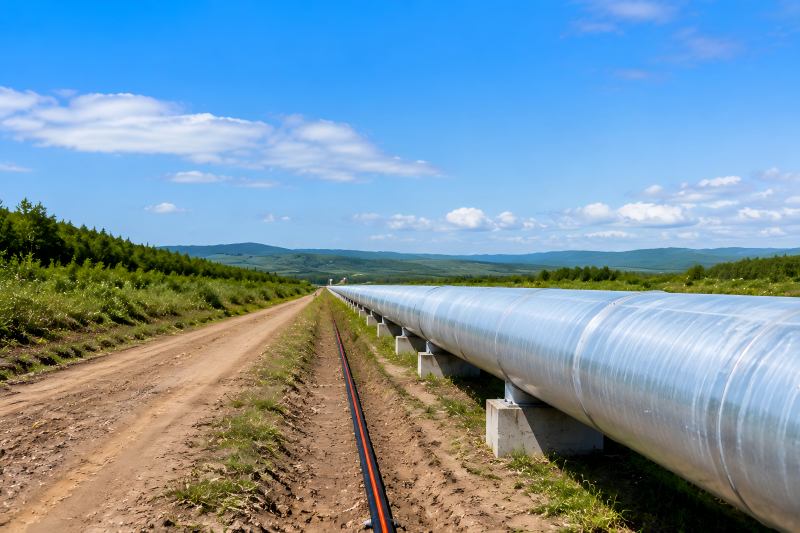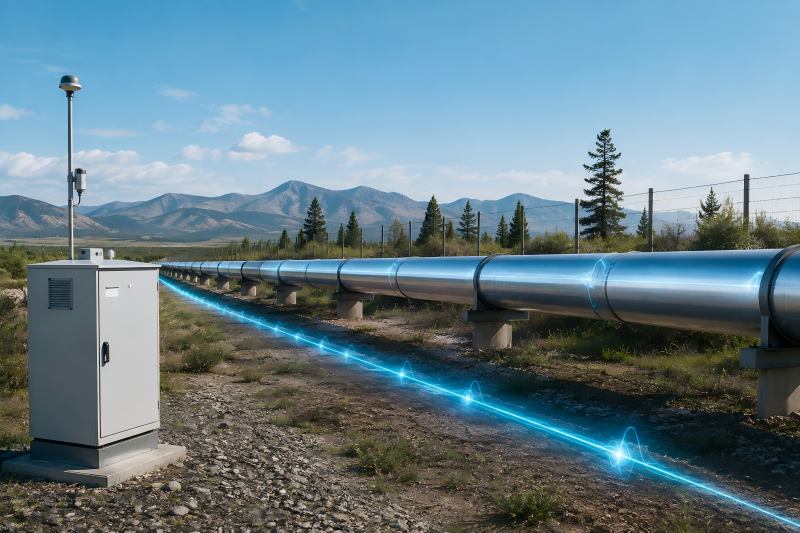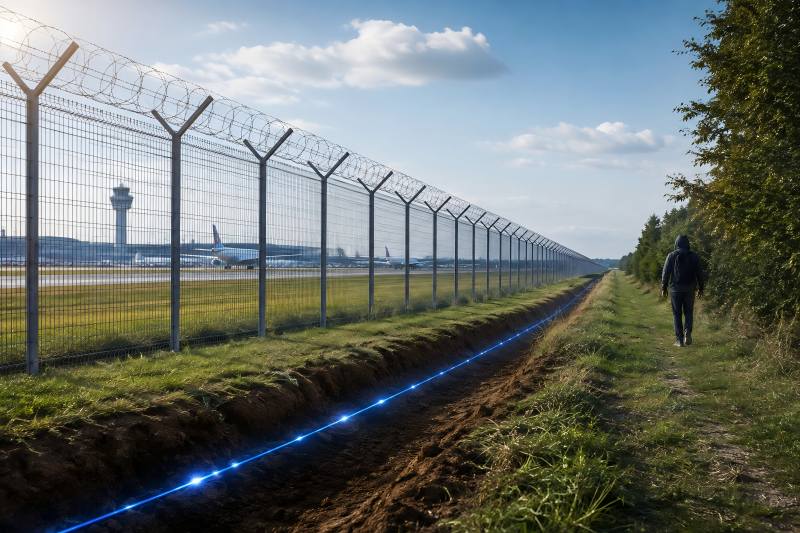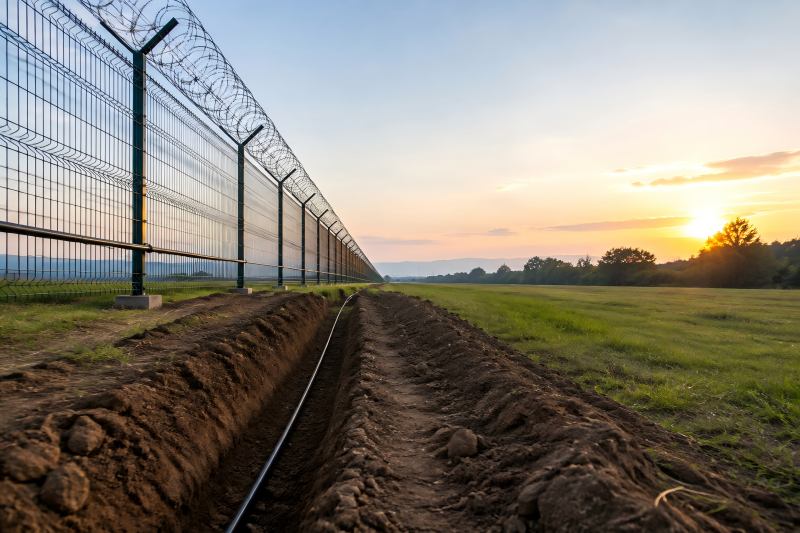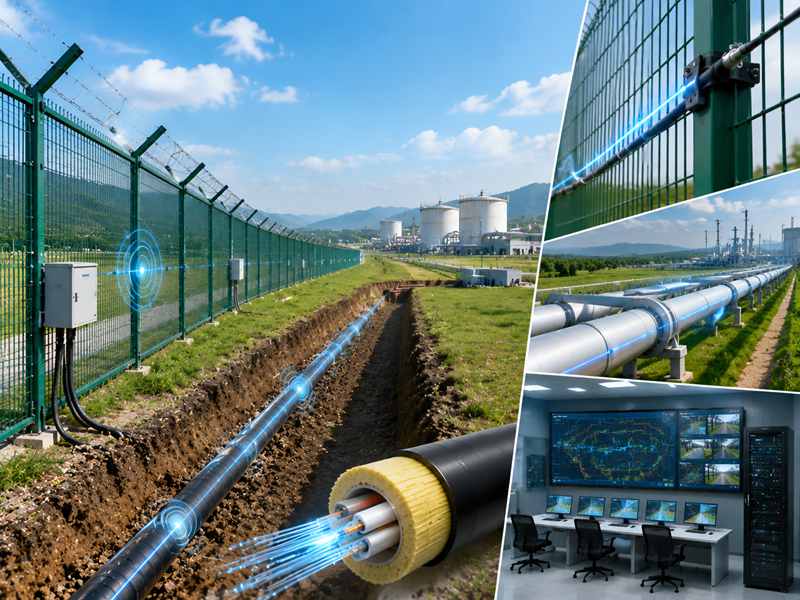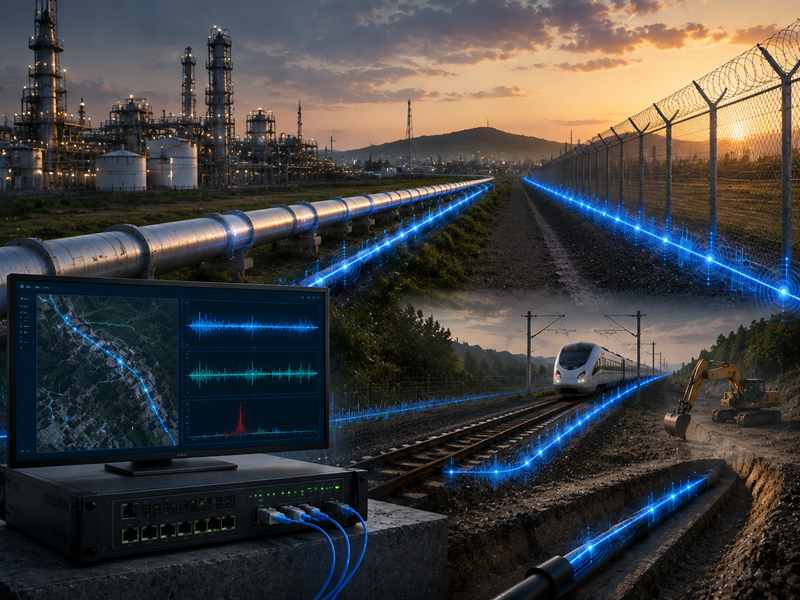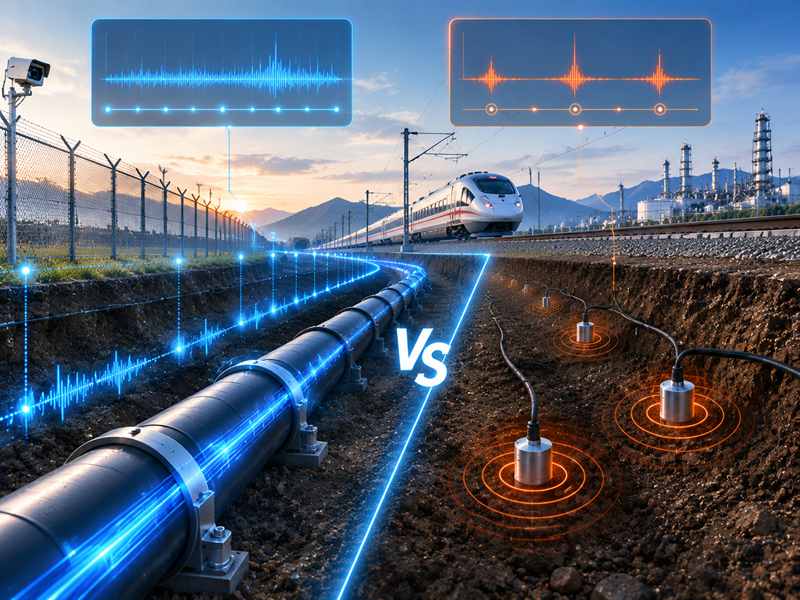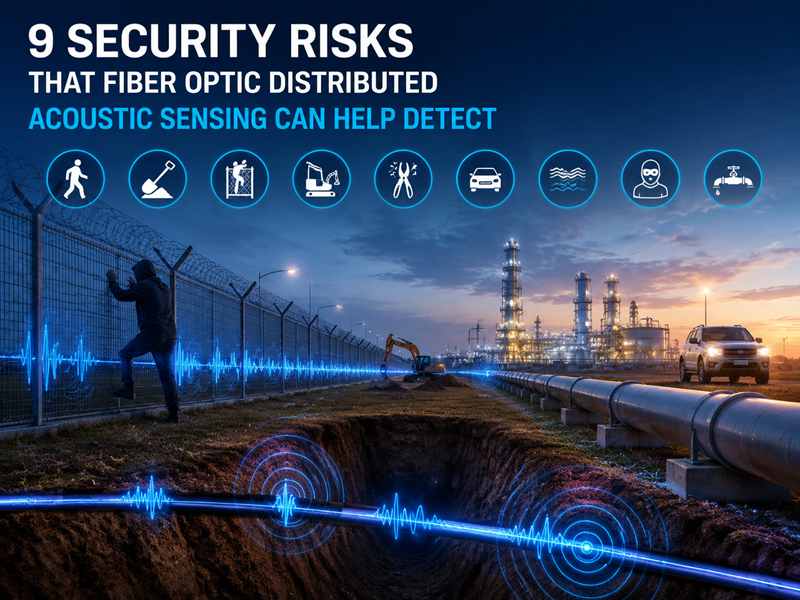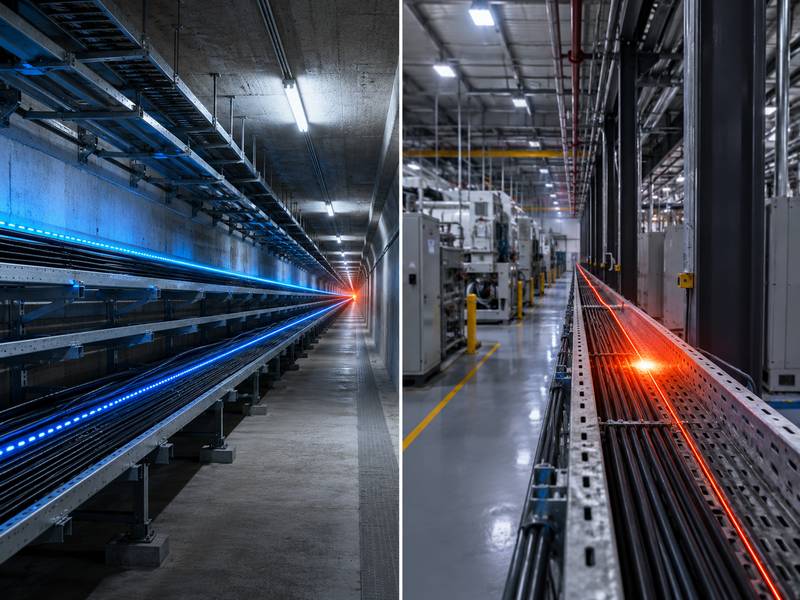
Distributed Acoustic Sensing (DAS) turns fiber optic cables into long-distance sensing lines for perimeter security and critical infrastructure protection.
However, security teams need more than detection. They must know where the alarm happened, its risk level, who should respond, and what action to take.
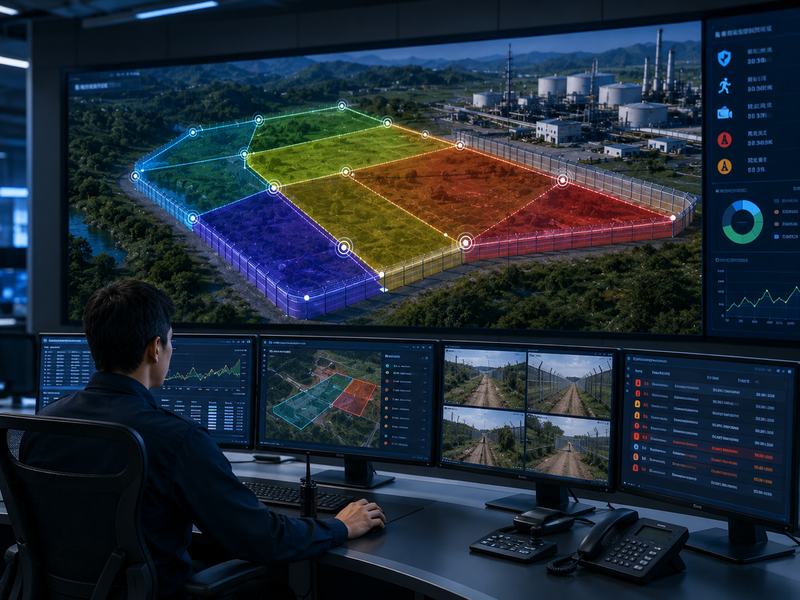
DAS alarm zoning divides the monitored fiber route into clear security zones with defined locations, sensitivity, camera linkage, and response rules, making alarm management faster and more efficient.
What Is DAS Alarm Zoning?
Distributed acousitic sensing alarm zoning is the process of dividing the monitored fiber optic route into smaller and more manageable sections. These sections are usually based on site layout, risk level, asset location, environmental conditions, and security response requirements.
For example, a solar farm may divide its perimeter into north fence, south fence, east fence, west fence, main gate, inverter area, transformer area, and remote boundary zones. An oil and gas facility may divide its monitored area into pipeline sections, tank farm zones, pump station zones, loading areas, road crossings, and high-risk fence sections.
Zoning aims to simplify and expedite the handling of alerts. Instead of showing only a distance point on a long fiber route, the system can show a meaningful zone name such as “East Fence – Transformer Area” or “Pipeline Section 3 – Road Crossing.” This helps operators quickly understand the location and importance of the alarm.
The Significance of DAS Alarm Zoning
Long-distance monitoring is a common application for DAS systems. A single system can cover many km or even tens of kilometres. Without proper zoning, operators may face several problems:
- Alarm locations are difficult to understand.
- Operators need more time to check maps or cameras.
- Patrol teams may be sent to the wrong area.
- High-risk and low-risk alarms may be treated the same way.
- False alarms may increase operator pressure.
- Security response may be delayed.
With proper alarm zoning, the system becomes much more practical for daily security work. Operators can quickly identify the alarm zone, check the linked camera, judge the risk level, and dispatch the correct team.
Main Benefits of DAS Alarm Zoning
| Benefit | Description | Result |
| Faster alarm location | Each alarm is linked to a clear zone name and map position | Operators understand the event faster |
| Better response priority | High-risk zones can have higher alarm levels | Critical events receive faster action |
| Lower operator pressure | Alarms are organized by zone and risk | Fewer unnecessary checks |
| Easier camera linkage | Each zone can be connected to nearby cameras | Faster visual verification |
| Clear team responsibility | Each zone can be assigned to a response team | Faster field dispatch |
| Better reporting | Alarm data can be analyzed by zone | Easier system optimization |
Common DAS Alarm Zone Types
Different projects need different zoning methods. A good DAS zoning plan usually combines several types of zones.
| Zone Type | Application | Purpose | Example |
| Location-based zone | Fence, pipeline, railway, solar farm | Divide long routes into clear areas | North fence, south gate, road crossing |
| Risk-based zone | Critical assets and high-risk areas | Set different alarm priorities | Fuel tank area, transformer zone |
| Response-based zone | Patrol and security management | Assign responsibility | Team A zone, Team B zone |
| Environmental zone | Noisy or complex environments | Reduce false alarms | Roadside area, windy fence section |
| Asset-based zone | Important equipment protection | Protect key facilities | Valve station, inverter station |
| Camera-linked zone | CCTV integration | Improve alarm verification | Camera 01 coverage area |
How Alarm Zoning Improves Security Response Efficiency
Faster Alarm Understanding
When an alarm happens, every second matters. If the operator only sees a distance marker, they may need to check the map, confirm the route, find the nearest camera, and then decide what to do. This takes time.
With zoning, the alarm can be displayed with a clear name, such as:
- Main Gate Zone
- East Fence Zone
- Transformer Area Zone
- Pipeline Road Crossing Zone
- Tank Farm Perimeter Zone
This makes the alarm easier to understand immediately. The operator can quickly judge whether the event is in a normal area or a high-risk area.
More Accurate Alarm Priority
Not all alarms have the same importance. An alarm near a remote fence may require routine checking, while an alarm near an oil tank, airport runway, transformer, or control room may require immediate response.
DAS alarm zoning allows different zones to have different priority levels.
| Risk Level | Typical Area | Alarm Priority | Response Requirement |
| Low | Remote open boundary | Normal | Routine check |
| Medium | Standard perimeter fence | Medium | Patrol verification |
| High | Gate, road crossing, equipment area | High | Fast dispatch |
| Critical | Fuel tank, substation, runway side, control room | Critical | Immediate emergency response |
One system can cover many km or even tens of kilometres.
Improved Device and Camera Connectivity
DAS systems are often integrated with CCTV, VMS platforms, lights, speakers, sirens, access control, or command center software. Alarm zoning makes this integration more efficient.
When an alarm occurs in a specific zone, the system can automatically call up the nearest camera. It can also trigger lights, send a warning through speakers, or notify the related patrol team.
For example:
| Alarm Zone | Linked Device | Automatic Action |
| Main gate | PTZ camera, speaker, alarm light | Camera turns to gate and speaker warning starts |
| East fence | Fixed camera, patrol notification | Camera view appears on control screen |
| Transformer area | Camera, siren, SMS alert | High-priority alarm sent to supervisor |
| Remote fence | Map alarm only | Operator reviews event pattern |
| Pipeline crossing | Camera, patrol app | Field team receives location |
This reduces manual operation and improves response speed.
Clearer Patrol Dispatch
In large sites, different teams may be responsible for different areas. Without zoning, the control room may not know which patrol team should respond. This can cause delays.
With alarm zoning, each zone can be connected to a specific patrol team or department. For example:
- North perimeter: Security Team A
- South perimeter: Security Team B
- Electrical area: Security team + maintenance team
- Pipeline section: Pipeline patrol team
- Tank farm: Emergency response team
This makes dispatch faster and more organized.
Reduced False Alarm Pressure
False alarms are one of the most common challenges in perimeter security. Wind, rain, animals, traffic, machinery, vegetation, and nearby construction may all create vibration signals.
Alarm zoning helps reduce false alarm pressure because each zone can use different sensitivity and filtering rules.
For example, a roadside zone may need stronger filtering for vehicle vibration. A quiet restricted area may use higher sensitivity. A windy fence section may need special environmental adjustment. A high-risk gate zone may use stricter alarm rules during the night.
| Environment | Possible Interference | Zoning Solution |
| Roadside fence | Vehicle vibration | Use traffic filtering and adjusted sensitivity |
| Windy area | Fence shaking | Apply wind-resistant alarm rules |
| Vegetation area | Branch movement | Clear vegetation and adjust thresholds |
| Construction area | Machinery vibration | Use temporary working-hour rules |
| Quiet restricted area | Low background noise | Use higher sensitivity |
Key Principles for DAS Alarm Zoning Design
Match Zones with the Real Site Layout
Alarm zones should match real locations that operators and patrol teams can understand. Avoid using only simple names like Zone 1, Zone 2, and Zone 3 if the site is complex.
Better names include:
- North Fence – Main Gate Section
- East Perimeter – Roadside Area
- Transformer Area – Inner Fence
- Pipeline Section 2 – River Crossing
- Tank Farm – South Boundary
Clear names reduce communication errors during emergency response.
Keep Zone Length Reasonable
If a zone is too long, the operator still needs time to find the exact location. If zones are too short, the system may become difficult to manage.
A practical method is to use main zones and sub-zones. Main zones help with management and reporting, while sub-zones help with accurate response.
For example, a 10 km perimeter can be divided into 10 main zones of 1 km each. High-risk areas such as gates, corners, substations, and storage areas can be divided into smaller sub-zones.
Set Different Rules for Different Risk Levels
A good DAS system should not use the same alarm rule for every area. Different zones should have different sensitivity, alarm types, escalation rules, and response methods.
For example, a transformer area may require immediate response if an intrusion alarm occurs at night. A remote fence section may require patrol verification only if repeated alarms occur.
Consider Environmental Conditions
The physical environment has a strong influence on DAS alarm performance. During zoning design, the project team should consider:
- Fence type
- Cable installation method
- Soil condition
- Road traffic
- Wind level
- Rain and storm conditions
- Animal activity
- Nearby machinery
- Vegetation
- Human activity nearby
Zones with different environmental conditions should have different alarm settings.
Combine Zoning with a Response Matrix
Alarm zoning should be connected to clear response actions. Operators should not need to decide everything from the beginning during an emergency.
A response matrix can define what should happen when a specific type of alarm occurs in a specific zone.
| Zone | Alarm Type | Priority | Operator Action | Field Response |
| Main gate | Climbing | High | Check camera immediately | Dispatch guard |
| Transformer area | Intrusion | Critical | Notify supervisor | Send security and maintenance |
| Remote fence | Walking | Medium | Review alarm pattern | Patrol if repeated |
| Pipeline crossing | Digging | High | Confirm location | Notify pipeline team |
| Tank farm | Fence cutting | Critical | Activate emergency process | Immediate response |
Step-by-Step DAS Alarm Zoning Process
Step 1: Conduct a Site Survey
Before designing alarm zones, the project team should inspect the full site. The survey should include the cable route, fence structure, gates, roads, cameras, high-value assets, terrain, and patrol routes.
Important survey points include:
- Total monitoring distance
- Fiber cable route
- Fence or buried cable condition
- Critical equipment locations
- Main entrances and exits
- Existing CCTV coverage
- Patrol team locations
- High-noise areas
- Blind spots
- Power and communication conditions
Step 2: Identify High-Risk Areas
Finding areas that require more robust protection is the next step. These could consist of:
- Main gates
- Fuel storage areas
- Oil tanks
- Transformer stations
- Inverter stations
- Pipeline crossings
- Control rooms
- Loading areas
- Airport runway-side fences
- Remote blind spots
These areas should have higher alarm priority and stronger response rules.
Step 3: Divide Main Zones and Sub-Zones
After identifying the site layout and risk points, the project team can divide the monitoring route into main zones and sub-zones.
Example for a solar farm:
| Main Zone | Sub-Zone | Security Focus |
| North perimeter | Main gate | Unauthorized entry |
| East perimeter | Roadside fence | Vehicle and pedestrian approach |
| Central area | Inverter station | Equipment protection |
| South perimeter | Transformer area | Critical asset protection |
| West perimeter | Remote fence | General intrusion detection |
Step 4: Configure Alarm Rules
Each zone should have suitable alarm rules. These rules may include:
- Sensitivity level
- Alarm threshold
- Alarm duration
- Event type classification
- Day and night settings
- Working-hour rules
- Escalation level
- Camera linkage
- Notification method
High-risk zones should usually have stricter rules and faster escalation. Noisy zones should use more careful filtering to reduce false alarms.
Step 5: Integrate with Cameras and Security Platforms
If the project uses CCTV, VMS, access control, alarm lights, or speakers, each DAS zone should be matched with the related device. This allows the system to automatically display the correct camera view or trigger a warning action.
This is especially useful for large sites where operators cannot manually search for the correct camera every time an alarm occurs.
Step 6: Test and Optimize
After zoning and configuration, the system should be tested in real conditions. Common tests include:
- Walking test
- Climbing test
- Fence cutting simulation
- Digging simulation
- Vehicle approach test
- Gate intrusion test
- Nighttime alarm test
- Wind and rain condition observation
- Camera linkage test
- Patrol response test
The test results should be used to optimize zone boundaries, alarm sensitivity, and response workflows.
Common DAS Alarm Zoning Mistakes and Solutions
| Mistake | Problem | Solution |
| Zones are too long | Operators cannot locate events quickly | Add smaller sub-zones |
| Zone names are unclear | Response teams misunderstand locations | Use real site names |
| Same sensitivity is used everywhere | False alarms or missed alarms increase | Adjust rules by zone |
| No camera linkage | Verification takes longer | Link each zone with nearby cameras |
| No response plan | Operators hesitate during alarms | Create a response matrix |
| High-risk areas are not separated | Critical alarms may be delayed | Create special high-priority zones |
| No regular review | System performance declines | Review alarm reports monthly |
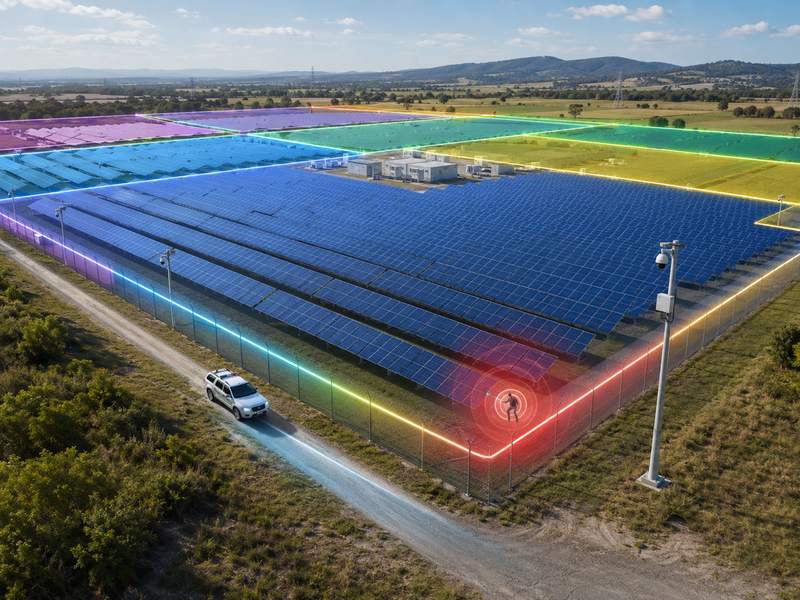
DAS Alarm Zoning for Solar Farms
Solar farms usually have long fence lines, wide open spaces, remote locations, and valuable electrical equipment. They may face theft, vandalism, unauthorized entry, and animal interference.
A practical DAS zoning plan for solar farms should include:
- Main gate zone
- Perimeter fence zones
- Inverter station zones
- Transformer area zones
- Roadside zones
- Remote boundary zones
- Maintenance access zones
- Blind spot zones
High-value electrical equipment areas should have higher alarm priority. Remote perimeter zones can use balanced sensitivity to reduce unnecessary alarms.
DAS Alarm Zoning for Oil and Gas Sites
Oil and gas facilities usually require a higher security level because safety risks are serious. Intrusion, sabotage, illegal construction, and equipment damage can cause major losses.
A typical zoning plan may include:
| Area | Zone Design | Priority | Response |
| Pipeline corridor | 500 m to 1 km zones | Medium to high | Patrol verification |
| Road crossing | Short high-risk zone | High | Immediate inspection |
| Tank farm | Small asset-based zones | Critical | Emergency response |
| Loading area | Gate and operation zones | High | Camera verification |
| Pump station | Equipment protection zone | Critical | Security and operations response |
For oil and gas sites, zoning should be closely connected with safety management and emergency response procedures.
DAS Alarm Zoning for Airports
Airports need fast and accurate perimeter response because unauthorized entry may affect flight safety. DAS zoning for airports should consider runway areas, terminal-side fences, cargo areas, fuel depots, service roads, and remote perimeter sections.
Critical zones near runways, taxiways, and fuel storage areas should have strict alarm rules and immediate escalation. Camera linkage is especially important because operators need quick visual confirmation before dispatching response teams.
How to Measure DAS Zoning Performance
After the DAS system is deployed, managers should regularly review zoning performance. This helps improve the system and reduce unnecessary alarms.
| KPI | Meaning | Why It Matters |
| Alarm verification time | Time needed to confirm an alarm | Measures operator efficiency |
| Dispatch time | Time from alarm to field response | Shows response speed |
| False alarm rate by zone | Percentage of non-threat alarms | Identifies noisy zones |
| Confirmed event rate | Real events compared with total alarms | Measures alarm quality |
| Repeated alarm points | Locations with frequent alarms | Helps find problem areas |
| Camera linkage success rate | Correct camera appears after alarm | Improves verification |
| Patrol arrival time | Time needed for field team to arrive | Measures real response ability |
Best Practices for DAS Alarm Zoning
To improve security response efficiency, project owners and system integrators should follow these best practices:
- Use clear and practical zone names.
- Match zones with real site layout.
- Divide long routes into main zones and sub-zones.
- Set higher priority for critical assets.
- Adjust sensitivity based on local environment.
- Link important zones with CCTV and alarm devices.
- Create a clear alarm response matrix.
- Train operators and patrol teams before handover.
- Review alarm data regularly.
- Optimize zones after site changes or expansion.
- Keep records of false alarms and confirmed events.
- Update alarm rules during construction or maintenance periods.
DAS alarm zoning improves security response by making long-distance alarms easier to locate, understand, and manage.
With proper zoning, operators can quickly identify the alarm location, risk level, linked camera, and response team. This reduces response time, lowers operator pressure, and improves alarm accuracy.
For critical infrastructure such as solar farms, oil and gas sites, airports, pipelines, and industrial parks, DAS zoning should be planned early with site surveys, risk analysis, clear zone naming, camera linkage, response rules, and continuous optimization.