Transportation Infrastructure Perimeter Security System
Protect selected rail and metro fence lines, depots, bridge and tunnel approaches, highway facilities and restricted transport access points with fiber optic sensing, zone-based detection and laser beams.
Challenges
A missed intrusion can put passengers and workers at risk, while unverified alarms may cause unnecessary service delays.
Trespassers Exploit Trackside Gates and Fence Gaps
Remote Rail and Road Sections Are Hard to Patrol
Trains and Road Traffic Can Trigger False Alarms
Locating Intrusions Along Rail Lines Takes Time
Our Solution
Gato combines F7 distributed acoustic sensing along protected railway and roadside fences, F5 zone-based fiber detection around depots, and C3 laser beam detection at selected access points. F7’s AI models help filter vibrations from passing trains and vehicles. Alarm locations and zones help security teams identify which section of the boundary needs inspection.

Detect Intrusions at Fences and Access Points

Monitor Long Fence Lines and Locate Intrusions

Filter Traffic Interference for Faster Alarm Checks
Product Technologies
F5 Zone-Based Fiber Optic Detection — Defined Fence Sections
Protects defined fence sections around railway depots, yards, and terminals. Alarm zones help security teams identify where to investigate.
Zone-based detection for defined fence sections.
F7 DAS — Long Corridors and Location-Based Alarms
Monitors long protected rail and road boundaries and locates intrusion-related vibrations. AI models help filter interference from passing trains and road traffic.
Intrusion-related vibration monitoring and event location.
Pulse Electric Fence — Physical Deterrence and Zoned Alarm
Provides visible deterrence and zone-based intrusion alarms along approved secured boundaries, subject to local safety requirements.
Zoned deterrence and alarms where permitted.
C3 Laser Beam — Gates and Clear Detection Paths
Detects beam interruptions at selected service gates, maintenance passages, and restricted access points with clear detection paths.
Beam interruption detection at suitable clear access paths.
Applications

Railway and Metro Corridors & Depots
Trespassers may enter railway areas through damaged fences, maintenance gates or isolated trackside routes. F7 monitors selected long fence sections for intrusion-related vibrations, while F5 provides zone-based alarms around depots and stabling yards. Security teams can use alarm locations or zones to identify where inspections are needed.

Bridges, Tunnel Entrances and Highway Facilities
Bridge approaches, tunnel entrances and highway maintenance sites often have service roads, fenced compounds and restricted access points. Fiber optic sensing can protect suitable boundary sections, while C3 laser beam detectors can monitor clear entry paths. Alarm zones help security teams identify the affected access point or boundary section.

Ports and Transport Terminals
Container terminals, vehicle depots and logistics yards have frequent truck movements near restricted fences and storage areas. F5 can divide protected boundaries into alarm zones, while C3 monitors suitable restricted passages. Alarm settings can be adjusted to account for normal vehicle and staff activity, reducing unnecessary security checks.
Case Studies
Perimeter Security for Shanghai Metro Line 17 Depot
Project Requirements
The depot and stabling yard included train-parking areas, operational buildings, access points and an extensive perimeter. The project required visible deterrence, clear alarm zoning and centralized verification during both operating and low-staff periods.
Challenges
- Extensive boundary with multiple operational zones
- Vehicle, personnel and train activity inside the facility
- Higher trespassing and theft risk during low-staff periods
- Need to associate alarms with specific perimeter sections
Solution
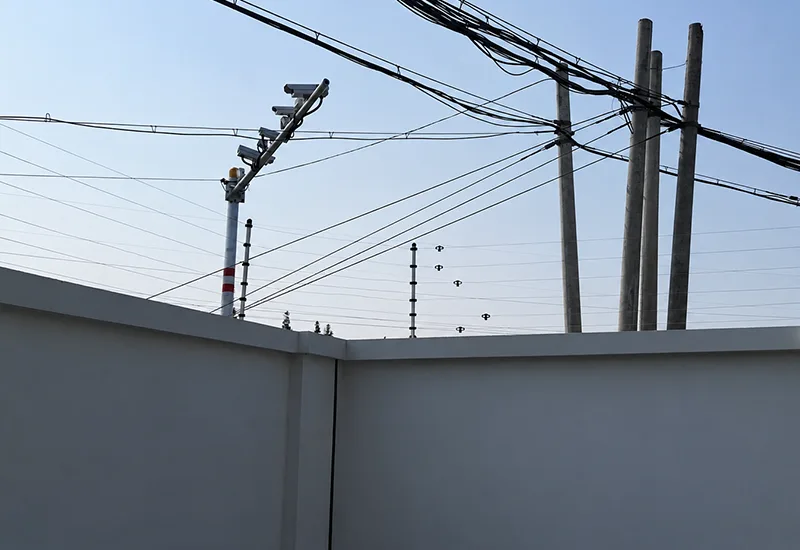
- Pulse electric fence installed along approved perimeter sections
- Alarm zones defined according to gates, buildings and patrol routes
- Zone alarms transmitted to the centralized monitoring system
- Video-verification linkage configured for supported cameras and platform interfaces
- Commissioning tests performed for climbing, contact and fence-disturbance events
Outcome
- The system provided visible deterrence and clearer perimeter-zone alarms, helping the security team verify events and direct patrol personnel to the relevant boundary section.
Why Choose Us
Rail Transit Perimeter Project Experience
Gato’s Shanghai Metro Line 17 depot project provides a practical reference for rail facility security, using pulse electric fencing, zoned alarms and centralized alarm management.
In-House Hardware and Software Development
Established in 2004, Gato develops its security hardware and software in-house. This gives customers access to a supplier with its own engineering expertise and the ability to support project-specific customization.
Long-Term Remote Technical Support
Gato provides remote troubleshooting and technical assistance after system handover, with software upgrade support where applicable. This helps transport operators maintain security systems across multiple depots and facilities.
How We Deliver
Operational Layout and Risk Review
Review perimeter length, fence types, vehicle and personnel routes, operating schedules, access points, restricted assets, communication conditions and existing security systems.
Technology, Zoning and Integration Design
Define the appropriate technology for each boundary section, alarm-zone structure, sensing ranges, power and communication architecture, interface requirements and bill of materials.
Commissioning and Handover Support
Support installation guidance, baseline configuration, representative intrusion testing, alarm-zone verification, interface testing, operator training and acceptance documentation.
Request a Transportation Security Design Review
Share the facility type, perimeter length, boundary construction, access points, operating environment and existing security platform. Our engineers will recommend the appropriate technology mix and alarm architecture.
Frequently Asked Questions
Can existing trackside optical fiber be used for railway fence intrusion detection?
It may be possible if a suitable unused fiber follows the required boundary and its condition is known. The review should confirm the actual route, ownership, splice and branch records, maintenance responsibility, and whether railway communication work could interrupt the fiber. A cable installed for telecom purposes may not follow the fence closely enough to provide the intended railway fence intrusion detection performance, so field validation may be required.
Is fiber optic sensing affected by traction power or electromagnetic interference?
The optical sensing cable is not electrically conductive and is resistant to electromagnetic interference. However, the transportation perimeter security system also includes powered host equipment, communications, power supplies, and connections that must be designed for the railway or roadside electrical environment. Equipment placement, grounding, surge protection, and cable separation should follow the transport operator’s engineering requirements.
What should be checked after trackside civil work or fence replacement?
The affected sensing route should be inspected for movement, crushing, sharp bends, damaged attachments, and changes to the physical fence line. Optical condition and alarm reporting should then be verified, and the displayed locations should be checked against the updated site. A functional test is especially important when work has altered a gate, bridge approach, maintenance access point, or boundary section.