
C3 Laser Beam Intrusion Detection System
Combines dual-light alignment with independently coded laser beams for reliable perimeter intrusion detection. Adjustable alarm settings and networked management simplify installation, configuration, and ongoing maintenance.
Core Advantages
Independent Dual-Light Design
Visible red light guides alignment, while individually coded invisible laser beams detect intrusions.
One-Touch Alignment Setup
Start alignment with one button; the receiver syncs after receiving a beam, with on-screen feedback.
Interference-Resistant Detection
Narrow-band optical filters and coded beams help reduce interference from sunlight and nearby light sources.
Adjustable Alarm Logic
Set the number of adjacent blocked beams and trigger time to suit different perimeter conditions.
Networked Remote Configuration
Configure detection settings locally or remotely through RS485 or Ethernet connections.
200 m
Max. Detection Range
IP66
Ingress Protection
-40°C to +80°C
Operating Temperature
RS485 / Ethernet
Communication Options
How It Works
01 / TECHNOLOGY
Laser Beam Detection
Invisible laser beams detect interruptions across a protected boundary.
C3 uses a laser transmitter and receiver to establish an invisible detection path across a protected area. Each beam operates at a distinct frequency to help prevent signal interference. When the configured number of beams is interrupted for the set trigger time, the receiver generates an intrusion alarm.

02 / ALIGNMENT
Dual-Light Alignment
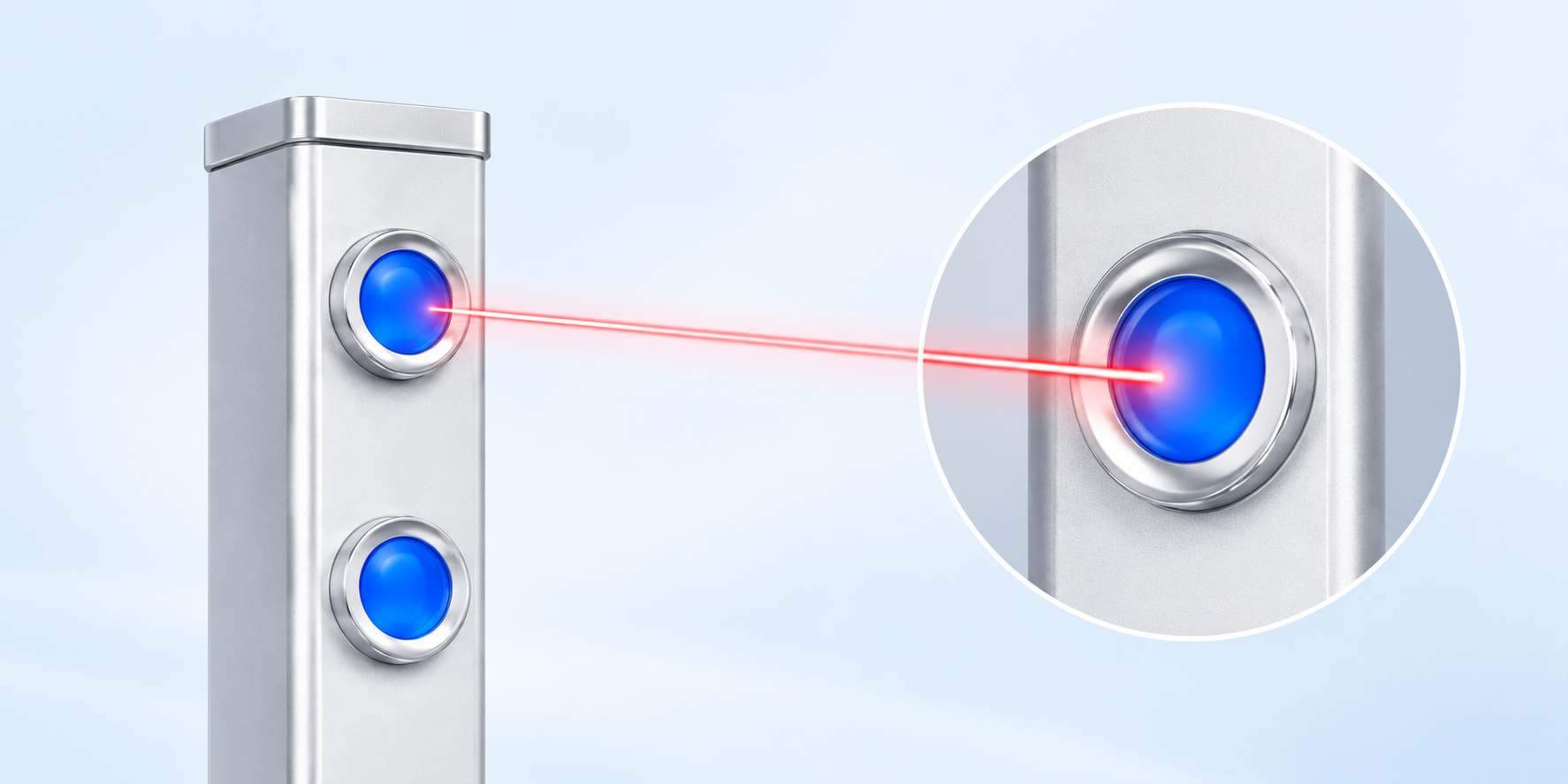
Visible red light helps technicians align the detection path.
Each beam combines a visible red alignment light with an invisible laser used for intrusion detection. During installation, technicians use the red light to locate and align the optical path. The transmitter can enter alignment mode through a single button, while the receiver automatically synchronizes its mode once it detects a beam. The receiver's display provides beam strength readings to help verify alignment.
03 / DETECTION SETTINGS
Detection Settings
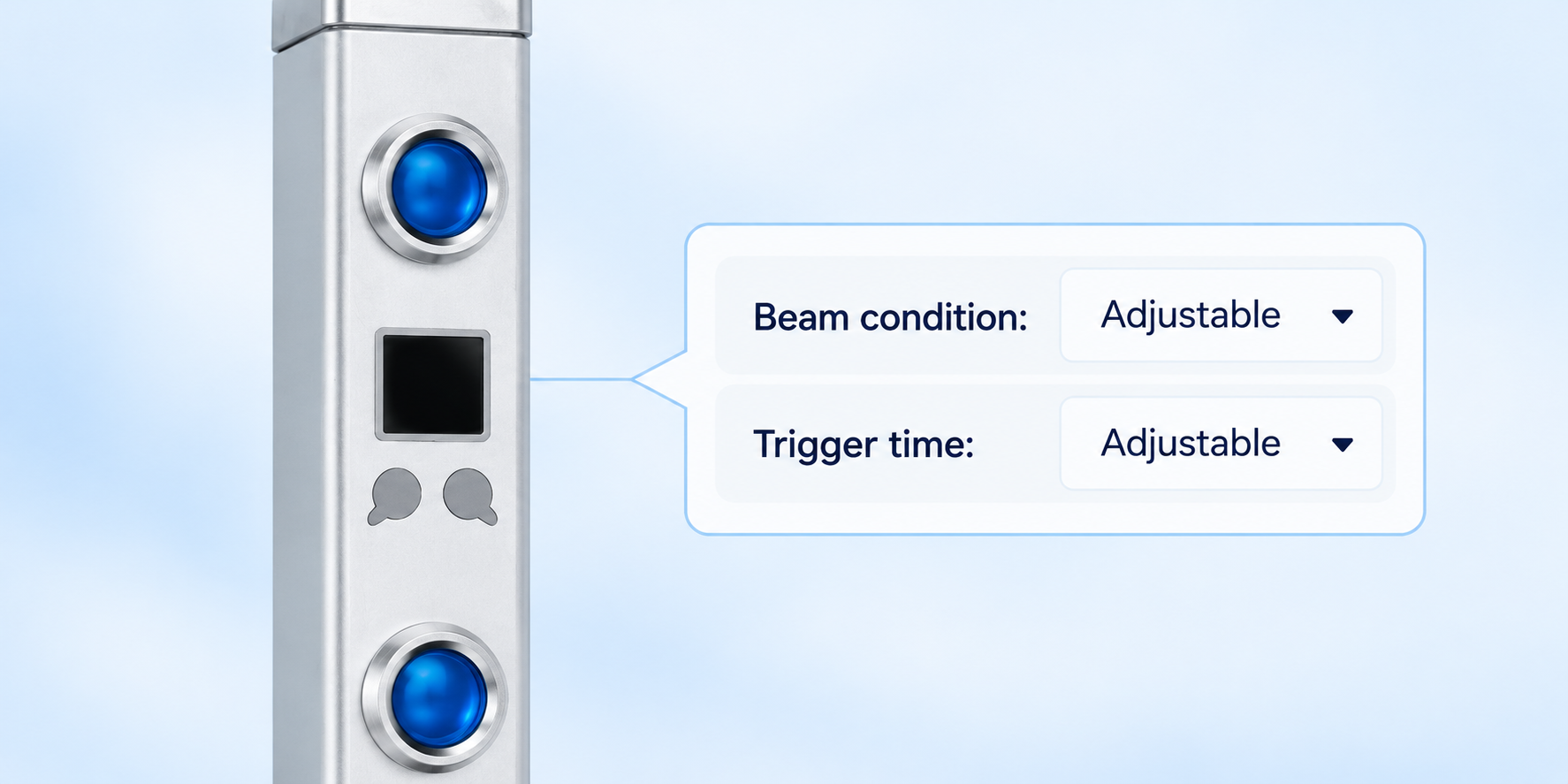
Adjust beam conditions and trigger time to suit site conditions.
C3 allows the required number of adjacent interrupted beams and the alarm trigger time to be adjusted according to site conditions. These settings help reduce unnecessary alarms caused by brief obstructions while maintaining intrusion detection along the protected boundary.
System Components
Laser Transmitter
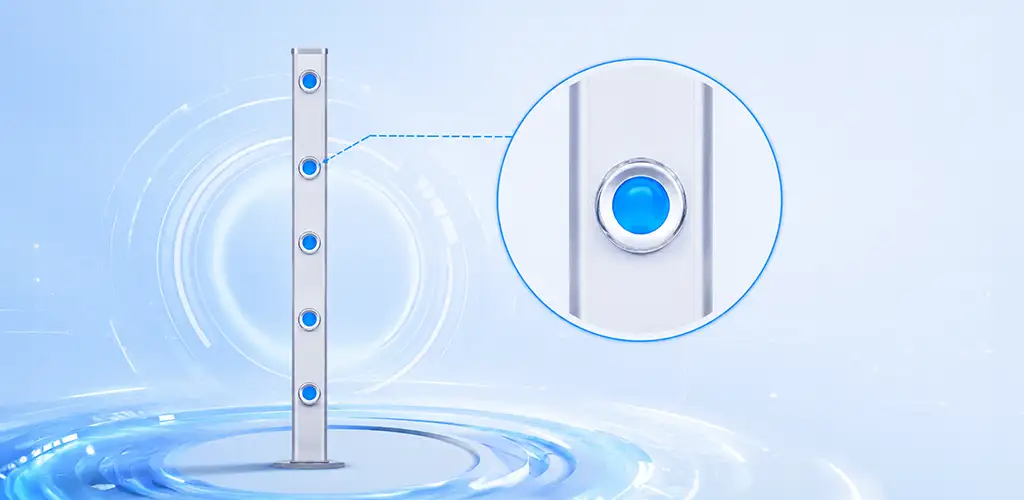
The C3 transmitter emits individually coded invisible laser beams toward the receiver. Visible red light assists with alignment during installation. A mode-switching button allows technicians to enter alignment mode and switch between beams for adjustment.
Laser Receiver
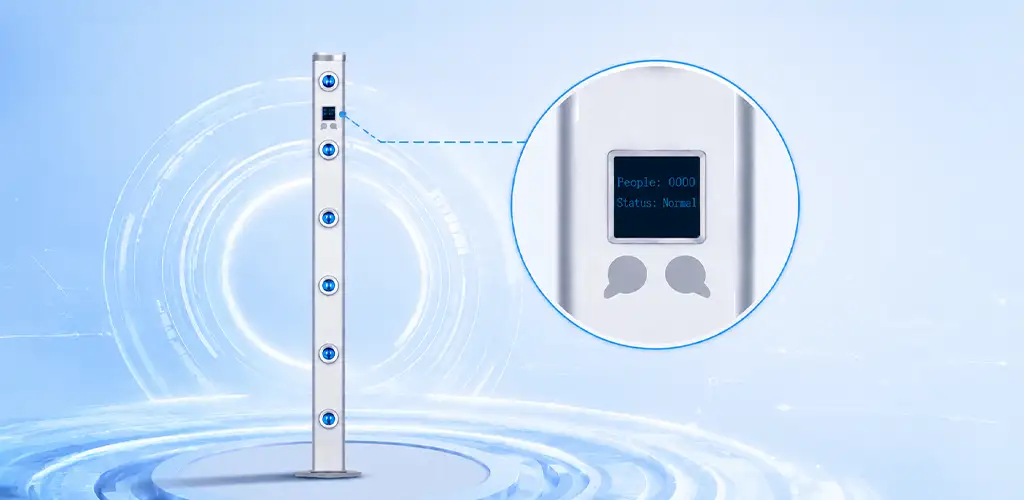
The receiver monitors incoming laser beams and generates alarms when the configured interruption conditions are met. Its built-in display shows beam strength and operating information, allowing technicians to check alignment and configure alarm settings locally.
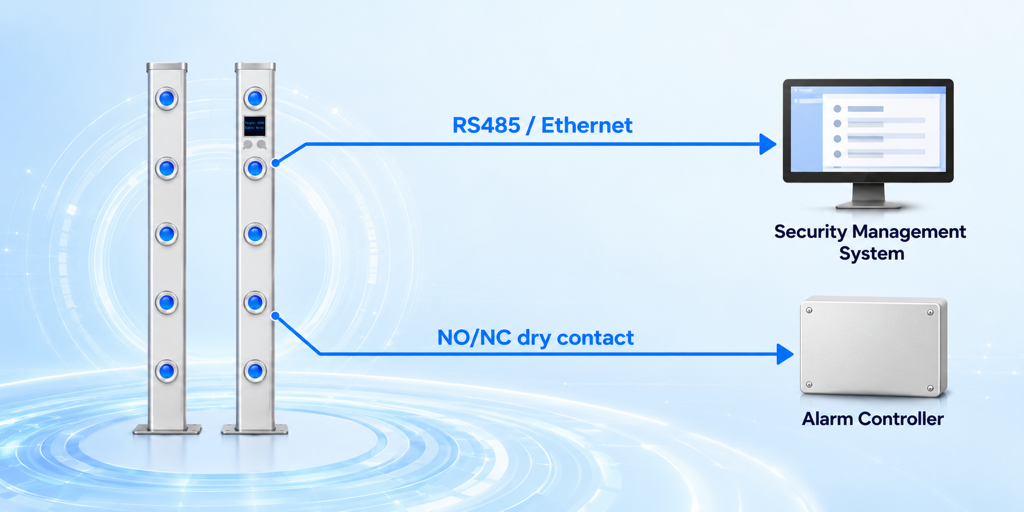
Configuration & System Integration
C3 supports RS485 and network communication for local or remote parameter configuration. Users can adjust beam-interruption settings, trigger times, and alarm output duration through the device or compatible PC software. NO/NC dry-contact outputs support integration with existing alarm controllers and security management systems.
Technical Specifications
| Laser wavelength | 808 nm |
|---|---|
| Alignment light | 650 nm visible red light |
| Beam configurations | 1, 4 or 6 beams |
| Beam spacing | 15 cm between adjacent beams (multi-beam configurations) |
| Detection ranges | 50 m / 100 m / 200 m |
| Power supply | DC 10–30 V or AC 24 V |
| Communication | RS485 or network |
| Alarm output | NO/NC dry contact |
| Protection rating | IP66 |
| Operating temperature | -40°C to +80°C |
| Operating humidity | ≤95% RH |
| Housing | Aluminum alloy |
| Horizontal adjustment | ±20° |
Case Studies


Beijing Residential Community Perimeter Protection
Project Challenge
A high-end residential community in Beijing required intrusion detection along approximately 1,100 m of perimeter. The security solution needed to protect the property without compromising its architectural appearance.
Laser Beam Solution
The project deployed 54 pairs of two-beam active laser detectors to establish intrusion detection along the community perimeter.
Project Highlights
The laser detection system provides perimeter monitoring without additional visually intrusive physical barriers, supporting the community's security and appearance requirements.
Frequently Asked Questions
How does the C3 laser beam intrusion detection system work?
C3 uses a transmitter and receiver to create a laser detection path across a protected area. When the configured number of adjacent beams is blocked for the set trigger time, the system generates an intrusion alarm.
How does the dual-light design make laser alignment easier?
C3 combines visible red light for alignment with an invisible laser for intrusion detection. The visible light helps installers locate the beam path and adjust the optical axis without relying entirely on a handheld laser finder.
What does one-touch alignment mean on the C3 detector?
The transmitter has a button that switches it into alignment mode. When the receiver detects a laser beam, it automatically synchronizes to the same mode. Technicians still need to adjust the optical axis and check signal strength to complete alignment.
How does C3 help reduce false alarms from environmental interference?
C3 combines independently coded laser beams with narrow-band optical filtering to reduce interference from sunlight and other external light sources. Adjustable beam-interruption settings and trigger times can also help filter brief obstructions.
Can the alarm trigger conditions be customized?
Yes. C3 allows the number of adjacent blocked beams and the trigger time to be configured. Supported settings depend on the beam configuration and can be adjusted according to the protected area and expected interference.
What detection distances are available for C3?
C3 offers nominal detection ranges of 50 m, 100 m, and 200 m. The appropriate range depends on the distance between the transmitter and receiver, mounting stability, clear line of sight, and environmental conditions.
Can C3 be integrated with existing alarm and CCTV systems?
Yes. C3 provides RS485 or network communication and NO/NC dry-contact alarm outputs for connection to compatible alarm controllers and security management systems. Video alarm linkage can be implemented through a compatible security management platform.
Is C3 suitable for outdoor perimeter security?
Yes. C3 features an IP66-rated aluminum alloy housing and an operating temperature range of -40°C to +80°C. For reliable operation, the transmitter and receiver should be securely mounted, properly aligned, and kept free from obstructions along the detection path.
What power supply options does C3 support?
C3 supports DC 10–30 V or AC 24 V power input, allowing installers to select a compatible power source based on site conditions. Proper power supply selection and installation are important for stable operation.
Secure Your Perimeter with C3 Laser Beam Detection
Share your site layout, detection distances, and security requirements with Gato's technical team to find the right C3 laser beam intrusion detection solution for your project.