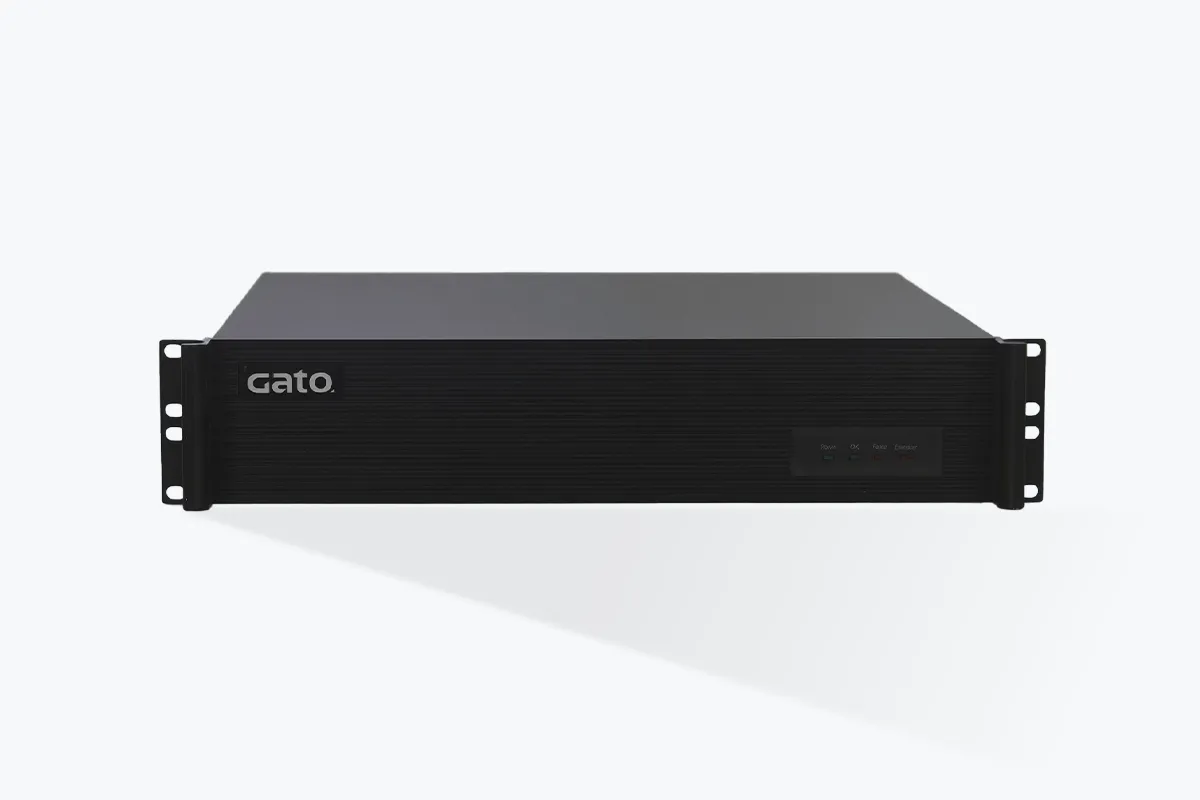
Fiber Optic Pipeline Intrusion Detection System
Continuously monitor pipeline corridors and selected stations for digging, tampering and unauthorized access, with location-aware fiber optic alarms that help teams verify threats and respond to the affected section faster.
Challenges
Pipeline damage can threaten nearby communities, interrupt supply, and lead to costly emergency repairs.
Unauthorized Excavation Threatens Pipelines
Locating Suspicious Activity Along Pipelines Takes Time
Remote Pipeline Sections Are Hard to Monitor
Traffic and Routine Work Can Trigger False Alarms
Our Solution
Gato uses F7 distributed acoustic sensing (DAS) to detect suspicious digging and intrusion-related vibrations along pipeline routes. Its AI models help distinguish potential threats from traffic and routine work. Passive sensing fiber supports continuous monitoring of remote pipeline sections, while alarm locations help field teams identify where to investigate.
Continuous Monitoring Along Remote Pipelines

Detect Digging and Reduce Nuisance Alarms

Locate Events for Faster Field Response
Product Technologies
F7 DAS — Pipeline Intrusion Detection
Detects and locates vibrations associated with digging and tampering along monitored pipeline routes. Preset AI models and models created from site-collected data help distinguish potential threats from traffic and other background activity.
Intrusion-related vibration monitoring and event location.
E3 DTS — Optional Station Cable Temperature Monitoring
Provides temperature monitoring along designated station power cable routes where required. Temperature alarms and location information support inspection of affected sections.
Temperature monitoring along designated power cable routes.
Applications

Pipeline Rights-of-Way
Buried pipelines often cross remote areas and farmland where excavation may begin without the operator's knowledge. F7 monitors vibrations along installed sensing fiber to identify suspicious digging or tampering activity and locate the affected pipeline section for inspection.

Road Crossings and Construction Zones
Traffic and routine maintenance near pipeline crossings can generate vibrations similar to digging activity. F7 analyzes these signals using alarm settings tailored to local conditions, helping teams identify suspicious activity while reducing nuisance alarms from normal operations.

Remote Pump, Compressor and Valve Stations
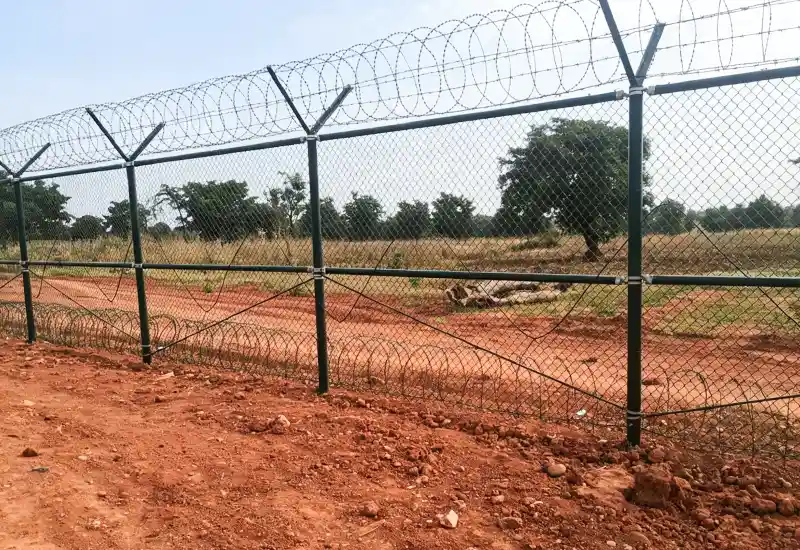
Pipeline stations are often far apart, with limited staff available for regular security patrols. F7 monitors protected station fences for intrusion-related vibrations and provides alarm locations for targeted checks. Where needed, E3 can monitor temperature along selected station cable routes.
Case Studies
Fiber Optic Perimeter Protection for Stations Along the Niger–Benin Pipeline
Project Requirements
The Niger–Benin crude oil pipeline crosses remote areas with limited maintenance access. Selected stations required dependable perimeter intrusion detection, centralized alarm reporting and an architecture that minimized powered equipment along the monitored fence line.
Solution
- Eleven F7 fiber optic intrusion detection systems deployed at selected pipeline facilities
- Armored sensing cable installed along the protected boundaries
- Centralized intrusion alarms with location information
- Passive sensing fiber along the monitored perimeter
- Repeatable system architecture for multiple remote stations
Results
- The deployment improved security visibility at selected remote stations, reduced reliance on distributed powered detectors and provided a consistent monitoring architecture for facilities along the pipeline route.
Project Delivery
- The project involved coordination between the pipeline operator, project stakeholders and local implementation partners.
Why Choose Us
Experience in Pipeline Security Projects
Gato deployed 11 F7 systems at selected stations along the Niger–Benin crude oil pipeline, providing practical experience in securing multiple remote pipeline facilities.
In-House R&D and Project Customization
Gato develops its sensing hardware and software in-house and supports project-specific F7 detection model customization. This gives pipeline operators access to tailored detection solutions for challenging vibration environments.
Ongoing Remote Technical Support
Gato provides remote troubleshooting and technical assistance for supported systems, including software upgrade support where applicable. This helps pipeline operators maintain monitoring equipment across geographically dispersed stations.
How We Deliver
Route and Risk Assessment
Review route length, pipeline type, station locations, threat scenarios, terrain, access conditions, existing fiber resources, communication availability and hazardous-area requirements.
Coverage and Integration Design
Define sensing ranges, channel segmentation, cable layout, detection zones, positioning requirements, communication architecture and platform interfaces. Provide the proposed bill of materials and available compliance documents for project review.
Commissioning and Handover Support
Support system configuration, baseline data collection, event testing, alarm-location verification, interface testing, operator training and acceptance documentation according to the agreed project scope.
Request a Pipeline Monitoring Design
Share the route length, number of stations, required detection events, available fiber, environmental conditions and existing security platform. Our engineers will recommend an appropriate monitoring architecture and F7/E3 configuration.
Frequently Asked Questions
Does pipeline sensing fiber have to be installed directly above the pipeline?
Not in every project. The preferred route depends on the threat being monitored, right-of-way conditions, soil and surface construction, access for installation, protection from accidental damage, and the relationship between the fiber and the pipeline corridor. The route should be engineered and validated for the intended events rather than selected only because it is closest to the pipe.
Can an existing telecom fiber along the pipeline right-of-way be used for intrusion detection?
Potentially, if a suitable unused fiber is available and its complete route is known. The project team should verify fiber ownership, continuity, splice locations, branch points, optical condition, and whether later telecom work could interrupt monitoring. A field evaluation may be needed because a cable installed for communications was not necessarily routed or mechanically coupled for pipeline intrusion detection.
What should be done if the pipeline sensing fiber is exposed or damaged during excavation?
Work near the affected section should first be controlled to prevent further damage. The fiber route can then be inspected, repaired where appropriate, and protected before the excavation is closed. After restoration, the team should verify optical condition, update the as-built route if it changed, and repeat representative event tests. This confirms that the repaired section still corresponds correctly to the displayed pipeline location.
What sensing-fiber length can one F7 DAS system support?
F7 is available in single- or dual-channel configurations with 5 km, 15 km, 25 km or 50 km per channel. The specified length applies independently to each channel; two channels should not be described as one continuous route of twice the length. Positioning accuracy is ±1 m for the 5 km and 15 km models, ±2 m for the 25 km models, and ±4 m for the 50 km models. The 50 km configuration requires a Raman unit at the far end of each applicable channel. These ratings refer to sensing-fiber length per channel. Actual pipeline coverage depends on cable routing, installation and optical-loss assessment.