F5 Zone-Based Fiber Optic Intrusion Detection System
Monitors vibrations along perimeter sensing fibers and identifies the affected detection zone during intrusion events. Supports fence-mounted deployment with fast alarm response and browser-based management.
Integrates signal acquisition and processing into a single device to reduce processing latency and improve intrusion detection reliability. Host power consumption is 20 W or less.
02
Multi-Frequency Vibration Analysis
Analyzes low-, mid-, and high-frequency vibration patterns to help distinguish intrusion attempts from environmental interference and improve alarm accuracy.
03
Web-Based Access
Access and manage the system through a web browser without installing client software, with multi-user access to detection zones, real-time monitoring, and alarm records.
How It Works
01 / TECHNOLOGY
Interferometric Sensing
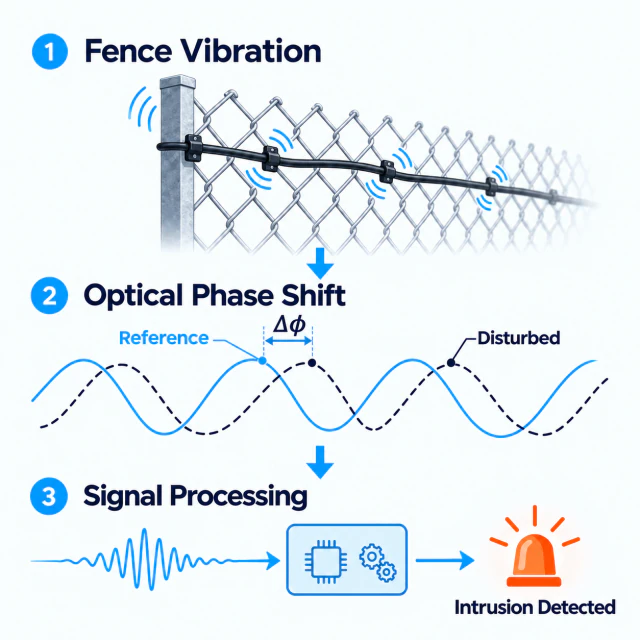
F5 detects vibration changes through optical phase variations in sensing fibers and analyzes signal patterns to identify intrusion events.
F5 detects vibration changes through optical phase variations in sensing fibers and analyzes signal patterns to identify intrusion events.
02 / FENCE INSTALLATION
Fence-Mounted Sensing
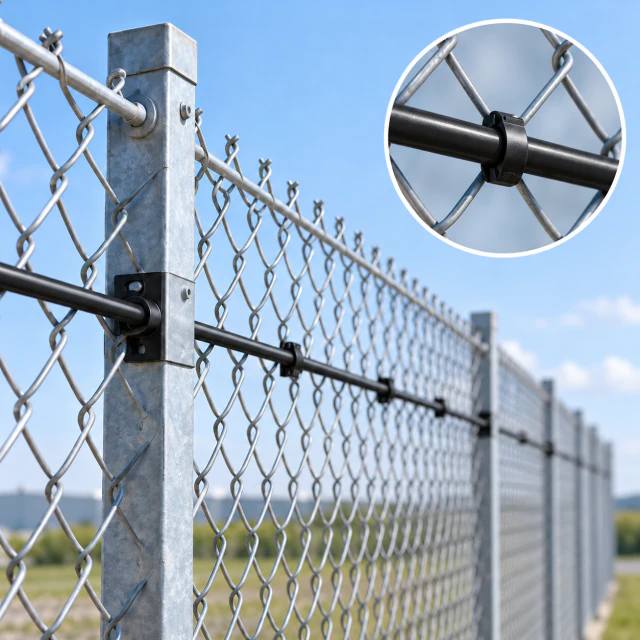
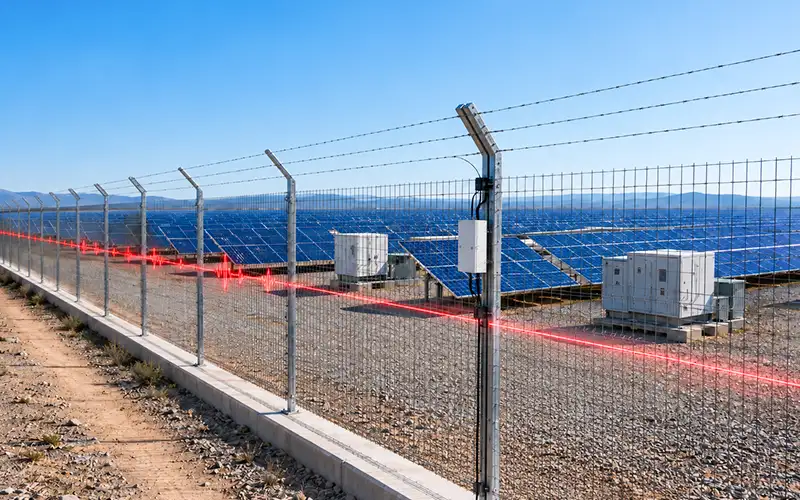
The sensing cable can be installed on mesh fences, razor-wire supports, and perimeter barriers to detect intrusion-related vibrations.
Detects intrusion-related vibrations through sensing cable installed on perimeter fences.
03 / ZONE DETECTION
Zone-Based Detection
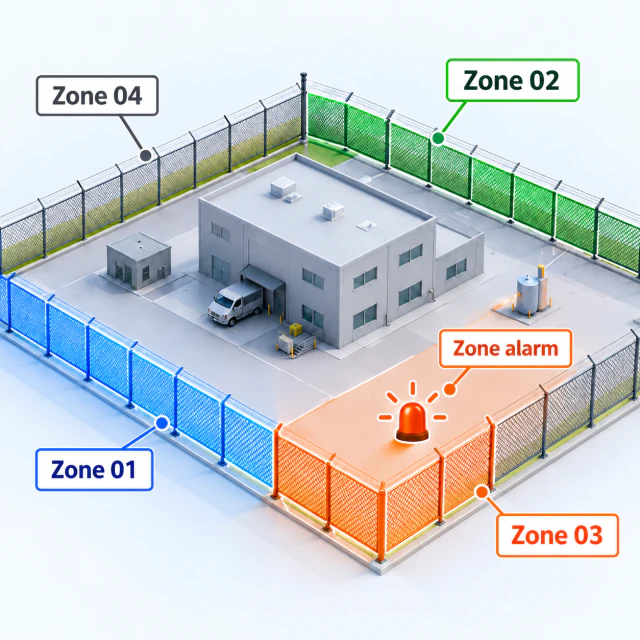
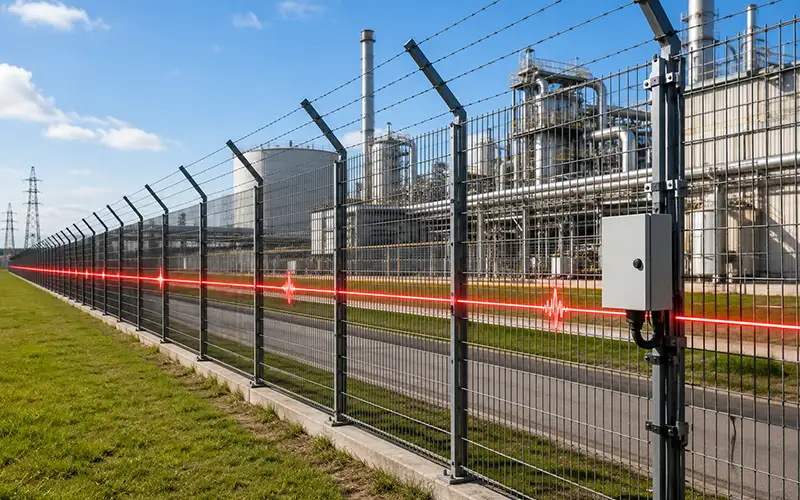
F5 divides the perimeter into independent detection zones. When intrusion activity is detected, the system identifies the affected zone and triggers an alarm, helping security teams locate the affected section.
Identifies the affected detection zone and triggers an alarm.
System Components
F5 Host Unit
The F5 host processes optical signals to identify intrusion events by zone and generate alarm outputs. Its embedded design combines signal processing and alarm management in one unit.
Sensing & Communication Fiber Cables
The sensing cable detects perimeter vibrations, while the communication cable carries optical signals between detection zones and the host. The passive sensing cable requires no power along the detection route and resists electromagnetic interference.
Zone Relay & Terminal Boxes
Zone relay boxes connect sensing and communication fibers at the start of each zone. Terminal boxes reflect optical signals at the far end. Both are passive and require no local power.
Interface illustration
Monitoring Software & Integration
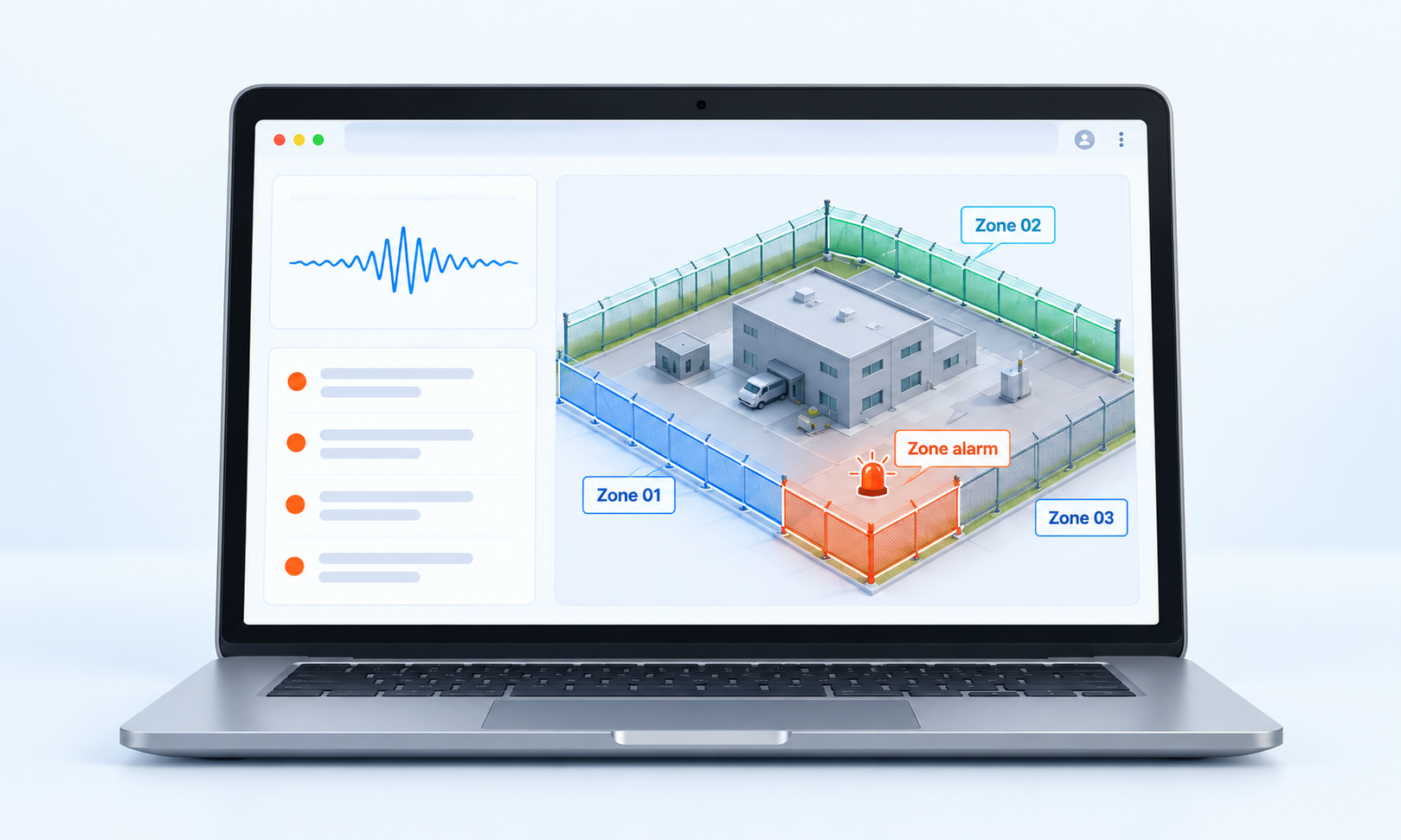
The browser-based platform displays detection zones on electronic maps, real-time waveforms, alarm records, and statistics. It supports multi-user access, scheduled arming and disarming, centralized F5 management, video-linked monitoring, and external alarm device integration.
How is sensing cable length calculated for an F5 installation?
Sensing cable length depends on the actual installation route, fence structure, and cable layout. Wave-pattern installations may require considerably more cable than the physical perimeter length. A site assessment helps determine the appropriate cable quantity.
What should be checked before commissioning F5?
Fiber connections, splice quality, and optical loss should be checked before commissioning. OTDR testing helps identify excessive signal loss or fiber faults that could affect detection performance.
Can F5 alarm history be reviewed and waveform data exported?
Yes. Operators can search historical alarm records by time, location, and event type. The system also supports waveform recording and exporting historical waveform data through a USB connection for further analysis.
Does F5 support different user access levels?
Yes. F5 provides administrator and operator user roles for system management. This allows different personnel to access the monitoring platform according to their assigned roles.
What power supply options does F5 support?
The F5 host supports flexible power configurations based on project requirements. Contact Gato for detailed specifications.
Plan Your F5 Perimeter Intrusion Detection System
Share your perimeter layout, fence type, and monitoring requirements with Gato. Our team can help evaluate the zone layout, sensing cable installation, and system integration options for your project.