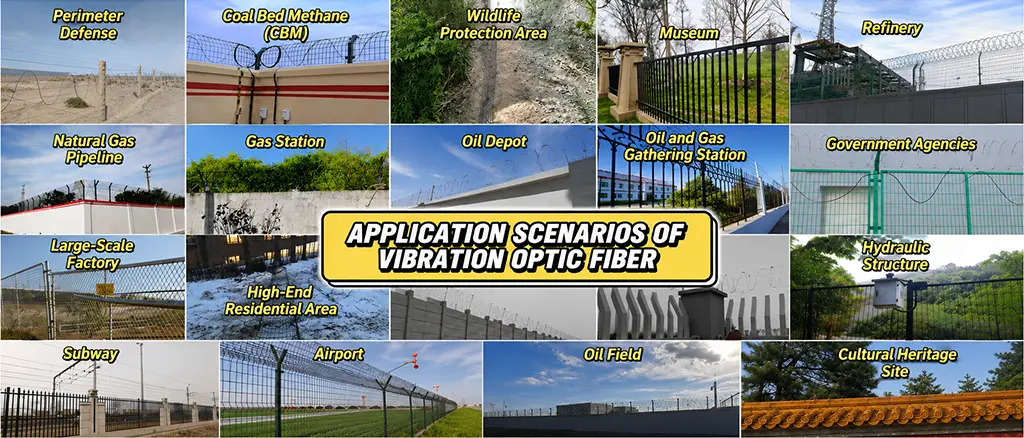
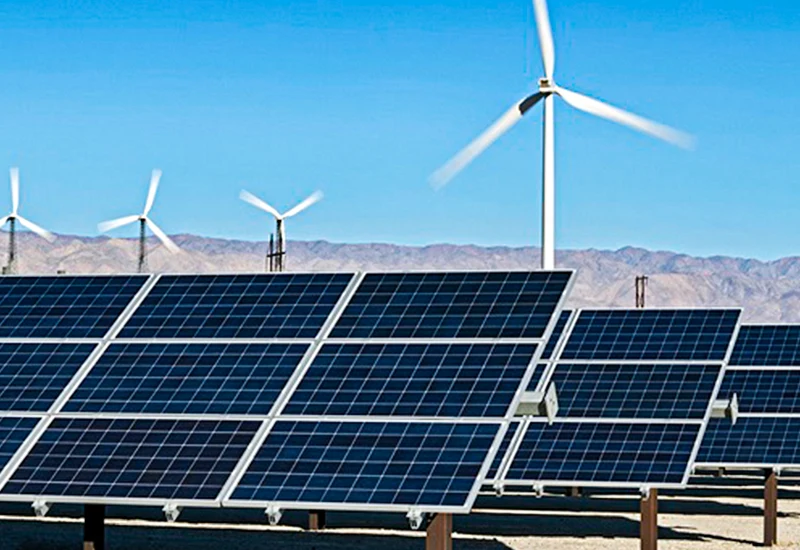
Low-false-alarm Perimeter Protection for Solar, Oil & Gas, and Industrial Sites
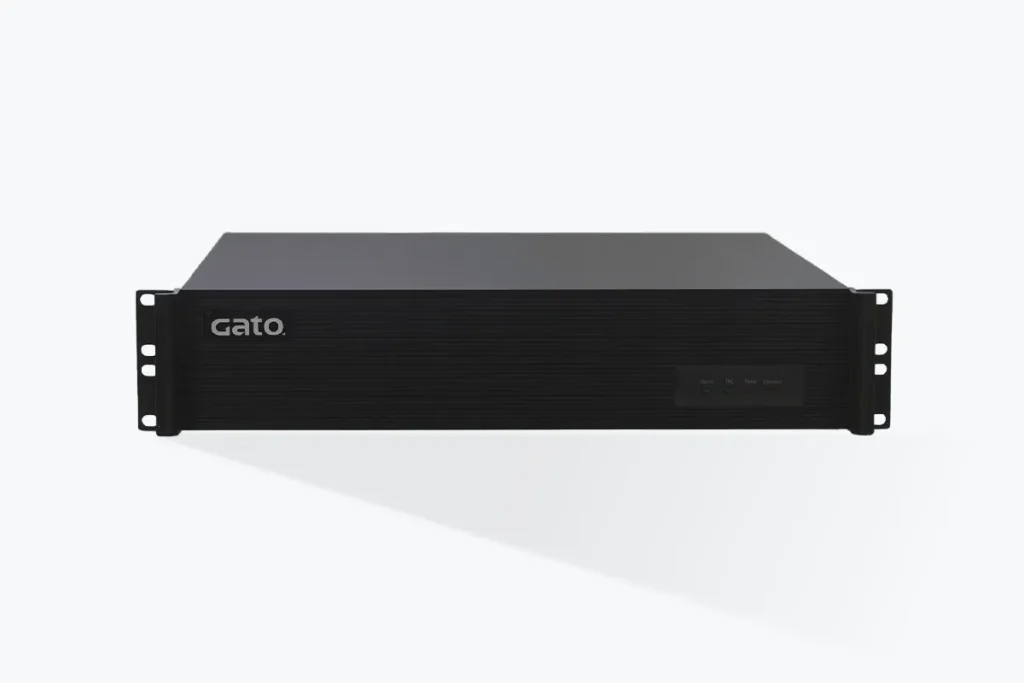
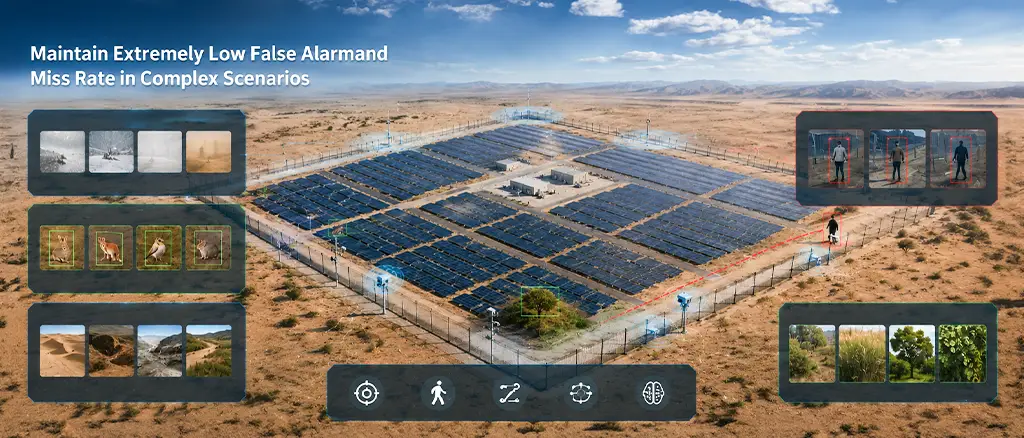
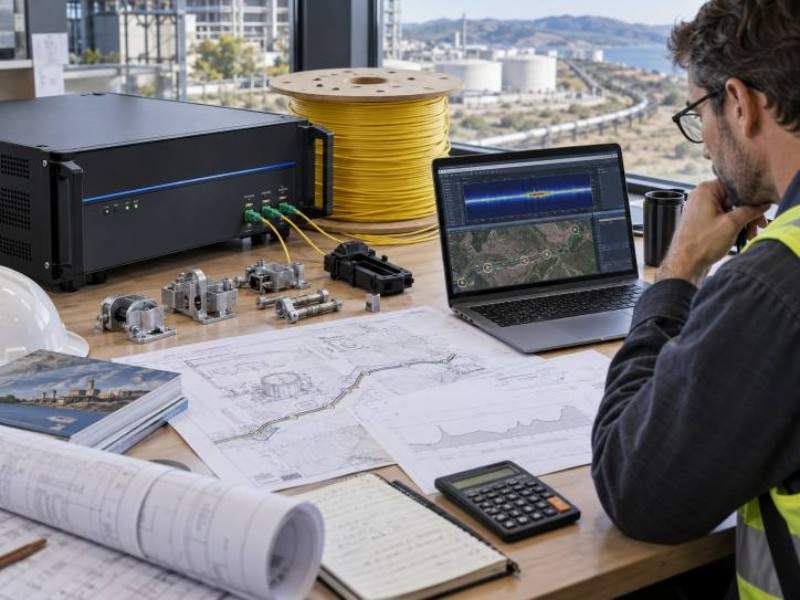
Fiber Optic Acoustic Sensing Combined with Proprietary Pattern Recognition—Effectively Differentiates Intrusions from Animals, Vehicles, Weather Interference for Ultra-Low False Alarm Rates.
- 2000+ Projects Across Solar, Oil & Gas, and Industrial Sites
- Trusted by Customers Worldwide
- Ideal for Long-Distance Critical Infrastructure Perimeters
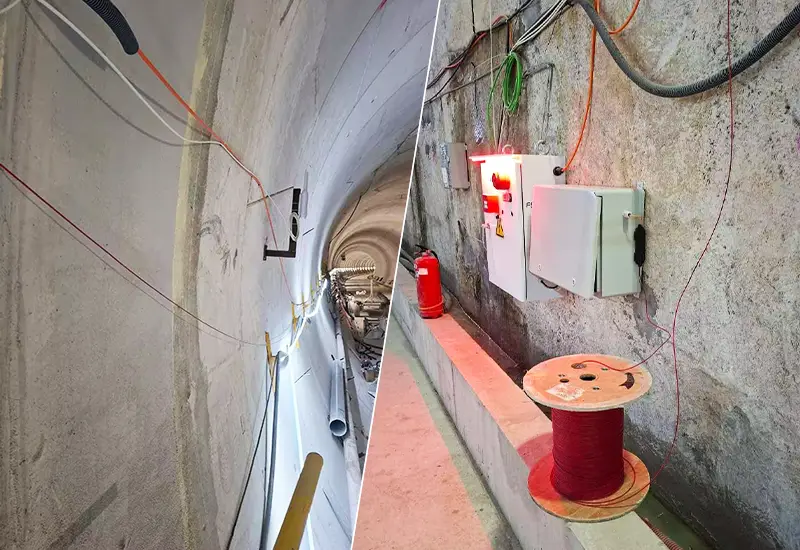
Early Fire Detection for Power Cable Tunnels & Utility Tunnels
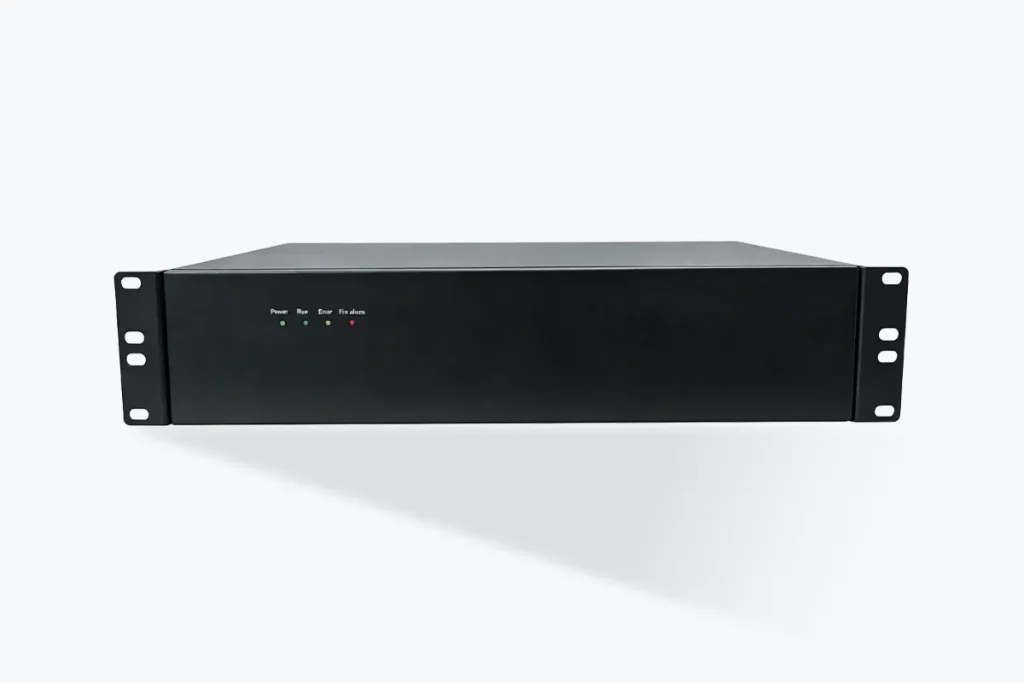
Powered by Distributed Temperature Sensing (DTS) —— Continuous Monitoring for Power Cable Tunnels, Cable Corridors, and Utility Tunnels.
- Real-time Temperature Detection
- Full-length Continuous Monitoring
- Reliable in Harsh & Enclosed Environments
Full-Scenario Integrated Perimeter Security Solution
One-stop solution from detection to management and control. Gato integrates multiple technologies with the SAM300 platform, covering video access, upper-level system integration, and Google Maps visualization.
- SAM300 Unified Management Platform: Centralized access and unified command for Guangtuo’s full range of perimeter security products.
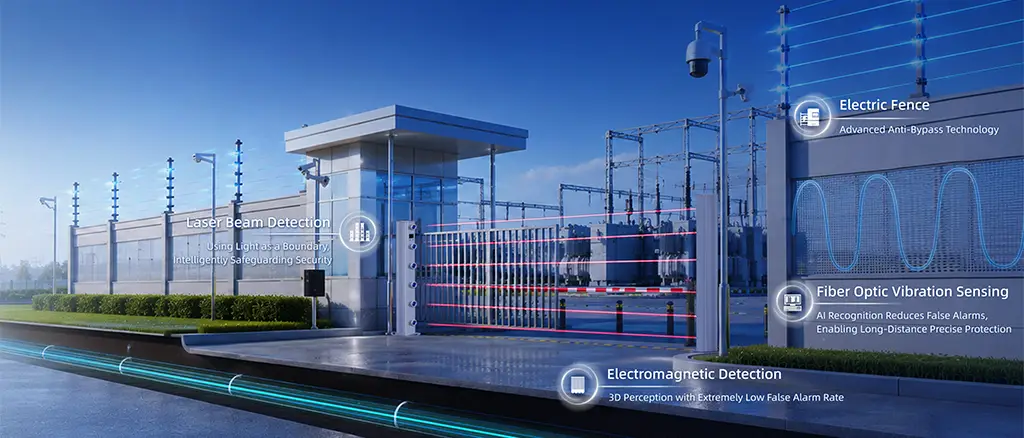
- Multi-Technology Layered Protection: DAS fiber optic system,Super-Array buried sensors, laser beams, and electric fence .
- Video System Compatibility: SDK integration with Hikvision and Dahua; RTSP/ONVIF standard protocols for expanded compatibility with more brands.
- Upper-Level Platform Ready: Compatible with Milestone XProtect.
- Google Maps Visualization: Zone-based map display and precise alarm positioning.
Industry
Tailored Security for Every Industry
A trusted partner in intelligent perimeter security!
Whether you operate in transportation, manufacturing, energy, or border control, Gato provides advanced security solutions to protect critical assets, ensure operational safety, and deliver real-time monitoring for your facility or infrastructure.
Oil & Gas Facilities
Remote locations, explosive environments, and strong EMI make traditional systems unreliable. Gato provides intrinsically safe passive detection, zero spark risk, vibration–temperature dual sensing, and multi-layer security.
Pipeline Monitoring
Rugged terrain and buried pipelines create blind spots for manual inspection. Gato enables precise intrusion localization, real-time alerts for excavation and leakage risks, and full-route monitoring on one platform.
Airport Perimeters
Long fences, uneven terrain, and vegetation often trigger false alarms. Gato’s ultra-low false alarm algorithms deliver accurate intrusion detection with video linkage for rapid verification.
Transportation
Railways and highways span long open areas where protection and rapid response are difficult to balance. Gato provides flexible deployment with instant intrusion localization and real-time video tracking.
Industrial Parks
Complex boundaries, busy entrances, and valuable assets make industrial parks difficult to protect. Gato enables accurate intrusion detection, alarm zoning, and fast video verification across large sites.
Solar Farms
Long perimeters and remote locations make solar farms vulnerable to theft and damage. Gato provides 24/7 perimeter monitoring, precise alarm location, and reliable outdoor protection.
Products
Detection Technologies
Gato offers a comprehensive range of perimeter security products, encompassing technologies ranging from covert underground surveillance to long-range detection, designed to meet the most demanding security requirements.
Fiber Optic Intrusion Detection (DAS)
Passive fiber detects climbing and digging vibrations, while AI locates intrusions for long-range, all-weather, zero-power perimeter sensing.
Fiber Optic Temperature Detection (DTS)
Standard fiber provides zero-power, long-range temperature monitoring. Raman backscatter analysis delivers real-time thermal profiles and fast abnormal heat detection.
Buried Cable Detection
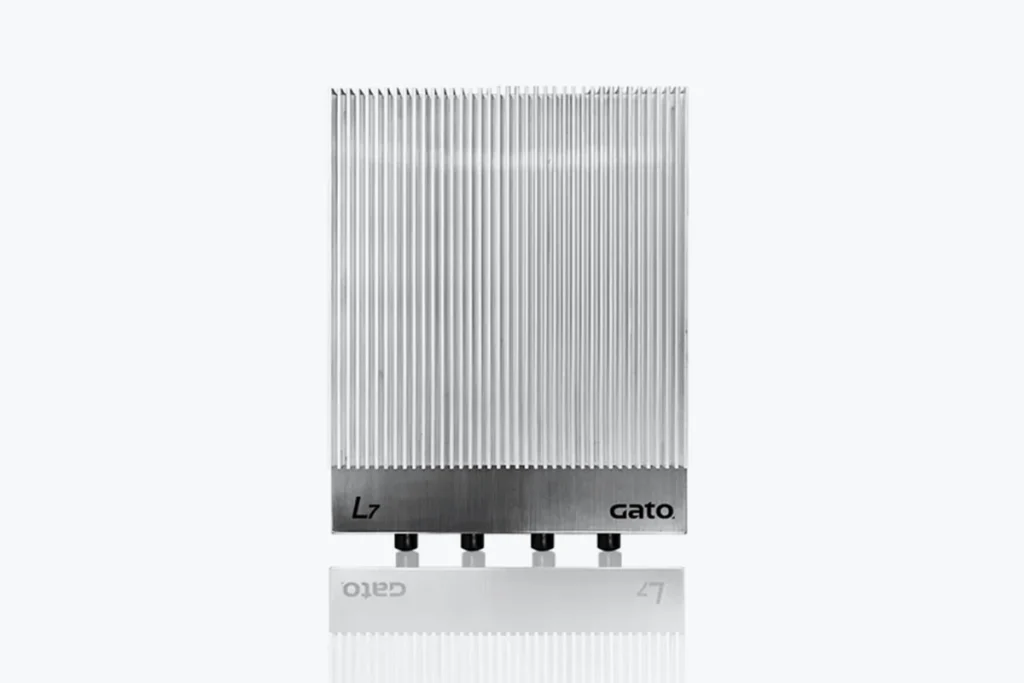
Buried electromagnetic cable creates an invisible zone, detecting personnel and vehicle intrusion for concealed, all-weather perimeter protection.
Laser Beam Intrusion Detection
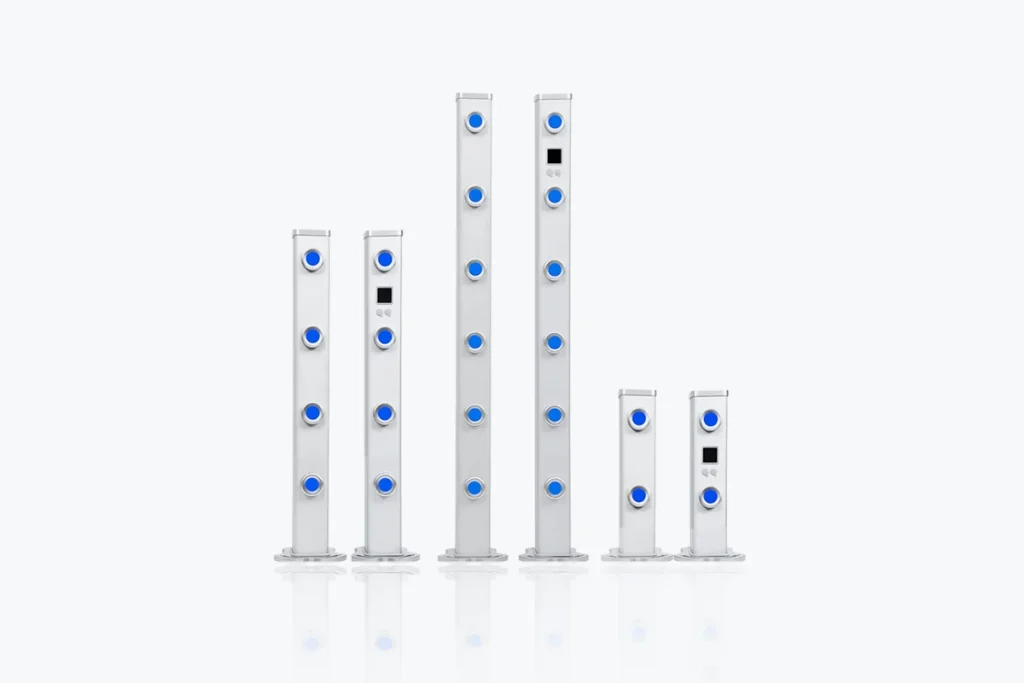
Laser beams secure boundaries or corridors, triggering instant alerts while multi-beam arrays reduce nuisance alarms.
Advantages
Why Choose Us
We deliver innovative, reliable, and high-quality perimeter security solutions, backed by advanced R&D, strict quality control, and efficient production capabilities.
Low False Alarm Performance
Advanced algorithms accurately distinguish real intrusions from environmental interference, maintaining extremely low false alarm and missed alarm rates in complex scenarios.
Multi-Layer Coverage
Linear perimeters, area protection, and 3D spatial detection can be flexibly combined to build a zero-blind-spot defense system.
In-House R&D and Manufacturing
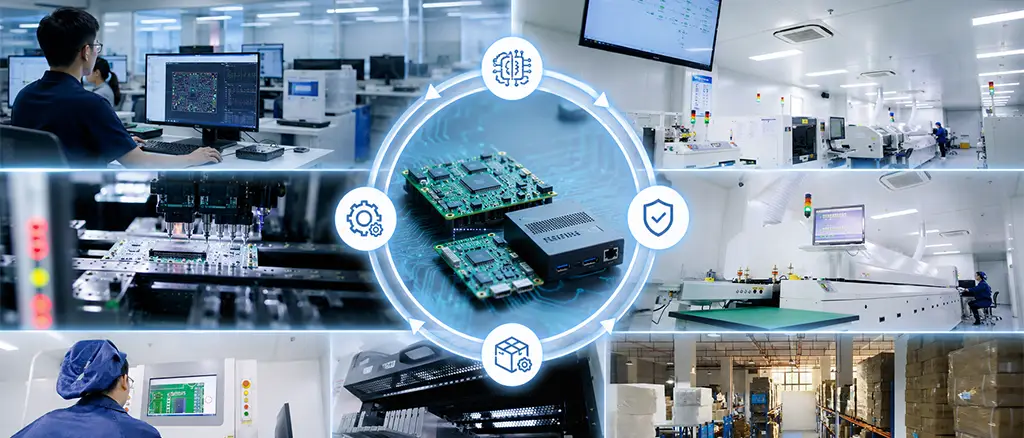
2600㎡ factory with proprietary algorithms and hardware design, ensuring full-process quality control and reliable delivery.
Global Compliance Certification
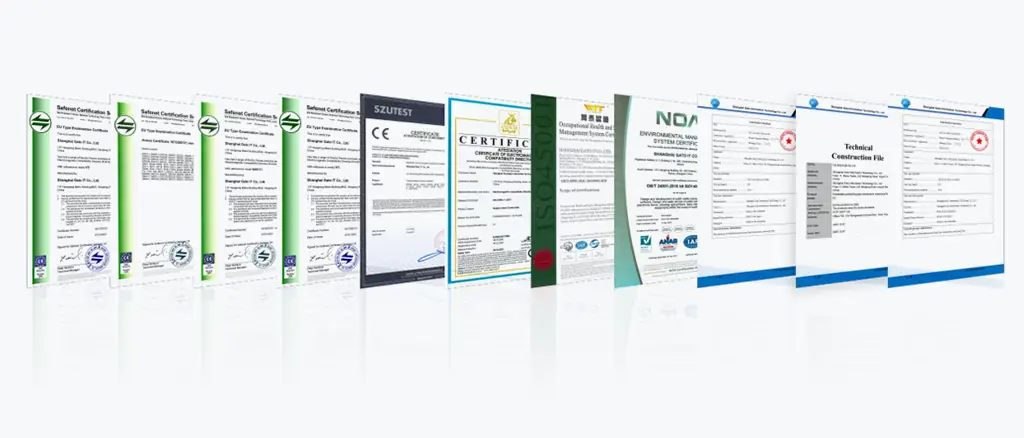
Certified with 3C, CE, RoHS, ISO9001, and regional standards, meeting international market requirements and supporting global project deployment.
Proven Across Industries
Widely deployed in rail transit, airports, power utilities, oil & gas, prisons, and border protection with solutions tailored to diverse scenarios.
Market
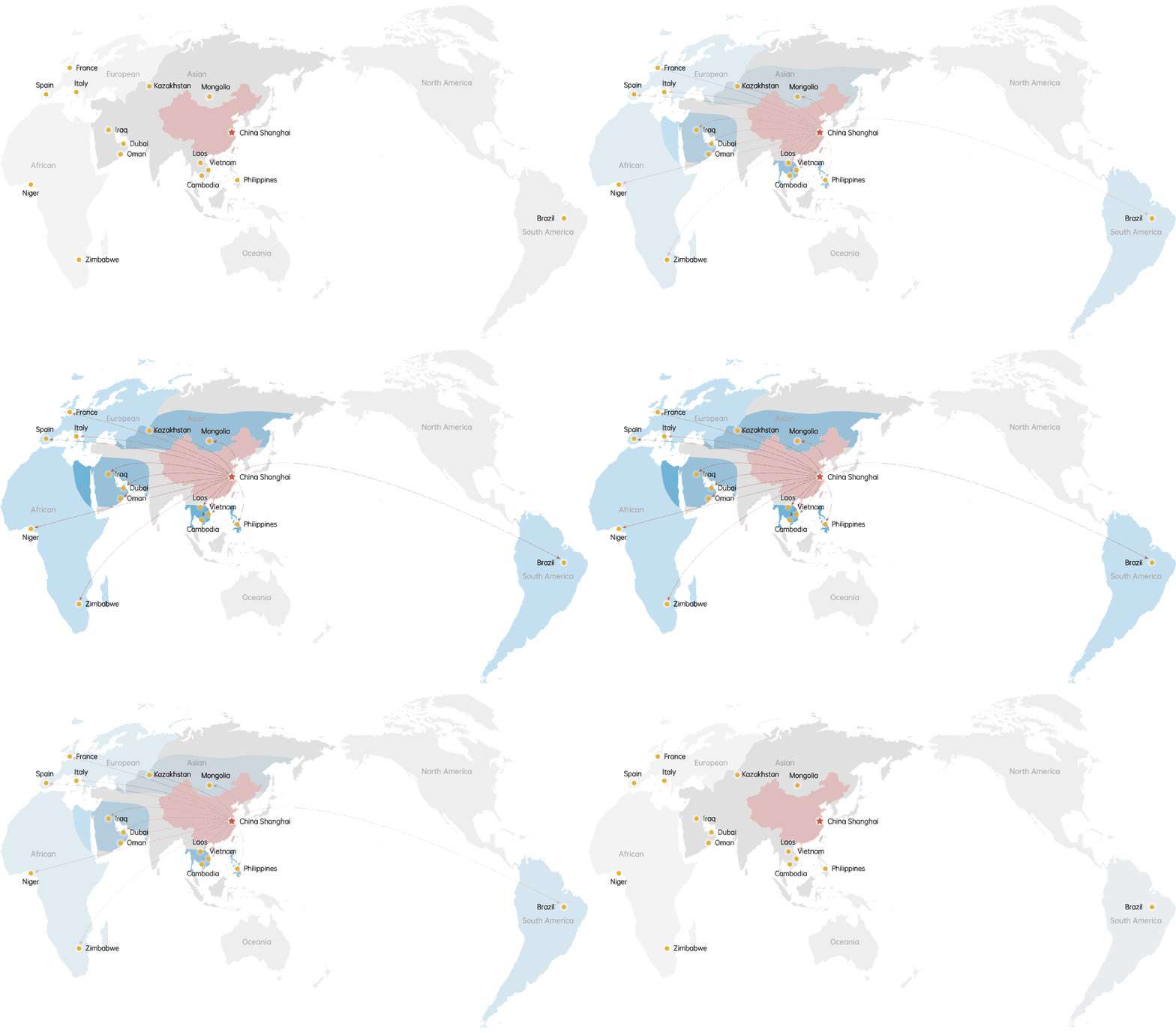
Global Business Layout
- Europe: France, Spain, Italy
- Southeast Asia: Cambodia, Vietnam, Laos, Philippines
- Central Asia: Kazakhstan, Mongolia
- East Asia: China
- Middle East: Dubai (UAE), Iraq, Oman
- South America: Brazil
- Africa: Niger, Zimbabwe
Cases
Case Highlights: Safety & Efficiency
Europe – Spain
Solar Farm Temperature Monitoring
Project Background
A Spanish clean energy service provider manages wind and solar assets, with a digital platform connected to over 300 solar stations. As operations expanded, the client required precise on-site temperature monitoring to improve equipment safety and generation efficiency.
Solution
Our distributed fiber optic temperature sensing system was deployed to provide real-time thermal monitoring, early warning, and intelligent O&M support for solar power stations.
Strategic Project Value
This project expands fiber optic temperature sensing in new energy applications, supports preventive thermal management, and validates our solution for photovoltaic and energy storage deployments across Spain and Southern Europe.
Europe – France
Tunnel Temperature Monitoring
Project Background
A French tunnel engineering service provider with over 20 years of infrastructure experience required an intelligent upgrade to replace manual fire alarm systems with real-time remote monitoring.
Solution
We deployed a distributed fiber optic temperature sensing system for continuous tunnel monitoring, remote supervision, and early fire detection.
Strategic Project Value
This project upgraded manual inspection to 7×24 intelligent monitoring, validated performance in European-standard infrastructure, and built reference experience for rail transit, energy tunnels, and critical facilities.
Niger
Zinder Oil Refinery Perimeter Security
Project Background
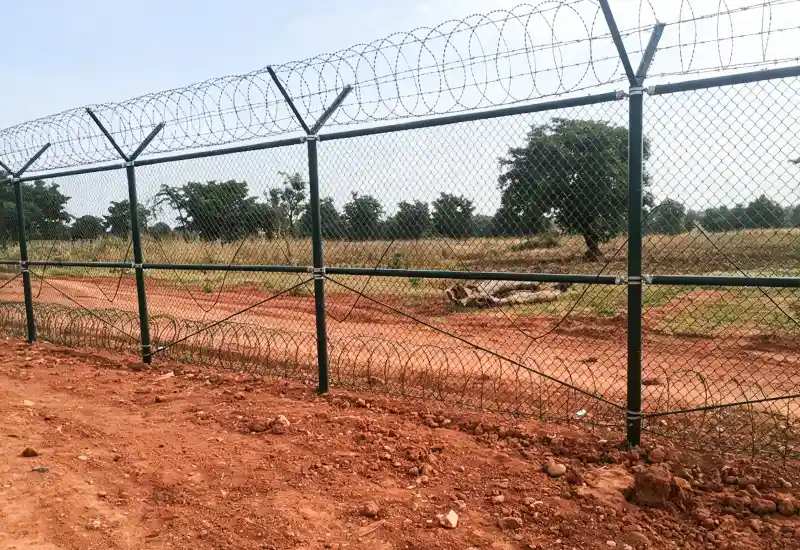
Zinder Oil Refinery needed reliable desert perimeter protection, as heat, sandstorms, and limited access made traditional systems costly to maintain.
Solution
Gato deployed about 15 km of armored F7 sensing fiber on the refinery fences, delivering passive long-range vibration detection, precise intrusion localization, and reduced infrastructure requirements.
Strategic Project Value
The project achieved stable operation with zero false alarms in wind and sandstorms, proving fiber optic sensing for harsh oil & gas sites and scalable perimeter security for energy facilities.
Latest Blogs
Security Technology Insights
Large-scale infrastructure featuring extended boundaries, underground spaces and remote regions faces risks arising from security blind zones, which necessitates uninterrupted safety protection. Conventional monitoring systems are prone to monitoring gaps. In contrast, DAS technology enables seamless fiber sensing, precise spatial positioning and holistic security coverage. Extend Perimeter Coverage by Deploying Distributed Fiber Sensing Replacing point-based monitoring with continuous distributed acoustic sensing expands coverage and reduces security gaps across large perimeter areas. Using optical fiber as a distributed sensor enables continuous vibration detection, helping protect areas beyond traditional monitoring limitations. This deployment method is especially suitable for: Industrial factory boundaries Railway corridors Pipeline routes Energy transmission infrastructure Large restricted zones When abnormal vibration occurs, such as climbing, cutting, digging, or unauthorized movement, the distributed acoustic sensing analyzes signal changes and identifies potential intrusion activities. Security Method Detection Coverage Limitation CCTV Monitoring Fixed visual areas Cannot cover hidden or distant zones Point Intrusion Sensors Specific detection points Coverage gaps between devices DAS Fiber Sensing Continuous monitoring route Suitable for large linear areas In large-scale projects, extending monitoring coverage often brings greater benefits than simply installing extra detectors. DAS forms a persistent monitoring layer and avoids coverage gaps stemming from long distances and varied terrain. Eliminate Hidden Area Risks Through Flexible Fiber Installation Methods Various types of security blind zones call for differentiated deployment strategies. Uniform installation layouts are not applicable to factory perimeters, underground pipelines and railway alignments. By adjusting fiber cabling schemes in accordance with monitored surroundings, DAS technology mitigates potential risks within concealed regions. Deploy Buried Fiber Cable to Protect Underground Blind Spots Monitoring underground assets remains difficult, owing to the inability of standard visual systems to observe underground activities directly. Fiber-optic cables buried underground are adopted in buried cable intrusion detection systems to sense vibration changes generated by: Unauthorized excavation Digging activities Cable damage attempts External interference This approach is suitable for: Power cable corridors Communication cable routes Pipeline protection Restricted underground areas Install Fiber Detection on Fences to Protect Boundary Weak Points Industrial sites usually rely on physical fences as their initial line of defense. Still, failure to rapidly identify climbing, cutting or forced trespassing activities will render fences vulnerable to security breaches. Fence intrusion detection systems combine fiber sensing technology with perimeter infrastructures. The system senses vibration fluctuations generated by: Fence climbing Metal cutting Structural impact Forced entry attempts Typical applications include: Power substations Manufacturing plants Warehouses Security-restricted facilities Apply Linear Fiber Monitoring for Long-Distance Infrastructure Some assets extend across several kilometers and cannot rely on traditional fixed-point monitoring. Fiber optic intrusion detection systems based on DAS technology are suitable for: Railway boundaries Oil and gas pipelines Energy corridors Large outdoor facilities Installation Method Blind Spot Addressed Typical Application Buried Fiber Detection Underground hidden areas Pipeline, cable protection Fence Fiber Detection Boundary weak points Factory perimeter Linear Fiber Monitoring Remote long-distance areas Railway, energy infrastructure The adoption of suitable installation methods significantly impacts DAS detection capability. Carefully arranged fiber paths deliver continuous protection to critical regions. Improve Event Location Accuracy to Reduce Response Blind Spots Security blind spots include unknown alarm locations, causing longer investigations and slower responses during intrusion events. DAS technology improves event positioning by analyzing fiber vibrations and identifying abnormal activity locations accurately. This allows operators to quickly identify: The affected perimeter section The distance from the control point The potential risk area For example, in a pipeline protection project, a DAS system can help locate the section where excavation vibration appears. Security personnel can inspect the specific area instead of checking the entire pipeline route. Security Process Traditional Method DAS-Based Method Detect Event Alarm from fixed sensor Distributed vibration analysis Find Location Manual inspection Fiber-based event positioning Response Action Wider search area Targeted investigation Reduce Detection Gaps Through Multi-Layer Security Integration Since individual equipment can only satisfy specific security needs, diverse technologies must be integrated to construct a full-function security system. DAS is capable of large-scale perimeter sensing. Meanwhile, CCTV, VMS and access control platforms enhance incident confirmation and accelerate response procedures. A typical workflow includes: Step 1: DAS detects abnormal vibration. Step 2: The system identifies the event location. Step 3: CCTV automatically displays the related area. Step 4: Security personnel verify and respond. Integrated Technology Security Function Blind Spot Reduction Effect DAS Long-distance intrusion detection Covers large unattended areas CCTV Visual confirmation Reduces uncertainty after alarms Laser Beam Detection Entrance protection Covers fixed access points Access Control Identity verification Controls authorized entry For example, a laser beam intrusion detection system may protect gates and entrances, while DAS protects the wider perimeter area. Combining both technologies prevents gaps between different security zones. Customize DAS Deployment Based on Site Risk Distribution Facilities are subject to distinct risk patterns. Standard security designs cannot guarantee optimal protection as critical regions, installation environments and operational requirements differ from site to site. Customized DAS systems need to be planned matching site structures and security objectives. Energy Facilities Vast outdoor regions and isolated equipment areas are typical components of energy infrastructure. Recommended measures: Deploy buried fiber sensing around cable routes Monitor remote perimeter sections continuously Integrate alarms with control centers Industrial Facilities Protection is required for manufacturing zones, storage areas and outer boundaries within industrial premises. Recommended measures: Combine fence intrusion detection with DAS Add CCTV verification Create multiple security zones Railway and Transportation Infrastructure Extensive linear infrastructures are distributed along railway routes and require persistent surveillance. Recommended measures: Deploy fiber along restricted routes Monitor unauthorized access points Integrate with centralized management platforms Pipeline Systems Many pipeline routes stretch across isolated regions, where routine manual patrols encounter substantial obstacles. Recommended measures: Install buried fiber monitoring Detect excavation activities Provide accurate event location Application Recommended DAS Configuration Industrial Plant Fence fiber + CCTV integration Pipeline Buried fiber monitoring Railway Linear fiber sensing Energy Facility Perimeter + underground protection A customized design ensures that DAS technology is applied where it creates the highest security value instead of simply increasing equipment quantity. Build a Complete Perimeter Protection Architecture with DAS Single detection devices are
Distributed Temperature Sensing leverages optical fibers to implement uninterrupted monitoring, enabling infrastructure projects to precisely identify overheating, failures and anomalous temperature conditions. Tailored DTS solutions are applicable to pipelines, tunnels and power systems. Combined with security technologies, they deliver dependable protection within complicated infrastructure surroundings. Applicable Infrastructure of Distributed Temperature Sensing Three core features are identified for infrastructure applicable to distributed temperature sensing monitoring. Long Monitoring Distance For extensive facilities stretching over multiple kilometers, traditional point-type sensors face obstacles in layout and routine upkeep. Utilizing a single optical fiber sensing path, DTS achieves continuous temperature surveillance and delivers precise location information. Critical Equipment Protection Subjected to sustained loads, power cables, pipelines, tunnels and industrial equipment are susceptible to hidden defects. Slight temperature changes are capable of detecting potential malfunctions and overheating risks, enabling early identification of anomalies before physical damage appears. High Safety Requirements Transportation networks, energy facilities, and industrial plants require early warning systems to identify abnormal temperature conditions quickly, helping prevent equipment failures, safety incidents, and costly operational interruptions. Oil & Gas Pipeline Monitoring Projects Oil and gas pipelines run through underground routes, remote territories, industrial zones and offshore settings. Continuous temperature surveillance plays a vital role in securing operational dependability. DTS detects abnormal temperature fluctuations and supports operators in identifying leakage, structural damage and insulation problems. When matched with buried pipeline intrusion detection functions, it delivers better pipeline protection. Project Requirement DTS Configuration Long-distance pipeline monitoring Distributed temperature sensing cable based on optical fiber Underground pipeline protection Buried fiber optic installation Remote pipeline routes Long-range continuous monitoring Combined security protection DTS + Buried Cable Intrusion Detection System Power Transmission and Substation Projects Overheating has a tight correlation with cable ageing, overload and equipment operating status, which makes dependable temperature monitoring a necessity for power transmission facilities. Continuous heat generation from high-voltage cables within underground tunnels, cable trenches and substations introduces potential threats, possibly shortening service lifespan and endangering operational security. By tracking temperature profiles along cable routes, DTS enables the localization of abnormal areas. When combined with tailor-made systems, it supports centralized control and improves maintenance efficiency. Railway and Metro Infrastructure To enhance the safety of daily operations, railway and metro systems need stable temperature surveillance covering tunnels, cable trenches, station premises and equipment zones. Equipped with fiber optic sensing cables, DTS can realize monitoring of lengthy tunnel stretches. It achieves fast identification of abnormal heat and can be combined with fence intrusion detection systems to strengthen security defense. Application Area Monitoring Purpose Recommended Solution Metro tunnel Fire and overheating detection DTS fiber sensing system Cable corridor Cable temperature monitoring Sensing cable utilizing optical fiber Railway boundary Intrusion monitoring Fence Intrusion Detection System Equipment area Local temperature analysis Custom DTS integration Tunnel and Underground Infrastructure Projects Constrained ventilation and intricate environments prevail in highway tunnels, comprehensive utility tunnels, mining roadways and other underground installations, imposing requirements for dependable temperature monitoring technologies. Electrical malfunctions, vehicle ignition incidents, overheated machinery or poor ventilation are likely to induce abnormal temperature distributions, posing latent threats to normal operation and overall safety. Capable of achieving full-scale continuous monitoring inside tunnels, DTS optimizes spatial coverage. It supports flexible configuration and can work alongside fiber-optic intrusion detection systems to upgrade underground safety protection capabilities. Data Center and Critical Facility Protection Data centers and critical facilities require stable environments because electronic equipment generates continuous heat, creating potential risks. DTS monitors temperature changes across cable trays, power areas, and battery systems, supporting preventive maintenance and centralized management. Facility Area Main Risk DTS Function Cable tray Cable overheating Continuous temperature monitoring Battery room Thermal abnormality Early temperature warning Power room Equipment overheating Hotspot identification Technical area Environmental change Temperature trend analysis Photovoltaic Farms and Renewable Energy Installations Widely distributed equipment over broad geographical ranges calls for robust monitoring approaches in large renewable energy developments. Solar farms accommodate photovoltaic assemblies, underground cabling, inverter facilities and energy storage units, where DTS serves to capture abnormal temperature signatures. Flexible custom DTS setups cater to cable pathways and energy installations. Integration with perimeter intrusion detection systems enables comprehensive on-site safety protection. Industrial Plants and Chemical Facilities Industrial sites are equipped with complicated production systems, pipelines, storage facilities and high-temperature devices that need continuous thermal surveillance. Suited for harsh environments, DTS eliminates troubles brought by electromagnetic interference. Customized arrangements can be implemented for pipelines, equipment and key safety industrial zones. Custom Item Available Options Fiber Cable Structure Standard / Armored / Protective coating Installation Method Buried / Attached / Ducted installation Monitoring Distance Short-distance to large-scale coverage System Integration Control center / Security platform Ports, Airports and Large Perimeter Infrastructure Ports, airports and transit hubs include restricted areas, underground utilities, power systems and essential facilities requiring full-scale monitoring. Combined with laser sensors and perimeter intrusion detection systems, DTS delivers an integrated protection mechanism to tackle temperature-related risks and unauthorised entry. System Main Function Distributed Temperature Sensing Temperature abnormality monitoring Fiber Optic Intrusion Detection System Vibration and intrusion detection Laser Beam Intrusion Detection System Open-area boundary protection Perimeter Intrusion Detection System Centralized security management Customized DTS Solutions for Various Infrastructure Scenarios Technical conditions vary among different infrastructure assets, which means a universal DTS setup cannot accommodate varied application scenarios. For instance, pipeline monitoring emphasizes long-range sensing capability and underground protection, while data center applications focus on high sensitivity and seamless system integration. Tailored DTS schemes are adjustable in light of: Fiber optic cable structure Monitoring distance Installation environment Temperature measurement range Alarm response requirements Integration with existing security systems Combined with Gato Security solutions, DTS supports linkage with multiple detection systems, such as fiber-optic monitoring, buried cable sensors, fence detectors, laser beam sensors and perimeter intrusion detection modules. When rationally configured, the DTS system can adapt to diverse infrastructure conditions and offer continuous surveillance, accurate location tracking and convenient capacity expansion. Distributed Temperature Sensing supports long-distance infrastructure monitoring with early warning and accurate positioning, while Custom integration with fiber optic security technologies improves operational safety and asset protection.
Optical-fiber Distributed Acoustic Sensing (DAS) perceives vibrational and acoustic disturbances, supporting round-the-clock monitoring for security protection and infrastructure supervision. Installation precision dominates DAS operating effects, calling for appropriate fiber types, layout schemes, environmental compatibility and bespoke sensing configurations. Fiber Cable Selection and Structural Requirements The sensing fiber structure determines vibration transmission efficiency, signal stability, and long-term performance under different operating conditions. Outdoor security applications require durable cables to withstand moisture, impact, pressure, and environmental changes while maintaining detection sensitivity. Key cable selection factors include: Fiber mechanical strength Protective layer structure Waterproof capability Bending resistance Environmental adaptability Fiber Cable Type Suitable Application Main Installation Requirement Standard Optical Fiber Indoor and controlled environments Requires stable conditions with limited mechanical stress Armored Fiber Cable Outdoor security and industrial areas Provides additional protection against impact and pressure Buried Sensing Cable Underground monitoring applications Requires stable underground positioning and protection Custom Fiber Cable Complex project environments Designed according to site conditions and detection targets Optimized cable construction sustains consistent propagation of acoustic signals over the entire monitoring span and prevents performance degradation in long-run applications. Installation Route Planning and Monitoring Coverage The sensing routing constitutes a core component of DAS installation. As the fiber serves as the sensing medium, the laying path defines the practical detection coverage. Prior to on-site deployment, engineers are required to analyze: Protected area structure Potential intrusion paths Required detection zones Maintenance accessibility Existing security infrastructure For perimeter intrusion monitoring, sensing optical fibers are arranged along major boundaries such as enclosures, restricted areas, underground passages and essential facilities. Underground deployment also demands careful route design. Fibers laid alongside protected infrastructure must maintain reliable contact with the adjacent environment. Application Scenario Recommended Installation Method Key Design Focus Buried Cable Protection Underground fiber deployment Maintain stable soil contact and accurate positioning Fence Security Fiber fixed along fence structure Capture vibration from intrusion activities Pipeline Monitoring Fiber installed near pipeline route Detect external disturbance and abnormal activity Large Perimeter Protection Zone-based fiber layout Improve alarm management efficiency A well-designed fiber route reduces blind areas and allows the DAS system to provide more accurate event location information. Underground Installation Requirements For buried applications, installation depth, soil conditions, and cable protection directly influence DAS sensitivity. A sensing cable installed underground receives vibration signals through surrounding materials. If the installation environment changes significantly, such as loose soil, uneven pressure, or unstable cable positioning, signal consistency may be affected. The underground installation process should consider: Suitable burial depth Stable cable placement Soil characteristics Protection against external damage Future maintenance requirements A buried cable intrusion detection system requires careful balance between protection level and signal sensitivity. Excessive protection layers may reduce vibration transmission, while insufficient protection may shorten cable service life. Fiber Fixing Method and Mechanical Stability When deployed on surface structures such as security fences, fiber fixing modes exert direct influence on vibration propagation efficiency. Insufficient tension of optical cables triggers signal instability, yet over-tension brings mechanical stress. Hence, installation design must reconcile physical stability and detection sensitivity. In fence intrusion detection systems, installation normally focuses on: Consistent fixing points Stable cable contact Weather-resistant protection Easy maintenance access The installation scheme of optical cables needs to match the structure of monitored assets. Diversified fence materials, elevations and layouts demand customized deployment tactics. Well-fastened sensing cables deliver more consistent vibration detection and support the system to identify authentic intrusion activities amid environmental interferences. Optical Transmission and Communication Configuration Reliable optical signal propagation between sensing fibers and processing devices underpins DAS performance. Fiber attenuation, connector quality, transmission distance and equipment layout should all be evaluated in installation. Optimized system tuning is necessary for long-range monitoring, given that weakened optical signals impair detection sensitivity at remote sensing segments. Core installation aspects involve: Fiber length planning Connection quality control Equipment placement Communication compatibility Data transmission stability Within extensive security deployments, DAS can be incorporated into established systems such as CCTV, access authorization and alarm management platforms. Reasonable communication architecture facilitates swift forwarding of detected events to the central control hub. Environmental Adaptation Requirements Outdoor DAS facilities are subject to diverse environmental variations. Temperature changes, rain, wind, vehicle vibration and industrial disturbances may affect signal analysis. System architecture should be customized to suit on-site working conditions. Environment Main Influence Installation Consideration Outdoor Fence Area Weather exposure and wind vibration Use durable cable protection and stable fixing Underground Area Soil movement and pressure changes Maintain consistent cable positioning Industrial Facilities Equipment vibration interference Optimize signal analysis parameters Transportation Areas Vehicle and mechanical vibration Adjust detection zones and filtering For perimeter security systems, environmental evaluation is highly critical. DAS should distinguish significant acoustic events rather than triggering responses to every vibration stimulus. Integration with Fiber Optic Security Systems Current security engineering often demands multi-level detection mechanisms. Distributed Acoustic Sensing utilizing optical fiber can be fused with other technologies to construct a thorough monitoring system. Available mainstream integration approaches include: Fiber optic intrusion detection systems CCTV verification systems Access control platforms Central alarm management systems Laser beam intrusion detection systems Through customized security integration, DAS technology can be well aligned with available infrastructure and operational requirements. Custom Configuration Requirements for Different Applications On-site installation circumstances differ across projects. Generic DAS setups cannot consistently achieve ideal performance under complicated conditions. Items available for customization include: Fiber cable selection Monitoring distance Installation method Detection zones Communication interface Platform integration For airports, energy facilities, industrial sites, and large perimeter protection projects, customized design helps achieve better coverage and long-term stability. Project Requirement Custom Configuration Direction Long Monitoring Distance Optimize sensing range and fiber deployment Complex Boundary Layout Design customized sensing routes Harsh Outdoor Environment Apply reinforced cable structures Multiple Security Zones Configure independent detection areas Existing Security System Customize communication and integration methods A properly customized DAS installation ensures that sensing performance matches the site’s actual security requirements. Multiple engineering parameters govern DAS installation such as fiber construction, routing layout, fixing techniques, signal transmission and system integration. Proper installation guarantees dependable detection and accurate event localization for perimeter and