L7 Buried Electromagnetic Intrusion Detection System
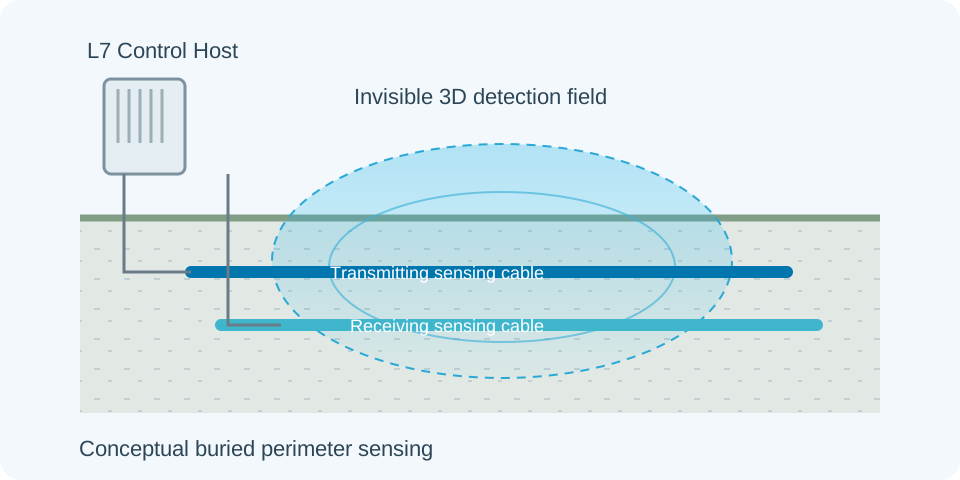
L7 uses buried sensing cables to create an invisible 3D electromagnetic field for perimeter intrusion detection and precise localization.
Core Advantages
Invisible 3D Perimeter Protection
Paired buried cables create an invisible 3D detection field to detect crossing, jumping, and digging.
High-Precision Intrusion Localization
Pinpoints intrusions to within ±0.5 m and supports camera preset positioning for faster verification.
Adaptive Interference Filtering
Uses adaptive thresholds and signal analysis to reduce interference from rain, plants, and small animals.
High-Speed Target Detection
Detects moving targets at up to 30 m/s (108 km/h), including fast-moving vehicles.
How It Works
01 / TECHNOLOGY
Electromagnetic Sensing
Paired sensing cables create an invisible 3D detection field.
L7 uses a controller and paired transmitting and receiving sensing cables to create an invisible three-dimensional electromagnetic field. When an intruder enters the detection field, the resulting disturbance is analyzed to identify and locate the intrusion event.
02 / BURIED INSTALLATION
Buried Sensing
Concealed underground cables detect perimeter intrusion activity.
Installed underground along the perimeter, the paired sensing cables provide concealed detection of intrusion activities such as crossing, jumping, and digging. Each L7 host supports a detection distance of up to 800 m, with installation layout and detection settings tailored to site conditions.
03 / WALL INSTALLATION
Wall-Embedded Sensing
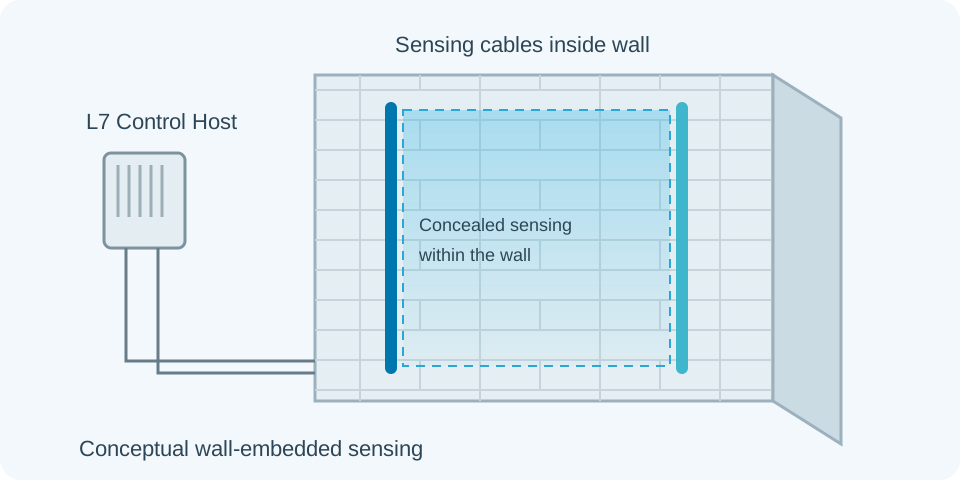
Cables embedded inside walls provide concealed intrusion detection.
The sensing cables can also be embedded inside walls to detect intrusion activity without visible perimeter sensors. Cable placement and detection settings are designed according to the wall structure, surrounding materials, and site protection requirements.
System Components

L7 Control Host
The L7 control host generates electromagnetic sensing signals, analyzes disturbances in the detection field, calculates intrusion locations, and outputs alarms. Ethernet and RS485 interfaces support connections to compatible security management and alarm systems.

Paired Electromagnetic Sensing Cables
The transmitting and receiving cables work together to form the three-dimensional detection field along the protected boundary. Cable placement, spacing, and installation methods are selected according to the site layout and detection requirements.

Management Software & Integration
L7 supports software-defined detection zones, whitelist configuration, and entry-direction recognition. Alarm location data can be shared with compatible management platforms and video surveillance systems to support camera preset linkage and alarm verification.
Case Studies

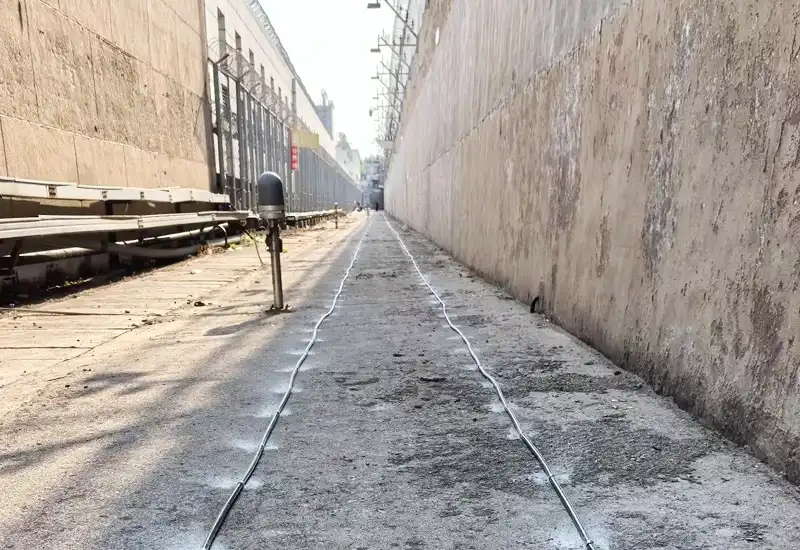
Correctional Facility Perimeter Protection
Project Challenge
A correctional facility required reliable perimeter intrusion detection during long-term outdoor operation, including periods of heavy seasonal rainfall.
L7 Solution
The L7 electromagnetic sensing system was deployed for a six-month field evaluation, during which it experienced multiple heavy summer rainstorms.
Project Highlights
The field deployment provided operational evidence of the system's intrusion detection performance under heavy-rain conditions.
Sheshan Lakeside Villa Perimeter, Shanghai
Project Challenge
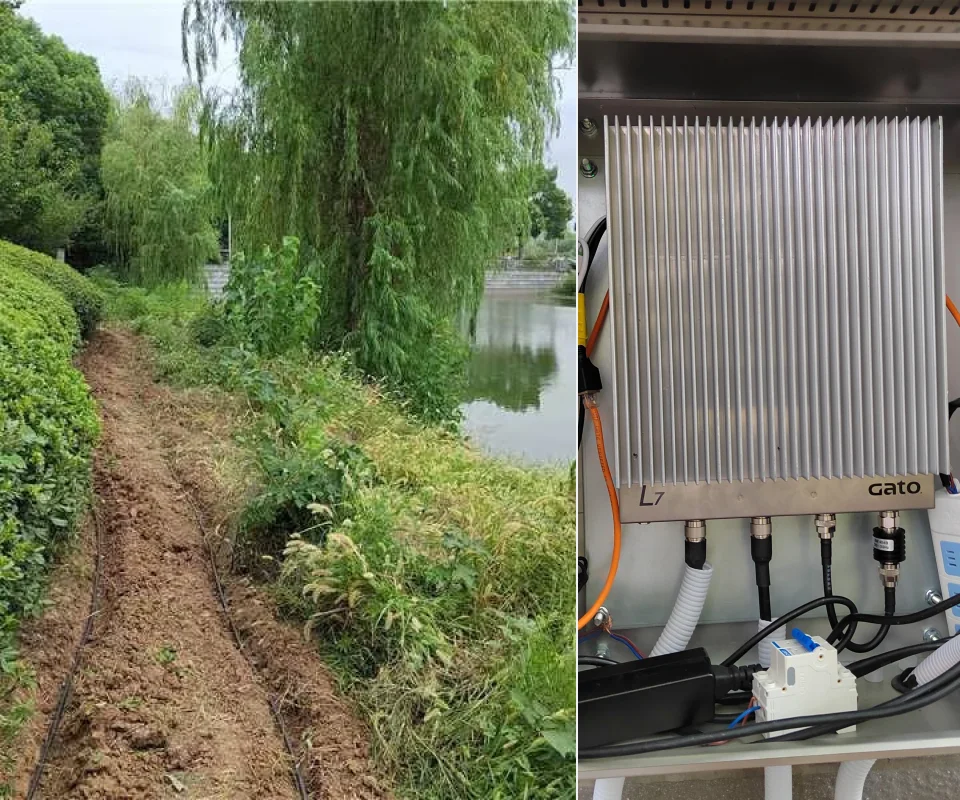
A lakeside residential development in Sheshan, Shanghai, required perimeter intrusion detection along approximately 1,700 m of site boundary. The project also faced a tight delivery schedule and installation requirements specific to the lakeside environment.
L7 Solution
Gato provided a customized electromagnetic sensing cable solution for the lakeside perimeter, including site assessment, system design, installation guidance, and technical training.
Project Highlights
The project combined site-specific cable design with installation support to meet the requirements of a complex residential perimeter.
Frequently Asked Questions
Can L7 be used without a physical perimeter fence?
Yes. L7 creates an invisible detection boundary without requiring a physical fence. It is suitable for sites where concealed protection and landscape preservation are important. However, it detects intrusions rather than physically preventing entry.
What site conditions should be evaluated before installing L7?
Key factors include perimeter layout, soil or wall materials, nearby metal structures, and potential sources of interference. A site assessment helps determine suitable cable placement and detection settings.
Does L7 require on-site calibration after installation?
Yes. On-site calibration helps the system adapt to the installation medium and surrounding environment. The controller can establish detection thresholds based on site conditions to optimize intrusion detection performance.
Can landscaping or construction changes affect L7 performance?
Yes. Significant changes to the installation area, such as excavation or the addition of large metal structures, may affect detection conditions. A technical reassessment is recommended after major site modifications.
How is the right L7 system configuration determined for a project?
System configuration depends on the actual cable route, perimeter layout, installation conditions, and required protection coverage. Gato's technical team can assess these factors to recommend suitable host quantities and deployment plans.
Secure Your Perimeter Invisibly
Share your perimeter layout and security requirements with Gato's technical team to find the right L7 buried intrusion detection solution for your site.