Fire detection is vital for tunnels, cable trays, conveyor belts, power plants, warehouses, oil and gas facilities, data centers, substations, and industrial sites, where traditional detectors may not work well in long, dusty, humid, hot, or hard-to-access areas.
DTS and LHD cable are two common continuous heat detection solutions. DTS measures temperature along a fiber optic cable, while LHD cable triggers an alarm when heat reaches a preset level.
What Is Distributed Temperature Sensing?
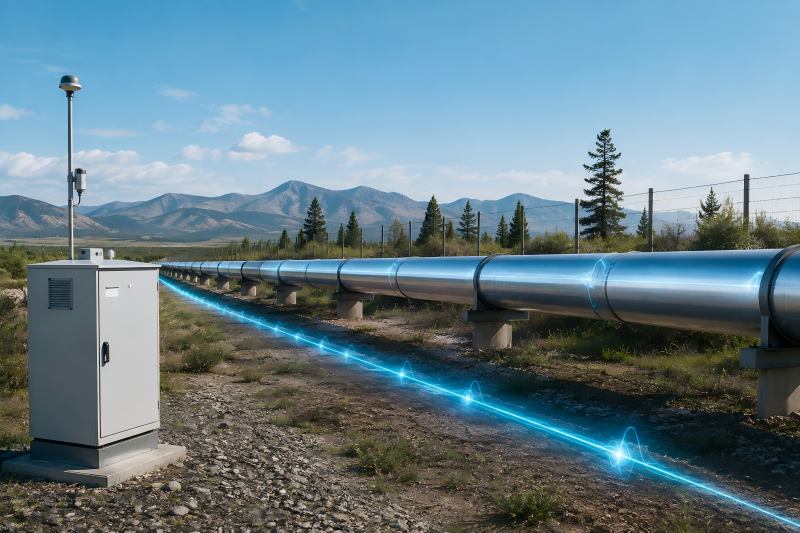
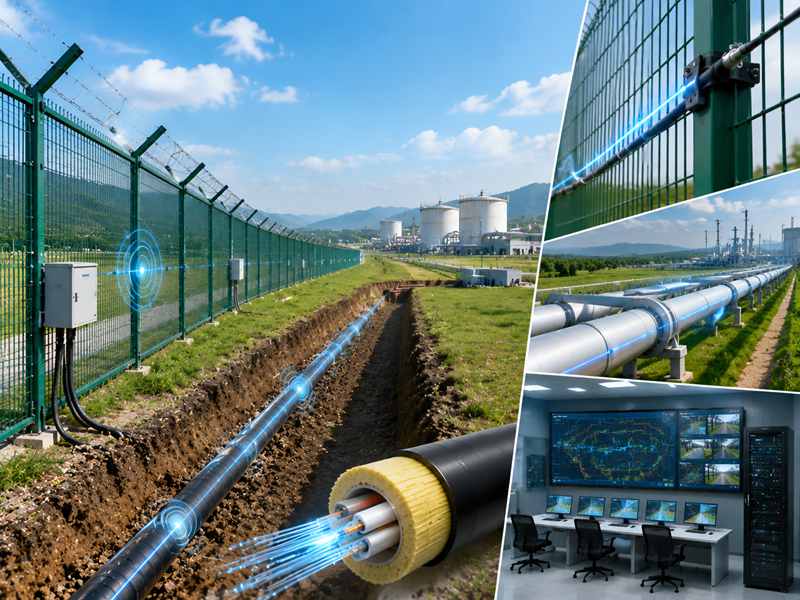
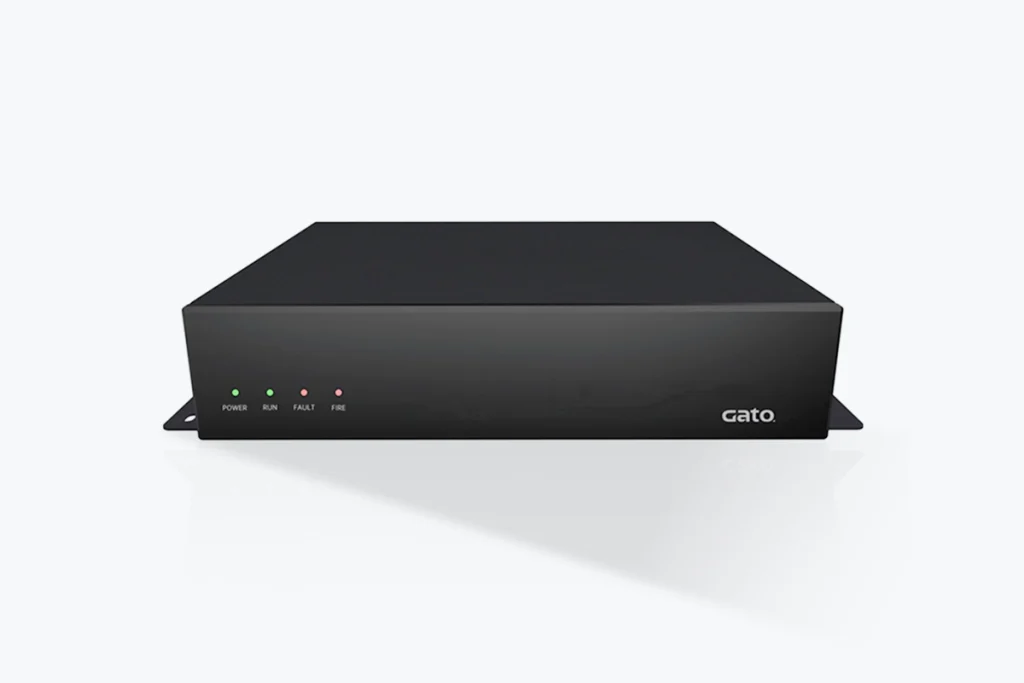
Distributed Temperature Sensing is a fiber optic sensing technology used to measure temperature continuously along an optical fiber cable. Instead of installing many separate temperature sensors, the fiber itself becomes the sensing element.
A DTS system usually includes:
- Fiber optic sensing cable
- DTS host or interrogator
- Alarm software
- Temperature monitoring platform
- Communication interface
- Optional integration with fire alarm systems, SCADA, or security platforms
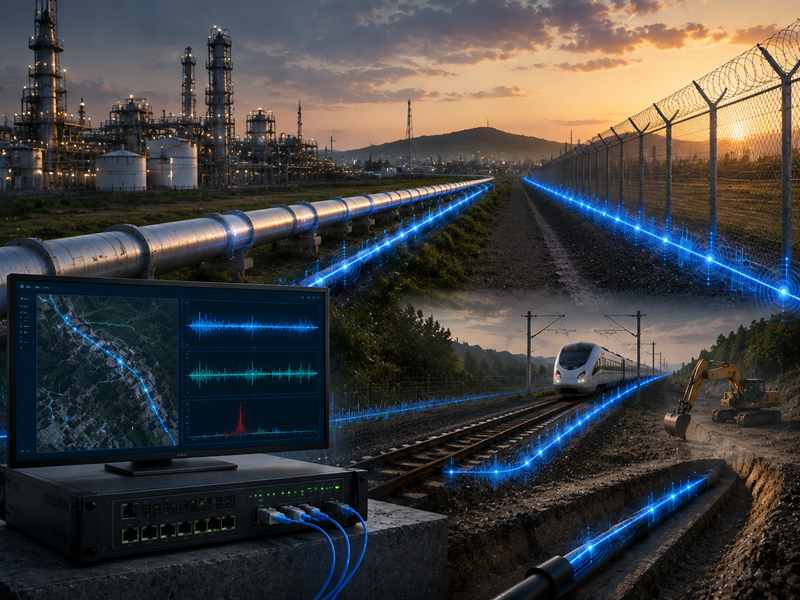
The DTS host sends laser pulses into the optical fiber and analyzes the backscattered light signal. Based on the signal response, the system calculates temperature at different positions along the cable. This allows the user to see not only whether there is a fire risk, but also where the temperature is rising and how the temperature is changing over time.
Linear Heat Detection Cable: What Is It?
A fire detection cable that senses unusual heat along its length is called a linear heat detection cable. It is often installed near cable trays, conveyor belts, storage racks, tunnels, machinery, transformers, and other areas where fire may start.
A common digital linear heat detection cable contains two conductors separated by heat-sensitive insulation. When the rated temperature is reached, the insulation changes and allows the conductors to contact each other, creating an alarm condition. In many digital LHD systems, the activated section must be replaced after an alarm because the cable undergoes a physical change.
Linear heat detection cable is popular because it is simple, reliable, and suitable for harsh environments where smoke detectors may not work well.
DTS vs Linear Heat Detection Cable: Basic Comparison
| Item | Distributed Temperature Sensing | Linear Heat Detection Cable |
| Detection principle | Measures temperature along optical fiber | Detects heat when rated alarm temperature is reached |
| Cable type | Fiber optic sensing cable | Heat-sensitive electrical cable |
| Output | Continuous temperature data | Alarm signal |
| Location ability | High location accuracy along cable route | Depends on system design and zoning |
| Alarm type | Temperature threshold, rate-of-rise, temperature trend | Fixed temperature alarm, depending on cable type |
| Reset after alarm | Usually resettable if cable is not damaged | Digital type is often non-resettable after activation |
| Monitoring depth | Real-time temperature profile | Alarm condition only |
| System complexity | Higher | Lower |
| Initial cost | Usually higher | Usually lower |
| Best for | Long-distance monitoring and temperature analysis | Simple fire detection in defined areas |
Key Difference 1: Temperature Measurement vs Heat Alarm
The biggest difference is that DTS measures temperature continuously, while linear heat detection cable usually provides an alarm when a temperature condition is reached.
Linear heat detection cable is more direct. When the cable exceeds its rated temperature, it is intended to sound a fire alarm. It may not provide the same detailed temperature trend as DTS, but it can offer simple and dependable fire alarm detection.
Key Difference 2: Alarm Location Accuracy
DTS has a strong advantage in alarm location. Because it measures temperature at many points along the fiber, it can identify where the temperature abnormality occurs. This is useful in long tunnels, cable corridors, pipelines, conveyor systems, and large industrial sites.
Linear heat detection cable can also support alarm zoning, but location accuracy depends on how the system is divided. If a long LHD cable is installed as one zone, the fire alarm panel may only show that the zone is in alarm. To improve location accuracy, the cable route needs to be divided into shorter zones.
| Location Requirement | Better Choice | Reason |
| Need accurate hot spot position | DTS | Provides distributed location data |
| Only need zone-level fire alarm | LHD cable | Simple and practical |
| Long tunnel or cable corridor | DTS | Easier to locate event quickly |
| Small machine area | LHD cable | Cost-effective and easy to install |
| Large site with many critical points | DTS | Better monitoring and reporting |
Key Difference 3: Early Warning Capability
DTS is suitable for early warning because it can detect temperature rise before the fire reaches a critical stage. Users can set different alarm levels, such as pre-alarm, warning alarm, and fire alarm.
For example:
| Alarm Level | Temperature Behavior | Action |
| Pre-alarm | Slight temperature rise | Operator checks trend |
| Warning | Temperature continues rising | Maintenance team inspects area |
| Fire alarm | Temperature exceeds danger threshold | Emergency response starts |
Linear heat detection cable is usually more focused on confirmed heat detection. It is highly useful when the goal is to trigger a clear fire alarm after the cable reaches a specific activation temperature.
Key Difference 4: Reset and Maintenance
DTS sensing cable is normally reusable if it is not physically damaged by fire, mechanical stress, or extreme heat. Once the temperature returns to normal following an alarm, the system can resume monitoring.
Digital linear heat detection cable is often non-resettable after activation because the heat-sensitive insulation changes permanently. The activated section usually needs replacement. However, there are different LHD technologies, including digital, analog, and resettable types, so the maintenance method depends on the product type.
Advantages of Distributed Temperature Sensing
DTS is often chosen for high-value and long-distance fire detection projects. Its main advantages include:
- Continuous temperature monitoring along the full cable route
- Accurate hot spot location
- Early warning before serious fire development
- Suitable for long-distance applications
- Immune to electromagnetic interference because it uses optical fiber
- Can support multiple alarm levels
- Useful for data analysis and thermal trend monitoring
- Suitable for tunnels, cable trays, pipelines, power cables, and industrial plants
DTS is especially valuable when operators need more than a simple alarm. It helps them understand the temperature development process and make faster decisions.
Advantages of Linear Heat Detection Cable
Linear heat detection cable is widely used because it is simple and reliable. Its main advantages include:
- Lower initial cost compared with many DTS systems
- Simple system structure
- Easy integration with conventional fire alarm panels
- Good performance in dusty, dirty, smoky, or harsh environments
- Suitable for equipment protection and short-to-medium cable routes
- Flexible installation around machinery, cable trays, conveyors, and storage areas
- Clear fire alarm output
When basic fire alarm detection is more important than precise temperature monitoring, LHD cable is a workable option for many industrial settings.
Application Comparison
| Application | DTS | Linear Heat Detection Cable |
| Road tunnels | Very suitable | Suitable for zone-based fire detection |
| Cable tunnels | Very suitable | Suitable |
| Conveyor belts | Suitable | Very suitable |
| Cable trays | Very suitable | Very suitable |
| Data centers | Suitable for cable routes and battery rooms | Suitable for targeted fire detection |
| Oil and gas facilities | Very suitable for long-distance monitoring | Suitable for local fire detection |
| Warehouses | Suitable for high-value areas | Suitable for racks and ceiling zones |
| Power plants | Very suitable | Very suitable |
| Substations | Suitable | Suitable |
| Pipelines | Very suitable | Less common for long-distance temperature profiling |
Cost Comparison
Cost is an important factor when choosing between DTS and linear heat detection cable.
DTS usually has a higher initial investment because it requires a fiber optic interrogator, specialized software, calibration, and system integration. However, for long-distance or high-value projects, DTS may reduce the need for many separate sensors and provide better operational value.
Linear heat detection cable is usually more cost-effective for smaller or simpler fire detection areas. It is often easier to install and connect to existing fire alarm systems.
| Cost Factor | DTS | Linear Heat Detection Cable |
| Initial equipment cost | Higher | Lower |
| Cable cost | Medium to high | Low to medium |
| Installation complexity | Medium to high | Low to medium |
| Maintenance cost | Depends on system and cable damage | Activated cable may need replacement |
| Long-term monitoring value | High | Medium |
| Best investment case | Large and critical sites | Simple and targeted fire detection |
When Should You Choose DTS?
DTS is a better choice when the project requires continuous temperature data, accurate location, and early warning. It is especially useful for long, complex, or high-value environments.
Choose DTS when:
- The protected area is very long.
- Accurate fire location is important.
- Temperature trend monitoring is needed.
- The site requires early warning before fire escalation.
- The environment has strong electromagnetic interference.
- The system needs integration with SCADA or monitoring platforms.
- The project involves tunnels, power cables, pipelines, or critical infrastructure.
When Is Linear Heat Detection Cable the Best Option?
Linear heat detection cable is a better choice when the project needs a simple, reliable, and cost-effective fire detection solution.
Choose LHD cable when:
- The protected area is relatively simple.
- Zone-level alarm is enough.
- Budget is limited.
- The system must connect easily to a fire alarm panel.
- The environment is dusty, dirty, smoky, or humid.
- Fire detection is needed around conveyors, cable trays, machinery, or storage racks.
- Detailed temperature data is not required.
Can DTS and Linear Heat Detection Cable Be Used Together?
Yes. In some high-risk projects, DTS and linear heat detection cable can be used together. DTS can provide early warning and temperature trend monitoring, while LHD cable can provide a simple fixed-temperature alarm.
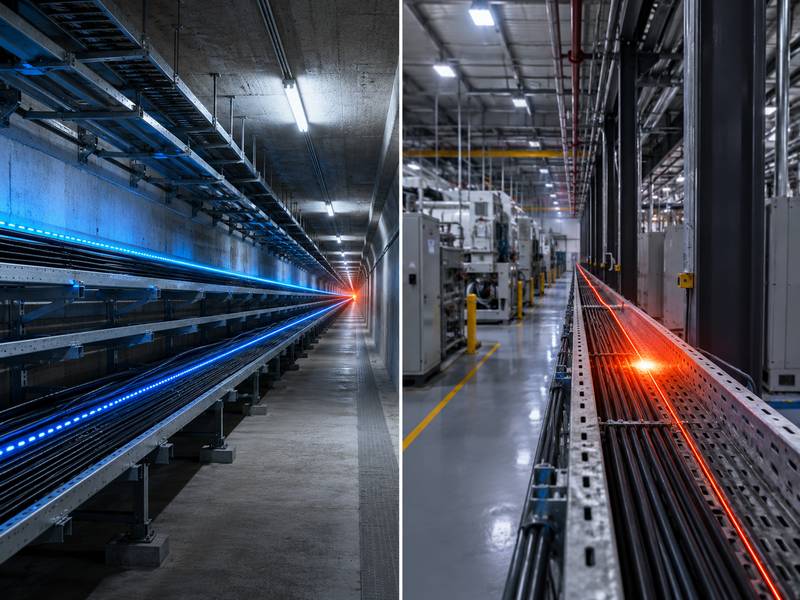
For example, in a power plant cable tunnel, DTS can monitor the full temperature profile along the cable route. In certain high-risk equipment areas, linear heat sensing cables can be deployed as a backup alert system. This combined design improves both early warning and fire alarm reliability.
Selection Checklist
Before choosing between DTS and linear heat detection cable, project owners should consider:
- Monitoring distance
- Required alarm location accuracy
- Required early warning level
- Fire risk level
- Installation environment
- Cable routing conditions
- Integration requirements
- Maintenance ability
- Budget
- Fire code and project specifications
- Need for temperature data and reporting
DTS and LHD cable are both used for fire detection, but they are designed for different needs. DTS is ideal for long-distance, high-value projects that require continuous temperature monitoring, accurate hot spot location, early warning, and thermal trend analysis.
LHD cable is better for simple, reliable, and cost-effective fire alarm detection in cable trays, conveyor belts, warehouses, machinery, and harsh industrial sites. In short, choose DTS for detailed monitoring and precise location, choose LHD cable for practical fire alarm detection, and combine both for stronger protection in high-risk sites.