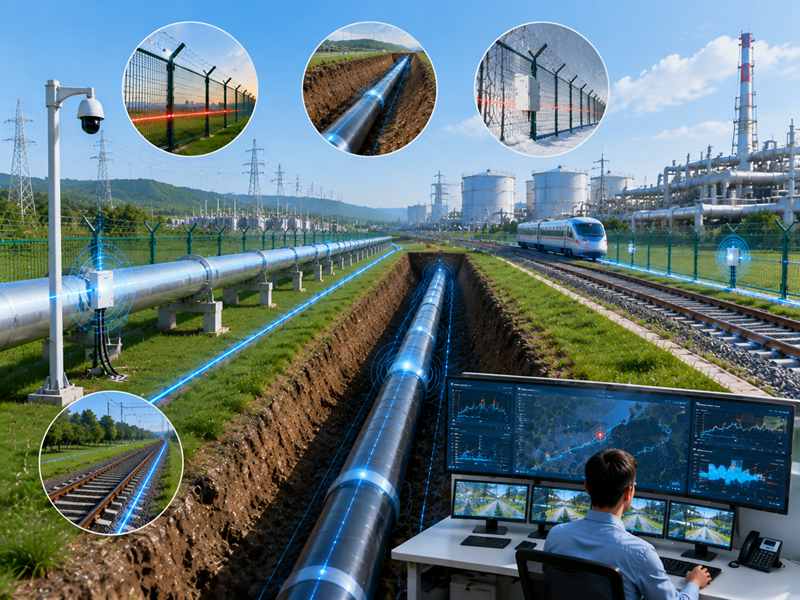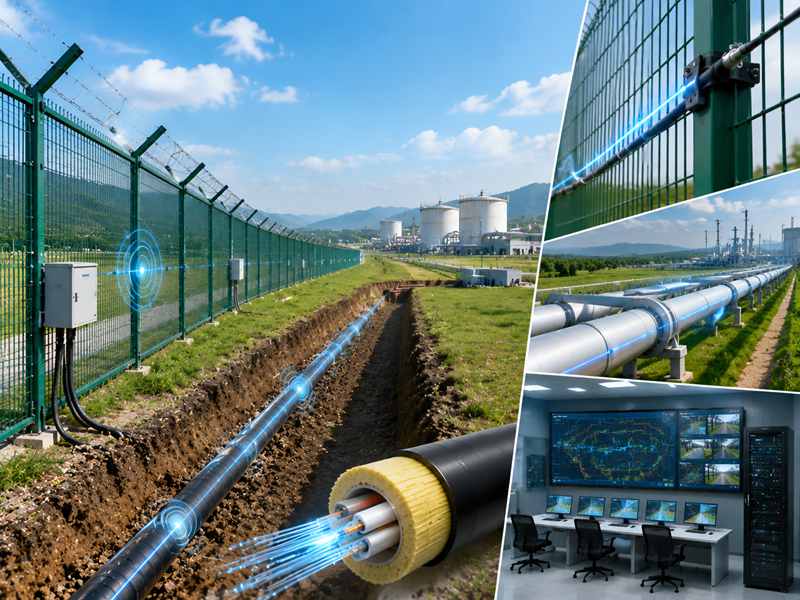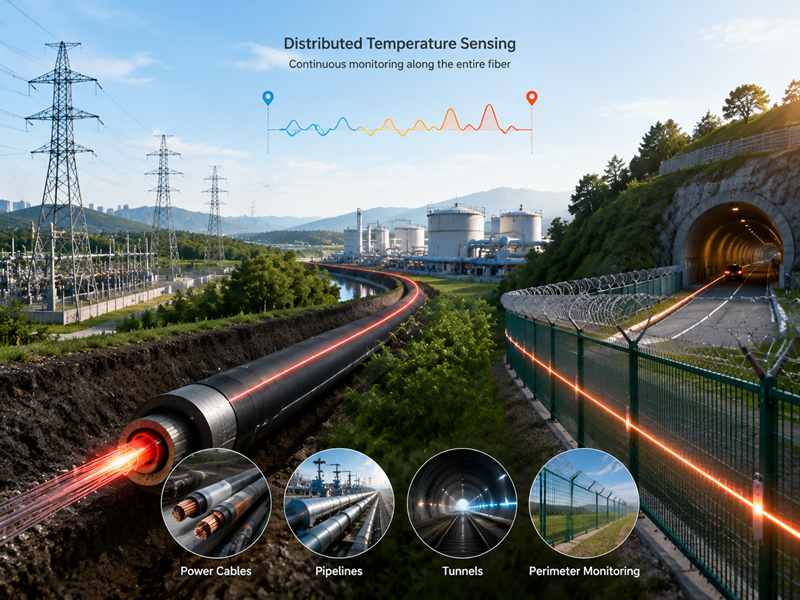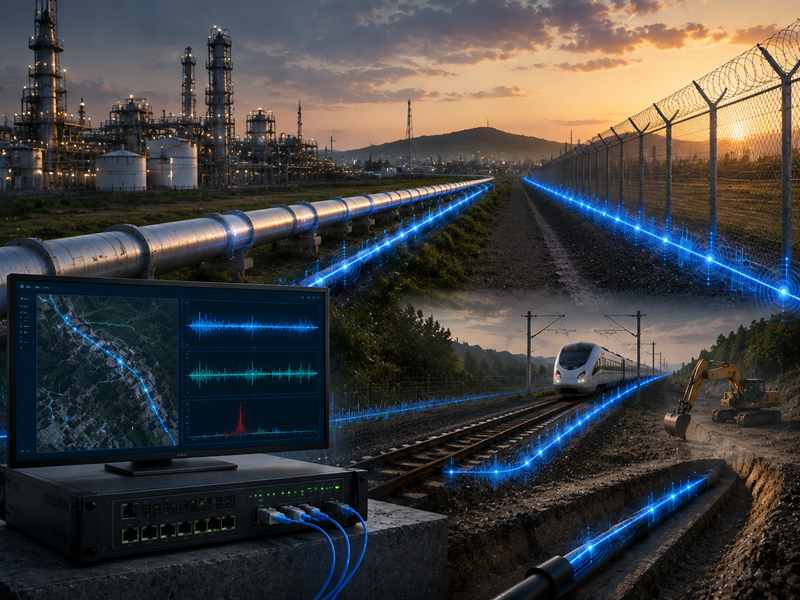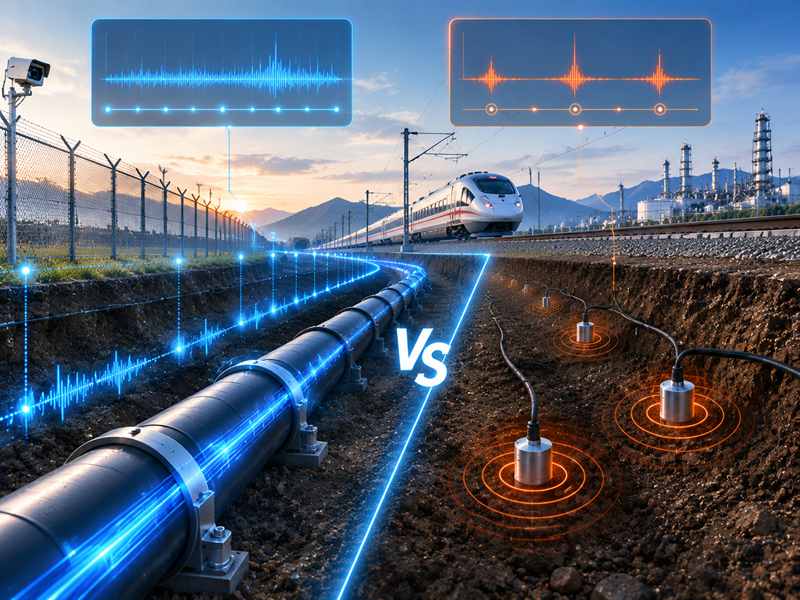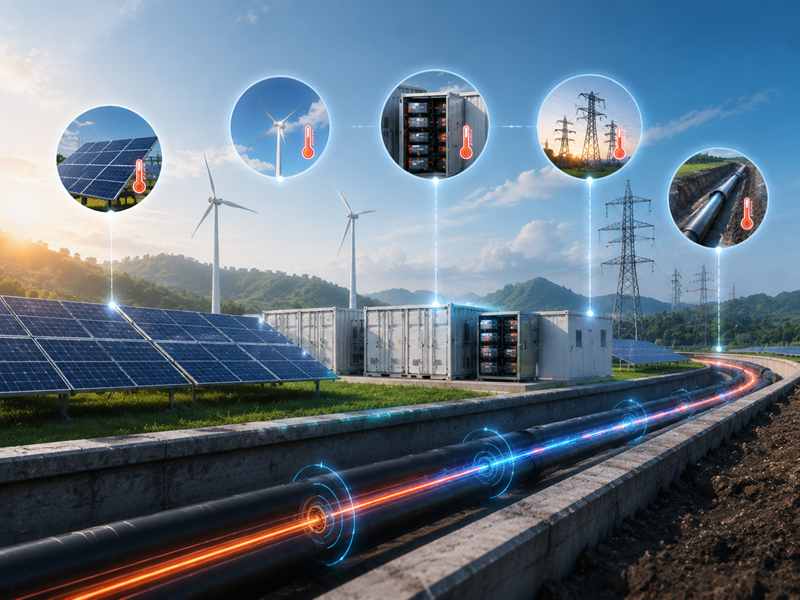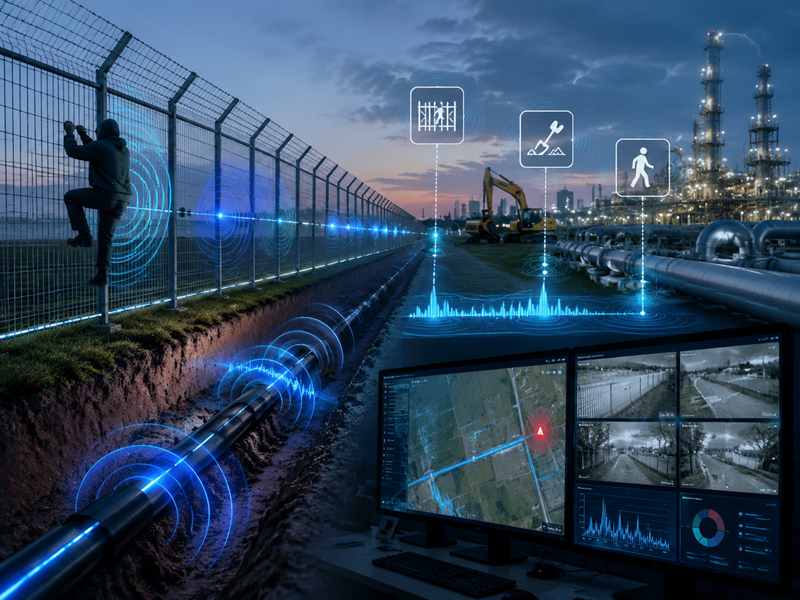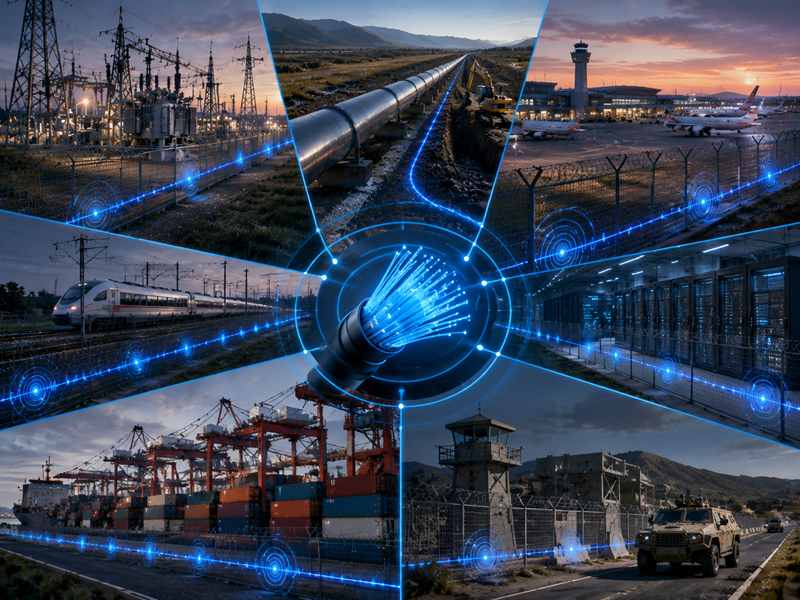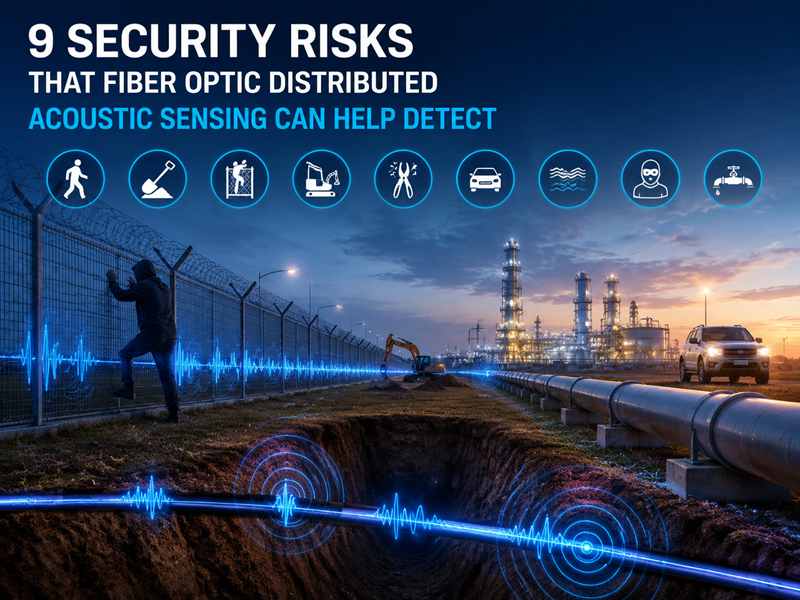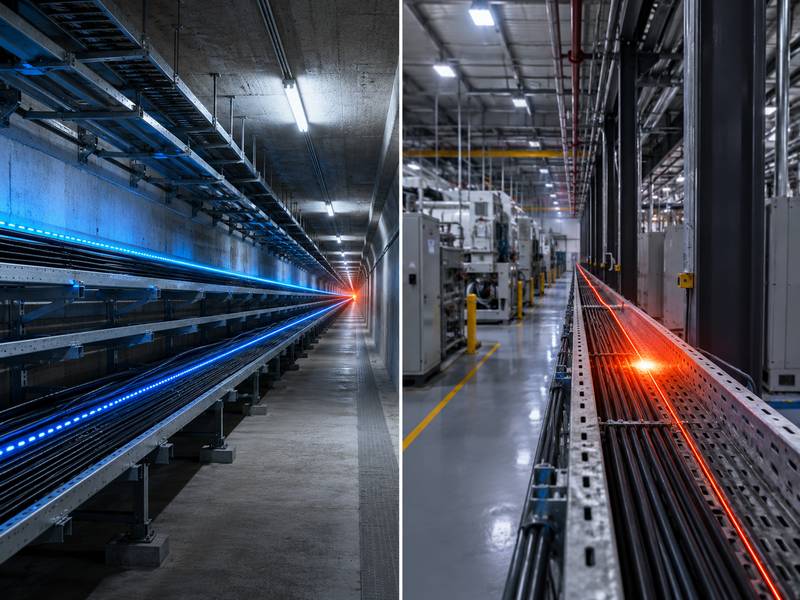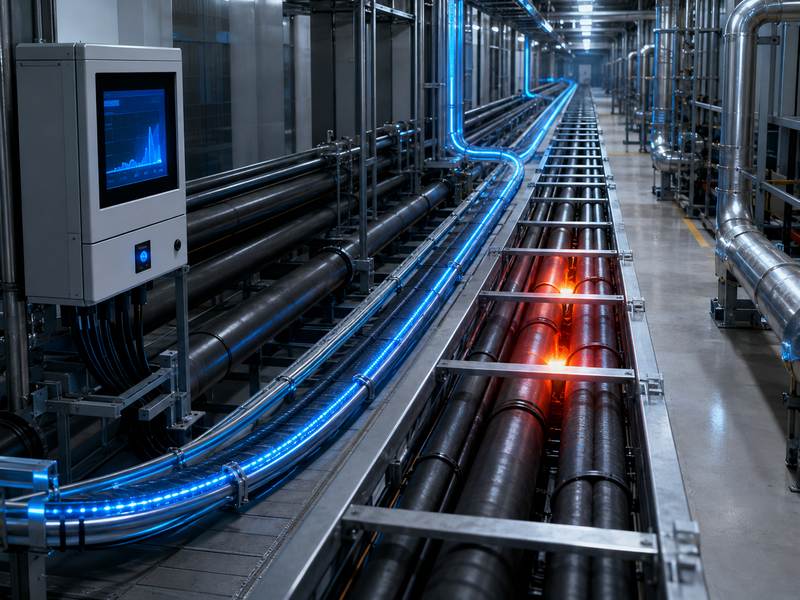
Distributed Temperature Sensing leverages optical fibers to implement uninterrupted monitoring, enabling infrastructure projects to precisely identify overheating, failures and anomalous temperature conditions.
Tailored DTS solutions are applicable to pipelines, tunnels and power systems. Combined with security technologies, they deliver dependable protection within complicated infrastructure surroundings.
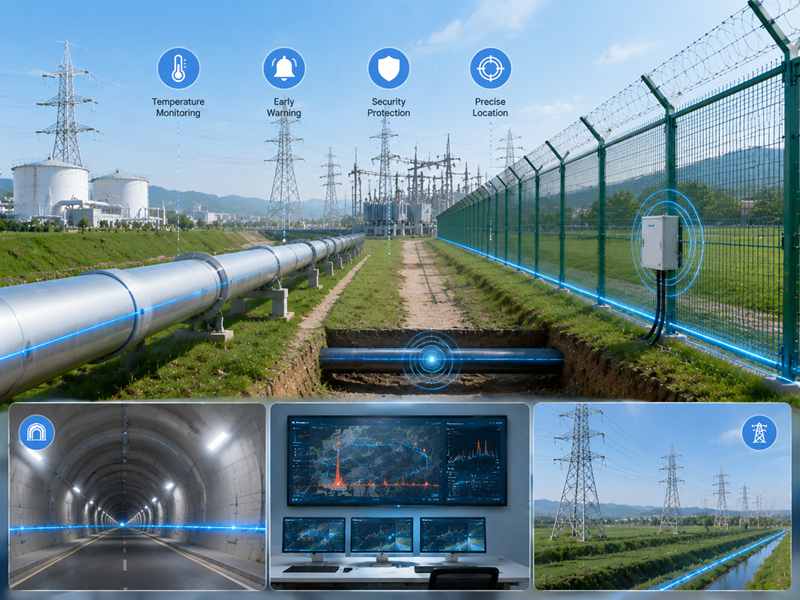
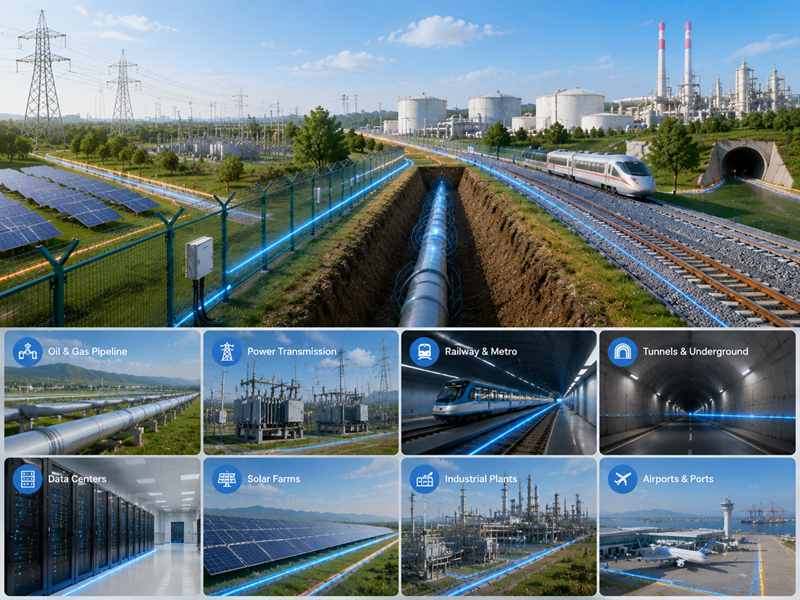
Applicable Infrastructure of Distributed Temperature Sensing
Three core features are identified for infrastructure applicable to distributed temperature sensing monitoring.
Long Monitoring Distance
For extensive facilities stretching over multiple kilometers, traditional point-type sensors face obstacles in layout and routine upkeep. Utilizing a single optical fiber sensing path, DTS achieves continuous temperature surveillance and delivers precise location information.
Critical Equipment Protection
Subjected to sustained loads, power cables, pipelines, tunnels and industrial equipment are susceptible to hidden defects. Slight temperature changes are capable of detecting potential malfunctions and overheating risks, enabling early identification of anomalies before physical damage appears.
High Safety Requirements
Transportation networks, energy facilities, and industrial plants require early warning systems to identify abnormal temperature conditions quickly, helping prevent equipment failures, safety incidents, and costly operational interruptions.
Oil & Gas Pipeline Monitoring Projects
Oil and gas pipelines run through underground routes, remote territories, industrial zones and offshore settings. Continuous temperature surveillance plays a vital role in securing operational dependability.
DTS detects abnormal temperature fluctuations and supports operators in identifying leakage, structural damage and insulation problems. When matched with buried pipeline intrusion detection functions, it delivers better pipeline protection.
| Project Requirement | DTS Configuration |
| Long-distance pipeline monitoring | Distributed temperature sensing cable based on optical fiber |
| Underground pipeline protection | Buried fiber optic installation |
| Remote pipeline routes | Long-range continuous monitoring |
| Combined security protection | DTS + Buried Cable Intrusion Detection System |
Power Transmission and Substation Projects
Overheating has a tight correlation with cable ageing, overload and equipment operating status, which makes dependable temperature monitoring a necessity for power transmission facilities.
Continuous heat generation from high-voltage cables within underground tunnels, cable trenches and substations introduces potential threats, possibly shortening service lifespan and endangering operational security.
By tracking temperature profiles along cable routes, DTS enables the localization of abnormal areas. When combined with tailor-made systems, it supports centralized control and improves maintenance efficiency.
Railway and Metro Infrastructure
To enhance the safety of daily operations, railway and metro systems need stable temperature surveillance covering tunnels, cable trenches, station premises and equipment zones.
Equipped with fiber optic sensing cables, DTS can realize monitoring of lengthy tunnel stretches. It achieves fast identification of abnormal heat and can be combined with fence intrusion detection systems to strengthen security defense.
| Application Area | Monitoring Purpose | Recommended Solution |
| Metro tunnel | Fire and overheating detection | DTS fiber sensing system |
| Cable corridor | Cable temperature monitoring | Sensing cable utilizing optical fiber |
| Railway boundary | Intrusion monitoring | Fence Intrusion Detection System |
| Equipment area | Local temperature analysis | Custom DTS integration |
Tunnel and Underground Infrastructure Projects
Constrained ventilation and intricate environments prevail in highway tunnels, comprehensive utility tunnels, mining roadways and other underground installations, imposing requirements for dependable temperature monitoring technologies.
Electrical malfunctions, vehicle ignition incidents, overheated machinery or poor ventilation are likely to induce abnormal temperature distributions, posing latent threats to normal operation and overall safety.
Capable of achieving full-scale continuous monitoring inside tunnels, DTS optimizes spatial coverage. It supports flexible configuration and can work alongside fiber-optic intrusion detection systems to upgrade underground safety protection capabilities.
Data Center and Critical Facility Protection
Data centers and critical facilities require stable environments because electronic equipment generates continuous heat, creating potential risks.
DTS monitors temperature changes across cable trays, power areas, and battery systems, supporting preventive maintenance and centralized management.
| Facility Area | Main Risk | DTS Function |
| Cable tray | Cable overheating | Continuous temperature monitoring |
| Battery room | Thermal abnormality | Early temperature warning |
| Power room | Equipment overheating | Hotspot identification |
| Technical area | Environmental change | Temperature trend analysis |
Photovoltaic Farms and Renewable Energy Installations
Widely distributed equipment over broad geographical ranges calls for robust monitoring approaches in large renewable energy developments.
Solar farms accommodate photovoltaic assemblies, underground cabling, inverter facilities and energy storage units, where DTS serves to capture abnormal temperature signatures.
Flexible custom DTS setups cater to cable pathways and energy installations. Integration with perimeter intrusion detection systems enables comprehensive on-site safety protection.
Industrial Plants and Chemical Facilities
Industrial sites are equipped with complicated production systems, pipelines, storage facilities and high-temperature devices that need continuous thermal surveillance.
Suited for harsh environments, DTS eliminates troubles brought by electromagnetic interference. Customized arrangements can be implemented for pipelines, equipment and key safety industrial zones.
| Custom Item | Available Options |
| Fiber Cable Structure | Standard / Armored / Protective coating |
| Installation Method | Buried / Attached / Ducted installation |
| Monitoring Distance | Short-distance to large-scale coverage |
| System Integration | Control center / Security platform |
Ports, Airports and Large Perimeter Infrastructure
Ports, airports and transit hubs include restricted areas, underground utilities, power systems and essential facilities requiring full-scale monitoring.
Combined with laser sensors and perimeter intrusion detection systems, DTS delivers an integrated protection mechanism to tackle temperature-related risks and unauthorised entry.
| System | Main Function |
| Distributed Temperature Sensing | Temperature abnormality monitoring |
| Fiber Optic Intrusion Detection System | Vibration and intrusion detection |
| Laser Beam Intrusion Detection System | Open-area boundary protection |
| Perimeter Intrusion Detection System | Centralized security management |
Customized DTS Solutions for Various Infrastructure Scenarios
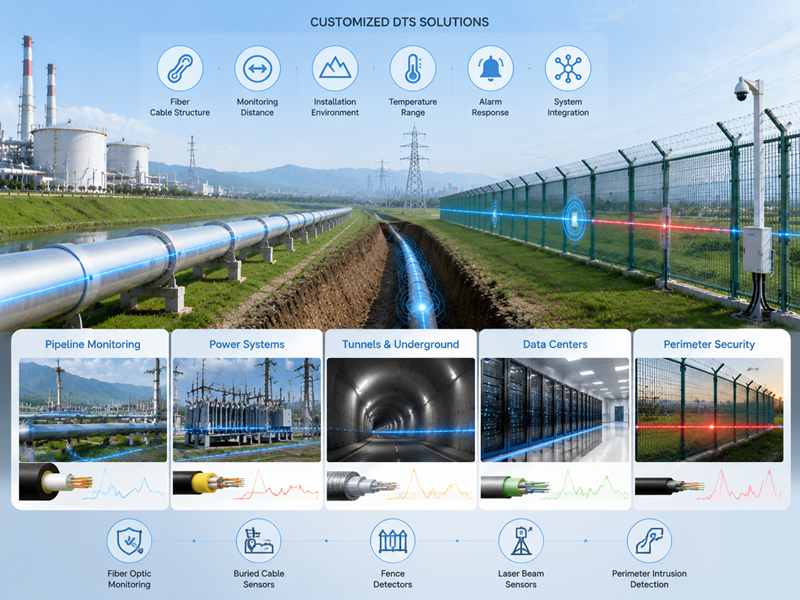
Technical conditions vary among different infrastructure assets, which means a universal DTS setup cannot accommodate varied application scenarios.
For instance, pipeline monitoring emphasizes long-range sensing capability and underground protection, while data center applications focus on high sensitivity and seamless system integration.
Tailored DTS schemes are adjustable in light of:
- Fiber optic cable structure
- Monitoring distance
- Installation environment
- Temperature measurement range
- Alarm response requirements
- Integration with existing security systems
Combined with Gato Security solutions, DTS supports linkage with multiple detection systems, such as fiber-optic monitoring, buried cable sensors, fence detectors, laser beam sensors and perimeter intrusion detection modules.
When rationally configured, the DTS system can adapt to diverse infrastructure conditions and offer continuous surveillance, accurate location tracking and convenient capacity expansion.
Distributed Temperature Sensing supports long-distance infrastructure monitoring with early warning and accurate positioning, while Custom integration with fiber optic security technologies improves operational safety and asset protection.