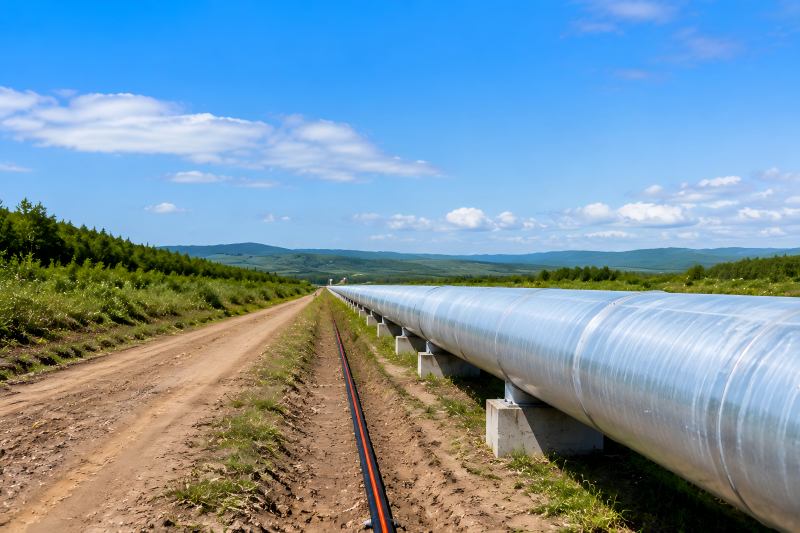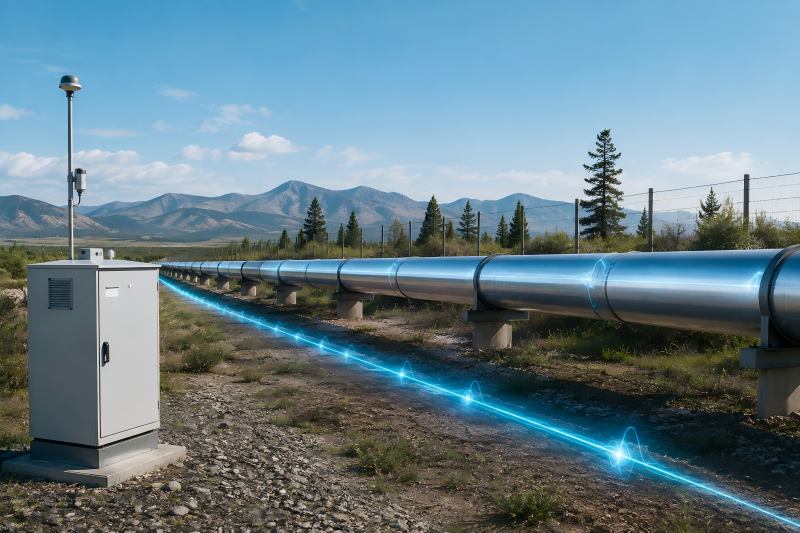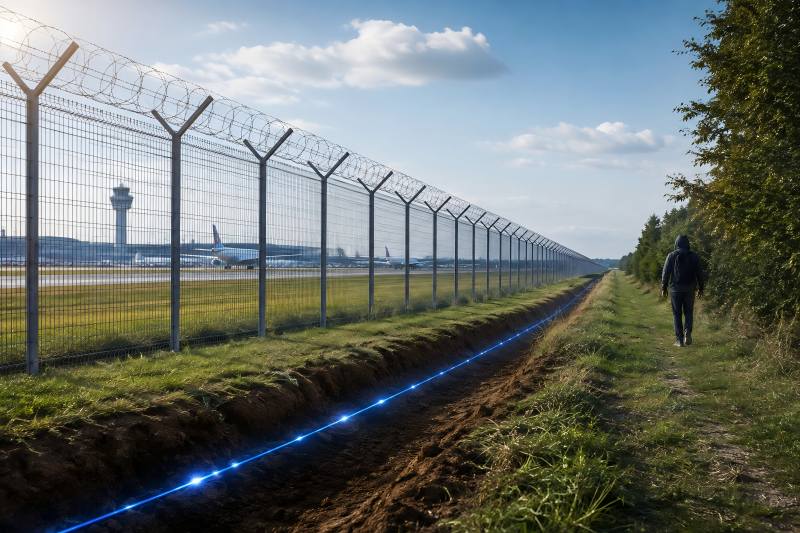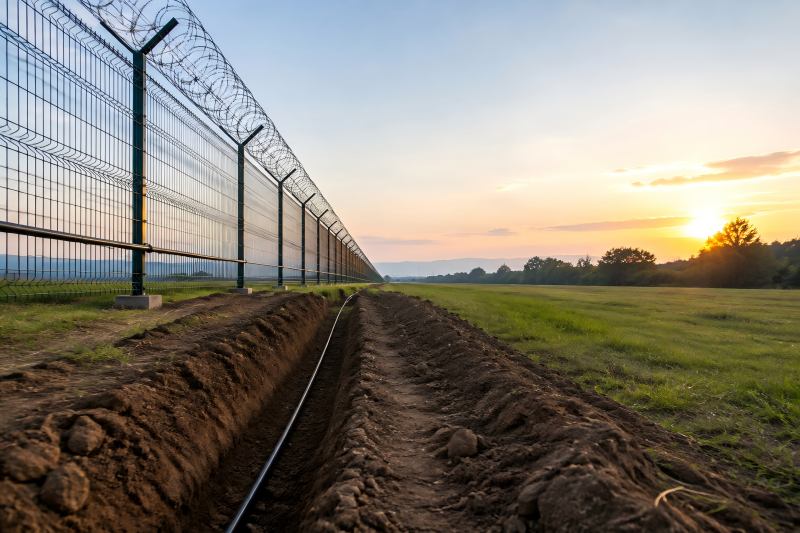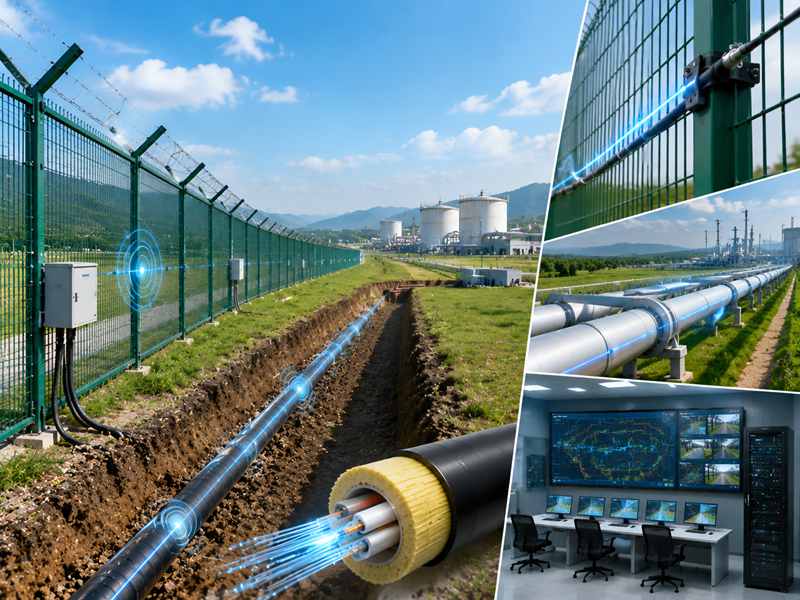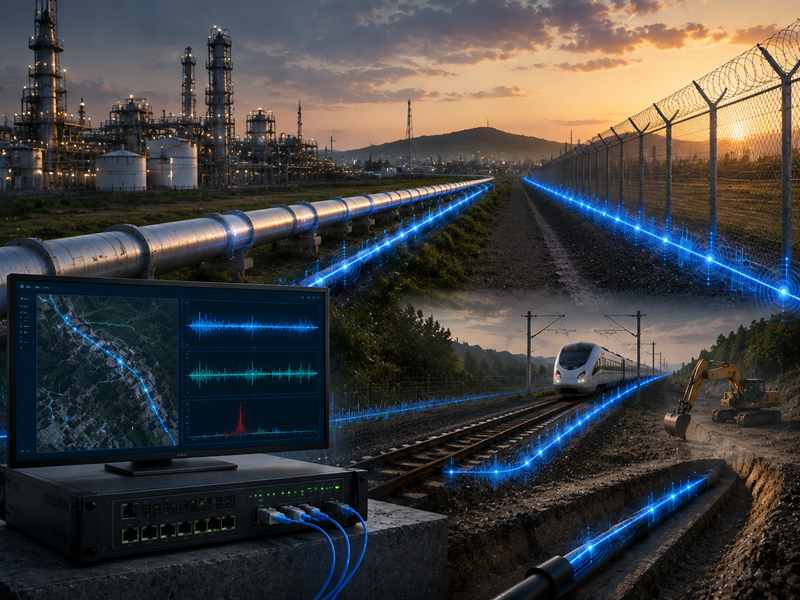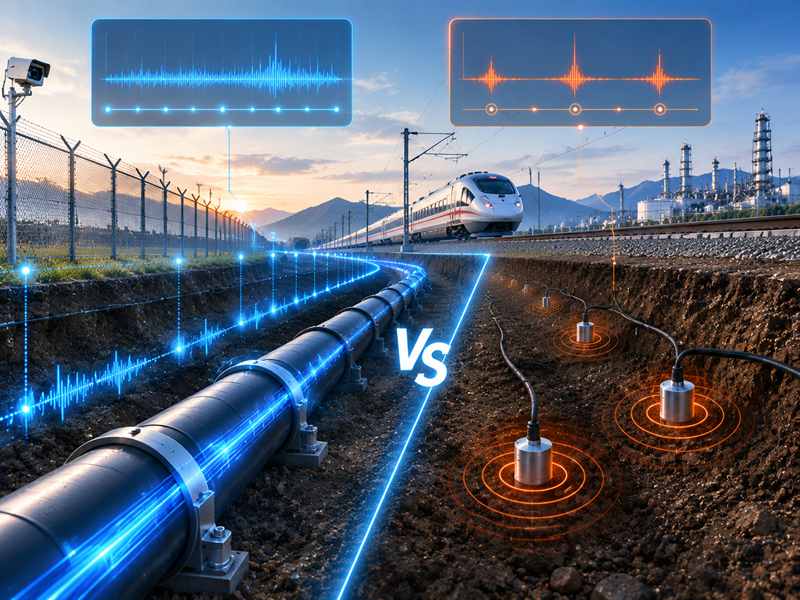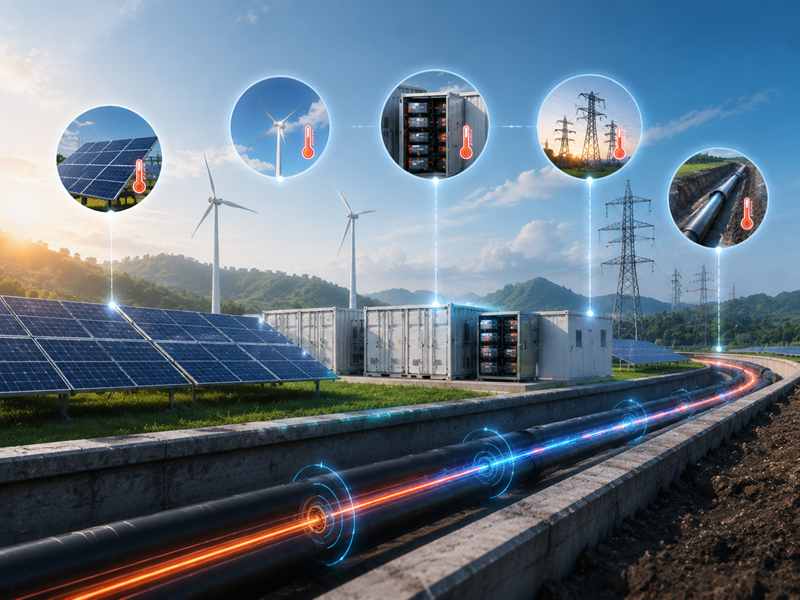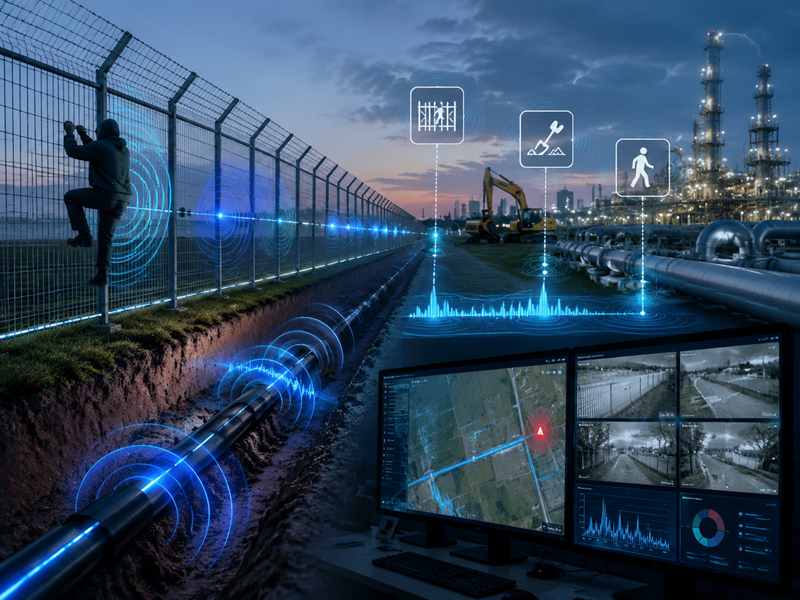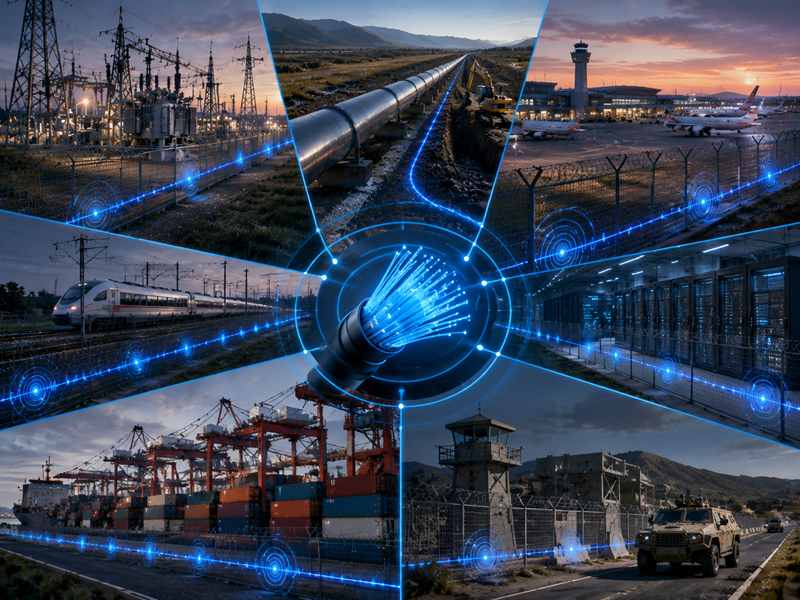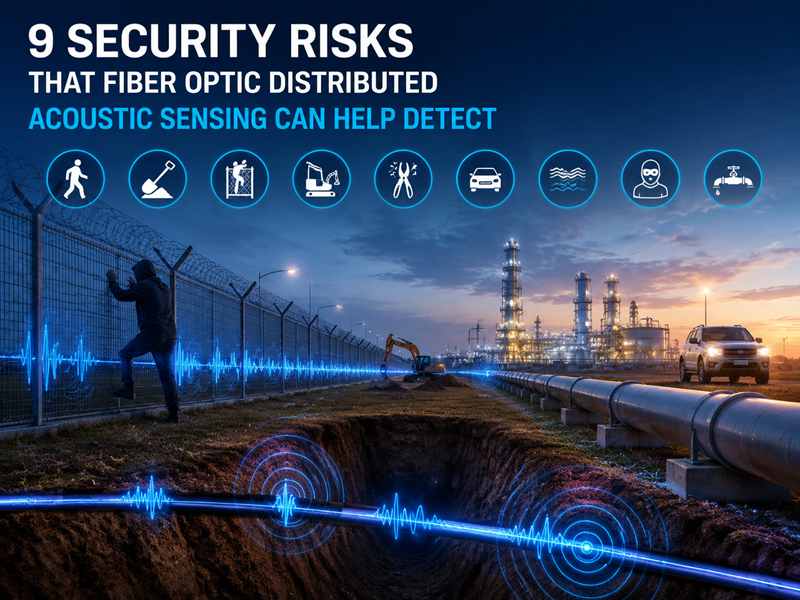
Distributed Acoustic Sensing (DAS) is a fibre optic method that converts optical fibre cables into long-range vibration sensors. It detects acoustic and vibration signals along the cable to monitor pipelines, railways, borders, solar farms, power cables, oil and gas facilities, and other critical infrastructure.
Although DAS provides long-distance coverage, real-time monitoring, and strong adaptability, it may still face issues such as false alarms, weak signals, poor cable coupling, inaccurate location, environmental noise, data overload, and integration challenges.
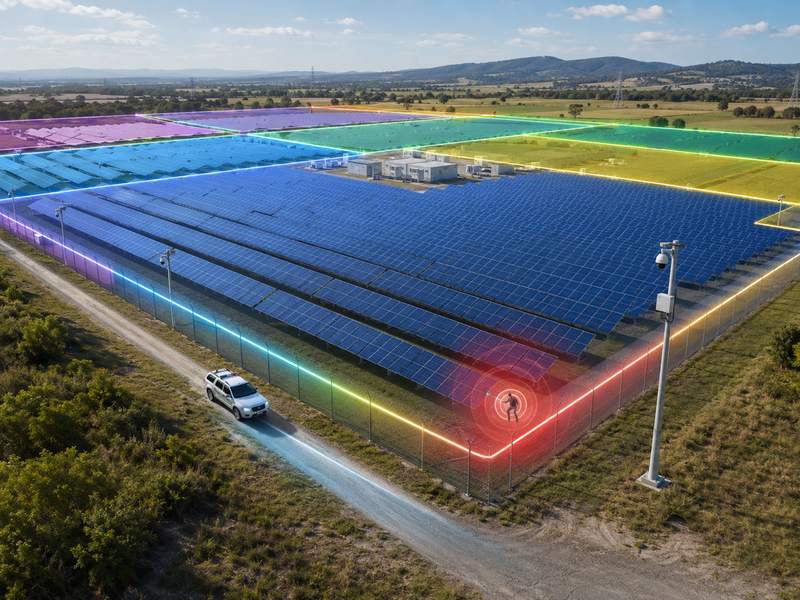
High False Alarm Rate
False alarms are one of the most common problems in DAS projects. Because DAS is highly sensitive, it may detect real intrusions as well as harmless vibrations from wind, rain, animals, vehicles, machinery, or nearby construction.
For example, a perimeter security system may confuse strong wind shaking a fence with a climbing event. A pipeline monitoring system may mistake passing vehicles for digging activity. If false alarms happen too often, operators may lose confidence in the system.
Common Causes of False Alarms
| Cause | Example | Result |
| Poor threshold settings | Sensitivity is too high | Frequent nuisance alarms |
| Environmental vibration | Wind, rain, animals, traffic | Non-threat events detected |
| Poor cable installation | Loose cable, uneven contact | Unstable signal |
| Lack of event classification | System cannot distinguish event types | Wrong alarm judgment |
| No site-specific tuning | Factory settings used directly | Poor real-world performance |
How to Solve It
The first solution is proper site calibration. DAS should not rely only on default factory parameters. Each site has different soil, fence structure, weather, traffic, and vibration patterns. Sensitivity, frequency range, event duration, and alarm thresholds should be adjusted according to real site conditions. According to Gato Security, fibre optic intrusion detection systems need to be carefully calibrated in order to balance noise rejection with detection sensitivity.
Secondly, employ intelligent event classification. Modern DAS systems can use algorithms or AI-based analysis to separate digging, walking, climbing, cutting, vehicle movement, and environmental noise. OptaSense also highlights the use of algorithms to classify intrusion types and reduce nuisance alarms in perimeter security applications.
Third, create different alarm zones. A fence line near a road should not use the same sensitivity as a quiet remote area. Zone-based configuration helps reduce unnecessary alarms while keeping high-risk areas sensitive.
Weak Signal or Poor Detection Performance
Sometimes a DAS system is installed correctly from the equipment side, but the detection performance is still weak. Intrusion events may be missed, vibration signals may be unclear, or the system may only detect strong events.
This often happens when the optical fiber cable is not properly coupled with the monitored object or ground. In DAS, the fiber must receive vibration energy effectively. If the cable is too loose, too deep, poorly attached, or isolated from the vibration source, the signal may become weak.
Common Signal Problems
| Problem | Possible Reason | Recommended Solution |
| Weak vibration signal | Poor cable coupling | Improve cable contact with fence, ground, or structure |
| Missed events | Low sensitivity or poor layout | Recalibrate and adjust cable route |
| Unstable signal | Loose cable fixing | Use proper clamps, ties, or burial method |
| Signal loss | Fiber bending or damage | Check bending radius and cable continuity |
| Uneven performance | Different soil or fence conditions | Use zone-by-zone tuning |
How to Solve It
For fence-mounted DAS, the cable should be tightly fixed to the fence fabric, posts, or rails according to the project design. Loose cable sections can cause unstable detection.
For buried DAS, soil condition is very important. Cable depth, backfill material, soil compaction, and moisture can all affect vibration transfer. Poor coupling conditions can increase signal degradation and false positives, especially when soil composition or moisture changes.
For pipeline or long-distance infrastructure monitoring, the cable route should be designed close enough to the protected asset. If the fiber is too far away from the activity source, detection performance may drop.
Inaccurate Event Location
One important advantage of DAS is its ability to locate events along the fiber. However, some projects may face location errors. The alarm may show the wrong position, or the displayed event location may not match the actual site.
This problem is common when the fiber route is not accurately mapped. In many real projects, cables are not installed in a perfectly straight line. They may turn around corners, pass through junction boxes, or include spare coils. If these details are not recorded, the system may give a correct fiber distance but an incorrect physical location.
Causes of Location Error
- Inaccurate fiber route map
- Unrecorded cable loops or spare fiber
- Wrong fiber length data
- Poor GPS mapping
- Incorrect zone configuration
- Lack of tap testing during commissioning
How to Solve It
Before system handover, the installer should perform location calibration. A common method is tap testing: technicians create controlled vibration at known points along the cable and compare the actual position with the system display.
All junction boxes, turns, spare coils, buried sections, and fence zones should be recorded. The physical map should match the fiber distance map. Recent DAS research also shows that fiber geolocation and route mapping are important for improving the accuracy of buried fiber applications.
For large sites, GIS mapping is strongly recommended. Integrating DAS alarms with a site map, CCTV system, or command platform allows operators to quickly identify the alarm location and send security staff to the right area.
Environmental Noise Interference
DAS systems are designed to detect vibration, so environmental noise is unavoidable. Rain, thunder, strong wind, sandstorms, nearby roads, pumps, compressors, trains, and industrial equipment can all create vibration signals.
In oil and gas sites, rotating machinery may create continuous background noise. In solar farms, wind may shake fences and panels. In railway applications, passing trains generate strong vibration. In urban areas, road traffic may dominate the acoustic environment.
Noise Sources and Solutions
| Noise Source | Typical Site | Solution |
| Wind and rain | Fence perimeter, solar farm | Weather-based threshold adjustment |
| Traffic vibration | Roadside pipeline, urban fiber | Frequency filtering and zone tuning |
| Machinery vibration | Refinery, power plant | Baseline noise profiling |
| Animals | Farms, remote perimeter | Event classification |
| Construction | Pipeline corridor | Temporary alarm rules and manual verification |
| Thunder or storm | Outdoor sites | Weather mode and alarm confirmation |
How to Solve It
The best solution is not to eliminate all noise, because that is impossible. The objective is to distinguish between genuine dangers and typical background vibration.
During commissioning, the system should collect baseline data under normal conditions. This helps the software understand the regular vibration pattern of each zone. For example, a section near a pump station should have a different baseline from a quiet fence line.
Advanced DAS systems may also use adaptive algorithms. AP Sensing states that AI-based detection algorithms can help systems adapt to changing environments and improve real-time detection.
Poor Cable Installation Quality
Many DAS problems are not caused by the interrogator unit or software. They are caused by installation quality. Fiber optic cable is the sensing element, so poor installation directly affects system performance.
Common Installation Mistakes
- The cable is too loose on the fence
- Cable is installed with sharp bends
- The cable is placed too far from the protected object
- Burial depth is inconsistent
- The cable route is not documented
- Splicing loss is too high
- Junction boxes are not protected
- Cable is exposed to physical damage
- Different zones are installed with different standards
How to Solve It
A DAS project should have clear installation specifications before construction begins. The installer should define cable type, fixing distance, bending radius, burial depth, splice protection, junction box position, and labeling method.
For long-distance projects, optical testing should be performed before and after installation. OTDR testing can help identify fiber breaks, high-loss splices, bending loss, or poor connector quality.
For fence projects, the cable should be installed consistently. If one section is tightly fixed and another section is loose, the system response will be uneven.
Difficult System Calibration
DAS calibration is not a one-time, simple setting. It requires field testing, data collection, event simulation, and parameter adjustment. Some users expect the system to work perfectly immediately after installation, but this is not realistic for complex environments.
Recommended Calibration Process
| Step | Action | Purpose |
| 1 | Check fiber quality | Confirm the optical link is stable |
| 2 | Divide alarm zones | Match site risk areas |
| 3 | Collect background noise | Understand normal conditions |
| 4 | Simulate real events | Test digging, climbing, walking, cutting |
| 5 | Adjust parameters | Balance sensitivity and false alarms |
| 6 | Verify alarm location | Confirm map accuracy |
| 7 | Train operators | Improve alarm response |
| 8 | Review after the operation | Optimize based on real data |
How to Solve It
The best approach is staged commissioning. First, confirm that the optical fiber and hardware are working properly. Then test each zone separately. Finally, perform full-site testing under different conditions.
Calibration should also be reviewed after several weeks of operation. Real-world alarm data can show which zones need more tuning.
Data Overload and Alarm Management Problems
DAS can generate a large amount of data because it monitors long distances continuously. Without proper filtering and alarm management, operators may receive too much information.
This is especially important for large infrastructure sites such as pipelines, borders, airports, railways, and industrial parks. A system that produces too many alarms, logs, or waveforms can overwhelm the control room.
How to Solve It
Use alarm priority levels. Not every event should trigger the same response. A confirmed climbing event near a critical zone should have higher priority than low-level vibration in a low-risk area.
Use integration with video verification. When DAS detects an event, the platform can automatically call nearby CCTV cameras, PTZ cameras, or thermal cameras. This helps operators confirm whether the alarm is real.
Use event reports. Weekly or monthly reports can help identify repeated false alarm zones, maintenance issues, and changing site conditions.
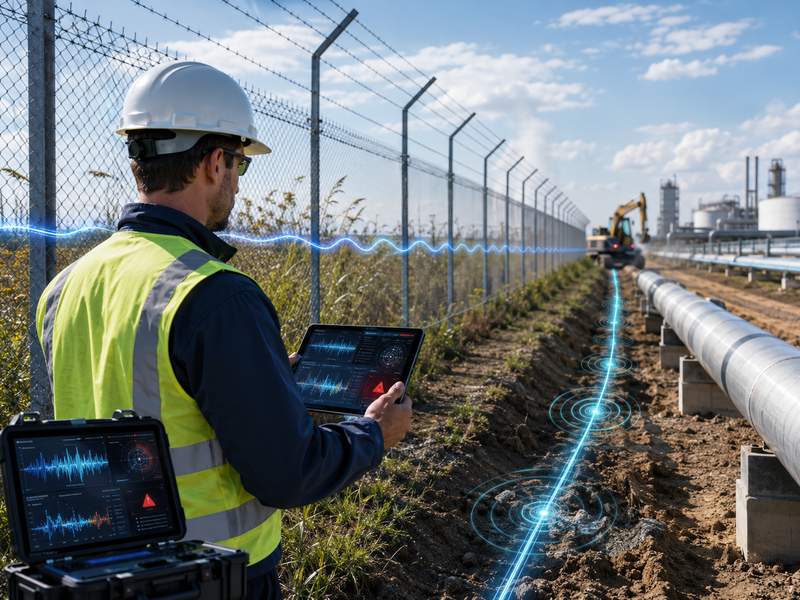
Integration Problems with Existing Security Systems
Many users do not use DAS alone. They need to connect it with CCTV, VMS, access control, command centers, alarm panels, or third-party security platforms.
Integration problems may occur when communication protocols, alarm formats, zone names, or map coordinates are not aligned.
Common Integration Needs
| Integration Item | Purpose |
| CCTV / PTZ camera | Visual alarm verification |
| VMS platform | Centralized video management |
| GIS map | Accurate location display |
| Alarm panel | Security response workflow |
| SCADA system | Industrial monitoring |
| SMS/email notification | Remote alarm alerts |
| Access control | Link perimeter alarms with entry records |
How to Solve It
Before purchasing a DAS system, confirm integration requirements. Check whether the system supports relay output, TCP/IP, SDK, API, ONVIF-related workflows, GIS integration, or platform-level alarm push.
Zone names should be standardized. For example, “Zone A-01 Fence North” is much clearer than “Channel 1 Section 3.” Good naming helps operators respond faster.
Maintenance and Long-Term Stability Problems
DAS systems are often used in harsh outdoor environments. Over time, cable damage, connector contamination, junction box leakage, software misconfiguration, and environmental changes may affect performance.
Maintenance Checklist
- Check optical power and fiber loss regularly
- Inspect junction boxes and cable protection
- Review false alarm records
- Clean connectors when needed
- Test alarm response at selected points
- Update software and detection rules
- Check UPS and power supply
- Review zone maps after site changes
- Recalibrate after construction or fence repair
How to Solve It
Create a preventive maintenance plan. DAS is not a “install and forget” system. Regular inspection helps avoid performance problems before they become serious.
Maintenance is especially important after storms, construction, fence repair, cable relocation, or equipment upgrades.
Choosing the Wrong DAS Solution
Not all DAS systems are the same. A system designed for pipeline monitoring may not be ideal for fence intrusion detection. A system used for railway monitoring may require different algorithms from those used in solar farm security.
Selection Factors
| Factor | Why It Matters |
| Monitoring distance | Determines system capacity |
| Location accuracy | Affects response speed |
| Cable type | Influences durability and signal quality |
| Application algorithm | Improves event classification |
| Environmental conditions | Affects false alarm control |
| Integration ability | Supports command center operation |
| Maintenance support | Ensures long-term stability |
| Project experience | Reduces deployment risk |
How to Solve It
Select a DAS system based on the real application, not only on price or distance. Ask the supplier for similar project experience, test data, calibration support, and integration capability.
For critical infrastructure, field testing or a pilot project is recommended before full deployment.
Distributed Acoustic Sensing enables long-distance, real-time monitoring by turning fiber optic cables into continuous sensing lines for pipelines, perimeters, railways, power facilities, oil and gas sites, solar farms, and other critical assets.
Reliable DAS performance depends on proper cable installation, strong coupling, accurate fiber mapping, calibration, noise control, intelligent algorithms, and regular maintenance. When well managed, DAS can reduce false alarms, improve detection accuracy, speed up response, and provide stable protection for large-scale infrastructure.