
Low-false-alarm Perimeter Protection for Solar, Oil & Gas, and Industrial Sites
Fiber Optic Acoustic Sensing Combined with Proprietary Pattern Recognition—Effectively Differentiates Intrusions from Animals, Vehicles, Weather Interference for Ultra-Low False Alarm Rates.
- 2000+ Projects Across Solar, Oil & Gas, and Industrial Sites
- Trusted by Customers Worldwide
- Ideal for Long-Distance Critical Infrastructure Perimeters
Early Fire Detection for Power Cable Tunnels & Utility Tunnels
Powered by Distributed Temperature Sensing (DTS) —— Continuous Monitoring for Power Cable Tunnels, Cable Corridors, and Utility Tunnels.
- Real-time Temperature Detection
- Full-length Continuous Monitoring
- Reliable in Harsh & Enclosed Environments
Full-Scenario Integrated Perimeter Security Solution
One-stop solution from detection to management and control. Gato integrates multiple technologies with the SAM300 platform, covering video access, upper-level system integration, and Google Maps visualization.
- SAM300 Unified Management Platform: Centralized access and unified command for Guangtuo’s full range of perimeter security products.
- Multi-Technology Layered Protection: DAS fiber optic system,Super-Array buried sensors, laser beams, and electric fence .
- Video System Compatibility: SDK integration with Hikvision and Dahua; RTSP/ONVIF standard protocols for expanded compatibility with more brands.
- Upper-Level Platform Ready: Compatible with Milestone XProtect.
- Google Maps Visualization: Zone-based map display and precise alarm positioning.
Industry
Tailored Security for Every Industry
A trusted partner in intelligent perimeter security!
Whether you operate in transportation, manufacturing, energy, or border control, Gato provides advanced security solutions to protect critical assets, ensure operational safety, and deliver real-time monitoring for your facility or infrastructure.
Oil & Gas Facilities
Remote locations, explosive environments, and strong EMI make traditional systems unreliable. Gato provides intrinsically safe passive detection, zero spark risk, vibration–temperature dual sensing, and multi-layer security.
Pipeline Monitoring
Rugged terrain and buried pipelines create blind spots for manual inspection. Gato enables precise intrusion localization, real-time alerts for excavation and leakage risks, and full-route monitoring on one platform.
Airport Perimeters
Long fences, uneven terrain, and vegetation often trigger false alarms. Gato’s ultra-low false alarm algorithms deliver accurate intrusion detection with video linkage for rapid verification.
Transportation
Railways and highways span long open areas where protection and rapid response are difficult to balance. Gato provides flexible deployment with instant intrusion localization and real-time video tracking.
Industrial Parks
Complex boundaries, busy entrances, and valuable assets make industrial parks difficult to protect. Gato enables accurate intrusion detection, alarm zoning, and fast video verification across large sites.
Solar Farms
Long perimeters and remote locations make solar farms vulnerable to theft and damage. Gato provides 24/7 perimeter monitoring, precise alarm location, and reliable outdoor protection.
Products
Detection Technologies
Gato offers a comprehensive range of perimeter security products, encompassing technologies ranging from covert underground surveillance to long-range detection, designed to meet the most demanding security requirements.
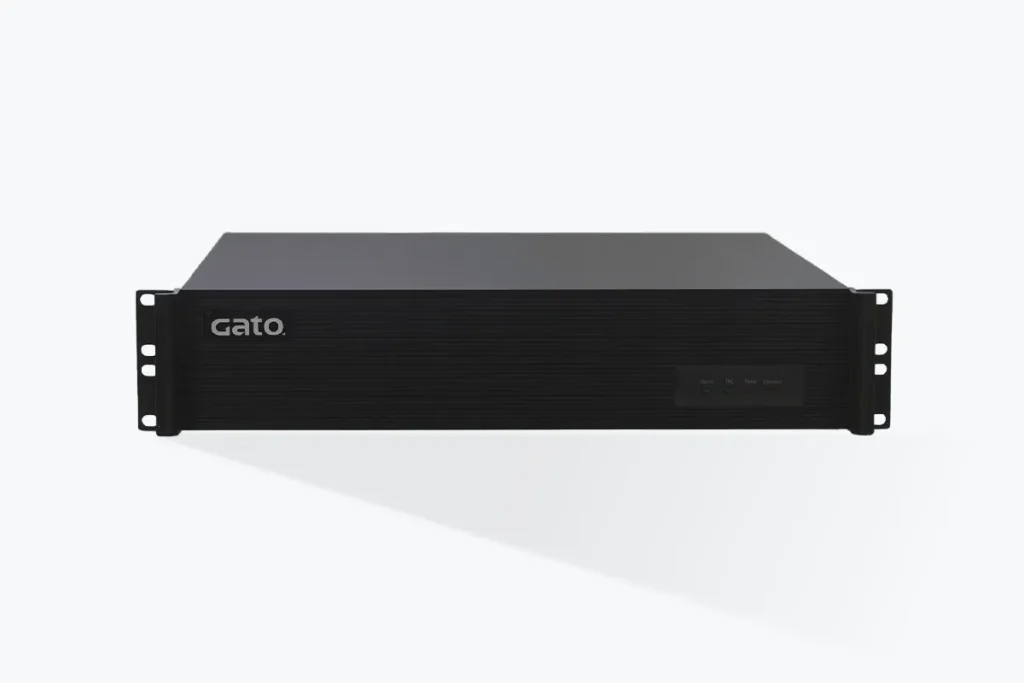
Fiber Optic Intrusion Detection (DAS)
Passive fiber detects climbing and digging vibrations, while AI locates intrusions for long-range, all-weather, zero-power perimeter sensing.
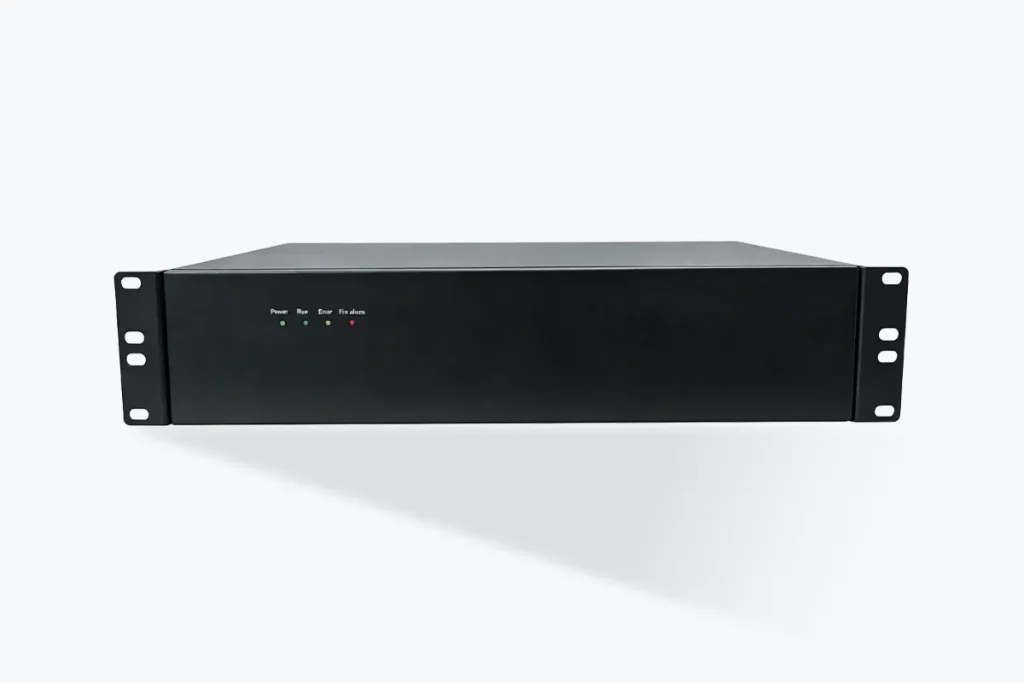
Fiber Optic Temperature Detection (DTS)
Standard fiber provides zero-power, long-range temperature monitoring. Raman backscatter analysis delivers real-time thermal profiles and fast abnormal heat detection.
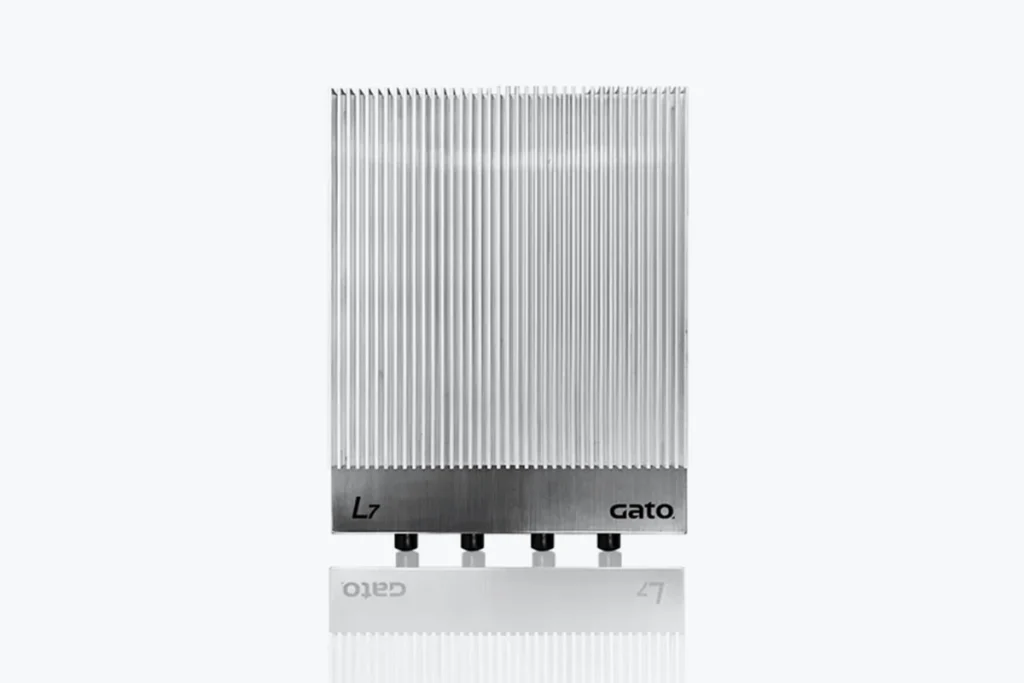
Buried Cable Detection
Buried electromagnetic cable creates an invisible zone, detecting personnel and vehicle intrusion for concealed, all-weather perimeter protection.
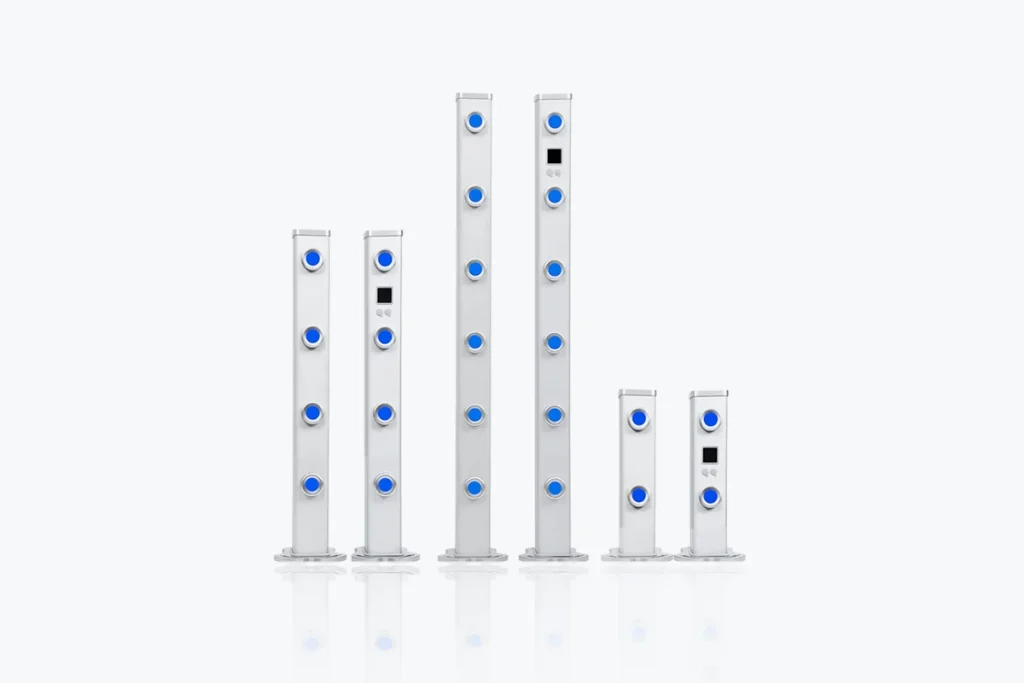
Laser Beam Intrusion Detection
Laser beams secure boundaries or corridors, triggering instant alerts while multi-beam arrays reduce nuisance alarms.
Advantages
Why Choose Us
We deliver innovative, reliable, and high-quality perimeter security solutions, backed by advanced R&D, strict quality control, and efficient production capabilities.
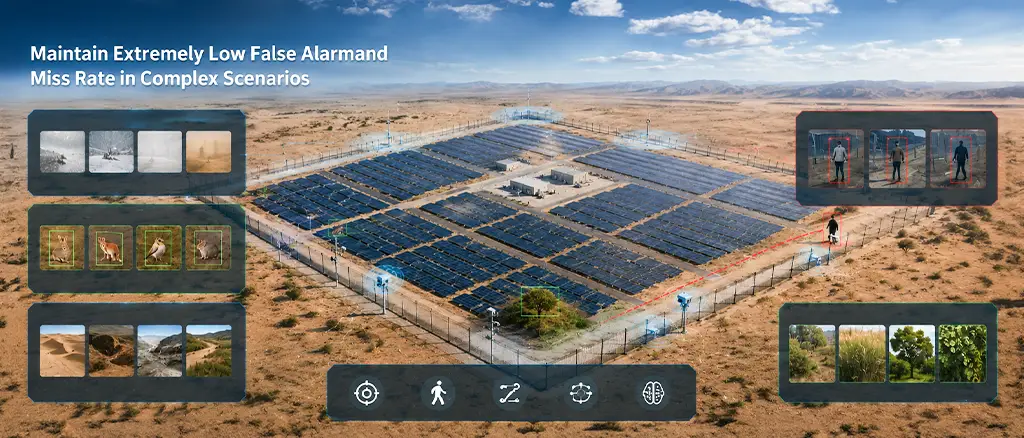
Low False Alarm Performance
Advanced algorithms accurately distinguish real intrusions from environmental interference, maintaining extremely low false alarm and missed alarm rates in complex scenarios.
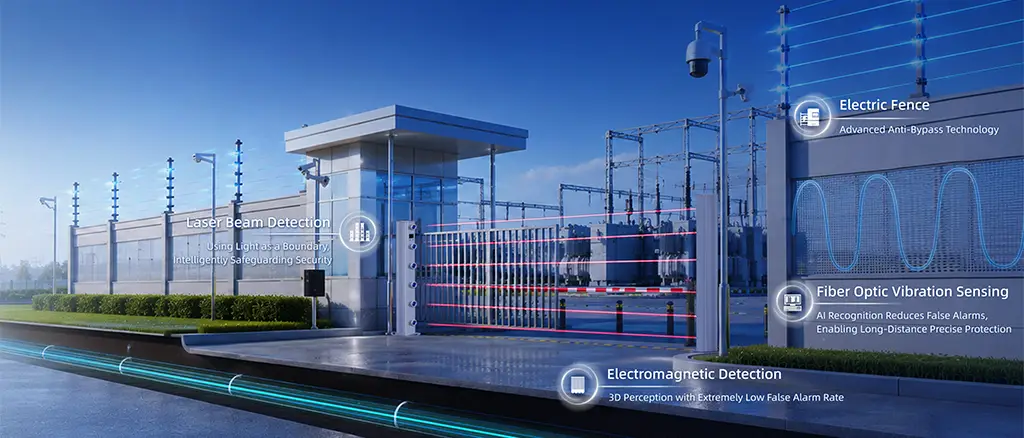
Multi-Layer Coverage
Linear perimeters, area protection, and 3D spatial detection can be flexibly combined to build a zero-blind-spot defense system.
In-House R&D and Manufacturing
2600㎡ factory with proprietary algorithms and hardware design, ensuring full-process quality control and reliable delivery.

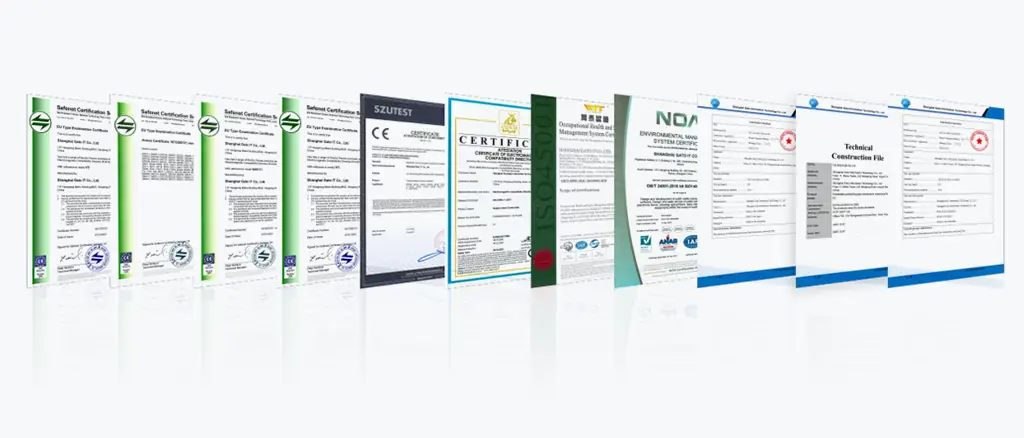
Global Compliance Certification
Certified with 3C, CE, RoHS, ISO9001, and regional standards, meeting international market requirements and supporting global project deployment.
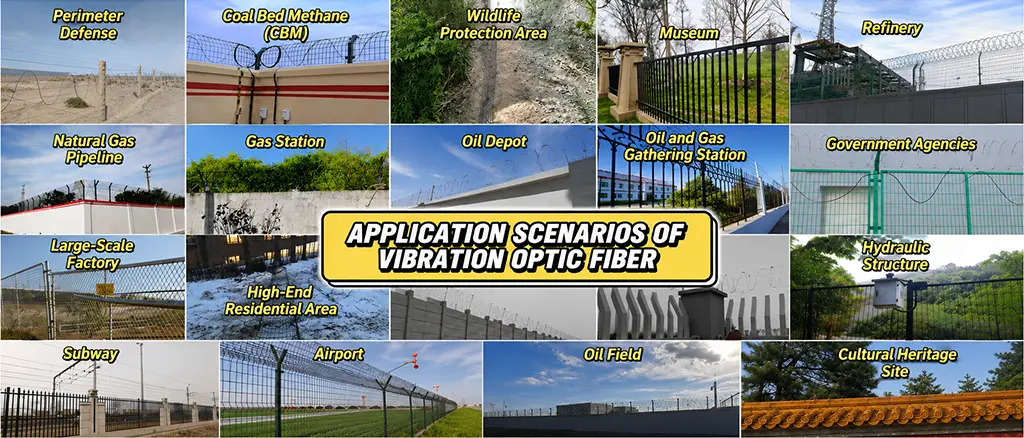
Proven Across Industries
Widely deployed in rail transit, airports, power utilities, oil & gas, prisons, and border protection with solutions tailored to diverse scenarios.
Market
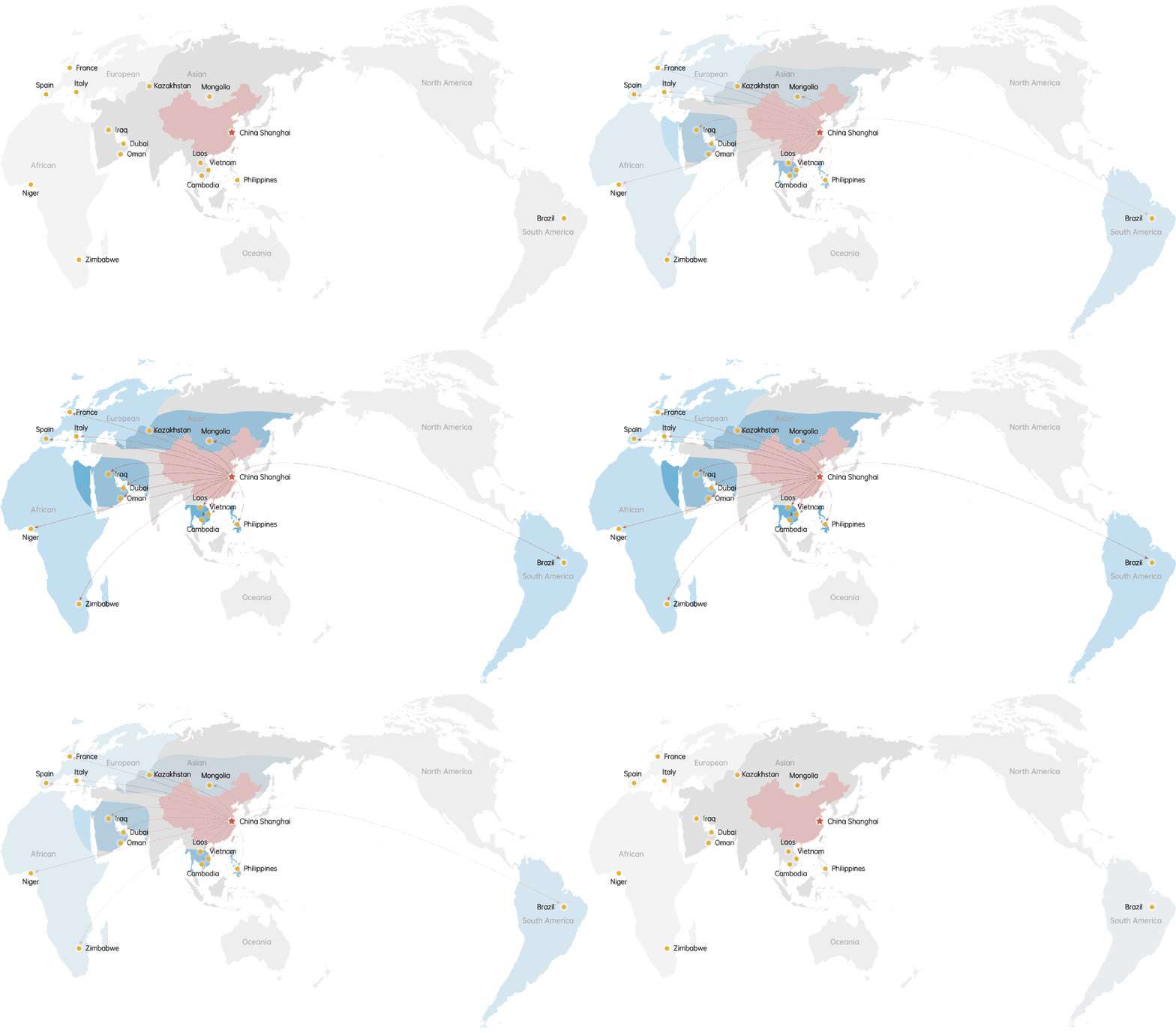
Global Business Layout
- Europe: France, Spain, Italy
- Southeast Asia: Cambodia, Vietnam, Laos, Philippines
- Central Asia: Kazakhstan, Mongolia
- East Asia: China
- Middle East: Dubai (UAE), Iraq, Oman
- South America: Brazil
- Africa: Niger, Zimbabwe
Cases
Case Highlights: Safety & Efficiency
Europe – Spain
Solar Farm Temperature Monitoring
Project Background
A Spanish clean energy service provider manages wind and solar assets, with a digital platform connected to over 300 solar stations. As operations expanded, the client required precise on-site temperature monitoring to improve equipment safety and generation efficiency.
Solution
Our distributed fiber optic temperature sensing system was deployed to provide real-time thermal monitoring, early warning, and intelligent O&M support for solar power stations.
Strategic Project Value
This project expands fiber optic temperature sensing in new energy applications, supports preventive thermal management, and validates our solution for photovoltaic and energy storage deployments across Spain and Southern Europe.

Europe – France
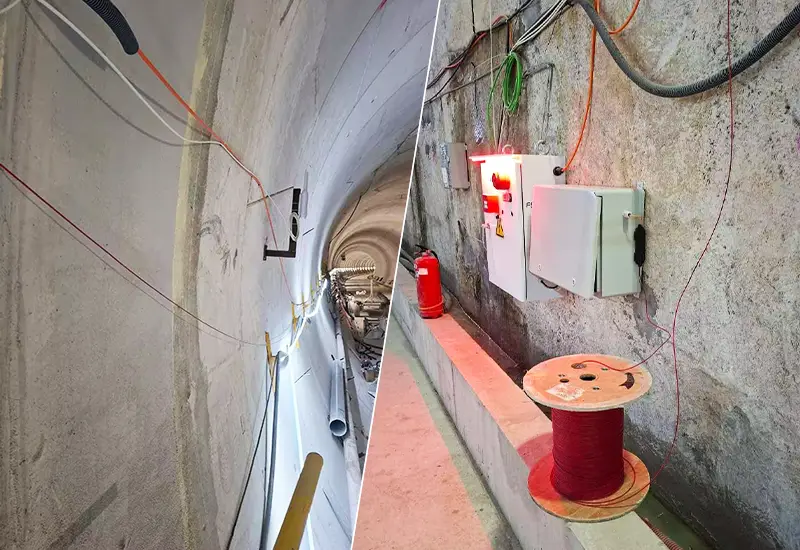
Tunnel Temperature Monitoring
Project Background
A French tunnel engineering service provider with over 20 years of infrastructure experience required an intelligent upgrade to replace manual fire alarm systems with real-time remote monitoring.
Solution
We deployed a distributed fiber optic temperature sensing system for continuous tunnel monitoring, remote supervision, and early fire detection.
Strategic Project Value
This project upgraded manual inspection to 7×24 intelligent monitoring, validated performance in European-standard infrastructure, and built reference experience for rail transit, energy tunnels, and critical facilities.
Niger
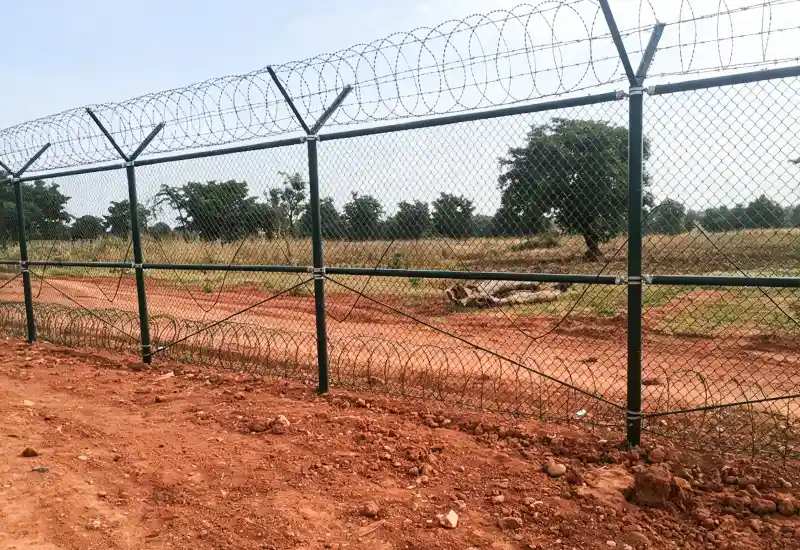
Zinder Oil Refinery Perimeter Security
Project Background
Zinder Oil Refinery needed reliable desert perimeter protection, as heat, sandstorms, and limited access made traditional systems costly to maintain.
Solution
Gato deployed about 15 km of armored F7 sensing fiber on the refinery fences, delivering passive long-range vibration detection, precise intrusion localization, and reduced infrastructure requirements.
Strategic Project Value
The project achieved stable operation with zero false alarms in wind and sandstorms, proving fiber optic sensing for harsh oil & gas sites and scalable perimeter security for energy facilities.
















Latest Blogs
Security Technology Insights
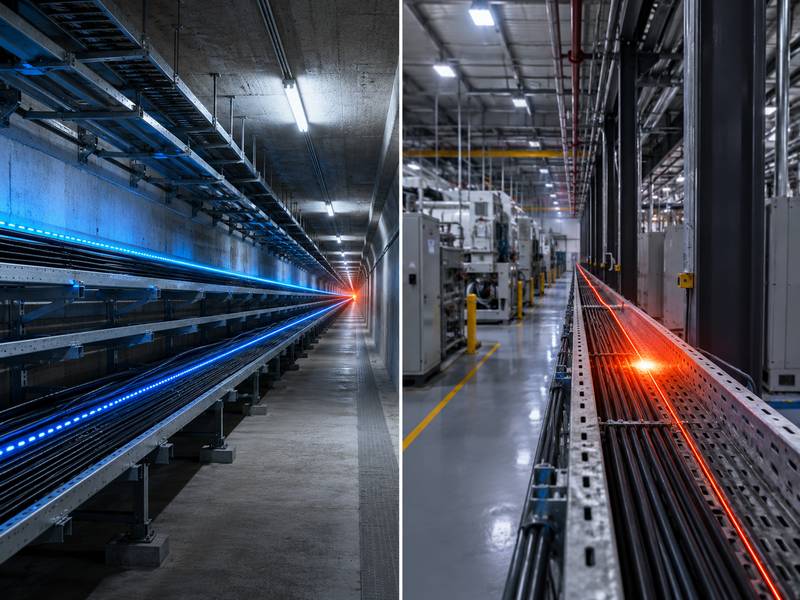
Fire detection is vital for tunnels, cable trays, conveyor belts, power plants, warehouses, oil and gas facilities, data centers, substations, and industrial sites, where traditional detectors may not work well in long, dusty, humid, hot, or hard-to-access areas. DTS and LHD cable are two common continuous heat detection solutions. DTS measures temperature along a fiber optic cable, while LHD cable triggers an alarm when heat reaches a preset level. What Is Distributed Temperature Sensing? Distributed Temperature Sensing is a fiber optic sensing technology used to measure temperature continuously along an optical fiber cable. Instead of installing many separate temperature sensors, the fiber itself becomes the sensing element. A DTS system usually includes: Fiber optic sensing cable DTS host or interrogator Alarm software Temperature monitoring platform Communication interface Optional integration with fire alarm systems, SCADA, or security platforms The DTS host sends laser pulses into the optical fiber and analyzes the backscattered light signal. Based on the signal response, the system calculates temperature at different positions along the cable. This allows the user to see not only whether there is a fire risk, but also where the temperature is rising and how the temperature is changing over time. Linear Heat Detection Cable: What Is It? A fire detection cable that senses unusual heat along its length is called a linear heat detection cable. It is often installed near cable trays, conveyor belts, storage racks, tunnels, machinery, transformers, and other areas where fire may start. A common digital linear heat detection cable contains two conductors separated by heat-sensitive insulation. When the rated temperature is reached, the insulation changes and allows the conductors to contact each other, creating an alarm condition. In many digital LHD systems, the activated section must be replaced after an alarm because the cable undergoes a physical change. Linear heat detection cable is popular because it is simple, reliable, and suitable for harsh environments where smoke detectors may not work well. DTS vs Linear Heat Detection Cable: Basic Comparison Item Distributed Temperature Sensing Linear Heat Detection Cable Detection principle Measures temperature along optical fiber Detects heat when rated alarm temperature is reached Cable type Fiber optic sensing cable Heat-sensitive electrical cable Output Continuous temperature data Alarm signal Location ability High location accuracy along cable route Depends on system design and zoning Alarm type Temperature threshold, rate-of-rise, temperature trend Fixed temperature alarm, depending on cable type Reset after alarm Usually resettable if cable is not damaged Digital type is often non-resettable after activation Monitoring depth Real-time temperature profile Alarm condition only System complexity Higher Lower Initial cost Usually higher Usually lower Best for Long-distance monitoring and temperature analysis Simple fire detection in defined areas Key Difference 1: Temperature Measurement vs Heat Alarm The biggest difference is that DTS measures temperature continuously, while linear heat detection cable usually provides an alarm when a temperature condition is reached. Linear heat detection cable is more direct. When the cable exceeds its rated temperature, it is intended to sound a fire alarm. It may not provide the same detailed temperature trend as DTS, but it can offer simple and dependable fire alarm detection. Key Difference 2: Alarm Location Accuracy DTS has a strong advantage in alarm location. Because it measures temperature at many points along the fiber, it can identify where the temperature abnormality occurs. This is useful in long tunnels, cable corridors, pipelines, conveyor systems, and large industrial sites. Linear heat detection cable can also support alarm zoning, but location accuracy depends on how the system is divided. If a long LHD cable is installed as one zone, the fire alarm panel may only show that the zone is in alarm. To improve location accuracy, the cable route needs to be divided into shorter zones. Location Requirement Better Choice Reason Need accurate hot spot position DTS Provides distributed location data Only need zone-level fire alarm LHD cable Simple and practical Long tunnel or cable corridor DTS Easier to locate event quickly Small machine area LHD cable Cost-effective and easy to install Large site with many critical points DTS Better monitoring and reporting Key Difference 3: Early Warning Capability DTS is suitable for early warning because it can detect temperature rise before the fire reaches a critical stage. Users can set different alarm levels, such as pre-alarm, warning alarm, and fire alarm. For example: Alarm Level Temperature Behavior Action Pre-alarm Slight temperature rise Operator checks trend Warning Temperature continues rising Maintenance team inspects area Fire alarm Temperature exceeds danger threshold Emergency response starts Linear heat detection cable is usually more focused on confirmed heat detection. It is highly useful when the goal is to trigger a clear fire alarm after the cable reaches a specific activation temperature. Key Difference 4: Reset and Maintenance DTS sensing cable is normally reusable if it is not physically damaged by fire, mechanical stress, or extreme heat. Once the temperature returns to normal following an alarm, the system can resume monitoring. Digital linear heat detection cable is often non-resettable after activation because the heat-sensitive insulation changes permanently. The activated section usually needs replacement. However, there are different LHD technologies, including digital, analog, and resettable types, so the maintenance method depends on the product type. Advantages of Distributed Temperature Sensing DTS is often chosen for high-value and long-distance fire detection projects. Its main advantages include: Continuous temperature monitoring along the full cable route Accurate hot spot location Early warning before serious fire development Suitable for long-distance applications Immune to electromagnetic interference because it uses optical fiber Can support multiple alarm levels Useful for data analysis and thermal trend monitoring Suitable for tunnels, cable trays, pipelines, power cables, and industrial plants DTS is especially valuable when operators need more than a simple alarm. It helps them understand the temperature development process and make faster decisions. Advantages of Linear Heat Detection Cable Linear heat detection cable is widely used because it is simple and reliable. Its main advantages include: Lower initial cost compared with many DTS systems Simple system structure Easy integration with
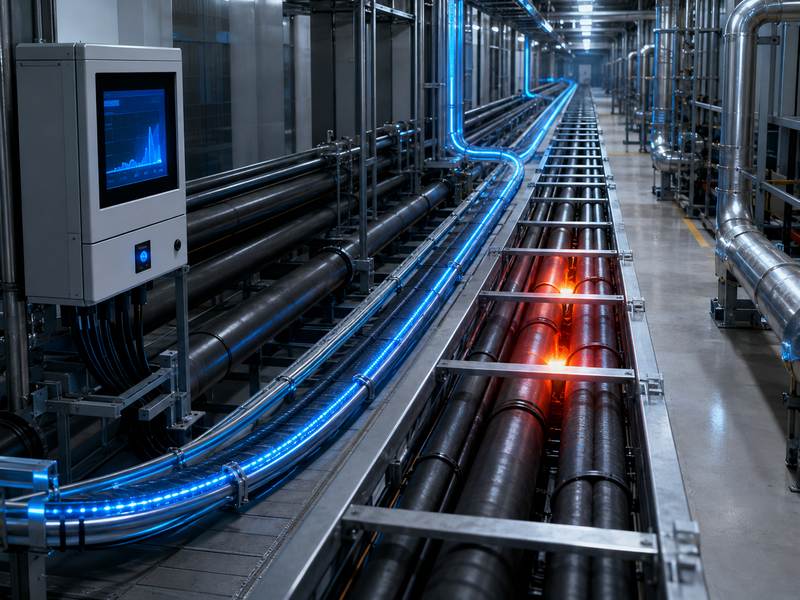
Fibre optic cables are used in Distributed Temperature Sensing (DTS), which continually measures temperature across great distances. It is widely used for fire detection, power cables, pipelines, tunnels, oil and gas sites, data centers, industrial plants, storage tanks, and environmental monitoring. DTS is powerful, but real projects may face inaccurate readings, poor calibration, weak signals, fiber damage, false alarms, slow response, data overload, and integration issues. Inaccurate Temperature Measurement Temperature accuracy is one of the most important performance factors in a DTS system. If the measured temperature is wrong, the system may fail to detect overheating, fire risk, pipeline leakage, or abnormal thermal conditions. Inaccurate readings can occur when the system is not calibrated correctly, when the reference temperature is unstable, or when fiber attenuation is not properly compensated. Calibration is especially important because DTS temperature estimation depends on signal interpretation, not only on direct sensor contact. Common Causes of Inaccurate Readings Cause Explanation Result Poor calibration Reference points are not accurate Wrong temperature profile Fiber attenuation The signal becomes weaker with distance Temperature error in the far sections Connector loss Dirty or damaged connectors reduce the signal Sudden abnormal readings Wrong cable type Cable not suitable for the environment Poor heat transfer or unstable data Environmental interference Moisture, strain, vibration, or external heat Measurement deviation How to Solve It The first solution is proper calibration. Use known temperature reference points, such as ice bath, water bath, calibrated temperature sensors, or stable reference sections. Research on DTS calibration shows that carefully designed calibration methods can significantly improve measurement accuracy compared with relying only on raw instrument-calibrated data. Second, check fiber loss and attenuation. Long fiber routes naturally reduce signal strength, and this may affect temperature resolution. Silixa notes that temperature resolution in DTS is limited by signal attenuation and signal-to-noise ratio, and averaging multiple measurements can improve resolution. Third, avoid using one calibration setting for all conditions. For demanding applications, calibration should be reviewed after installation, after maintenance, and after major environmental changes. Weak Signal and Poor Signal-to-Noise Ratio A weak optical signal can reduce DTS accuracy, response stability, and measurement reliability. This problem is common in long-distance systems, old fiber cables, poor splices, damaged connectors, or installations with high optical loss. When the signal-to-noise ratio is poor, the DTS system may show unstable temperature curves, random fluctuations, or reduced accuracy at the far end of the cable. Symptoms of Weak Signal Temperature data becomes noisy at long distances Far-end measurement is less stable Some zones show sudden spikes or drops The system requires a long averaging time Alarm accuracy becomes unreliable The optical loss test shows abnormal attenuation How to Solve It Before commissioning, perform optical testing. OTDR testing can help locate high-loss points, fiber breaks, sharp bends, poor splices, and connector problems. Clean all connectors and check that fiber ends are properly protected. If the route is too long, consider using a higher-performance DTS unit, better fiber cable, lower-loss splicing, or a double-ended measurement configuration. Double-ended DTS can improve accuracy because the system measures from both directions and compensates for differential attenuation more effectively. Also, avoid unnecessary connectors and patch points. Every connector or splice may introduce loss. For long-distance monitoring, a clean and continuous fiber route is always better. Poor Cable Installation The sensing component of a DTS system is the fibre optic cable. If the cable is poorly installed, the system cannot accurately reflect the true temperature of the monitored object or environment. For example, if a DTS cable is used for power cable monitoring but is not placed close enough to the power cable, the measured temperature may be lower than the actual hotspot. If a fire detection cable is installed too far from the ceiling or hazard area, detection may be delayed. Common Installation Problems Installation Problem Possible Impact Cable not in contact with the target surface Delayed or inaccurate temperature reading Cable too far from the heat source Missed hotspot or slow alarm Sharp bends Optical loss or cable damage Poor mechanical protection Fiber break or signal loss Inconsistent installation route Uneven temperature response Cable exposed to physical damage Long-term reliability problem How to Solve It Before installation, define the monitoring objective clearly. A DTS cable used for tunnel fire detection, power cable monitoring, pipeline leakage detection, or tank temperature monitoring may require different installation methods. For direct temperature monitoring, the cable should have good thermal contact with the target surface. For environmental monitoring, the cable should be placed where it can represent the actual temperature field. For buried or embedded applications, installation depth, soil condition, and cable protection must be carefully controlled. Use proper fixing accessories, protective conduits, cable trays, clamps, or armored cable according to the site environment. Avoid sharp bending and follow the cable manufacturer’s minimum bending radius. Slow Temperature Response Some users expect DTS to detect temperature changes instantly. However, response time depends on cable structure, installation method, thermal contact, sampling interval, and averaging settings. A heavily armored cable may provide strong protection, but it may respond more slowly to rapid temperature changes. A cable installed inside a conduit may be protected from damage, but the conduit may delay heat transfer. A long averaging time can improve measurement stability, but it may also slow alarm response. Factors That Affect Response Time Factor Effect Cable jacket material Influences the heat transfer speed Armored cable structure Improves protection but may slow response Installation method Direct contact is faster than indirect contact Sampling interval Affects data update frequency Averaging time Improves stability but may delay detection Distance from heat source A greater distance means a slower response How to Solve It Choose the cable according to the application. For fire detection, faster thermal response may be more important. For underground pipeline or power cable monitoring, mechanical protection and long-term durability may be equally important. Balance response speed and data stability. If alarm response is too slow, reduce averaging time or optimize alarm logic. If the data is too noisy, increase averaging or improve
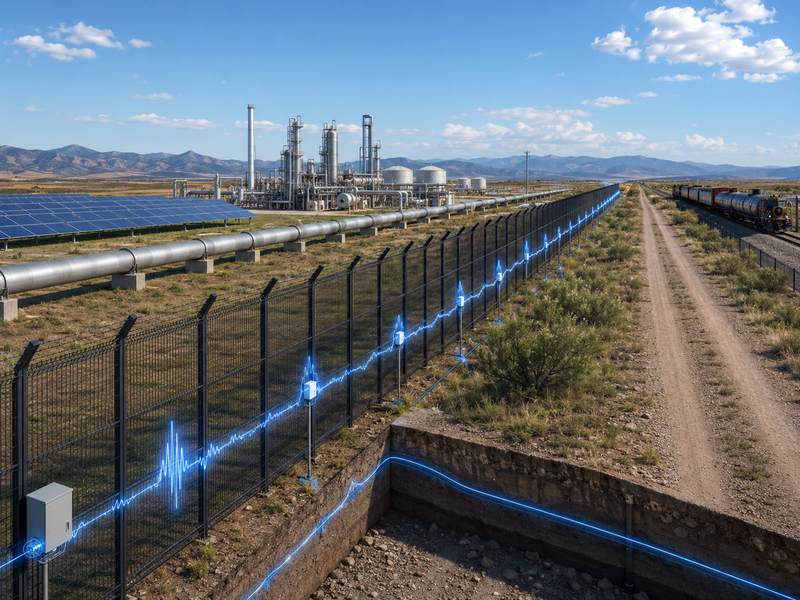
Fibre optic cables are used by distributed acoustic sensing (DAS) to detect mechanical disturbance, movement, and vibration over great distances. In security applications, DAS provides continuous real-time monitoring for fence lines, pipelines, borders, railways, power facilities, solar farms, airports, and oil and gas sites. It helps detect intrusion, climbing, cutting, digging, vehicle movement, tampering, and other abnormal activities. What Makes DAS Useful for Security? Distributed acoustic sensing turns an optical fiber cable into a long sensing line. When vibration or acoustic energy affects the cable, the DAS interrogator analyzes the signal and identifies the event location. This makes it suitable for large-scale security projects where traditional sensors may be difficult, expensive, or inefficient to deploy. Key Security Advantages of DAS Advantage Security Value Long-distance monitoring Suitable for large perimeters and linear assets Real-time detection Helps security teams respond quickly Location accuracy Shows where the event happened Passive sensing cable No power required along the fiber route Harsh-environment adaptability Works in remote, dusty, hot, cold, or wet sites Event classification Helps distinguish intrusion from environmental noise Integration capability Can link with CCTV, alarms, maps, and command platforms DAS is especially useful when the protected area is long, remote, difficult to patrol, or exposed to frequent intrusion risks. Perimeter Intrusion Detection One of the most common security applications of DAS is perimeter intrusion detection. The fiber optic cable can be installed on a fence, buried near a fence line, or routed around the boundary of a protected site. When someone climbs, cuts, shakes, digs, or approaches the perimeter, the system detects the vibration and sends an alarm. AP Sensing states that DAS can act as a perimeter intrusion detection system and detect footsteps, vehicle movements, mechanical disturbances, and tampering along extensive perimeters. Common Perimeter Security Sites Industrial parks Warehouses Power plants Airports Military zones Solar farms Oil depots Data centers High-security factories Border facilities Why DAS Is Effective Traditional fence sensors may only detect activity in short sections. Cameras may have blind spots, poor visibility at night, or reduced performance in bad weather. DAS provides continuous sensing along the fiber route, making it suitable for large perimeter areas. Perimeter Threat DAS Detection Method Fence climbing Detects vibration on the fence Fence cutting Detects mechanical disturbance Digging near fence Detects ground vibration Vehicle approaching Detects low-frequency vibration Repeated tampering Detects abnormal signal patterns For better performance, DAS can be integrated with CCTV or PTZ cameras. When DAS detects an event, the system can automatically display the alarm location and activate the nearest camera for visual verification. Border Security and Long-Distance Protection Borders and remote boundaries are difficult to protect because they often cover long distances and complex terrain. DAS is well-suited for this type of application because fiber optic cable can monitor long routes continuously. In border security, DAS can detect walking, running, digging, vehicle movement, fence disturbance, and other activities near the protected line. DAS-based security solutions can identify and locate various threats in real time with point-locating capability, according to OptaSense. Border Security Benefits Challenge DAS Benefit Long border distance Continuous fiber-based monitoring Remote areas Reduced the need for frequent patrols Night intrusion Works without visible light Harsh weather Suitable for outdoor deployment Multiple intrusion types Detects footsteps, vehicles, digging, and tampering For border projects, DAS can be combined with thermal cameras, radar, drones, patrol systems, and command centers. DAS provides early warning, while other systems help verify and track the target. Pipeline Security Monitoring Pipeline security is another important application of Distributed Acoustic Sensing. Oil, gas, water, and chemical pipelines often pass through remote areas, deserts, mountains, forests, and urban zones. These pipelines may face threats such as illegal tapping, excavation, theft, vandalism, third-party construction, and mechanical damage. AP Sensing describes pipeline monitoring solutions using distributed fiber optic sensing, including DAS, DTS, and DTSS, to support long-distance pipeline safety and threat detection. Common Pipeline Security Risks Illegal digging Unauthorized excavation Pipeline theft Third-party construction damage Vehicle movement near the pipeline route Mechanical impact Valve station intrusion Sabotage or tampering DAS Security Value for Pipelines Pipeline Problem DAS Solution Long-distance route Monitors the full pipeline corridor Remote location Reduces manual patrol burden Excavation risk Detects digging vibration Theft attempts Detects cutting, drilling, or tampering Fast response need Provides alarm location along the fiber DAS helps operators identify where a threat is happening before serious damage occurs, for high-risk areas such as valve stations, pumping stations, and crossing points, higher sensitivity settings can be applied. Airport Perimeter Security Airports require high-level perimeter protection because unauthorized intrusion can create serious safety and operational risks. Airport perimeters are usually long, exposed, and difficult to monitor only with cameras or patrols. DAS can be installed along airport fences to detect climbing, cutting, crawling, vehicle impact, or abnormal movement near restricted zones. It can also support security response by showing the exact alarm zone. Why Airports Use DAS Airport Security Need DAS Advantage Long fence lines Continuous perimeter monitoring Fast response Real-time alarm location Low visibility areas Works at night and in poor visibility Restricted zones Supports zone-based alarm rules Camera linkage Helps verify alarms quickly For airport applications, DAS is often used with video surveillance, access control, lighting systems, and security patrol platforms. When an alarm occurs, the platform can display the zone and direct guards to the right location. Solar Farm and Renewable Energy Security Solar farms are often built in remote or open areas, where theft, vandalism, and unauthorized access are common risks. Large photovoltaic sites may cover wide areas, making traditional perimeter monitoring expensive or difficult. DAS is suitable for solar farm security because it can monitor long fence lines and detect intrusion events before intruders reach solar panels, inverters, substations, or storage systems. Solar Farm Security Applications Fence intrusion detection Cable theft prevention Substation perimeter monitoring Battery storage area protection Remote site monitoring Vehicle approach detection DAS Benefits for Solar Farms Site Challenge DAS Benefit Large outdoor area Long-distance coverage Remote location Supports unattended monitoring Cable theft risk Early intrusion