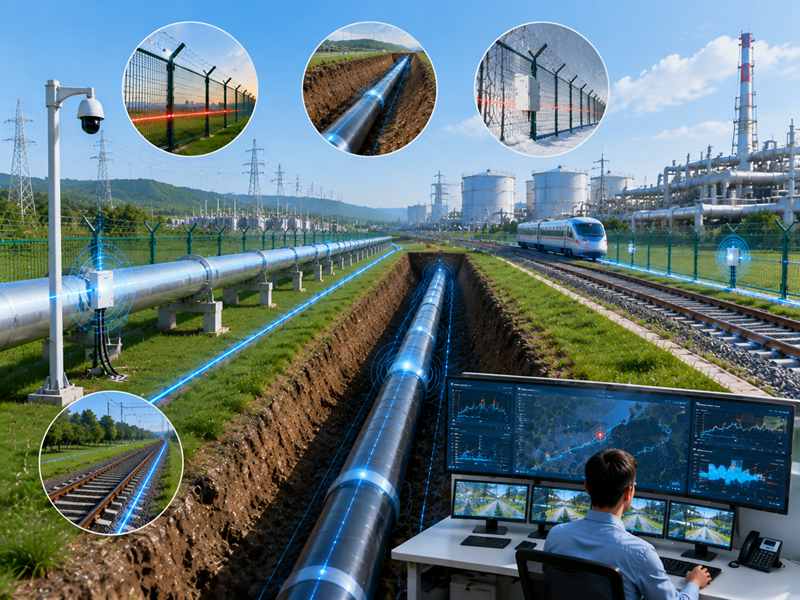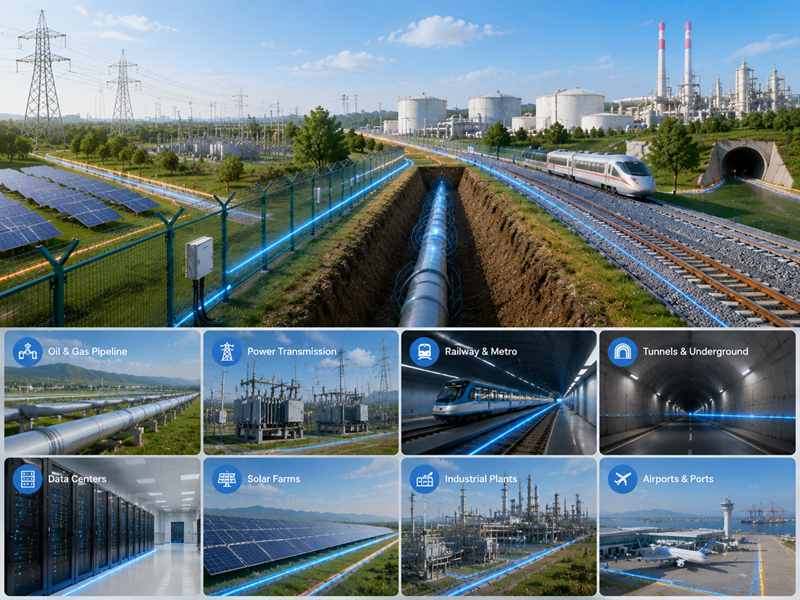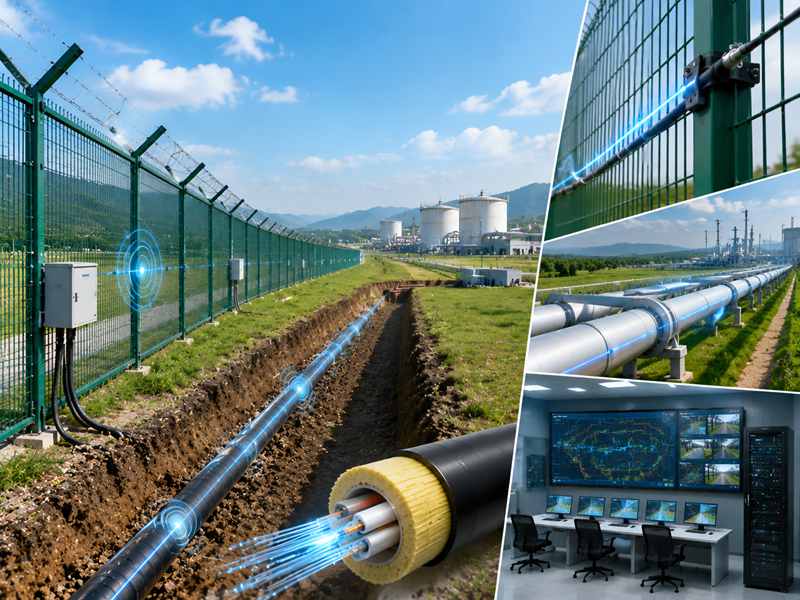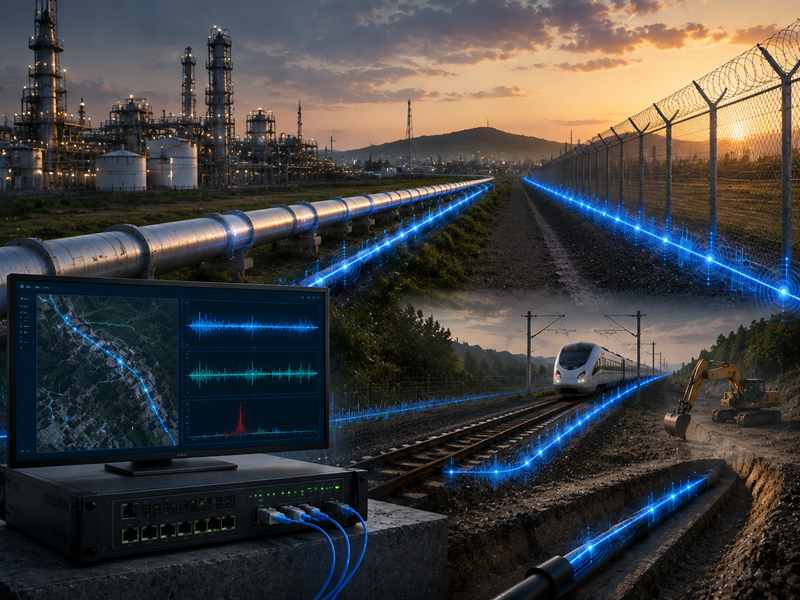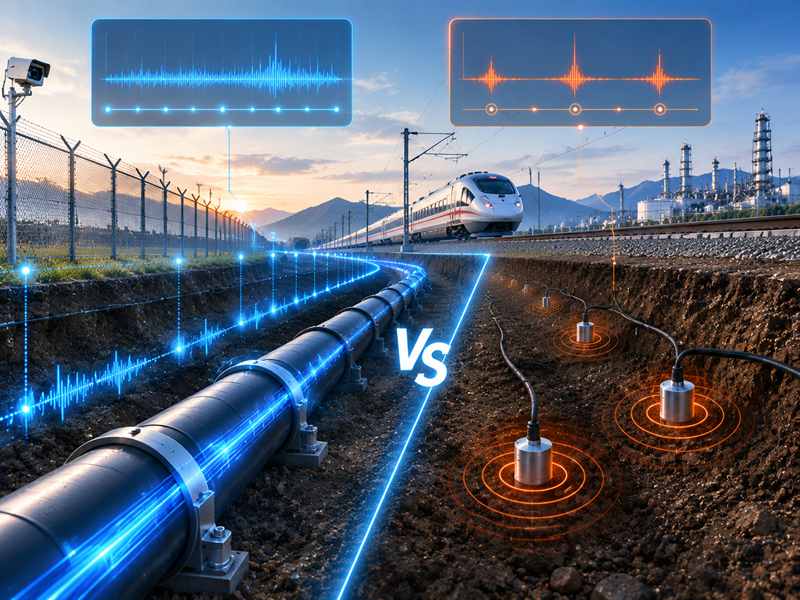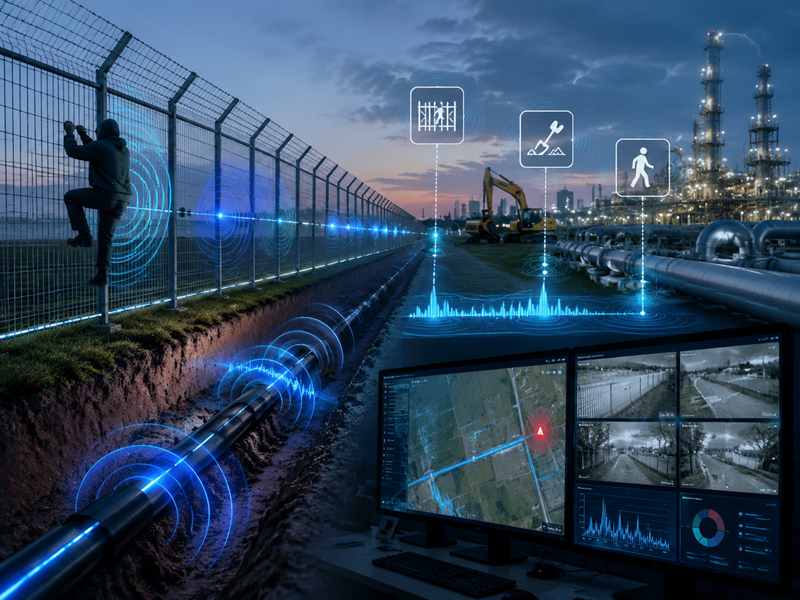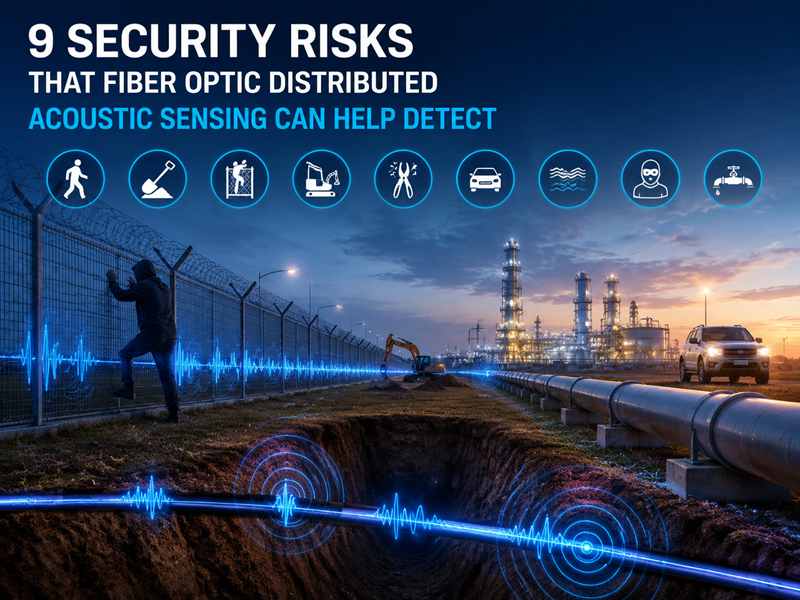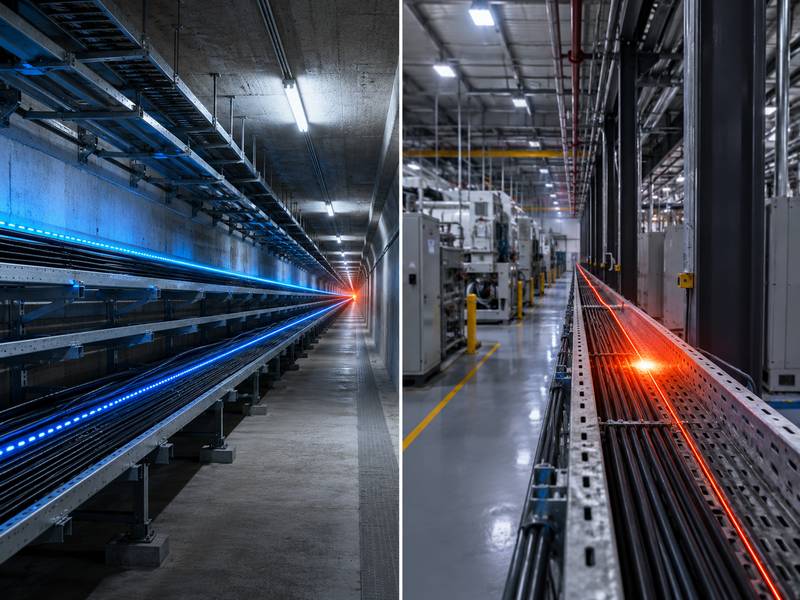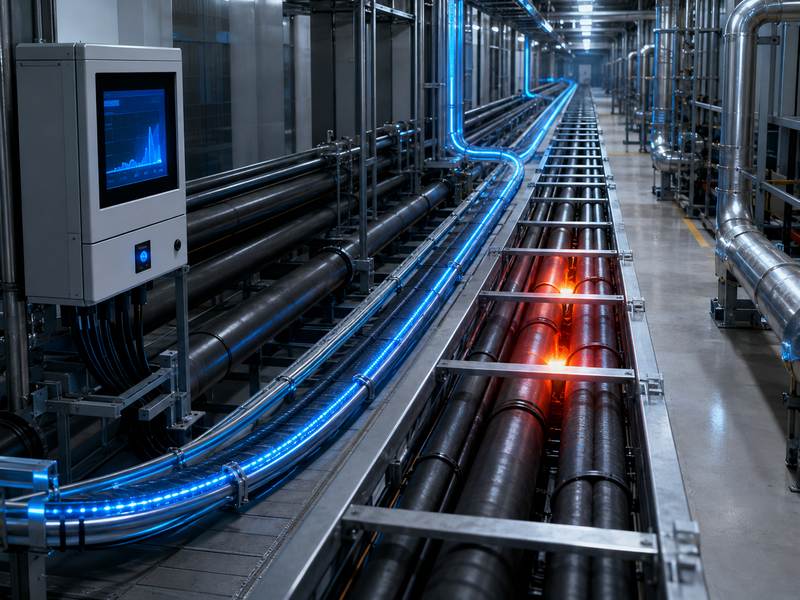
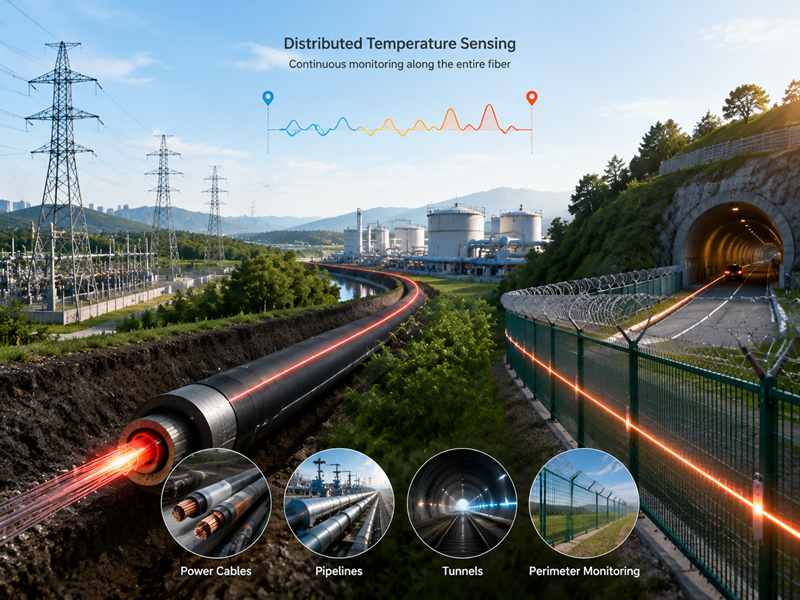
Distributed Temperature Sensing (DTS) adopts optical fiber for continuous monitoring of temperature fluctuations, with wide applications in power cables, pipelines, tunnels and perimeter safety monitoring.
The accuracy of DTS measurement is subject to fiber quality, installation workmanship, signal transmission, surrounding environment and system settings. Tailored solutions are available to optimize sensing distance, layout design and system integration.
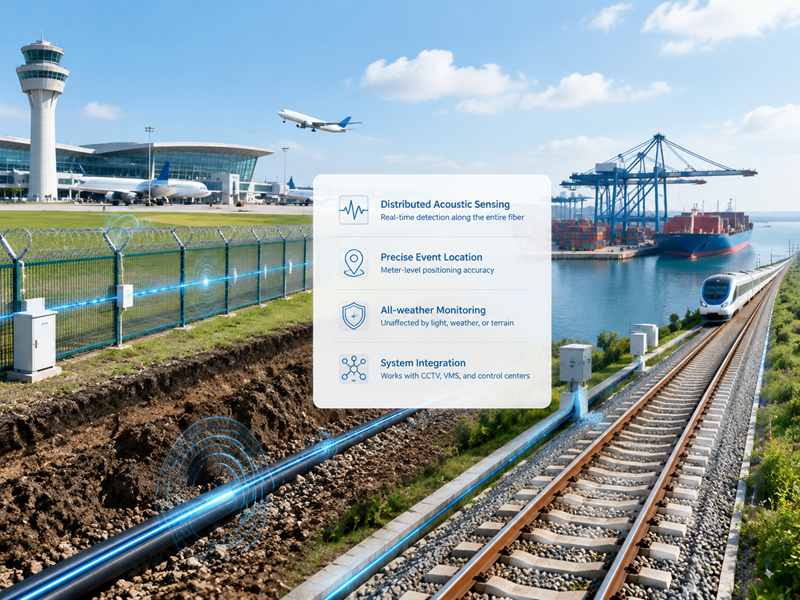
Optical Fiber Quality and Sensing Cable Structure
The sensing fiber structure, protective layers, and mechanical strength directly influence DTS performance across different operating environments.
For buried cable intrusion detection, durable sensing cables ensure stable transmission, reduce attenuation risks, and maintain accurate temperature monitoring.
The main factors related to fiber structure include:
- Fiber material consistency
- Protective layer design
- Mechanical resistance
- Waterproof performance
- Bending tolerance
For perimeter security applications, fiber optic intrusion detection systems often require specially designed sensing cables to maintain stable performance along fences, underground areas, or large protected boundaries.
Spatial Resolution and Sensing Distance
Spatial resolution refers to the minimum interval over which a DTS system is capable of identifying temperature discrepancies, which exerts a direct influence on the positioning precision of thermal anomalies.
Extended sensing ranges demand sophisticated signal processing algorithms. To guarantee stable system operation, it is essential to strike a balance among monitoring coverage, spatial resolution and temperature measurement precision.
| DTS Parameter | Typical Consideration | Impact on Accuracy |
| Sensing Distance | Several km to dozens of km depending on system design | Determines monitoring coverage |
| Spatial Resolution | Usually adjusted according to application needs | Influences event positioning accuracy |
| Temperature Accuracy | Depends on fiber quality and processing algorithm | Affects thermal event identification |
| Sampling Interval | Selected based on response requirements | Influences monitoring speed |
For large perimeter projects, higher spatial resolution is usually preferred in critical zones, while longer-distance monitoring may focus on coverage efficiency.
Optical Signal Loss and Fiber Attenuation
DTS systems operate based on optical signals propagating within sensing optical fibers. Signal attenuation occurring anywhere along the transmission route is likely to interfere with temperature computation outcomes.
Fiber attenuation can be caused by:
- Excessive bending
- Incorrect installation
- Fiber damage
- Connector loss
- Long-distance transmission
In real projects, optical loss is not always caused by the DTS equipment itself. Installation quality often becomes a major factor affecting final accuracy.
For example, in buried cable monitoring applications, underground pressure and improper routing may gradually affect fiber performance. In fence intrusion detection systems, unstable fixing methods may influence sensing consistency.
A well-designed fiber installation should include:
- Proper bending radius control
- Stable cable fixing
- Suitable protection structure
- Accurate route planning
Installation Method and Fiber Deployment Conditions
Continuous temperature monitoring along the entire sensing cable is realized by DTS. Hence, the installation scheme is a critical factor affecting the system’s response latency and accuracy when temperature alterations emerge.
| Application Area | Installation Method | Accuracy Consideration |
| Underground Monitoring | Buried fiber installation | Requires stable soil contact and route planning |
| Fence Security | Cable attached along fence structure | Requires consistent fixing distance |
| Pipeline Monitoring | Fiber installed near heat source | Requires good thermal contact |
| Industrial Facilities | Surface or duct installation | Requires protection from environmental interference |
When deploying buried cable intrusion detection, burial depth and soil status affect how fast temperature signals emerge. For perimeter security, irregular fiber intervals lead to varied sensitivity in separate detection regions.
Hence, fiber layout needs site-specific design for protected zones instead of applying standardized installation modes.
Environmental Temperature Changes
Ambient thermal conditions are capable of interfering with DTS measurement data, particularly for outdoor deployment scenarios.
Solar irradiation, seasonal temperature shifts, precipitation, wind and adjacent materials can generate thermal variations irrelevant to real incidents.
A robust DTS platform must effectively differentiate between:
- Normal environmental temperature changes
- Equipment heat generation
- Unauthorized intrusion activity
- Abnormal overheating conditions
| Environment | Main Temperature Influence | Design Focus |
| Outdoor Perimeter | Sunlight and weather changes | Environmental compensation |
| Underground Area | Soil temperature variation | Stable installation depth |
| Power Facilities | Equipment heat accumulation | Accurate overheating detection |
| Industrial Sites | Machinery operation heat | Event recognition capability |
When applied to security systems, temperature shifts on their own are often inadequate. Analysis of temperature profiles, lasting time and location data helps the system achieve more trustworthy alerts.
Calibration and Reference Temperature Accuracy
Calibration establishes the benchmark to guarantee measurement precision of DTS systems. Despite the adoption of premium sensing fiber, improper calibration parameters can trigger temperature errors in operational processes.
Calibration should consider:
- Fiber characteristics
- Installation environment
- Reference temperature source
- System configuration
- Long-term operating conditions
During project commissioning, engineers usually verify actual temperature values at selected points and adjust system parameters to improve measurement consistency.
For critical infrastructure monitoring, regular verification helps maintain reliable temperature positioning throughout the service life of the system.
Data Processing and Alarm Algorithm
Apart from sensing hardware, data analysis methods also exert a vital impact on DTS detection precision. The system should distinguish temperature fluctuations caused by normal backgrounds from those induced by abnormal events.
Major processing capabilities cover:
- Temperature trend analysis
- Event location calculation
- Alarm threshold adjustment
- False alarm reduction
- Multi-zone monitoring
| Processing Function | Purpose |
| Temperature Trend Analysis | Identifies continuous abnormal heating |
| Location Calculation | Determines event position along fiber |
| Alarm Threshold Setting | Adjusts sensitivity according to environment |
| Data Filtering | Reduces interference from external conditions |
In perimeter security applications, combining DTS with systems such as CCTV, access control, and other intrusion detection technologies can improve overall monitoring efficiency.
Cable Layout and Monitoring Coverage Design
The arrangement of sensing cables defines the practical coverage and detection efficiency of the monitoring system. Improper layout design may result in monitoring blind spots and excessive false alarm regions. Hence, engineers need to evaluate the structure of monitored zones prior to confirming fiber length and laying paths.
For example:
- Long fences require continuous perimeter coverage.
- Underground areas require planned cable routes.
- Critical equipment areas require higher monitoring density.
| Application Scenario | Layout Strategy | Key Requirement |
| Buried Cable Protection | Follow underground routes | Accurate intrusion location |
| Fence Monitoring | Match fence structure | Stable detection coverage |
| Large Perimeter Area | Divide into monitoring zones | Efficient alarm management |
| Industrial Equipment | Focus on heat source areas | Fast abnormal temperature response |
A Custom fiber optic intrusion detection system allows adjustments in sensing zones, cable arrangement, and monitoring distance according to project conditions.
System Configuration and Custom Requirements
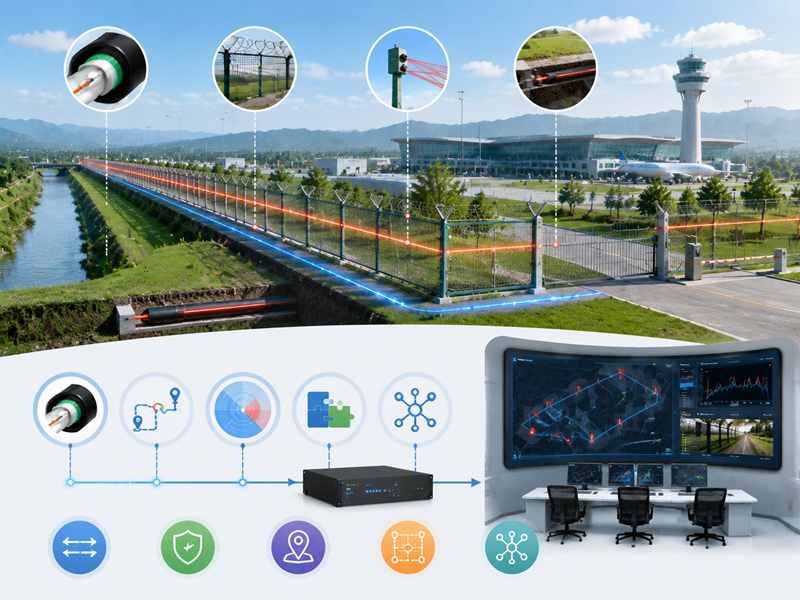
Various industries put forward distinct performance specifications for DTS technology. Off-the-shelf system configurations are frequently incompatible with complicated project demands.
Items available for personalized adjustment may cover:
- Sensing cable structure
- Monitoring distance
- Detection zones
- Communication interfaces
- Integration with existing security systems
For example, large perimeter protection projects may combine DTS technology with fiber optic intrusion detection systems or laser beam intrusion detection systems to create multiple detection layers.
| Project Requirement | Custom Configuration |
| Long-distance Monitoring | Extended sensing range design |
| Harsh Outdoor Environment | Reinforced fiber cable structure |
| Complex Site Layout | Customized sensing route |
| Multiple Security Zones | Independent monitoring areas |
| Existing Security Integration | Customized communication interface |
Well-configured DTS systems deliver enhanced operational stability, as the sensing architecture is adapted to practical application environments.
Many variables impact DTS measurement precision. Comprehensive system design rather than single components guarantees reliable temperature monitoring for industrial and security scenarios.
Reasonable engineering deployment enables DTS to offer continuous monitoring for buried regions, perimeter lines, power installations and other key infrastructure.