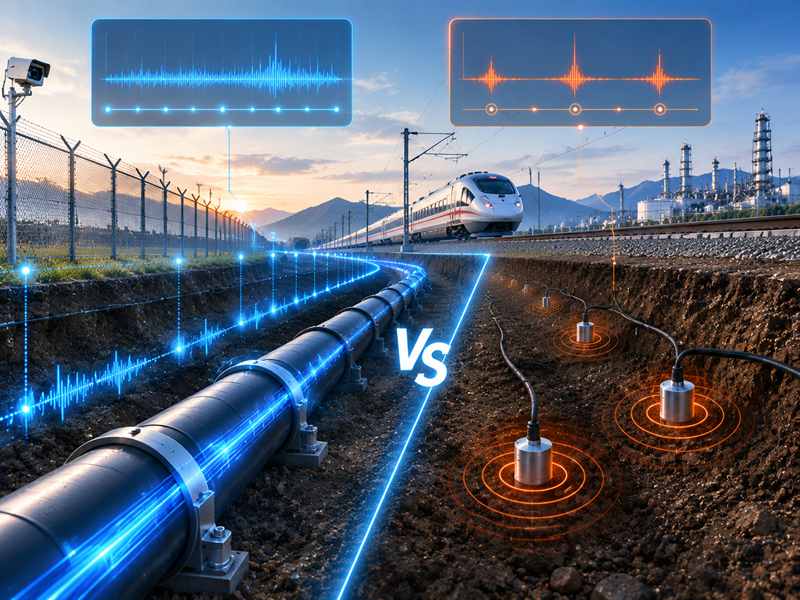
Reusing installed cable can make a distributed acoustic sensing project easier to justify. It can also create a disappointing security system if the procurement team treats every spare fiber as a ready-made sensor. The useful question is whether that particular route can reveal the particular intrusion you need to detect.
This guide proposes a practical qualification process for existing fiber in perimeter security. It separates compatibility, physical coverage, signal transfer and operational ownership, so a promising cable route becomes a testable engineering option.
Can an ordinary installed fiber become a DAS sensor?
Direct Answer: Often it can, provided the interrogator supports the fiber and the installed cable responds adequately to the target disturbance. A spare core is a candidate for evaluation, not automatic proof of usable security coverage.
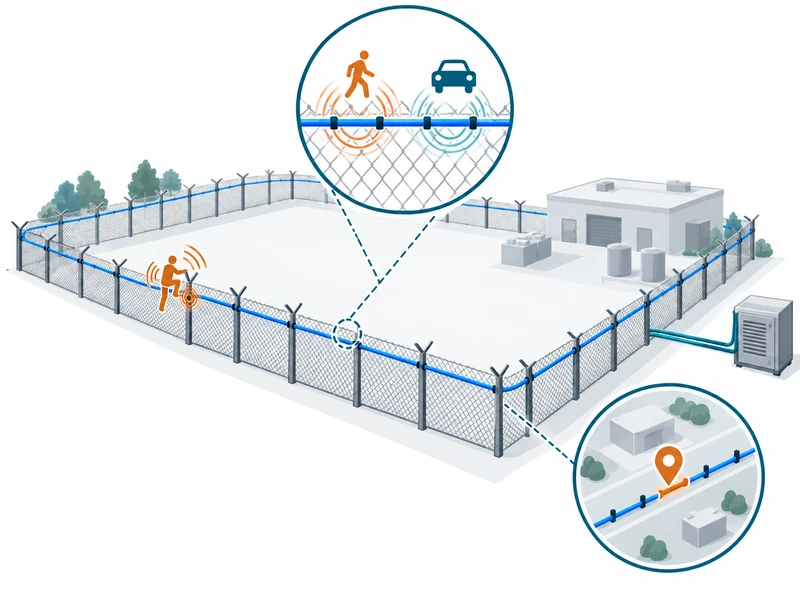
Explanation: Start with the cable records, termination points, and intended threat. An unused core running beside a protected fence may be valuable. An equally healthy core crossing the centre of the property may miss the activity that matters at the boundary. The glass can be compatible while the route is unsuitable.
Our recommended decision order is route first, coupling second, optical qualification third, and commercial comparison after those checks. This order prevents a common budgeting mistake: approving a low installation price before discovering that a new sensing route is still required. Desktop records can establish a shortlist, but walking the route often exposes detours, unrecorded chambers, and sections carried on another structure.
Also separate the cable from the individual core. One cable can contain working communication fibers alongside spare fibers. Availability must be confirmed at both ends and through intermediate patching. A disconnected connector at one cabinet does not establish that the entire path is unused.
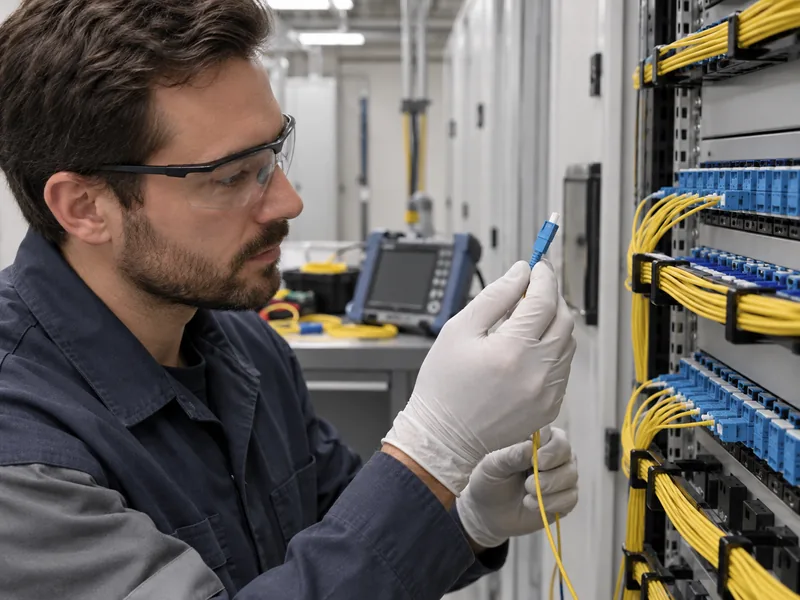
Conditions: Obtain the fiber specification, route drawing, core allocation and access rights. Ask the DAS supplier to confirm compatibility with the actual cable plant. Avoid assuming that support for one single-mode fiber means support for every multimode or specialist cable.
Evidence: AP Sensing’s explanation of existing telecom fiber for DAS identifies route suitability, access, and loss budget as qualification factors. That supports conditional reuse, rather than a universal compatibility claim.
Related Article: Review the sensing mechanism in our introduction to distributed acoustic sensing before specifying a retrofit.
Does reusing a cable mean sharing a live communication fiber?
Direct Answer: No. Using an unused core within an existing cable and adding sensing to a core carrying traffic are different engineering arrangements. Evaluate them separately.
Explanation: For a retrofit, a documented spare core is usually the clearer starting point. It gives the sensing team a defined optical path without treating the communications network as an experimental component. Even then, ownership matters: a fiber reserved for future networking may not be available for long-term security use.
Live-core coexistence requires a specific design, with both equipment suppliers and the network owner agreeing on the optical arrangement. Do not connect an interrogator to an active link merely because both devices use optical fiber. The proposed architecture must address wavelength allocation, isolation, permitted power levels and the effect of every intervening component.
Our view is that a shared infrastructure project needs a shared change process. If the networking team can repatch the sensing core without warning, security availability depends on an undocumented assumption. Record who authorizes changes, who receives outage notices, and who restores the original mapping after maintenance.
| Available arrangement | First decision | Proof to request |
| Spare core in existing cable | Can security reserve it? | End-to-end allocation record |
| Core already carrying traffic | Is coexistence supported? | Approved optical design and joint test |
| No suitable available core | Can a new route be installed? | Survey and installation scope |
Conditions: Schedule testing through the network owner’s procedures. Maintain identifiable patch labels and a recovery plan. Compatibility must apply to the complete link, not just the bare glass.
Evidence: The acceptance evidence should include written core allocation and the results of any approved coexistence trial. A cable inventory alone cannot establish either operational permission or service continuity.
Related Article: Our DAS deployment conditions guide connects cable access with wider installation requirements.
Why can a healthy optical link still detect intrusion poorly?
Direct Answer: Optical health describes light transmission. Security sensing also requires mechanical energy from the event to reach the fiber in a useful, repeatable way.
Explanation: Imagine two cable sections with similar optical test results. One is attached to a stable fence; another sits loosely inside a duct across a service road. A fence disturbance may transfer differently into those sections. The interrogator cannot recover an event signature that never reaches its sensing path clearly enough.
This is why a commissioning test should resemble the threat. Tapping a cabinet proves that a local disturbance produces a signal. It does not establish detection of climbing at the distant boundary. Likewise, a powerful excavator response cannot be used as evidence that quiet footsteps will be detected under the same conditions.
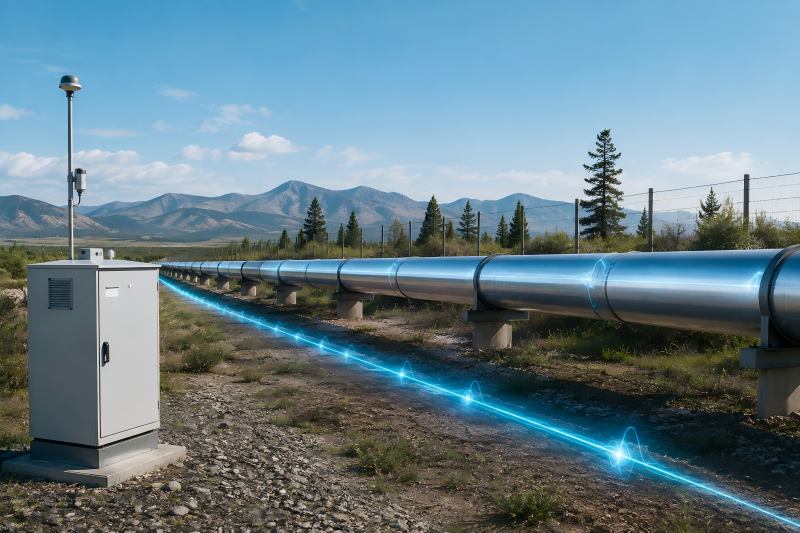
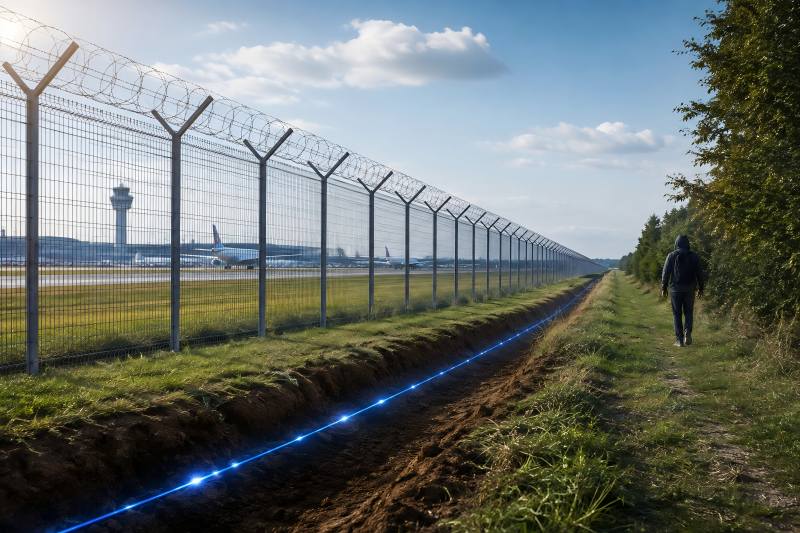
A useful retrofit survey divides the route into physical classes: fence attachment, buried cable, duct sections, bridge crossings and slack storage. Give each class its own test locations. The purpose is to expose weak sections before they become expensive arguments during acceptance.
We recommend treating coupling uncertainty as a budget item. Allow for a short trial and possible local cable replacement. This makes the reuse proposal more credible than promising that software adjustments will compensate for every installation defect.
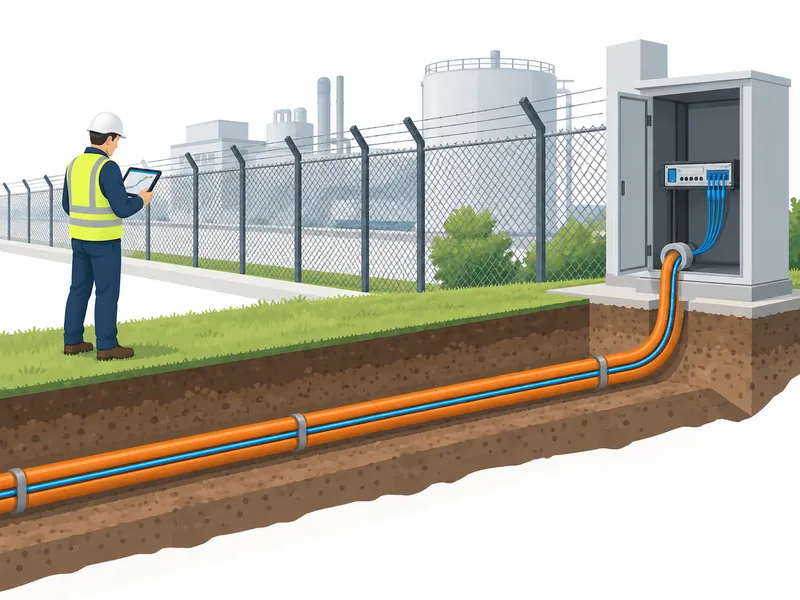
Conditions: Ground conditions, cable construction, attachment quality and nearby machinery can change the measured response. Never publish a universal burial depth or stand-off detection distance without evidence for that configuration.
Evidence: FEBUS describes preliminary site assessment and deployment-specific work in its intrusion detection approach. For your project, request event records from representative route sections, including difficult locations and ordinary background activity.
Related Article: The distributed acoustic sensing fiber optics is a product option to assess against the surveyed installation.
Which tests should qualify an existing sensing route?
Direct Answer: Combine optical inspection with a controlled detection trial and a location-mapping check. Approval requires all three: a sound optical path, demonstrated alarms and a trustworthy site map.
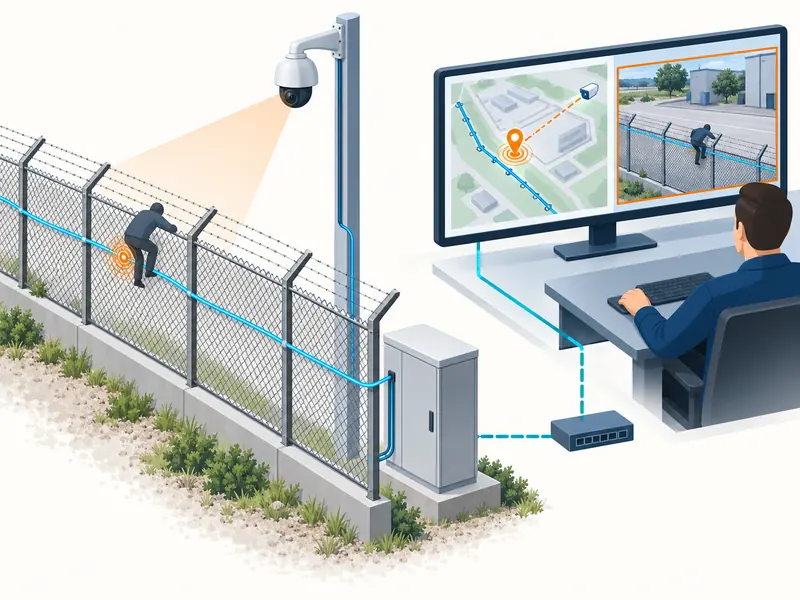
Explanation: The optical work establishes continuity and identifies suspect connections or cable sections. The detection trial checks whether agreed events generate useful alarms. The mapping check confirms that the location shown to the operator corresponds to the correct physical place.
Keep those results in one route record. For example, a repair may improve optical performance while adding extra fiber length. The old alarm map may then need adjustment. A passing optical measurement would not reveal that the camera preset now points beyond the tested location.
- Document the chosen core, route and termination identifiers.
- Inspect and test the optical link using suitable methods.
- Record controlled events at near, middle and distant locations.
- Include quiet events and nuisance sources relevant to the site.
- Compare reported alarm positions with surveyed landmarks.
- Repeat failed cases after changes and retain the configuration used.
Our proposed acceptance rule is simple: approve each route class on its own evidence. Strong performance on a short, convenient section should not stand in for an inaccessible stretch with different cable construction.
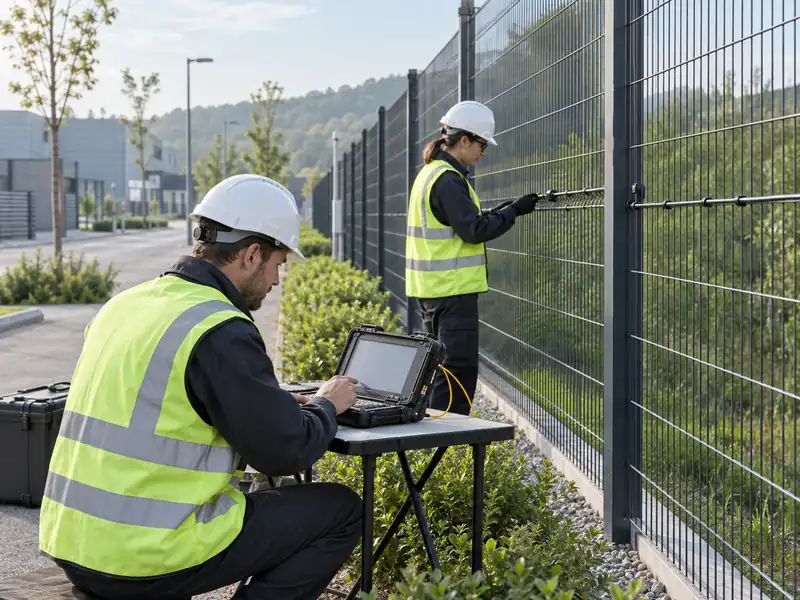
Conditions: Agree event types, repetitions, allowable location error and nuisance-alarm assessment periods before testing. Report unsuccessful trials as well as successful ones. Tests conducted on one calm afternoon provide limited evidence about seasonal operation.
Evidence: The Fiber Optic Association explains how OTDR testing helps identify cable length, splices and faults. It distinguishes this from insertion-loss measurement using a source and power meter. Neither test alone proves intrusion detection performance.
Related Article: Use our perimeter security acceptance checklist to organize the field evidence.
When should a project replace rather than reuse the fiber?
Direct Answer: Install new sensing cable when correcting route gaps, uncertain access, or poor coupling would cost more than a purpose-designed route with demonstrable performance.
Explanation: Compare complete alternatives. Reuse may avoid trenching but introduce recurring lease charges, patching coordination, or difficult troubleshooting. New cable may cost more initially while giving security a route that follows the actual boundary and has a clear maintenance owner.
A mixed solution can be sensible. Keep qualified sections, replace weak sections, and document the transitions. The decision should follow demonstrated coverage rather than a target percentage of reused cable. There is little value in boasting that almost all cable was retained if the remaining blind section protects the most important entrance.
Choose the sensing architecture at the same time. Some sites require continuous position information; others can respond effectively to a clearly identified zone. Comparing these needs early can prevent spending on detail that the response process cannot use.
Conditions: Include civil work, testing, mapping, maintenance access, and repair responsibilities in the comparison. Specify how cable modifications will trigger retesting during operation.
Evidence: The strongest decision record contains two scoped quotations and the same acceptance requirements for both. Treat untested coverage and unresolved ownership as open costs, rather than assigning them a convenient value of zero.
Related Article: Where zone-level indication is sufficient, compare the F5 zone-based fiber sensing option against the location detail your security team actually needs.