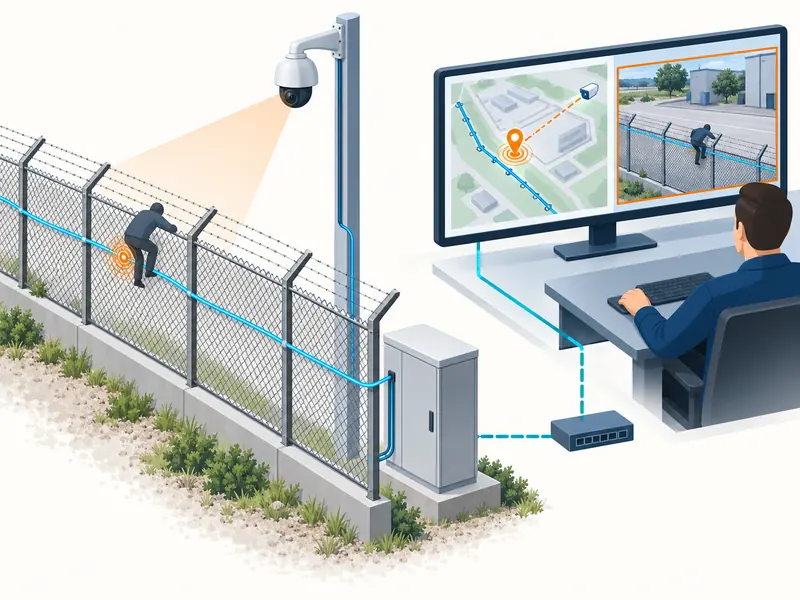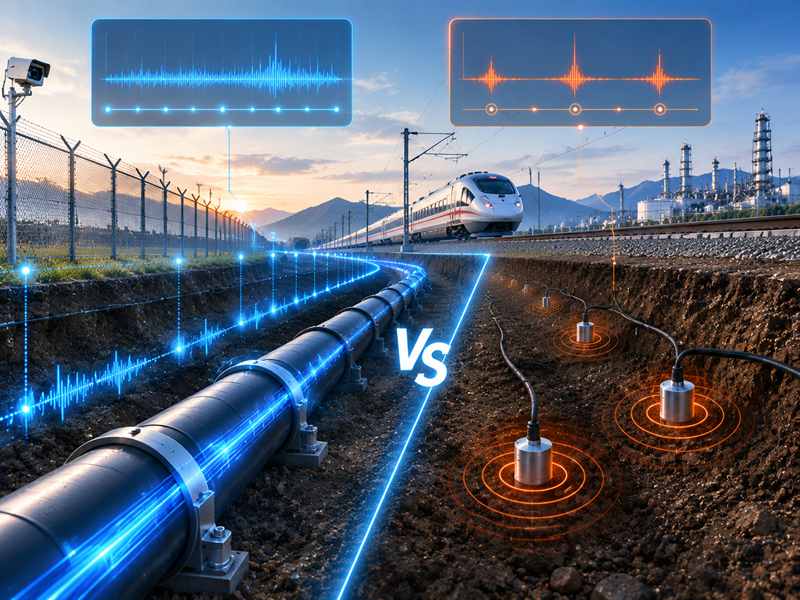
A useful DAS perimeter security budget begins with a defined site and response requirement. An interrogator price alone leaves out the work that turns an optical measurement into an alarm the control room can use.
This article explains how to build a comparable quotation and assess whole-life cost. It intentionally avoids presenting an unsupported universal price: different routes, installation conditions and integration requirements can produce very different scopes.
What should a DAS perimeter security quotation include?
Direct Answer: Request a complete installed and commissioned scope, with separate lines for equipment, sensing cable, installation, integration, testing and ongoing services. State what the customer will supply as clearly as what the vendor will supply.
Explanation: Two offers can both say “DAS system” while covering different responsibilities. One may include only the interrogator and software. Another may include survey work, cable fittings, equipment housing, route mapping and operator training. Comparing their totals before aligning the scope rewards omissions.
Our recommended approach is to divide the quotation into deliverables that someone can verify. “Integration included” is too vague. “An agreed alarm triggers the correct camera view and creates a retrievable event record” describes an outcome that can be demonstrated.
| Budget area | Ask the supplier to itemize |
| Equipment | Interrogator, channels, servers, software and licenses |
| Field installation | Cable, fittings, splicing, civil work and reinstatement |
| Integration | Interfaces, camera rules, map configuration and testing |
| Handover | Acceptance trials, drawings, training and documentation |
| Operation | Support, renewals, maintenance and planned retesting |
Include exclusions beside the corresponding line rather than in an easily missed appendix. Reviewing exclusions line by line lets the buyer assign unfinished work before appointing contractors.
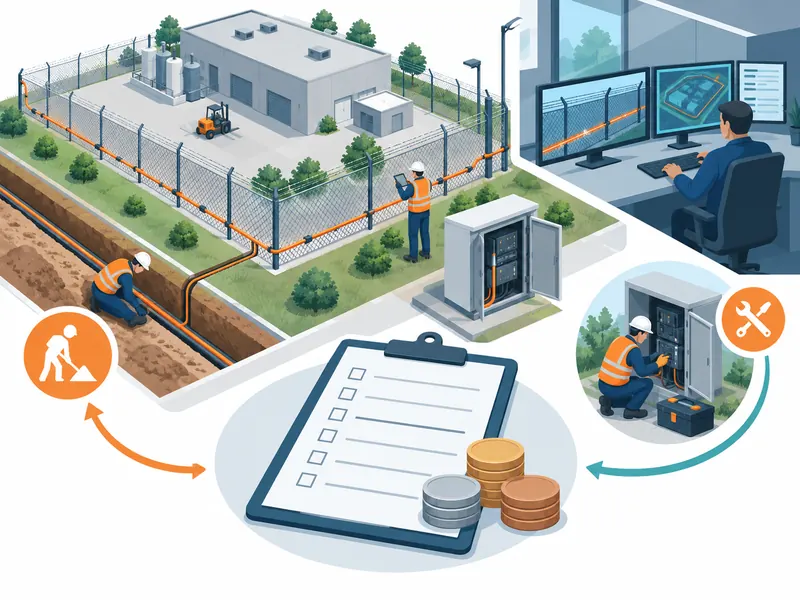
Conditions: Confirm currency, taxes, delivery terms, warranty scope and quotation validity. Separate one-time expenditure from recurring charges, and identify optional resilience features rather than silently bundling them into a headline total.
Evidence: Ask for a bill of quantities tied to the route drawing and a deliverables schedule. These project documents provide a firmer basis for comparison than an unrelated price found online.
Related Article: Our DAS perimeter security guide explains how the main parts form an operating system.
Why can two perimeters of the same length cost differently?
Direct Answer: Boundary length is only one cost driver. Installation method, route access, cable condition, equipment locations and the number of operational interfaces can materially change the work required.
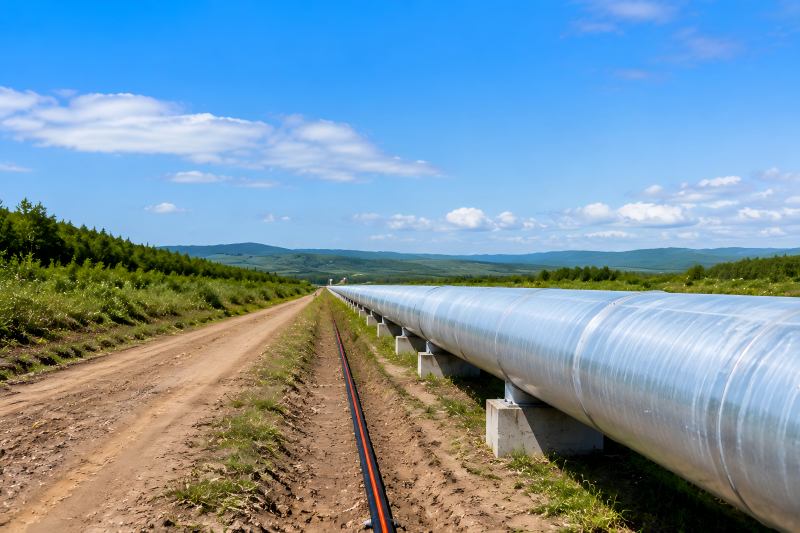
Explanation: Compare a fence that already has accessible cable supports with a boundary requiring excavation through paved areas. Equal distances do not imply equal labour or reinstatement costs. A remote section may also require additional communications, protected equipment accommodation or maintenance access.
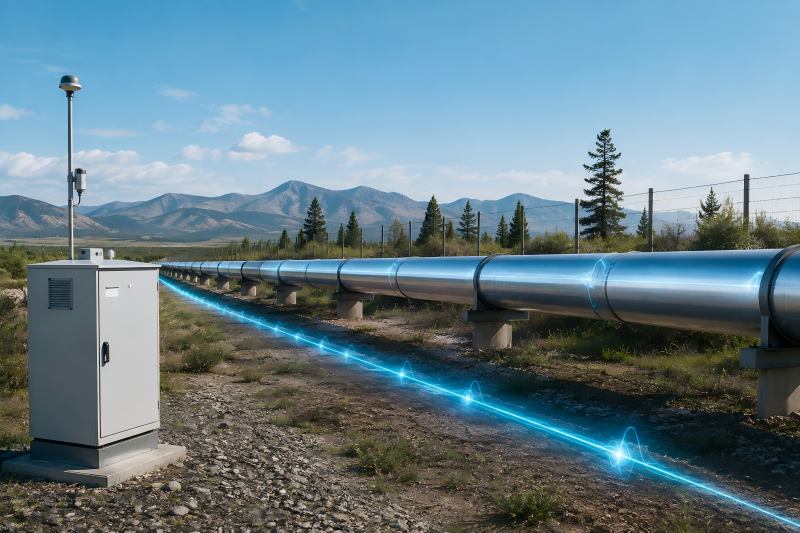
Existing fiber can improve the economics when it follows the right route and passes qualification. It can also add survey and coordination effort if ownership is unclear or sections are physically unsuitable for sensing. Our view is that “existing cable” belongs in the assumptions register until its reuse has been demonstrated.
Geometry matters too. A route beginning close to the equipment room has a different lead-in requirement from one reached through a long service corridor. Multiple disconnected areas may require an architecture that a single perimeter-length figure conceals.
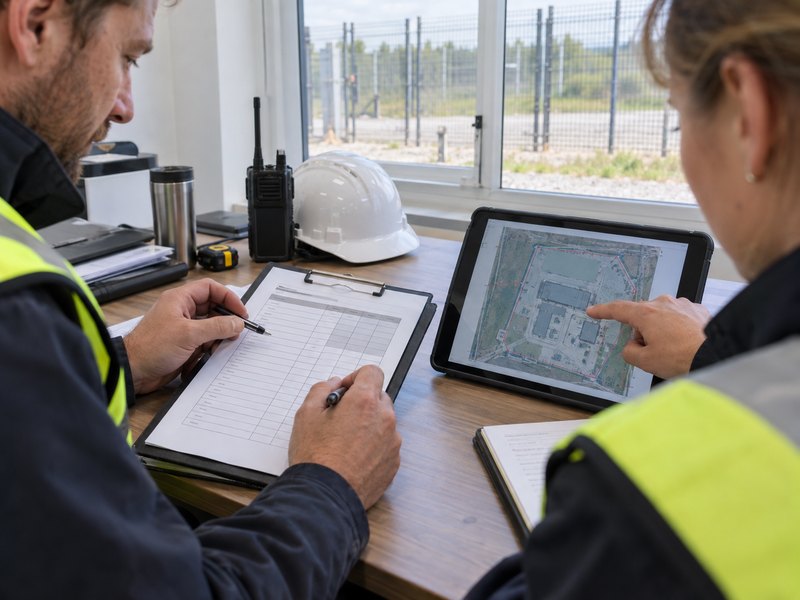
Ask the surveyor to mark expensive transitions: gates, roads, walls, drainage crossings and changes between fence-mounted and buried sections. Those locations often deserve individual allowances instead of a uniform installation rate.
Conditions: Use the same site drawing and installation assumptions for every bidder. Request separate options when the design has unresolved alternatives, such as retaining an existing duct route or installing a dedicated sensing cable.
Evidence: Sensonic’s discussion of DAS cost considerations notes that economics depend on scale and application. Treat that as context, not as a price benchmark for a different perimeter.
Related Article: Check our fiber sensing deployment requirements before fixing the installation allowance.
How should buyers compare cost per kilometre?
Direct Answer: Use cost per kilometre only after defining the included scope and the distance being measured. It is a useful comparison aid, but a poor substitute for coverage and acceptance requirements.
Explanation: Total cable length, nominal channel capacity and protected boundary length are different denominators. Dividing a project price by unused instrument capacity makes the system appear cheaper without adding actual protection.
A more useful project metric is installed cost divided by the accepted protected route length. Even this requires care: two routes may have different threat requirements, civil conditions and integration scope. Keep those differences visible next to the result.
For illustration, assume a hypothetical project costs 100 budget units and protects five kilometres after acceptance. Its installed ratio is 20 units per protected kilometre. If the instrument can technically connect a longer fiber, that unused capacity does not reduce the money spent on the present five kilometres. These are deliberately abstract units, not market prices.
Our recommendation is to compare three outputs together: total committed expenditure, accepted coverage and the operational capability delivered. A slightly higher installation cost can be reasonable if it resolves a difficult route section or provides an interface that the lower offer excludes.
Expansion should be evaluated separately. Spare capacity may have real value, but only if the proposed extension can use it without unbudgeted equipment, licensing or installation changes.

Conditions: Normalize taxes, currency and support periods before comparing ratios. State whether the price includes cameras and network work. Do not compare hardware-only quotations with commissioned project totals.
Evidence: Require bidders to show their denominator and exclusions. Recalculate the ratio from their itemized scope and the agreed route drawing rather than copying a promotional cost-per-distance claim.
Related Article: Use distributed acoustic sensing fiber optics to request a configuration matched to the actual project length and functions.
Which operating costs are easiest to underestimate?
Direct Answer: Budget for support, fault investigation, cable repair, map updates, periodic testing and operator time spent assessing alarms. Passive field fiber does not make the complete security service maintenance-free.
Explanation: A cost model should reflect who does the work after handover. Cable damage may require a contractor; a camera replacement may require new presets; a fence alteration may change sensing behaviour. These are ordinary lifecycle activities, not necessarily evidence that the original system was defective.
Alarm workload also deserves attention. If an installation generates frequent unexplained events, staff must investigate them even when no equipment repair is needed. Conversely, suppressing too much activity to reduce workload can undermine the detection requirement. Both detection and nuisance behaviour belong in the acceptance discussion.
For a planning model, calculate annual alarm-review hours from observed daily event counts, average review time and operating days. Label the inputs as measured or assumed. Do not claim staffing savings merely because the model contains a smaller number.
- Separate software renewals from technical support coverage.
- Identify the owner of routine route inspections.
- Allow for retesting after cable or fence modifications.
- Define response times and spare-equipment arrangements.
- Include documentation updates when camera or map rules change.
Our view is that maintenance ownership is as important as the maintenance allowance. An unassigned task can remain undone even when money was included in the budget.
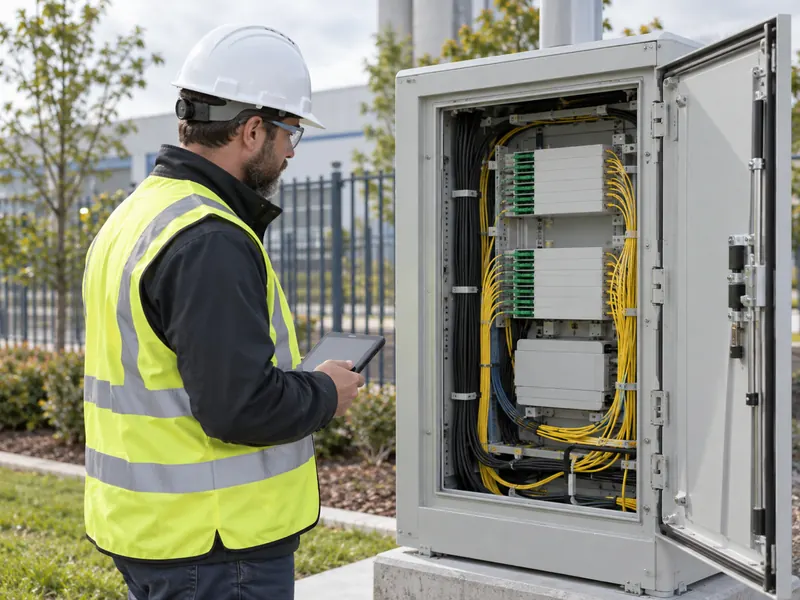
Conditions: Choose an evaluation period appropriate to the procurement and use consistent assumptions across alternatives. If applying discounting or inflation, show the method and obtain the buyer’s agreed financial inputs.
Evidence: Request a sample support schedule, exclusions and repair procedure. During the pilot, log actual alarm-review time and maintenance interventions instead of relying entirely on estimates.
Related Article: The PIDS acceptance checklist helps connect promised performance with observable operating results.
Which savings preserve the agreed perimeter protection?
Direct Answer: Remove unnecessary scope, qualify reusable infrastructure and match the sensing architecture to the response task. Preserve the agreed coverage and test requirements while comparing alternatives.
Explanation: Start with the decisions that affect the design. Does the control room need continuous event positioning, or can well-defined sectors support its camera and patrol plan? Which interfaces are essential at launch? Which extensions are genuinely funded rather than merely possible?
A staged project can make sense when the first phase provides a complete, useful security function. It is less convincing when it installs equipment but leaves critical route gaps or the operator workflow unfinished. Define a working outcome for every phase.
Our recommended sequence is survey, representative trial, scoped quotation and acceptance plan. This spends some effort before purchase to reduce larger uncertainties later. It also gives suppliers a fairer basis for proposing value engineering.
Ask each bidder to explain what changes when an option is removed. A cheaper quotation should show the resulting effect on coverage, resilience or operator capability. That explanation is more useful than an unexplained discount.
Keep a short decision log identifying accepted compromises and the person responsible for them. It prevents a deliberately omitted feature from returning later as a disputed expectation during commissioning.
Conditions: Treat a different sensing architecture as a new technical option requiring review. Do not assume that a lower equipment price delivers identical event information or integration behaviour.
Evidence: Compare alternatives against one requirements matrix and ask for demonstrations of the functions that remain. Cost reduction is defensible when the accepted security outcome is still demonstrated.
Related Article: Evaluate F5 zone-based fiber intrusion detection where zone-level alarms satisfy the site’s response design.