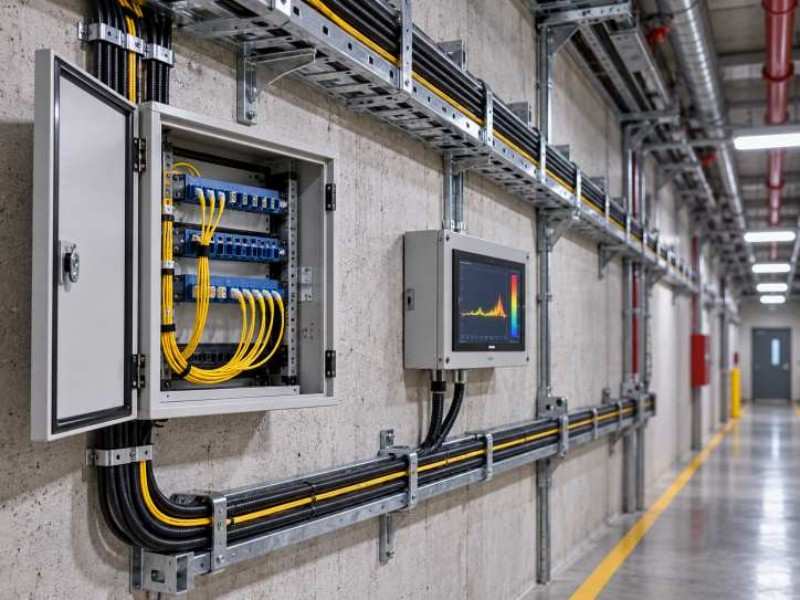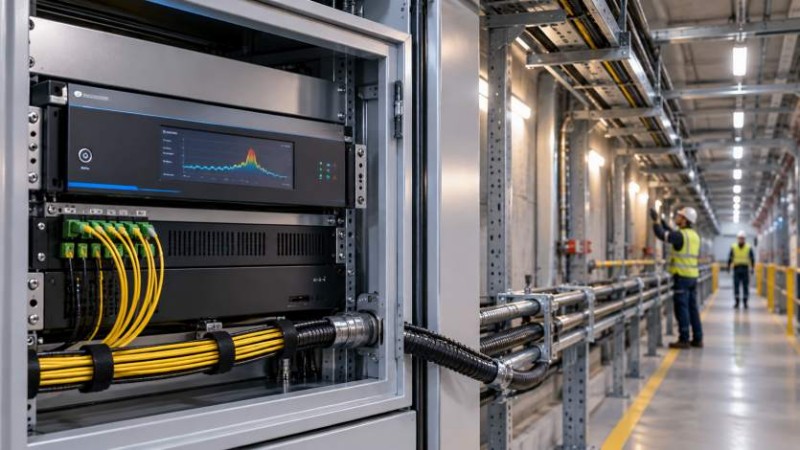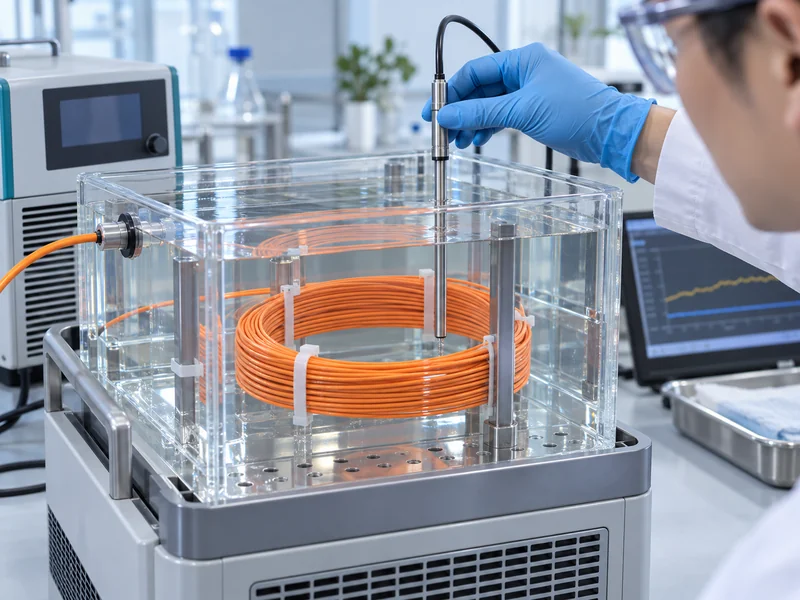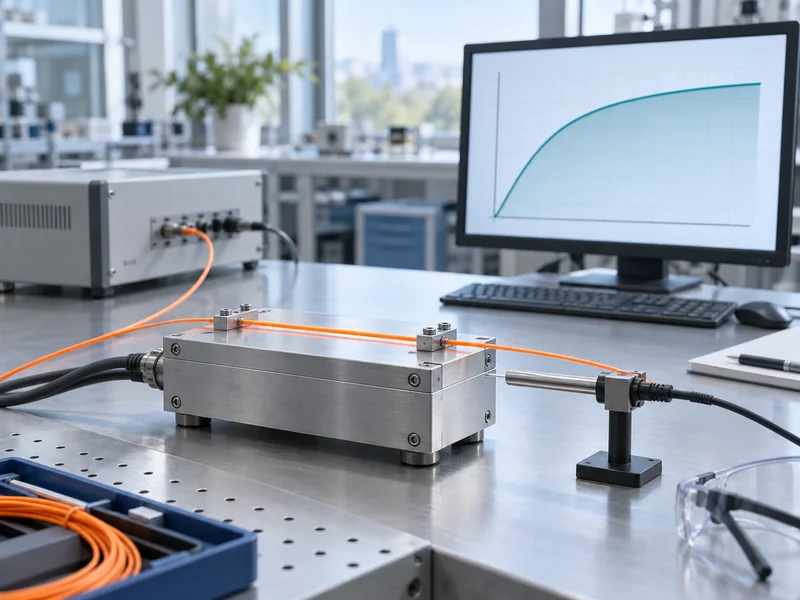

Yes, existing fiber optic cables can sometimes be reused for Distributed Temperature Sensing (DTS), but not every installed fiber is suitable. Successful reuse depends on fiber compatibility, available spare fibers, optical loss, cable construction, and the thermal relationship between the fiber and the monitored asset.
How Does DTS Work with Existing Fiber Optic Cables?
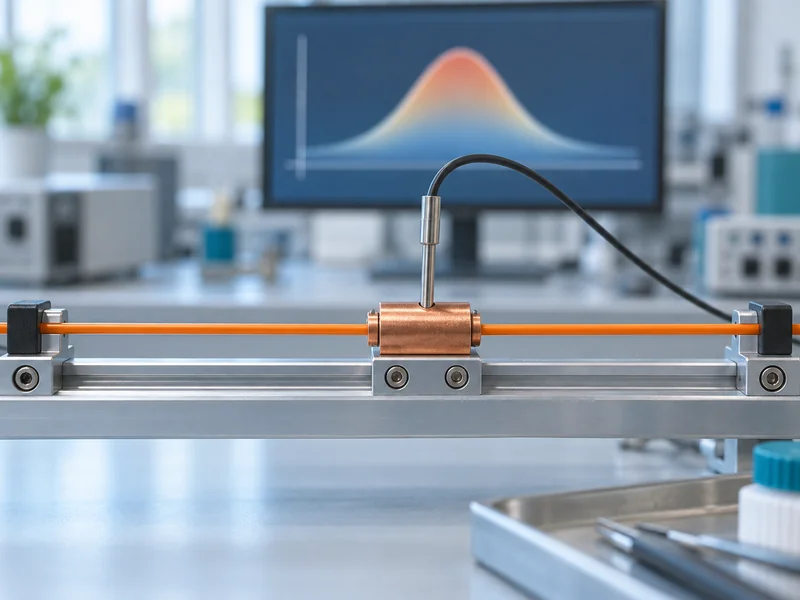
Distributed Temperature Sensing measures temperature along an optical fiber rather than at individual sensor locations. In Raman-based DTS systems, an interrogator sends optical pulses into the fiber and analyzes temperature-dependent backscattered light.
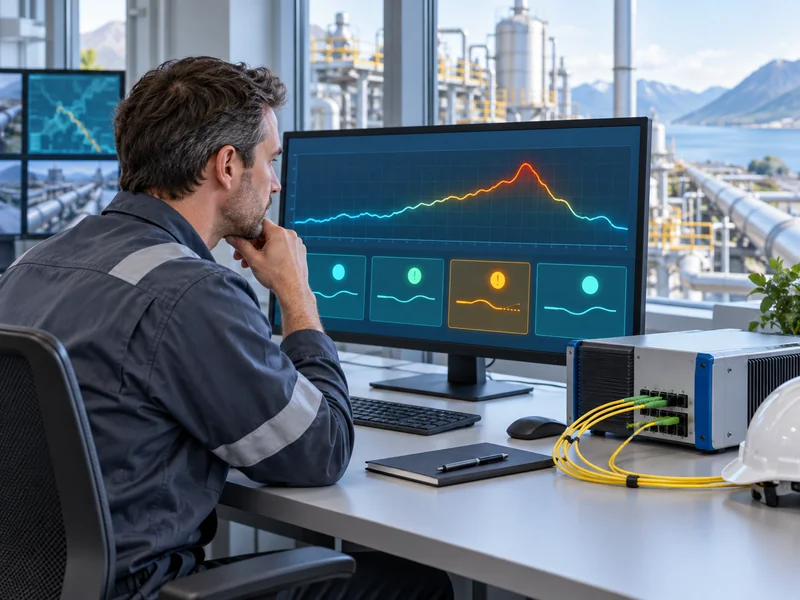
The resulting temperature profile allows operators to identify abnormal temperature changes along the monitored route. Unlike traditional point sensors, DTS provides measurements across many positions using a continuous sensing fiber.
A typical DTS installation includes:
- DTS interrogator: Generates optical pulses and processes returning signals.
- Sensing fiber: Acts as the temperature-sensitive medium.
- Optical connections: Connect the interrogator to the sensing route.
- Monitoring software: Displays temperature profiles and alarm locations.
Existing optical fibers may serve as sensing elements if their specifications and installation conditions are suitable. However, compatibility must be confirmed with the DTS equipment manufacturer.
Which Existing Fiber Types Are Compatible with DTS?
Fiber type is one of the first technical requirements to verify. Single-mode and multimode fibers have different optical characteristics, and DTS instruments are designed for particular fiber configurations.
Single-Mode vs. Multimode Fiber
| Fiber Type | Typical Application | DTS Compatibility |
| Single-mode fiber (OS1/OS2) | Long-distance telecommunications | Depends on DTS technology and instrument design |
| Multimode 50/125 μm | Enterprise and industrial networks | Possible with compatible DTS equipment |
| Multimode 62.5/125 μm | Legacy networks and industrial installations | Suitable for certain Raman DTS systems |
| Specialty sensing fiber | Dedicated temperature monitoring | Depends on manufacturer specifications |
Many Raman-based DTS instruments use multimode fiber, although other sensing technologies and configurations may support single-mode fiber.
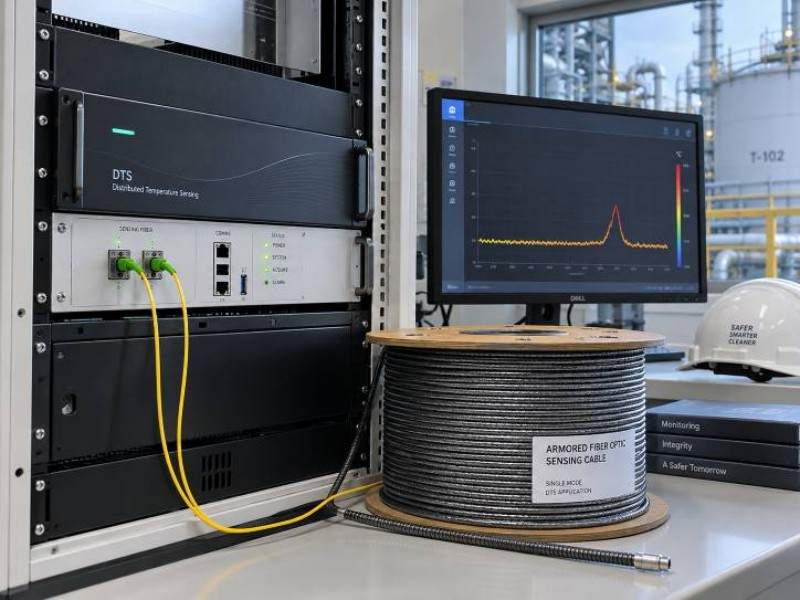
For example, the distributed temperature sensing fiber optic is presented with a dedicated sensing cable using GI 62.5/125 multimode optical fiber and protective polymer and armored layers.
This provides a reference for evaluating fiber compatibility, but it does not establish that every existing 62.5/125 μm cable is suitable for the E3 system.
Engineering recommendation: Confirm the fiber core diameter, optical characteristics, operating wavelength, and DTS manufacturer requirements before planning reuse.
Can Spare Fibers in an Existing Cable Be Used?
Many industrial communication cables contain more fibers than are currently required. These unused fibers may offer a practical option for adding temperature monitoring without installing an entirely new cable route.
However, an available fiber is not automatically suitable for DTS. Its continuity, connection arrangement, optical loss, and physical location must be verified.
Key Conditions for Spare Fiber Reuse
- The fiber type matches the DTS interrogator specifications.
- The fiber provides a continuous optical path through the required monitoring route.
- The total optical loss remains within the instrument’s supported budget.
- The cable is positioned close enough to the monitored environment or equipment.
- The spare fiber is not allocated to another service.
For conventional Raman DTS, a dedicated fiber is generally the simpler approach. Sharing an active telecommunications fiber requires an explicitly supported design and should not be assumed possible.
Why Optical Compatibility Alone Is Not Enough
A fiber may transmit optical signals successfully while remaining unsuitable for temperature monitoring. The main reason is that DTS measures temperature at the fiber’s physical location, not necessarily the temperature of nearby equipment.
For example, a telecommunications cable installed several meters away from a power cable may provide useful ambient temperature information but cannot automatically represent the power cable’s surface temperature.
| Installation Condition | Potential DTS Result |
| Fiber in direct contact with a monitored surface | Better thermal coupling |
| Fiber inside a protective conduit | Potentially slower temperature response |
| Fiber separated from equipment by an air gap | Weaker thermal relationship |
| Fiber buried near a pipeline | Temperature response influenced by soil and distance |
| Fiber inside an insulated cable assembly | Measurement depends on fiber location and insulation |
This distinction is especially important for detecting localized overheating.
The key question is not only whether the fiber can transmit DTS signals, but whether its position allows the system to detect the temperature changes that matter.
Evaluate Optical Loss Before Reusing Existing Fiber
Existing fiber networks often contain splices, connectors, bends, and sections installed at different times. These components introduce optical attenuation that can affect DTS measurement performance.
Raman backscattered signals are relatively weak, making optical loss an important design consideration, particularly over longer sensing distances.
Optical Assessment Checklist
| Inspection Item | Purpose |
| Fiber continuity | Identify broken or disconnected sections |
| OTDR testing | Locate optical events and estimate attenuation |
| Connector inspection | Identify contamination or damage |
| Splice assessment | Locate excessive connection losses |
| Fiber length verification | Confirm the actual optical route |
| Instrument compatibility | Verify operation within the DTS optical budget |
Testing should include measurements appropriate to the intended DTS operating wavelength and configuration. Standard telecommunications test results alone may not fully establish sensing performance.
Suppliers should evaluate whether the proposed fiber route can deliver the required temperature accuracy, measurement distance, and update time.
Assess Cable Construction and Environmental Conditions
Most existing communication cables are designed primarily for optical transmission and mechanical protection. Dedicated DTS cables may use construction features selected for particular temperature ranges or industrial environments.
Cable jacket materials, armor, installation methods, and mechanical protection can affect suitability for temperature monitoring.
Important factors include:
- Maximum and minimum cable operating temperatures.
- Cable resistance to moisture, chemicals, and mechanical damage.
- Minimum bending radius and existing installation stress.
- Thermal response through cable jackets and protective layers.
- Long-term durability in the intended operating environment.
For example, a fiber cable installed in a dry equipment room may not be suitable for direct installation in a hot industrial area.
Where existing cable specifications are unavailable, the project may require additional inspection or manufacturer confirmation.
Existing Fiber vs. Dedicated DTS Sensing Cable
Reusing existing infrastructure can provide economic advantages, but the lowest installation cost does not always produce the most effective monitoring system.
| Evaluation Factor | Existing Fiber | Dedicated DTS Cable |
| Initial installation cost | Potentially lower | Additional installation expense |
| Fiber compatibility | Requires verification | Selected for the DTS system |
| Route flexibility | Limited by existing layout | Can follow monitoring requirements |
| Thermal contact | May be unsuitable | Can be designed for better contact |
| Optical condition | Depends on cable history | Can be tested during installation |
| Maintenance access | Depends on existing network | Can be planned around sensing needs |
| Expansion | Limited by available fibers | Can include future capacity |
The decision should consider both installation savings and monitoring objectives.
For example, reusing an existing fiber may be reasonable for observing temperature trends along a cable corridor. Dedicated sensing cable may be preferable when a project requires reliable thermal contact with specific power cable sections.
How to Evaluate Existing Fiber for DTS Reuse
A structured feasibility assessment can prevent unnecessary equipment purchases and installation changes.
- Collect cable documentation. Review fiber type, route drawings, splice records, and installation history.
- Confirm spare fiber availability. Identify fibers that can be assigned to DTS without affecting existing services.
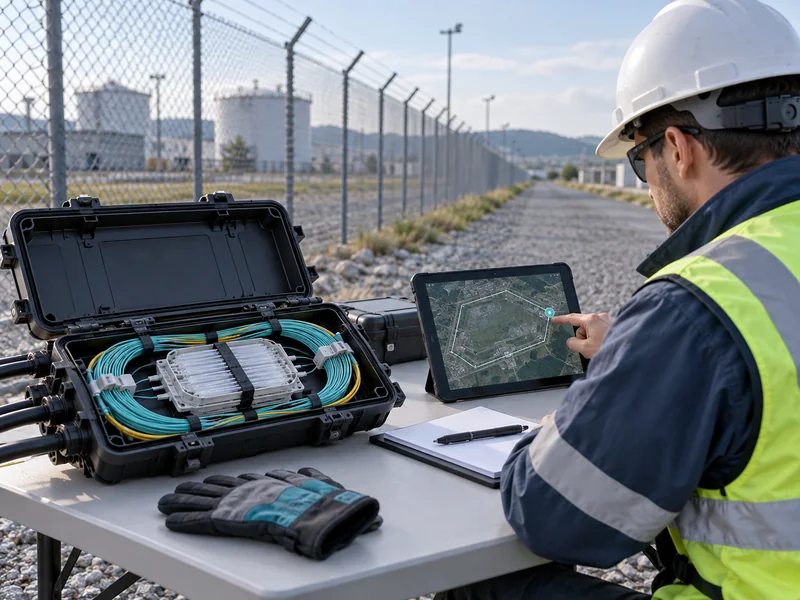
- Inspect the optical route. Test continuity, attenuation, connector condition, and splice losses.
- Evaluate thermal coupling. Determine whether the cable location reflects the intended monitoring target.
- Verify equipment compatibility. Submit fiber specifications and test results to the DTS supplier.
- Conduct a practical trial. Where feasible, test temperature response and hotspot localization before full deployment.
A controlled field trial is particularly valuable when the existing cable route contains unknown installation conditions. It can reveal the difference between detecting a temperature change along the fiber and reliably detecting an abnormal event at the monitored asset.

When Should a New DTS Cable Be Installed?
Installing dedicated sensing cable is generally preferable when existing infrastructure cannot meet the monitoring objective.
Common situations include:
- No compatible spare fiber is available.
- Optical loss exceeds the acceptable system budget.
- Existing cable routes do not cover critical monitoring locations.
- Thermal contact is insufficient for the intended detection task.
- Cable temperature ratings or environmental protection are unsuitable.
- Existing network documentation is incomplete and reliable verification is impractical.
A hybrid arrangement may also be considered. Existing fiber can be reused along suitable sections, while dedicated sensing cable is installed around critical equipment or previously uncovered areas.
However, each fiber section and its connection to the proposed DTS instrument must be technically verified.
Questions to Ask a DTS Supplier Before Reusing Fiber
Before purchasing equipment, project engineers should request written confirmation of compatibility and proposed testing requirements.
| Supplier Question | Why It Matters |
| Which fiber types are supported? | Establishes basic compatibility |
| What optical loss budget is permitted? | Determines usable route conditions |
| Can existing splices and connectors remain? | Identifies potential modification work |
| How will temperature accuracy be verified? | Establishes performance expectations |
| Is a field trial recommended? | Reduces uncertainty |
| Can existing and new cable sections be combined? | Supports partial infrastructure reuse |
| What acceptance tests are required? | Defines commissioning responsibilities |
These questions help procurement teams determine whether a connection can provide reliable monitoring rather than simply meet technical requirements.
Existing fiber optic cables may support Distributed Temperature Sensing (DTS), depending on fiber type, optical loss, cable condition, and thermal contact. Optical compatibility alone does not guarantee reliable temperature monitoring.
We provide a reference for evaluating Raman-based monitoring and sensing fiber configurations. Before reuse, existing cables should undergo optical testing, thermal assessment, and supplier verification to ensure reliable performance.