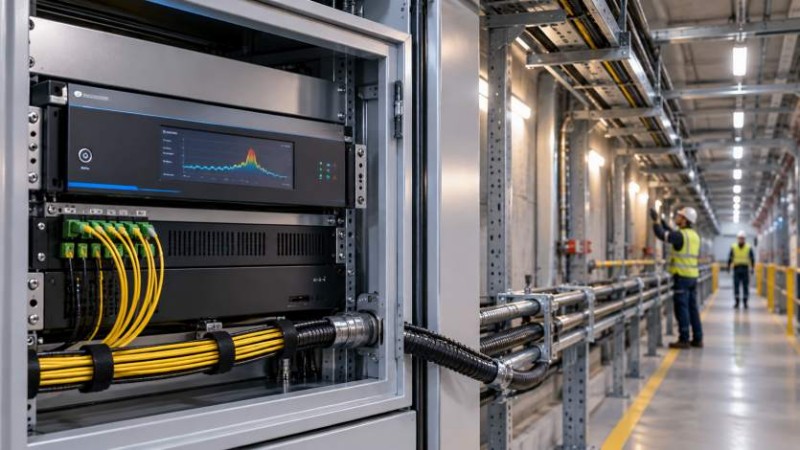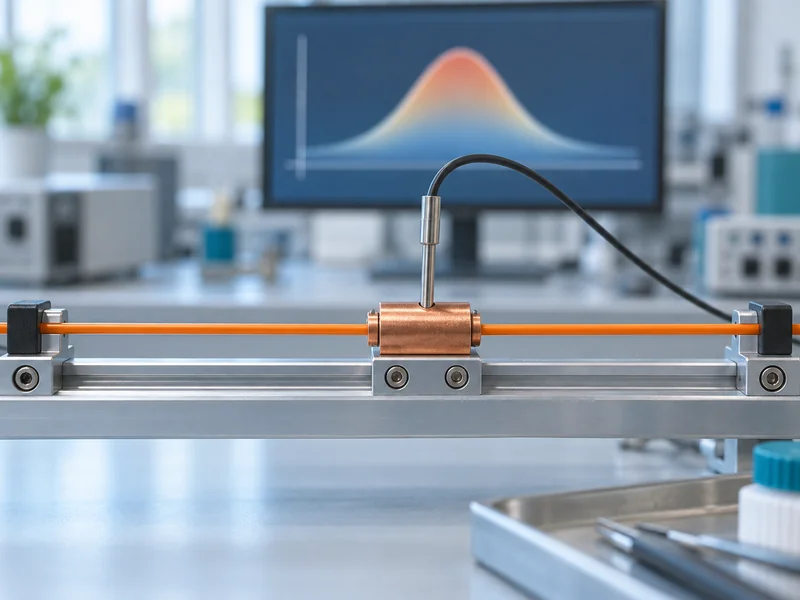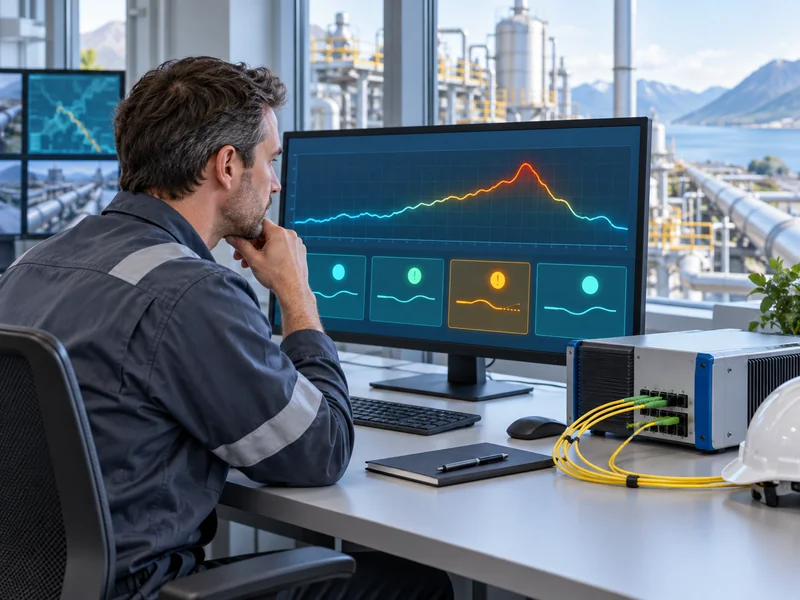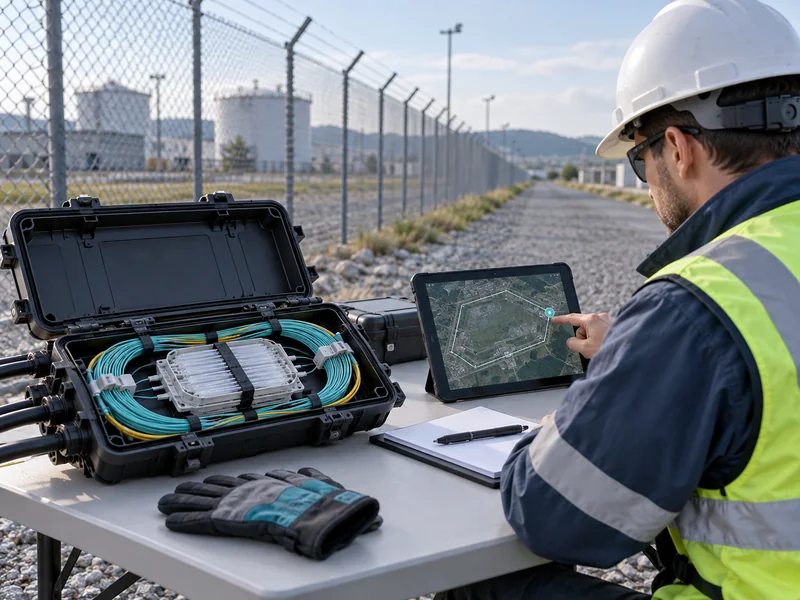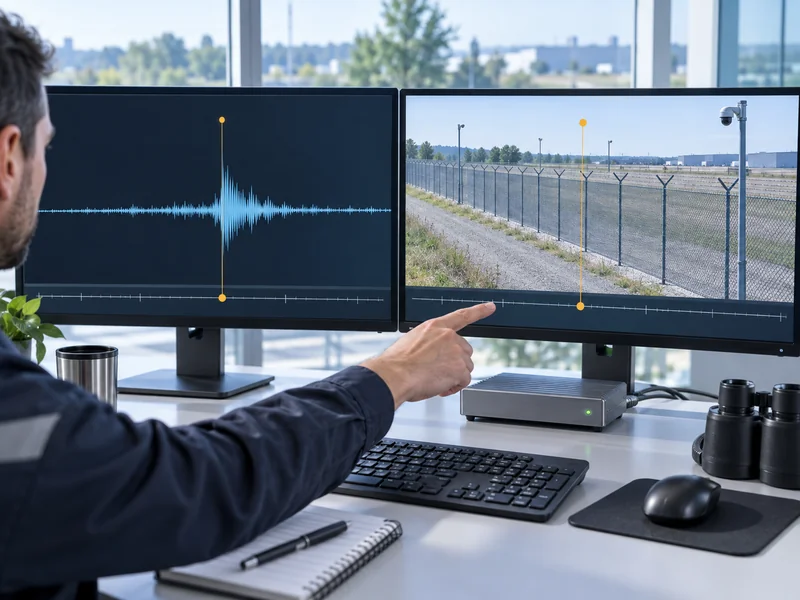
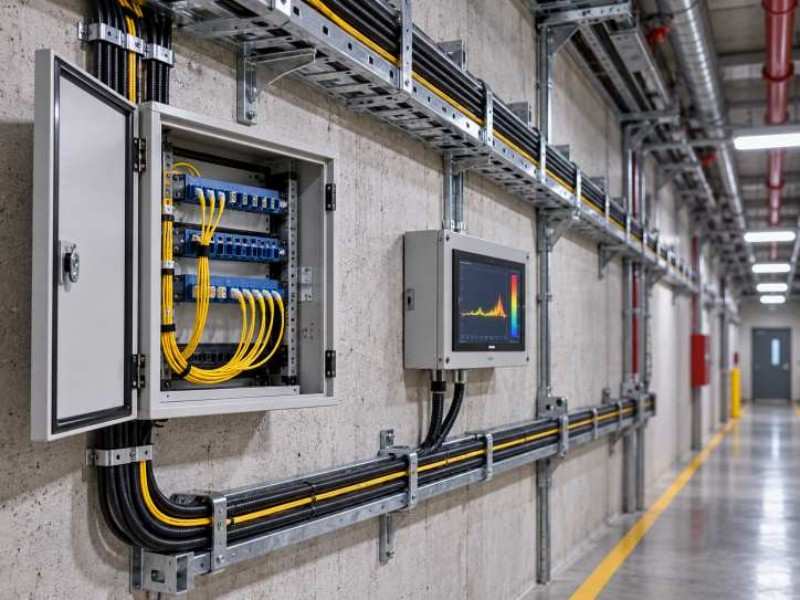
A well-prepared Request for Quotation (RFQ) for a Fiber Optic Distributed Temperature Sensing (DTS) system should clearly define monitoring objectives, installation conditions, technical requirements, and acceptance criteria—not just equipment prices.
For power cable tunnels, pipelines, and industrial facilities, a detailed RFQ helps ensure accurate, comparable supplier quotations. This guide covers essential DTS specifications, project drawings, communication interfaces, installation requirements, and acceptance testing.
Define the Monitoring Objective Before Requesting Prices
The first section of a DTS RFQ should explain why temperature monitoring is required. Different applications may use similar sensing technologies, but their installation methods, alarm requirements, and operational priorities can vary considerably.
For example, monitoring a high-voltage cable circuit involves different engineering considerations from detecting abnormal temperatures along an oil pipeline. Suppliers must understand the specific application requirements before recommending suitable hardware and sensing cable configurations.
| Application | Primary Monitoring Objective | Important RFQ Considerations |
| Power cable tunnel | Detect abnormal cable or tunnel temperatures | Cable routing, thermal contact, alarm zones |
| Oil and gas pipeline | Identify abnormal temperature patterns | Pipeline length, burial conditions, thermal environment |
| Industrial facility | Monitor critical equipment and cable routes | Installation access, temperature limits, integration |
| Traffic tunnel | Detect developing overheating or fire conditions | Detection coverage, alarm location, control-room integration |
| Warehouse | Identify abnormal heat accumulation | Cable placement, coverage, environmental conditions |
| Data center | Monitor selected thermal-risk areas | Route layout, alarm thresholds, existing monitoring systems |
An important distinction is whether the project requires equipment temperature monitoring, ambient temperature monitoring, or early fire detection. These objectives may require different cable locations and alarm logic even when the same DTS technology is considered.
RFQ recommendation: State the monitoring objective separately from the proposed equipment specifications. This allows suppliers to identify design limitations or suggest a more suitable configuration.
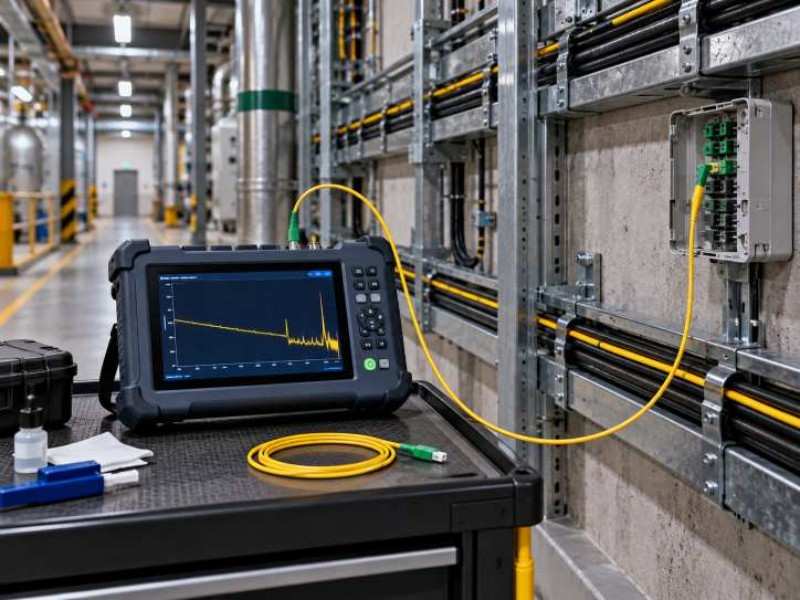
Provide Accurate Route Drawings and Monitoring Distances
Physical Route Length Is Not Always Sensing Fiber Length
One of the most common DTS quotation problems is treating the physical length of an asset as the exact length of sensing cable required. A 3 km tunnel, for example, does not necessarily require only 3 km of fiber optic sensing cable.
Additional cable may be needed for equipment connections, route deviations, vertical transitions, service loops, or multiple monitoring paths. These allowances affect material quantities, optical loss, installation effort, and overall project cost.
An RFQ should ideally include:
- General arrangement drawings showing monitored assets.
- Route drawings indicating the proposed sensing cable path.
- Approximate cable lengths for individual routes.
- Locations of the DTS host units and equipment cabinets.
- Existing ducts, cable trays, and installation constraints.
- Accessible splice points and maintenance locations.
- Any requirements for redundant or parallel sensing routes.
Separate Asset Distance From Optical Distance
A useful improvement is to create two distance records: one showing the physical asset chainage and another showing the expected optical fiber distance. This distinction becomes especially important when cables pass through service loops, junction areas, or indirect installation routes.
| Route Segment | Asset Length | Estimated Fiber Length | Installation Condition |
| Control room to tunnel entrance | 120 m | 150 m | Existing cable tray |
| Tunnel Section A | 800 m | 850 m | Parallel to power cables |
| Tunnel Section B | 1,000 m | 1,080 m | Multiple route transitions |
| Return to equipment cabinet | 100 m | 120 m | Protected conduit |
| Total | 2,020 m | 2,200 m | Preliminary estimate |
Illustrative planning example only. Actual quantities must be established from project drawings and site surveys.
The difference between the two distances affects not only procurement quantities but also hotspot location reporting. If this information is ignored, an alarm displayed at a particular optical distance may not correspond directly to the same physical distance along the monitored asset.
Specify Temperature Measurement Requirements
Define the Operating Range
Instead of simply requesting a high-accuracy DTS system, buyers should identify the temperatures the installation is expected to experience under normal, abnormal, and maximum design conditions.
The RFQ should distinguish between the temperature measurement range of the instrument and the permissible operating temperature of the sensing cable. These specifications serve different purposes and should not be used interchangeably.
A complete temperature requirement should identify:
- Expected normal operating temperature.
- Highest and lowest anticipated temperatures.
- Required temperature measurement accuracy.
- Temperature resolution and repeatability, if applicable.
- Required measurement update interval.
- Alarm thresholds and permitted adjustment ranges.
Distinguish Accuracy, Sampling Interval, and Spatial Resolution
Three DTS specifications are frequently confused during procurement: temperature accuracy, sampling interval, and spatial resolution.
Temperature accuracy describes measurement deviation under specified conditions. Sampling interval refers to the spacing of reported data positions, while spatial resolution describes how well a localized temperature change can be distinguished along the fiber.
A system reporting measurements at closely spaced intervals does not necessarily resolve a heat source of the same physical size. Suppliers should therefore state how their quoted specifications are measured and under which conditions they apply.
For reference, GATO Security’s distributed temperature sensing fiber optic is described with temperature accuracy of ±0.5°C and hotspot positioning accuracy of ±0.5 m. Its product information also identifies single-channel monitoring distances reaching 16 km, depending on the configuration.
These published figures can serve as preliminary technical references, but project-specific performance and acceptance conditions should still be confirmed through the supplier’s quotation.
Specify the DTS Hardware and Channel Configuration
The number of DTS channels should be determined by the actual monitoring architecture rather than by total route length alone. Separate routes, installation boundaries, redundancy requirements, and maintenance accessibility can influence the final channel arrangement.
A useful RFQ should request both a proposed channel allocation diagram and a detailed equipment schedule.
| Technical Item | Information Required From Supplier |
| DTS host unit | Manufacturer, model, hardware configuration |
| Channel quantity | Number of installed and available channels |
| Measurement distance | Supported distance for each proposed channel |
| Temperature performance | Accuracy, resolution, and operating conditions |
| Measurement cycle | Update time under the proposed configuration |
| Optical interface | Fiber type and connector requirements |
| Power requirements | Supply voltage and power consumption |
| Environmental suitability | Operating conditions and enclosure requirements |
| Maintenance | Diagnostics, calibration, and service requirements |
For example, GATO Security describes its E3 series as supporting multiple channel configurations, including 2-, 4-, and 8-channel versions on its detailed host-unit page. Its broader DTS solution page also mentions a 16-channel option. The availability and specifications of the exact proposed version should be confirmed when issuing an RFQ.
A practical procurement approach is to obtain a separate quotation for future system expansion. This makes it easier to compare the cost of installing additional channels later against purchasing a larger configuration initially.
Define the Sensing Fiber Cable Requirements
Cable Construction Must Match the Installation Environment
The sensing cable is not simply an accessory to the DTS host. Its physical construction, mechanical protection, and installation arrangement directly influence long-term measurement reliability.
A cable suitable for installation in a protected indoor tray may not be appropriate for direct burial, chemically aggressive environments, or locations exposed to repeated mechanical loading.
The RFQ should specify the expected cable conditions, including mechanical exposure, moisture, temperature, installation method, and required protection.
Request a Complete Cable Datasheet
| Parameter | Why It Matters |
| Fiber type | Ensures compatibility with the DTS interrogator |
| Cable construction | Determines mechanical and environmental suitability |
| Outer sheath material | Influences resistance to site exposure |
| Minimum bend radius | Prevents installation-related fiber damage |
| Tensile strength | Supports safe cable pulling |
| Operating temperature | Establishes environmental suitability |
| Optical attenuation | Influences the achievable sensing distance |
| Cable diameter | Affects conduit and tray planning |
GATO Security describes a sensing cable incorporating GI 62.5/125 multimode optical fiber with protective polymer and armored construction. This provides a useful example of the information suppliers should disclose, although the final cable choice should be based on site requirements.
An additional consideration is thermal coupling. Even when an instrument has high temperature accuracy, the measured fiber temperature may differ from the actual asset temperature if the sensing cable is poorly positioned or insulated from the heat source.
For this reason, the RFQ should describe the intended thermal contact and mounting method rather than relying only on instrument specifications.
Describe Alarm Functions and Monitoring Zones
DTS systems are commonly purchased for abnormal temperature detection, but different projects require different alarm strategies. The RFQ should explain what constitutes an actionable event and how that event should be presented to operators.
Typical alarm functions may include:
- Fixed-temperature alarm: Activated when a measured temperature exceeds a configured threshold.
- Rate-of-rise alarm: Activated when temperature increases faster than a defined rate.
- Temperature-difference alarm: Activated when a monitored location differs from a defined reference or surrounding condition.
- Fiber fault alarm: Identifies fiber breakage, signal deterioration, or other relevant monitoring faults.
The GATO Security E3 product description identifies fixed-temperature, differential-temperature, and rate-of-rise alarm functions, along with optical cable fault assessment capabilities.
Why Alarm Zones Should Be Defined Before Installation
A long sensing route may contain equipment with different normal temperatures and operating conditions. Applying one alarm threshold across the entire route could create unnecessary alarms or fail to reflect the operational risks of individual areas.
Buyers should provide a preliminary zone schedule identifying each monitored section, its purpose, and the expected alarm response. Suppliers can then confirm whether the proposed system supports the required configuration.
Specify Software and Communication Interfaces
A DTS system is rarely installed in isolation. Temperature information may need to be transmitted to a supervisory control system, building management platform, industrial network, or security monitoring center.
The RFQ should identify the existing platform, required communication protocols, network restrictions, and expected operator functions.
| Integration Requirement | Details to Include in the RFQ |
| Communication protocol | Required protocol and version |
| Network interface | Connection type and network architecture |
| Alarm output | Required data fields, contacts, or messages |
| Data visualization | Temperature curves, zones, and location maps |
| Historical records | Data retention period and retrieval requirements |
| User management | Required accounts and access permissions |
| External integration | Target platform and interface responsibility |
GATO Security describes a browser-based DTS monitoring platform supporting temperature curves, alarm status display, zone configuration, and historical data queries. Its SAM300 integration information also references API and Modbus TCP/IP connectivity, with additional video-system linkage options.
Buyers should verify which interfaces are included in the quoted scope and which require additional software, gateways, engineering services, or licenses.
Define Installation and Commissioning Responsibilities
An RFQ can contain complete equipment specifications yet still produce inconsistent quotations if installation responsibilities are unclear. Supplier quotations may vary, with some including civil work, cable installation, fiber splicing, cabinet setup, and software commissioning, while others charge separately for these services.
A responsibility matrix makes these differences easier to identify.
| Activity | Customer | DTS Supplier | Installation Contractor |
| Route survey | Confirm | Support | Support |
| Final system design | Approve | Prepare | Review |
| Cable tray preparation | Define scope | — | As contracted |
| Sensing cable supply | — | As quoted | — |
| Cable installation | — | As contracted | As contracted |
| Fiber splicing and testing | — | Define requirements | As contracted |
| Software configuration | Provide requirements | As quoted | Support |
| Commissioning | Witness | Perform or supervise | Support |
Responsibility assignments are illustrative and should be agreed upon for each project.
The RFQ should also clarify whether the supplier must attend site commissioning, provide remote technical support, train operators, or prepare final system documentation.

Establish Factory and Site Acceptance Criteria
Acceptance testing should not be left until the equipment has already been delivered. Buyers should describe the required tests during the RFQ stage so suppliers can assess technical feasibility and include the corresponding services in their quotations.
A practical approach is to separate Factory Acceptance Testing (FAT) from Site Acceptance Testing (SAT).
Factory Acceptance Testing
Factory testing may cover hardware configuration, software functions, communication interfaces, simulated alarm events, and measurement verification under agreed conditions.
Site Acceptance Testing
Site testing should establish whether the complete installed system operates correctly within its actual environment, including the sensing fiber routes and external interfaces.
Typical acceptance requirements include:
- Verification of installed hardware and channel allocation.
- Measurement of fiber continuity and optical loss.
- Temperature measurement checks at agreed reference locations.
- Verification of hotspot location reporting.
- Testing of configured alarm thresholds and outputs.
- Confirmation of software communication and data recording.
- Submission of final test reports and updated route documentation.
One particularly important consideration is how a controlled heat source will be applied during testing. The test method should be agreed in advance, taking account of cable construction, thermal contact, safety restrictions, and the instrument’s measurement characteristics.
A useful RFQ improvement is to require each acceptance criterion to include its test method, responsible party, and pass/fail condition. This helps prevent disagreements between the buyer, supplier, and installation contractor.
Request an Itemized Commercial Quotation
A complete DTS quotation should separate hardware costs from installation, engineering, software, and service costs. A single total price provides limited information and makes comparisons between suppliers difficult.
| Quotation Item | Required Pricing Details |
| DTS host unit | Model, channel configuration, quantity |
| Sensing cable | Type, length, unit price |
| Optical accessories | Connectors, splices, termination materials |
| Monitoring software | License scope and included functions |
| Integration services | Protocol configuration and testing |
| Installation | Labor, equipment, and site scope |
| Commissioning | FAT, SAT, and technical support |
| Documentation and training | Deliverables and training sessions |
| Maintenance | Warranty, support, and optional service costs |
The commercial section should additionally identify delivery terms, estimated lead time, warranty coverage, quotation validity, and exclusions.
For international projects, the RFQ should specify the applicable Incoterms and clarify whether customs clearance, duties, and local installation services are included.
Use an RFQ Checklist Before Sending the Inquiry
Before distributing the RFQ, the engineering and purchasing teams should review the document together. This final check can identify missing information that would otherwise cause repeated technical questions or quotation revisions.
DTS RFQ Preparation Checklist
[ ] Project description and monitoring objectives
[ ] Route drawings and estimated fiber quantities
[ ] Temperature range and measurement requirements
[ ] Channel configuration and hardware specifications
[ ] Sensing cable construction and installation conditions
[ ] Alarm zones and required alarm functions
[ ] Software and communication interfaces
[ ] Installation and commissioning responsibilities
[ ] FAT and SAT acceptance requirements
[ ] Itemized pricing, delivery terms, and warranty
For critical infrastructure, it is also useful to request a deviation statement. Suppliers should identify any RFQ requirement they cannot meet, along with the proposed alternative and its technical implications.
This makes supplier evaluation more transparent and reduces the risk of discovering important differences after purchase-order placement.
An effective Fiber Optic Distributed Temperature Sensing (DTS) RFQ should clearly define monitoring objectives, installation routes, temperature requirements, cable specifications, and acceptance criteria. Accurate project details help suppliers provide comparable quotations.
For power cable tunnels, pipelines, and industrial facilities, the GATO Security E3 Distributed Temperature Sensing system offers a reference for evaluating sensing configurations, alarm functions, and software integration. Final specifications should reflect actual project conditions and performance requirements.