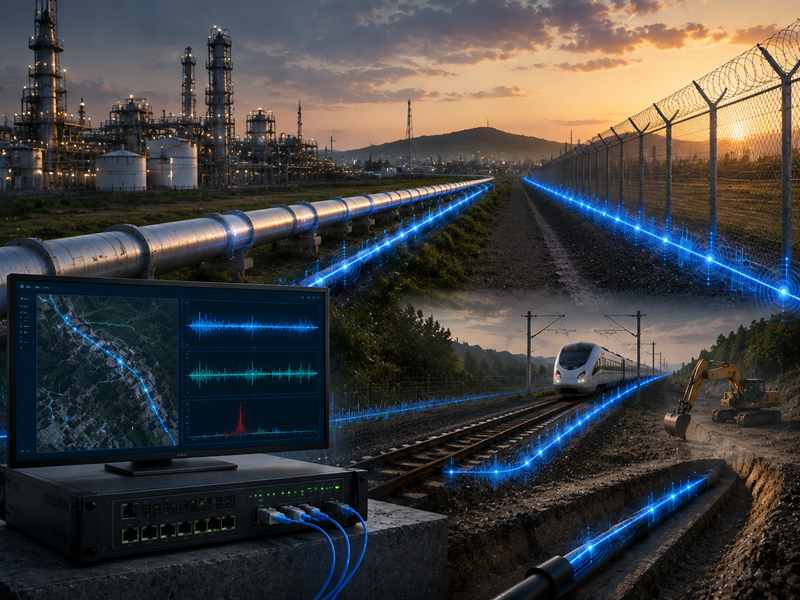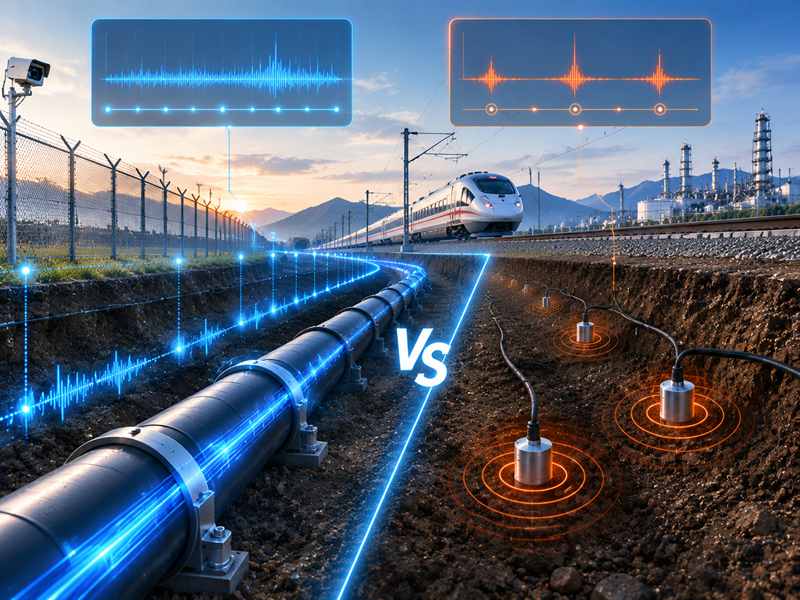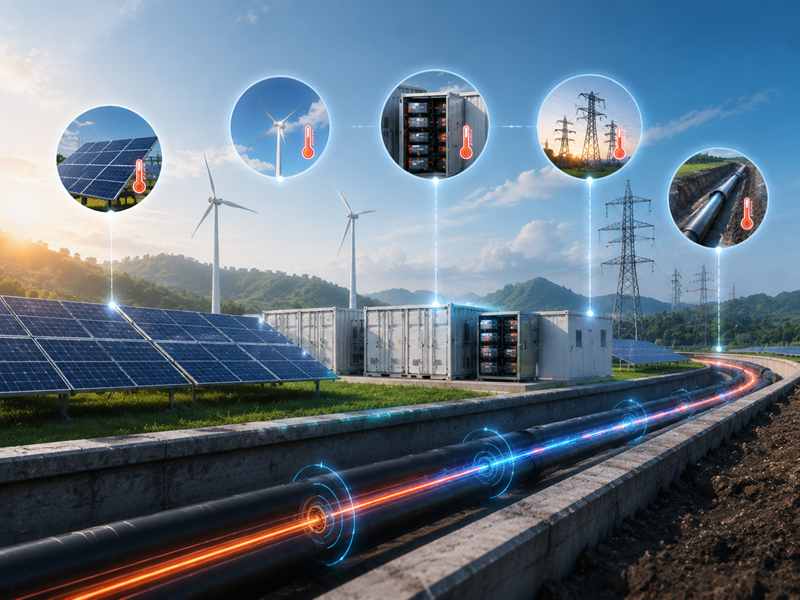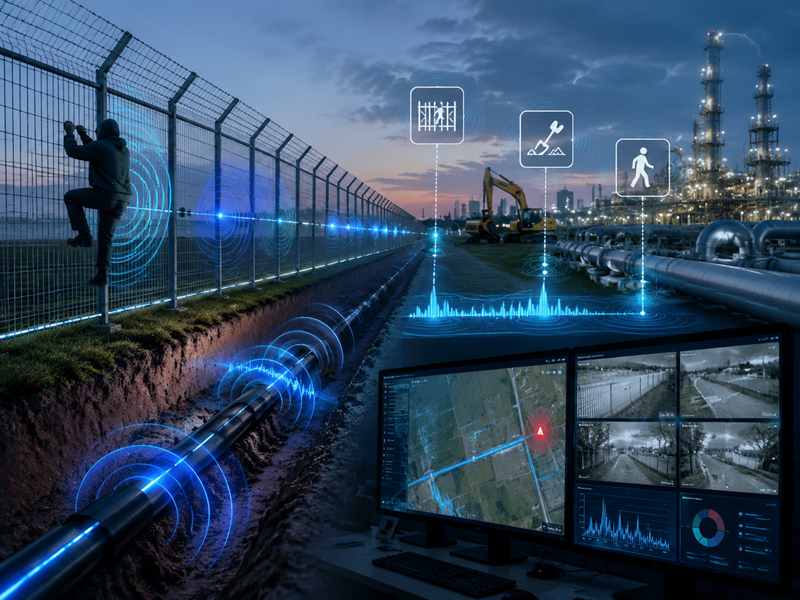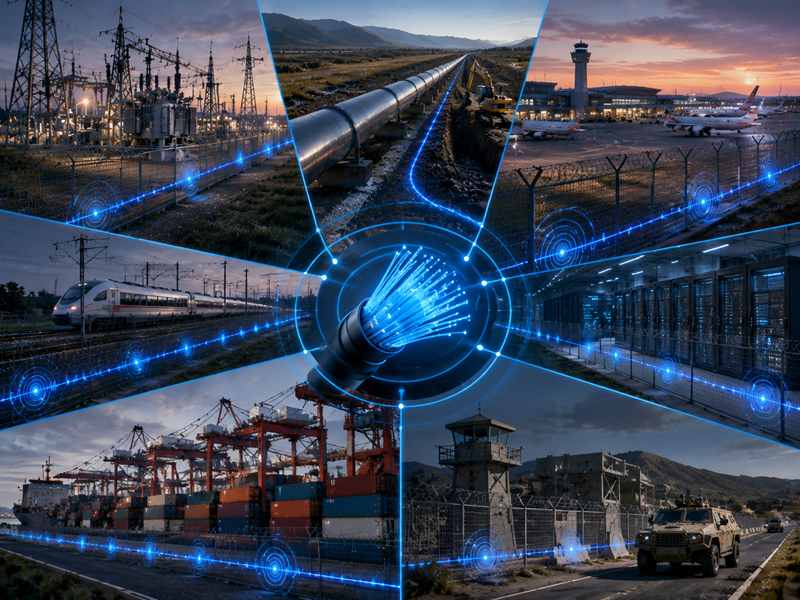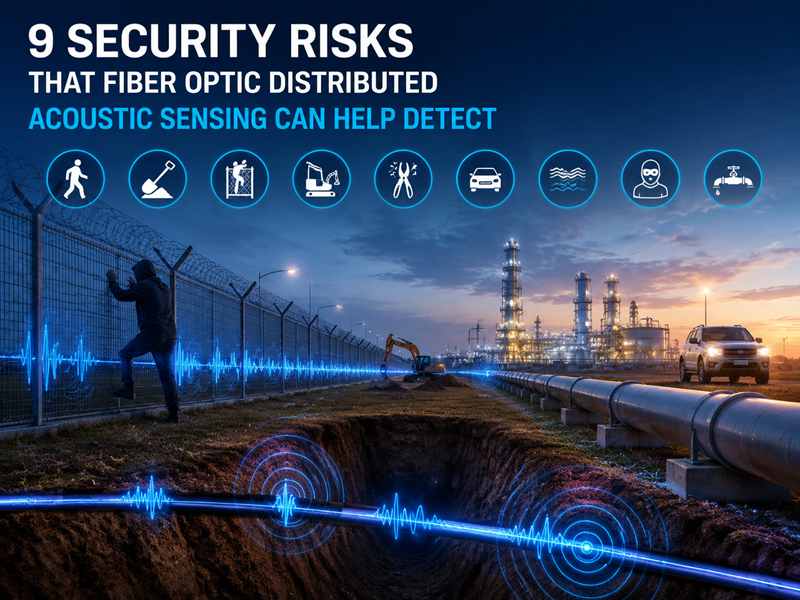
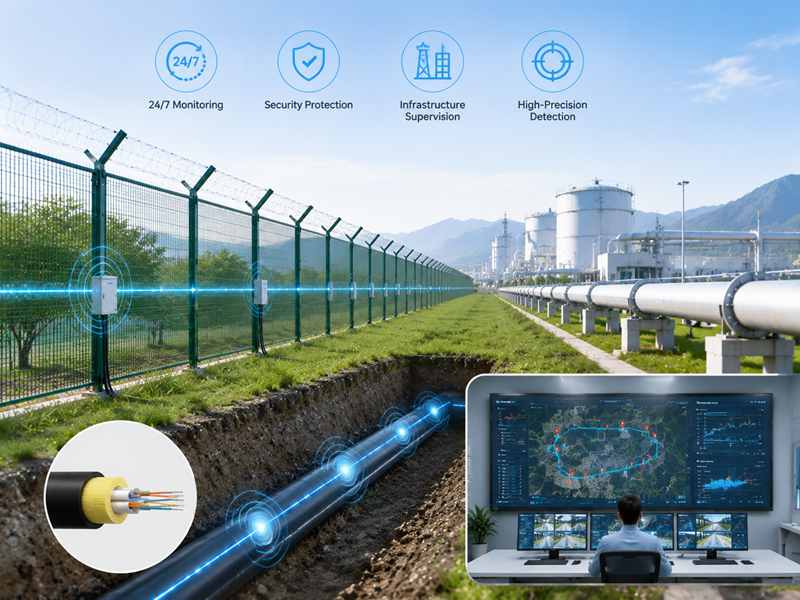
Optical-fiber Distributed Acoustic Sensing (DAS) perceives vibrational and acoustic disturbances, supporting round-the-clock monitoring for security protection and infrastructure supervision.
Installation precision dominates DAS operating effects, calling for appropriate fiber types, layout schemes, environmental compatibility and bespoke sensing configurations.
Fiber Cable Selection and Structural Requirements
The sensing fiber structure determines vibration transmission efficiency, signal stability, and long-term performance under different operating conditions.
Outdoor security applications require durable cables to withstand moisture, impact, pressure, and environmental changes while maintaining detection sensitivity.
Key cable selection factors include:
- Fiber mechanical strength
- Protective layer structure
- Waterproof capability
- Bending resistance
- Environmental adaptability
| Fiber Cable Type | Suitable Application | Main Installation Requirement |
| Standard Optical Fiber | Indoor and controlled environments | Requires stable conditions with limited mechanical stress |
| Armored Fiber Cable | Outdoor security and industrial areas | Provides additional protection against impact and pressure |
| Buried Sensing Cable | Underground monitoring applications | Requires stable underground positioning and protection |
| Custom Fiber Cable | Complex project environments | Designed according to site conditions and detection targets |
Optimized cable construction sustains consistent propagation of acoustic signals over the entire monitoring span and prevents performance degradation in long-run applications.
Installation Route Planning and Monitoring Coverage
The sensing routing constitutes a core component of DAS installation. As the fiber serves as the sensing medium, the laying path defines the practical detection coverage. Prior to on-site deployment, engineers are required to analyze:
- Protected area structure
- Potential intrusion paths
- Required detection zones
- Maintenance accessibility
- Existing security infrastructure
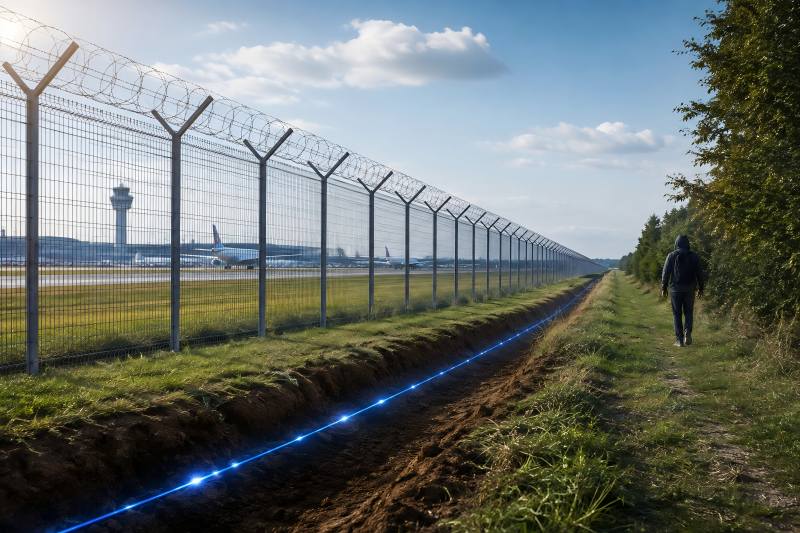
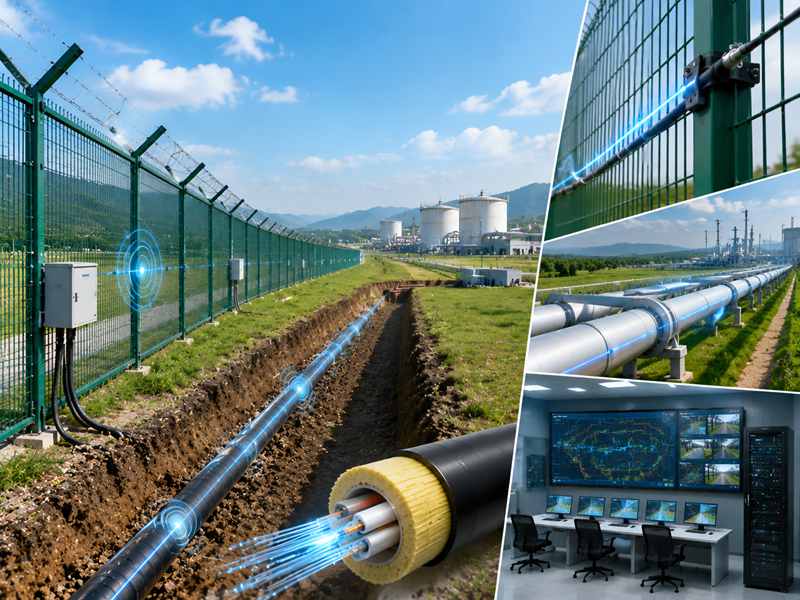
For perimeter intrusion monitoring, sensing optical fibers are arranged along major boundaries such as enclosures, restricted areas, underground passages and essential facilities.
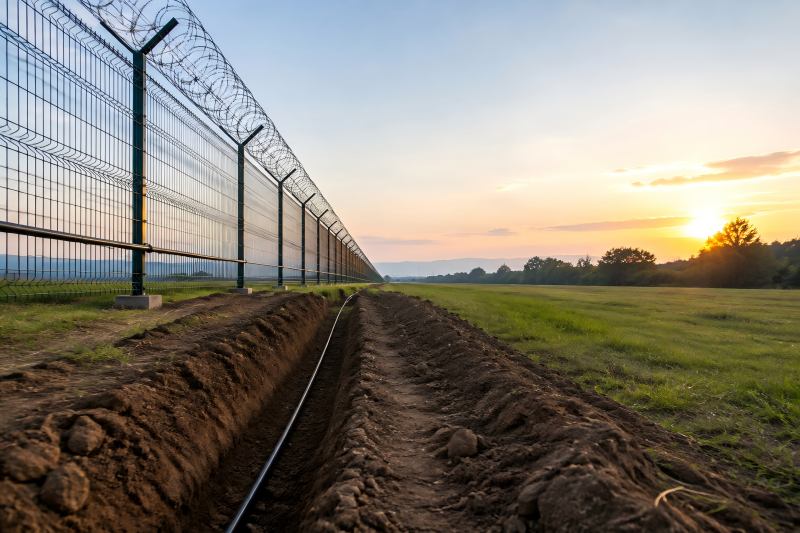
Underground deployment also demands careful route design. Fibers laid alongside protected infrastructure must maintain reliable contact with the adjacent environment.
| Application Scenario | Recommended Installation Method | Key Design Focus |
| Buried Cable Protection | Underground fiber deployment | Maintain stable soil contact and accurate positioning |
| Fence Security | Fiber fixed along fence structure | Capture vibration from intrusion activities |
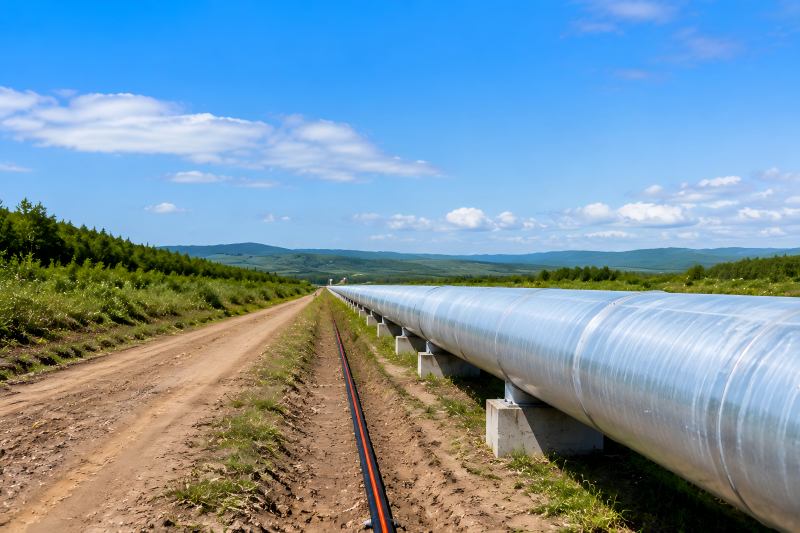
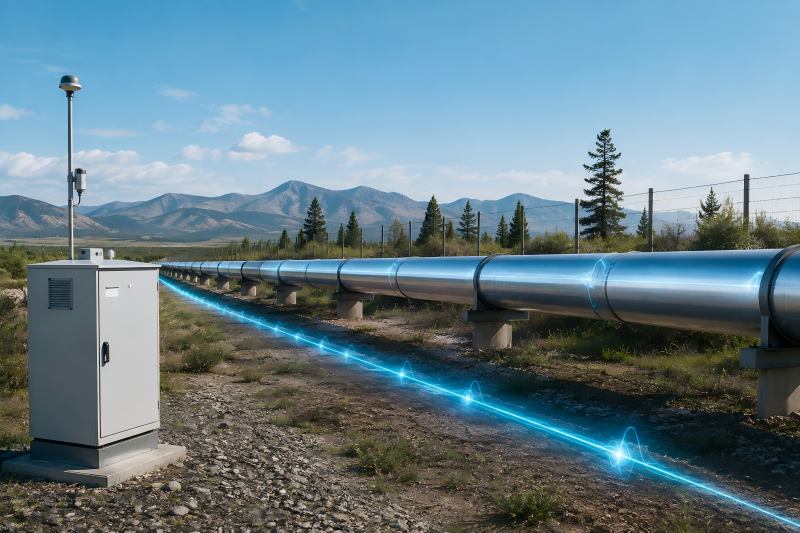
| Pipeline Monitoring | Fiber installed near pipeline route | Detect external disturbance and abnormal activity |
| Large Perimeter Protection | Zone-based fiber layout | Improve alarm management efficiency |
A well-designed fiber route reduces blind areas and allows the DAS system to provide more accurate event location information.
Underground Installation Requirements
For buried applications, installation depth, soil conditions, and cable protection directly influence DAS sensitivity.
A sensing cable installed underground receives vibration signals through surrounding materials. If the installation environment changes significantly, such as loose soil, uneven pressure, or unstable cable positioning, signal consistency may be affected.
The underground installation process should consider:
- Suitable burial depth
- Stable cable placement
- Soil characteristics
- Protection against external damage
- Future maintenance requirements
A buried cable intrusion detection system requires careful balance between protection level and signal sensitivity. Excessive protection layers may reduce vibration transmission, while insufficient protection may shorten cable service life.
Fiber Fixing Method and Mechanical Stability
When deployed on surface structures such as security fences, fiber fixing modes exert direct influence on vibration propagation efficiency.
Insufficient tension of optical cables triggers signal instability, yet over-tension brings mechanical stress. Hence, installation design must reconcile physical stability and detection sensitivity.
In fence intrusion detection systems, installation normally focuses on:
- Consistent fixing points
- Stable cable contact
- Weather-resistant protection
- Easy maintenance access
The installation scheme of optical cables needs to match the structure of monitored assets. Diversified fence materials, elevations and layouts demand customized deployment tactics.
Well-fastened sensing cables deliver more consistent vibration detection and support the system to identify authentic intrusion activities amid environmental interferences.
Optical Transmission and Communication Configuration
Reliable optical signal propagation between sensing fibers and processing devices underpins DAS performance. Fiber attenuation, connector quality, transmission distance and equipment layout should all be evaluated in installation.
Optimized system tuning is necessary for long-range monitoring, given that weakened optical signals impair detection sensitivity at remote sensing segments.
Core installation aspects involve:
- Fiber length planning
- Connection quality control
- Equipment placement
- Communication compatibility
- Data transmission stability
Within extensive security deployments, DAS can be incorporated into established systems such as CCTV, access authorization and alarm management platforms. Reasonable communication architecture facilitates swift forwarding of detected events to the central control hub.
Environmental Adaptation Requirements
Outdoor DAS facilities are subject to diverse environmental variations. Temperature changes, rain, wind, vehicle vibration and industrial disturbances may affect signal analysis. System architecture should be customized to suit on-site working conditions.
| Environment | Main Influence | Installation Consideration |
| Outdoor Fence Area | Weather exposure and wind vibration | Use durable cable protection and stable fixing |
| Underground Area | Soil movement and pressure changes | Maintain consistent cable positioning |
| Industrial Facilities | Equipment vibration interference | Optimize signal analysis parameters |
| Transportation Areas | Vehicle and mechanical vibration | Adjust detection zones and filtering |
For perimeter security systems, environmental evaluation is highly critical. DAS should distinguish significant acoustic events rather than triggering responses to every vibration stimulus.
Integration with Fiber Optic Security Systems
Current security engineering often demands multi-level detection mechanisms. Distributed Acoustic Sensing utilizing optical fiber can be fused with other technologies to construct a thorough monitoring system.
Available mainstream integration approaches include:
- Fiber optic intrusion detection systems
- CCTV verification systems
- Access control platforms
- Central alarm management systems
- Laser beam intrusion detection systems
Through customized security integration, DAS technology can be well aligned with available infrastructure and operational requirements.
Custom Configuration Requirements for Different Applications
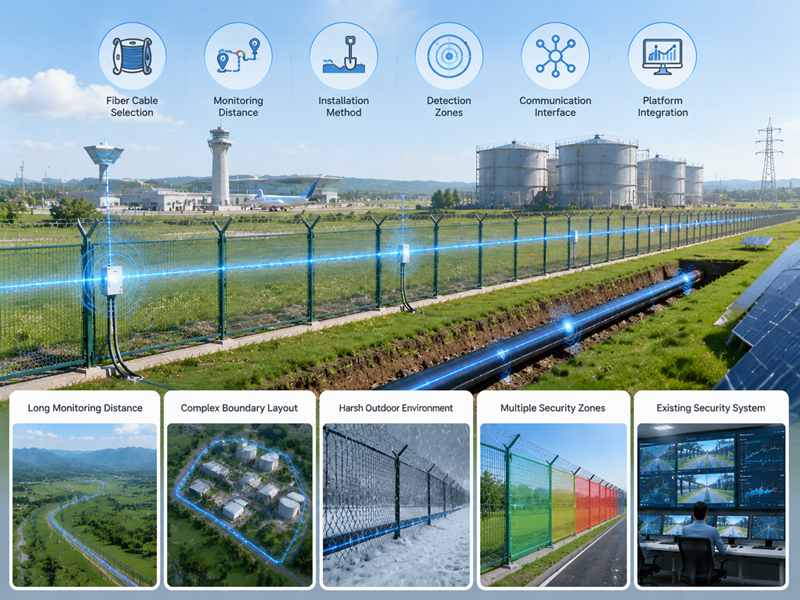
On-site installation circumstances differ across projects. Generic DAS setups cannot consistently achieve ideal performance under complicated conditions. Items available for customization include:
- Fiber cable selection
- Monitoring distance
- Installation method
- Detection zones
- Communication interface
- Platform integration
For airports, energy facilities, industrial sites, and large perimeter protection projects, customized design helps achieve better coverage and long-term stability.
| Project Requirement | Custom Configuration Direction |
| Long Monitoring Distance | Optimize sensing range and fiber deployment |
| Complex Boundary Layout | Design customized sensing routes |
| Harsh Outdoor Environment | Apply reinforced cable structures |
| Multiple Security Zones | Configure independent detection areas |
| Existing Security System | Customize communication and integration methods |
A properly customized DAS installation ensures that sensing performance matches the site’s actual security requirements.
Multiple engineering parameters govern DAS installation such as fiber construction, routing layout, fixing techniques, signal transmission and system integration. Proper installation guarantees dependable detection and accurate event localization for perimeter and buried asset monitoring.
Tailored fiber sensing configurations allow DAS to suit varied project surroundings and offer persistent safety protection for infrastructure, industrial premises and extensive security deployments.