
September 18, 2025

Fibre Optic Detector vs. Vibration Sensor
Blogs

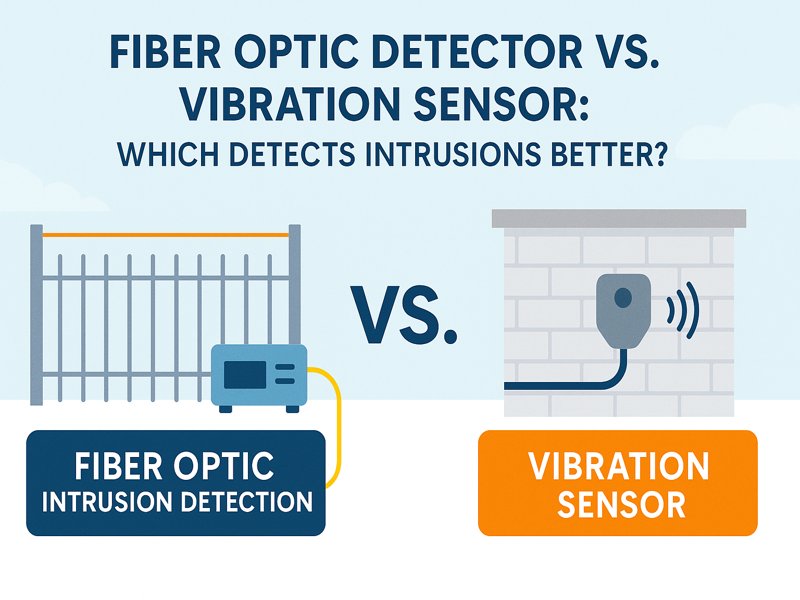
Fibre Optic Detector vs. Vibration Sensor: Which Detects Intrusions Better?

Perimeter security lives and dies on one metric: detect real intrusions quickly without drowning operators in nuisance alarms. Two of the most widely deployed technologies for fence lines, buried perimeters, and walls are fibre-optic detectors and vibration sensors. Both listen for physical disturbances; they just do it in very different ways. This guide compares how they work, what they detect best, where they struggle, and how to choose (or combine) them for your site. Best overall for long, complex perimeters: fibre-optic systems (especially distributed acoustic sensing and interferometric solutions), thanks to kilometre-scale coverage, precise location, and no field electronics. Best for short runs, gates, and targeted retrofits: conventional vibration sensors (MEMS/piezo on the fence or ground) for lower upfront cost and simple, localised deployment. Best outcome for high-risk sites: a hybrid—fibre for continuous detection and geolocation, vibration sensors for special structures (gates, turnstiles), or to add a second technology for alarm correlation. How the technologies work Fibre-optic intrusion detection A single strand of fibre becomes the sensor. A controller (“interrogator”) injects light and analyses the backscatter or interference pattern along the cable. Disturbances—climb, cut, digging, footsteps—modulate the light, which the system maps to distance along the fibre. Two common approaches: Distributed Acoustic Sensing (DAS): measures backscattered light continuously, offering detection and meter-level location over kilometres. Interferometric (e.g., Mach-Zehnder): highly sensitive to vibrations/strain at defined loops or segments, often used fence-mounted or buried. Because the fibre is passive, nothing live sits in the field: no power, no electronics, no radios. The interrogator stays in a secure cabinet or control room. Vibration sensors These are point sensors mounted on a fence, post, wall, or buried shallowly in soil. They use accelerometers (MEMS), piezoelectric elements, or geophones to measure motion. Each sensor covers a local area; a controller aggregates alarms from many nodes. Units may be wired (daisy-chained power/data) or wireless (battery powered, RF mesh). Sensitivity, thresholds, and classification run in the sensor, a nearby module, or a central panel. What each detects best Threat type Fibre-optic detectors Vibration sensors Fence climb/cut/lift Excellent; continuous sensing along the run with precise location Excellent locally; coverage depends on sensor spacing and mounting Buried dig/tunnel Strong with buried fibre; sensitivity extends several meters from the trench Possible with buried geophones; careful array design needed Footsteps on approach Good with DAS on suitable ground and sensitivity tuning Good with ground sensors; range limited to array geometry Gate activity Good, but gates often need special loops or slack management Very good; dedicated sensors on the gate leaf/frame Multiple simultaneous events Very good; one fibre covers many zones with separate locations Good; each node reports independently but needs more wiring Precise geolocation Native; metre-level along fibre By zone only, unless dense sensor spacing Detection performance, false alarms, and classification Probability of Detection (Pd) and Nuisance Alarm Rate (NAR) are the core KPIs. In practice, both technologies achieve high Pd when installed and tuned correctly. Where they diverge is context: Fibre-optic systems typically excel at localising events (e.g., “climb at 2,347 m on the south fence”) so operators can slew PTZ cameras quickly, dispatch correctly, and review patterns over time. Advanced analytics distinguish wind-induced fence swaying from cutting or ladder application by analysing frequency content, persistence, and multi-point correlation along the cable. Vibration sensors can be exquisitely sensitive at a point but may produce more nuisance alarms if spacing is wide, tie-downs are inconsistent, or fence fabric resonates under wind. Modern MEMS units with onboard classification and adaptive thresholds help a lot, but coverage uniformity across long runs remains an installation challenge. Common nuisance-alarm sources for both: wind-driven fence motion, loose panels, vegetation, heavy nearby machinery, wildlife, hail/rain bursts, and maintenance activities. Fibre systems mitigate with pattern-based analytics across distance; vibration networks mitigate with per-sensor tuning and mechanical isolation. Environmental robustness Electromagnetic immunity: Fibre is dielectric—no risk of EMI/RFI coupling, and no ground loops. Conventional sensors and long copper runs can be susceptible (mitigated by shielding and proper earthing). Lightning & surge: Fibre has no field power, reducing surge risk. Metallic fences will still move during strikes, which either system will sense as an event; the difference is that fibre won’t carry surge into electronics along the fence. Temperature, UV, corrosion: Outdoor-rated fibre and stainless/UV-stable ties are reliable over decades if bending radius and strain limits are respected. Vibration sensors live outdoors permanently; IP-rated housings and cable glands are critical. Wireless nodes face battery and gasket ageing. Installation and commissioning Fibre-optic Pros: One continuous cable covers kilometres; minimal field hardware; fast to segment into software “zones”; excellent retrofit on existing fences; trench-based install for buried detection. Cons: Requires attention to cable routing, slack loops at gates/expansion joints, bend radius, and protected splicing. Buried fibre means civil work; fence-top fibre must be consistently tied and tensioned. Vibration sensors Pros: Simple for short runs, gates, doors, and special structures; can be wireless where cabling is hard; per-sensor tuning allows local optimisation. Cons: For long perimeters, the sensor count rises quickly. Daisy-chained wiring or battery maintenance becomes significant. Consistency of mounting and tie-down strongly impacts performance. Operations & maintenance (O&M) Fibre-optic: With no field electronics, there’s little to maintain beyond periodic visual checks (ties intact, no fence damage), interrogator firmware updates, and re-tuning after structural changes. Fibre breaks are rare but are easy to localise precisely when they occur. Vibration sensors: Expect battery replacements (wireless), connector inspections, corrosion checks, and occasional recalibration after severe weather or repairs. Stocking spare nodes reduces downtime. Integration, alarm handling, and cybersecurity Both technologies integrate with PSIM/VMS, access control, and alarm panels via dry contacts, TCP/IP, SNMP, REST, or event streams. Practical differences: Fibre-optic: Supplies precise coordinates; VMS can auto-slew PTZ cameras and display event pins on GIS maps. Analytics metadata (cut vs. climb vs. dig) is rich. One headend simplifies network hardening. Vibration sensors: Offer per-zone alarms; some provide rich metadata and health status. If many nodes are IP-enabled, harden the network: VLANs, certificate management, and patching across many endpoints. Cost of ownership (indicative) Upfront hardware
Foids Maintenance Tips
Blogs

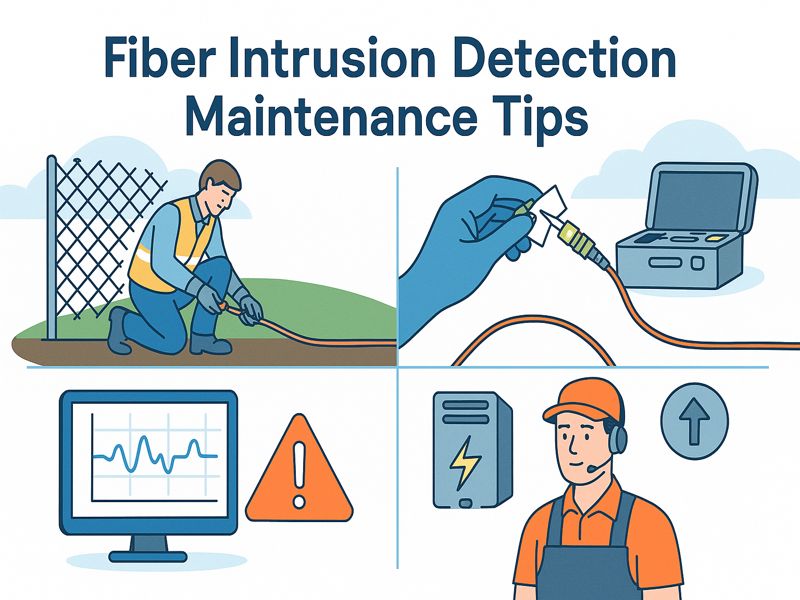
Fiber Intrusion Detection Maintenance Tips for Reliable Performance

We help customers maintain optimal performance of their fiber-optic intrusion detection systems by exploring practical, business-focused maintenance tips. From routine inspections to environmental considerations, we’ll outline best practices for protecting your infrastructure and reputation. The Importance of Maintenance in Fiber Intrusion Detection Unlike conventional sensors, fiber optic systems rely on highly sensitive light transmission to detect vibrations, pressure, and intrusions along the cable. While the fiber itself is passive and highly durable, the performance of the system depends on connectors, enclosures, splicing quality, and software calibration. Neglecting maintenance can lead to false alarms, signal losses, or worse—undetected breaches. For industries where downtime or compromised security translates directly into financial loss, maintenance is not optional. It’s a business continuity strategy. Routine Inspection of Fiber Optic Cables The backbone of intrusion detection is the fiber cable. Even though fiber has a life expectancy exceeding 25 years, regular inspections are essential. Checklist for inspections: Visual survey: Look for visible damage, bends tighter than the minimum radius, or exposed cable. Connector check: Ensure all connectors are dust-free, capped, and firmly secured. Splice protection: Confirm that splices are enclosed properly to avoid moisture intrusion. Mechanical stress points: Inspect areas near gates, fences, or roads where external forces are likely. Routine visual inspections reduce the likelihood of undetected degradation and allow proactive interventions before system alarms are triggered unnecessarily. Cleaning Fiber Connectors and Hardware Dust, dirt, or oil on connectors can lead to significant signal attenuation. Even a microscopic particle can block light transmission and cause false positives. Best practices for cleaning: Use lint-free wipes or pre-moistened fiber cleaning sticks. Never use your bare hands to contact the fiber end. Follow the “inspect-clean-inspect” protocol using a fiber scope. Store unused connectors with protective caps. A disciplined cleaning routine ensures the sensing accuracy remains uncompromised over time. Monitoring Software Calibration Advanced algorithms are used by fiber intrusion detection systems to distinguish between real threats and background noise from things like wind, rain, and wildlife. Over time, system settings may drift due to environmental changes or cable expansions. Maintenance recommendation: Schedule quarterly calibration tests. Simulate intrusion attempts (climbing, cutting, digging) at various locations. Adjust sensitivity settings to balance detection accuracy with false alarm reduction. Regular calibration guarantees that the system adapts to evolving site conditions without sacrificing reliability. Power Supply and Backup Systems Like all electronic security systems, fiber intrusion detection relies on continuous power. Power interruptions not only cause downtime but also may reset system parameters. Key maintenance tasks: Test backup batteries monthly. Inspect UPS (uninterruptible power supply) units for capacity loss. Verify generator integration if used in critical facilities. Document runtime capabilities under full load. A robust power maintenance program ensures the system stays online during unexpected outages. Environmental Considerations Fiber systems are designed to withstand harsh environments, but extreme weather or site conditions require extra care. Temperature fluctuations: Ensure cables are rated for local temperature extremes to prevent cracking. Moisture protection: Verify sealants and enclosures in flood-prone or coastal areas. Rodent control: Install protective conduits in areas where wildlife may chew cables. UV exposure: Check for UV-resistant sheathing in outdoor applications. Accounting for these factors extends the life of the infrastructure and prevents avoidable failures. Software and Firmware Updates Intrusion detection systems increasingly integrate with AI-based analytics and command-and-control platforms. Outdated software can create vulnerabilities not just in performance but also in cybersecurity. Maintenance protocol: Schedule semi-annual software and firmware updates. Test compatibility with integrated systems (CCTV, access control). Verify new updates don’t alter detection zones or reset parameters. Document version histories for compliance audits. Staying current with updates maximizes system capabilities and strengthens cybersecurity resilience. Alarm Verification and Response Testing The ability of a system to trigger reliable alarms is a measure of its effectiveness. Maintenance must include regular verification of alarm outputs and the response chain. Alarm testing: Conduct routine simulations and verify that alarms reach the monitoring station. Response chain audit: Ensure security personnel receive, understand, and act on alerts. Integration check: Confirm alarms trigger secondary systems like lights, sirens, or cameras. Testing response readiness ensures the fiber system functions not only as a sensor but as part of a wider security ecosystem. Documentation and Maintenance Logs Documenting every inspection, test, and repair is critical for performance tracking, warranty claims, and compliance. What to include in logs: Inspection dates and results. Calibration and test reports. Repair or replacement records. Technician signatures and certifications. Digital maintenance logs integrated with asset management software provide traceability and data for predictive maintenance planning. Training Security and Maintenance Personnel Even the most advanced fiber optic system can underperform if staff are not properly trained. Training should cover: Proper handling of fiber cables and connectors. Alarm verification procedures. Cleaning protocols and calibration basics. Recognizing environmental vs. genuine intrusion alerts. Investing in training reduces human error, extends system life, and ensures rapid troubleshooting. Partnering with Professional Service Providers Many organizations lack in-house fiber expertise. Partnering with certified service providers ensures maintenance aligns with industry best practices. Advantages of outsourcing maintenance: Access to specialized test equipment (OTDR, power meters). Predictive diagnostics based on fiber signal analysis. Rapid response teams for emergency repairs. Compliance with manufacturer service standards. Choosing a reliable partner ensures continuous, professional oversight without overburdening internal teams. Predictive and Preventive Maintenance The trend in modern security infrastructure is shifting from reactive to predictive maintenance. Fiber intrusion detection is no exception. Strategies include: Finding weak places before they fail is possible with OTDR (Optical Time-Domain Reflectometer) instruments. Leveraging AI-based monitoring platforms for early warning of degradation. Scheduling preventive component replacements at recommended intervals. Predictive maintenance lowers long-term costs, minimizes downtime, and ensures uninterrupted protection. Cost of Neglect vs. Value of Maintenance Presenting maintenance as an investment rather than an expense is necessary from a business perspective. Consequences of neglect: Expensive emergency repairs. False alarms leading to operational disruption. Missed detections risking theft, sabotage, or liability. Benefits of disciplined maintenance: Maximized system lifespan. Reduced total cost of ownership (TCO). Enhanced reliability and client confidence. Higher ROI on security investments.

FOIDS Common Mistakes
Blogs

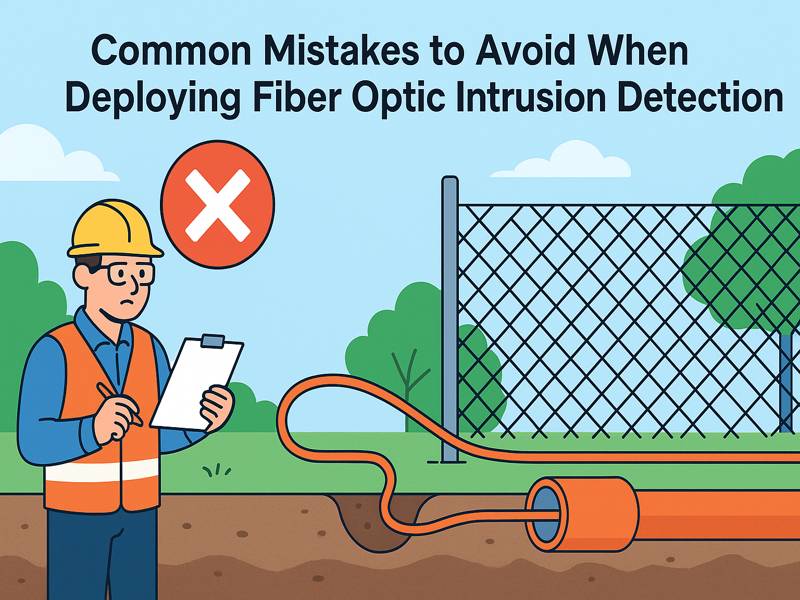
Common Mistakes to Avoid When Deploying Fiber Optic Intrusion Detection

FOIDS offer unparalleled sensitivity. Nonetheless, like any sophisticated security technology, its effectiveness relies on both the equipment and its deployment. Missteps during planning, installation, or integration can undermine performance, increase costs, or create blind spots in the system. Underestimating Site Assessment Needs One of the most frequent errors is failing to conduct a thorough site survey before installation. While fiber optic sensors are very sensitive, they need to be customized for the specific terrain, structures, and environmental conditions of the site where they will be deployed. Mistake: Installing sensors without considering soil composition, fence condition, vibration sources, or local wildlife activity. Impact: Leads to excessive false alarms or undetected breaches. Solution: Conduct a detailed risk and site assessment to identify noise sources (e.g., nearby highways, construction sites) and natural obstacles. Use this information to calibrate sensor placement and sensitivity. Choosing the Wrong Fiber Type Not all optical fibers are created equal. Single-mode and multi-mode fibers behave differently under strain and vibration, and the wrong choice can compromise detection performance. Mistake: Using general-purpose communication fiber instead of fiber designed for sensing applications. Impact: Reduced detection accuracy and shortened monitoring range. Solution: Select sensor-grade fiber designed for distributed acoustic sensing (DAS) or specific FOIDS applications, ensuring the fiber is ruggedized for environmental exposure. Overlooking Proper Cable Installation Techniques Improper cable laying and routing is another pitfall. Fiber must be installed in ways that ensure consistent sensitivity along its length. Mistake: Tight bends, uneven burial depths, or poorly secured cables on fences. Impact: Weak points in detection, reduced longevity, or mechanical damage. Solution: Follow manufacturer guidelines for bend radius, burial depth, and securing methods. Use protective conduits in high-risk areas to prevent accidental cuts. Neglecting Calibration and Tuning Even with high-quality equipment, fiber optic intrusion detection systems require careful calibration to balance detection sensitivity and noise rejection. Mistake: Assuming factory settings are adequate for all environments. Impact: High rates of false alarms or missed intrusion attempts. Solution: Perform site-specific calibration, adjusting thresholds and algorithms based on real-world data collected during testing. Periodically recalibrate to adapt to seasonal or environmental changes. Failing to Plan for Integration with Existing Systems Fiber optic intrusion detection rarely operates in isolation. It is most effective when integrated with other security platforms such as CCTV, access control, or command-and-control software. Mistake: Deploying FOIDS as a stand-alone system without integration. Impact: Delayed response to intrusions and inefficient use of alarms. Solution: Integrate FOIDS with video surveillance and alarm management platforms for rapid verification and coordinated responses. 6. Ignoring Environmental Factors Environmental conditions—rain, snow, wind, or seismic activity—can cause significant background noise. Failing to account for them leads to excessive false positives. Mistake: Not testing the system under varying weather conditions. Impact: Operators lose confidence in the system due to frequent nuisance alarms. Solution: Deploy advanced signal processing and weather-resistant fiber housings. Schedule testing during different seasons to ensure system stability. Insufficient power and network redundancy The infrastructure that supports it determines the reliability of a FOIDS. Power failures or network outages can render the system useless at critical moments. Mistake: Relying on single-source power and non-redundant communication paths. Impact: System downtime, leaving assets unprotected. Solution: Use redundant power supplies (UPS, solar backup) and failover communication channels. Ensure the network design includes redundancy. Poor Alarm Management Alarms are only effective if they lead to timely, accurate responses. Too many false alarms or poorly configured notifications overwhelm operators. Mistake: Setting alarm thresholds too low or not categorizing alerts. Impact: Alarm fatigue, with critical events potentially ignored. Solution: Implement tiered alarm management, prioritizing alerts by severity. Train staff to distinguish between nuisance alarms and genuine threats. Overlooking Maintenance and Periodic Testing Some organizations treat FOIDS as “set it and forget it” systems. But cables degrade, environments change, and calibration drifts. Mistake: Skipping routine inspections, firmware updates, and recalibration. Impact: System gradually loses accuracy and reliability. Solution: Establish a maintenance schedule that includes periodic inspections, performance tests, and updates to both hardware and software. Lack of Operator Training Even the most advanced FOIDS cannot compensate for poorly trained personnel. It is essential for operators to grasp how to make sense of data and react accordingly. Mistake: Providing minimal or one-time training during installation. Impact: Misinterpretation of alarms, delayed responses, and underutilization of system features. Solution: Provide continuous training programs, simulations, and refresher courses to ensure staff remain proficient in system use and troubleshooting. Insufficient Cybersecurity Safeguards Modern FOIDS often rely on IP-based communication, making them vulnerable to cyberattacks if not properly secured. Mistake: Overlooking cybersecurity protections for FOIDS control units and software. Impact: Hackers could disable or manipulate the system, creating false security. Solution: Use encrypted communication, strong authentication, and regular vulnerability testing. Follow best practices for securing industrial control systems. Overpromising Capabilities Marketing materials may suggest FOIDS can detect every disturbance flawlessly, but real-world conditions are more complex. Mistake: Overestimating system performance or making unrealistic promises to stakeholders. Impact: Disappointment and loss of trust when the system doesn’t meet inflated expectations. Solution: Set realistic expectations during planning. Clearly communicate system strengths and limitations to management and operators. Neglecting to Plan for Scalability Organizations frequently concentrate on present requirements, overlooking the potential for future growth. Adding more zones or extending coverage later can be costly if not planned from the start. Mistake: Designing a system without modularity or expansion capacity. Impact: High costs and complexity when scaling up. Solution: Choose systems that support modular expansion and design initial deployments with future growth in mind. Overlooking Regulatory Compliance Critical infrastructure often has regulatory requirements regarding security systems. Mistake: Deploying FOIDS without confirming compliance with local or international standards. Impact: Legal liability and costly retrofits. Solution: Ensure system design and deployment meet relevant standards (e.g., ISO, IEC, or government-specific regulations). Skipping Independent Validation Lastly, many organizations rely solely on vendor claims without independent validation of performance. Mistake: Accepting vendor specifications at face value without third-party testing. Impact: Potential mismatches between promised and actual performance. Solution: Conduct independent performance evaluations or engage third-party security consultants to

Leave Your Message