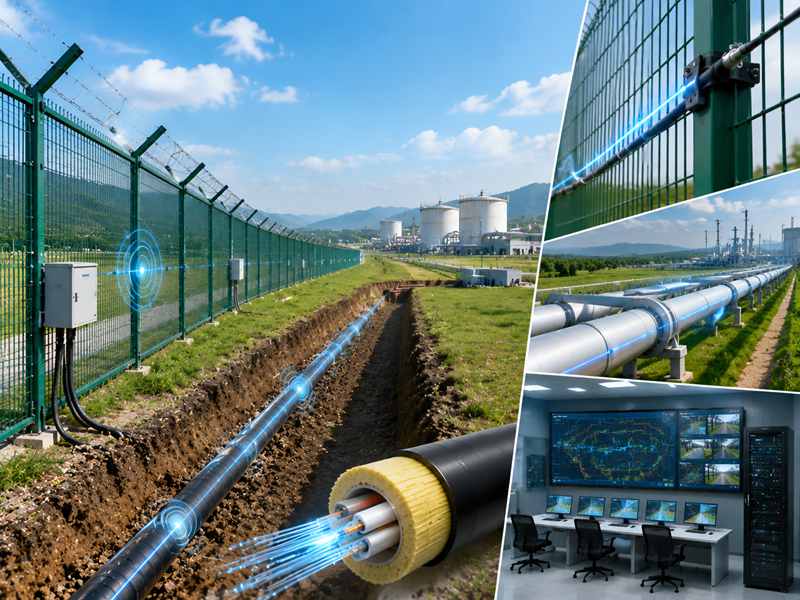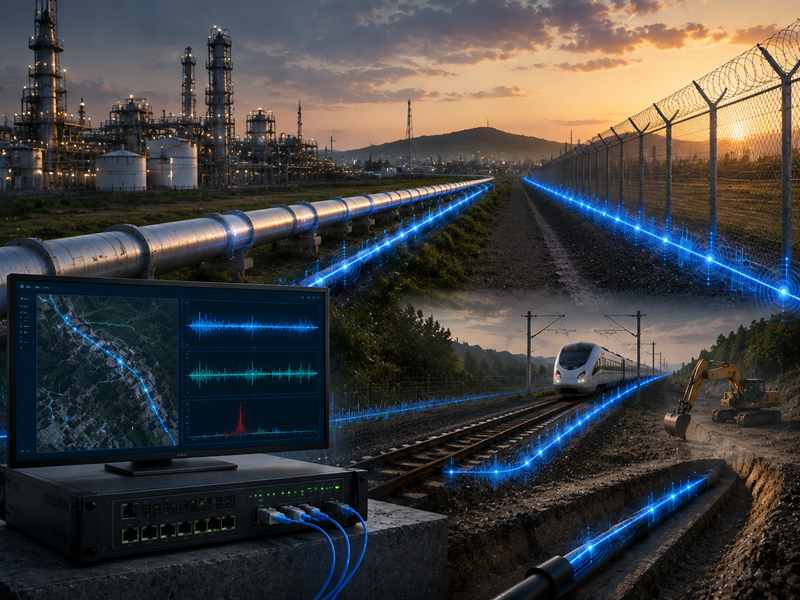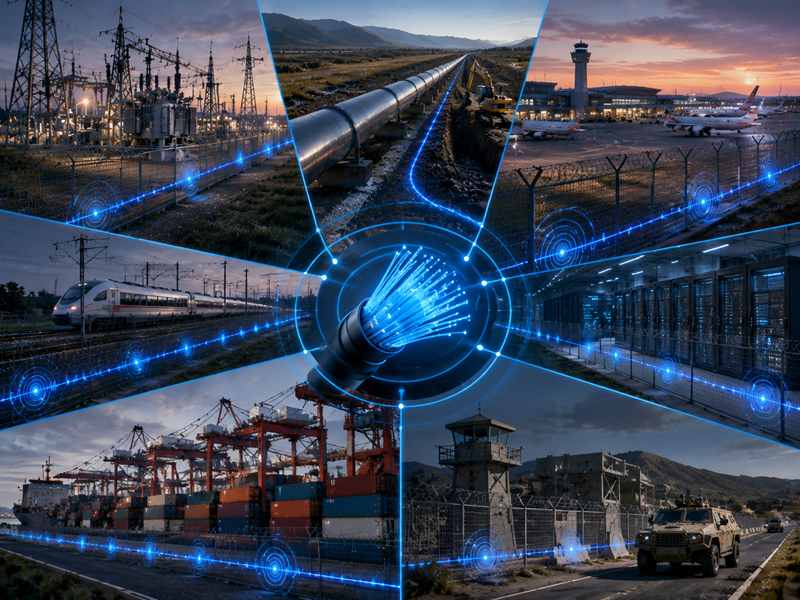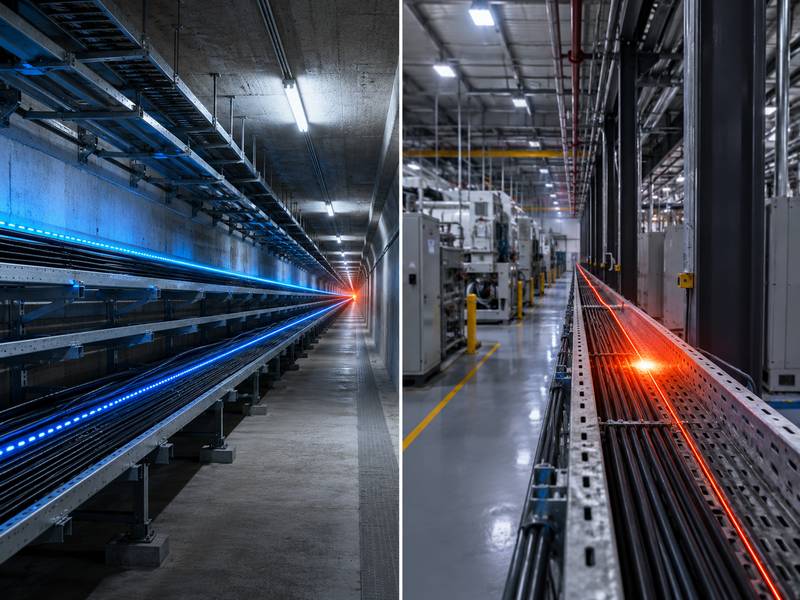
Large-scale critical infrastructure necessitates high-level security monitoring frameworks. Fiber distributed acoustic sensing (DAS) realizes uninterrupted intrusion risk perception for pipeline corridors, campus areas and vital national facilities.
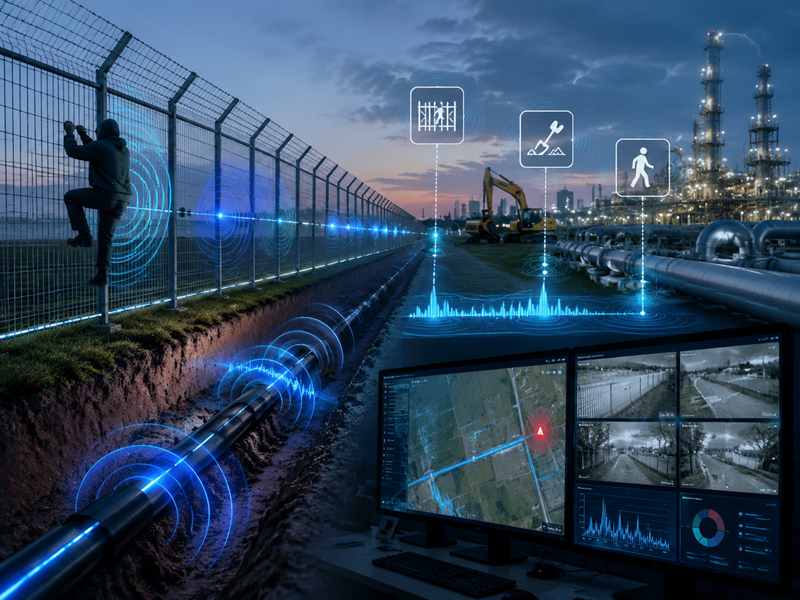
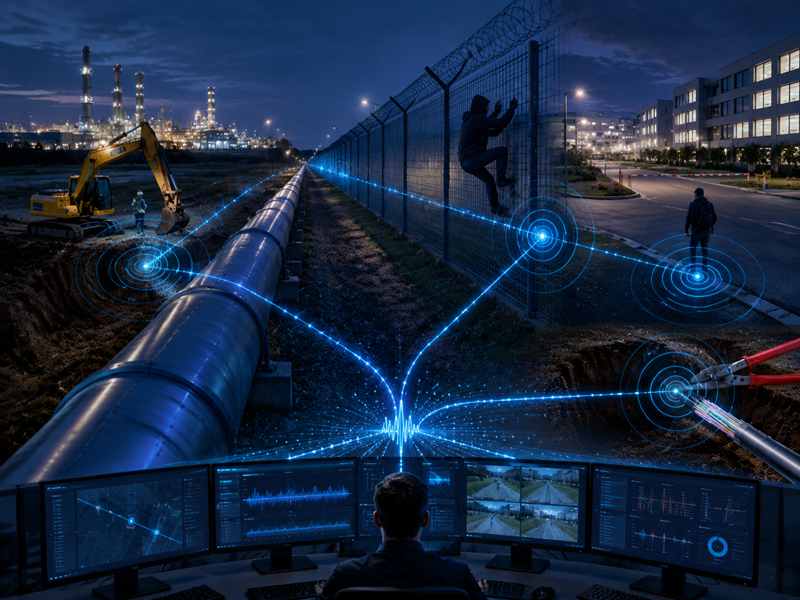
Based on the analysis of vibration characteristic signals, DAS is capable of recognizing dangerous behaviors including excavation, wall climbing, optical cable cutting and pedestrian movement. It facilitates rapid emergency disposal and the development of customized security prevention systems.
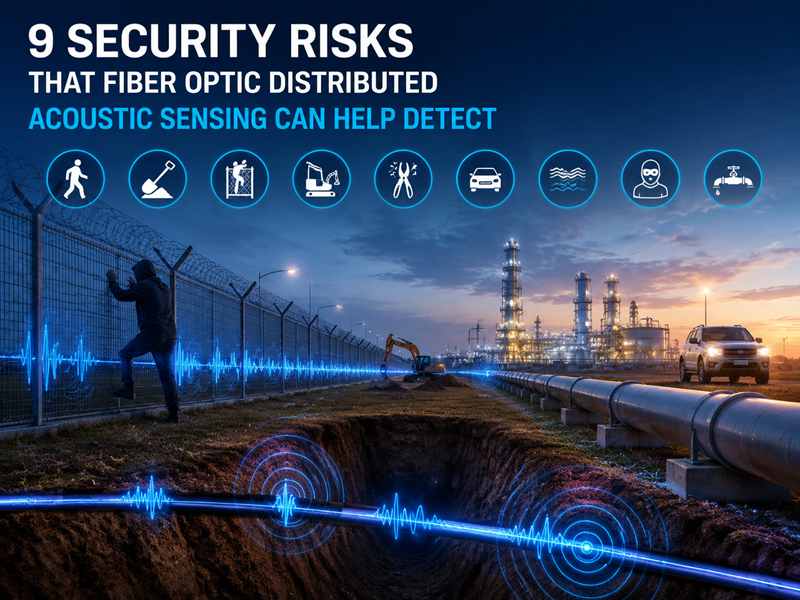
Fiber Optic Distributed Acoustic Sensing
| Detection Feature | Typical Capability | Security Application |
| Detection Medium | Standard optical fiber cable | Long-distance perimeter monitoring |
| Monitoring Method | Distributed vibration analysis | Continuous area protection |
| Detection Events | Cutting, digging, climbing, walking, vehicles | Intrusion identification |
| Installation Options | Buried, fence-mounted, pipeline-side, underground | Flexible project deployment |
| System Integration | VMS, alarm platforms | Centralized security response |
Unauthorized Perimeter Intrusion
Industrial facilities face severe risks from illegal trespassing. Leveraging vibration signal analysis, fiber-optic DAS can spot incoming intruders long before they approach core protected equipment and areas.
Unlike conventional surveillance cameras and perimeter fencing, this DAS system achieves all-time wide-range monitoring. Its surveillance performance remains unaffected by poor lighting, harsh weather conditions and limited sightlines.
Typical detectable activities include:
- Walking near protected boundaries
- Crossing restricted zones
- Approaching underground facilities
- Moving along isolated perimeter sections
Buried Cable Cutting and Underground Intrusion
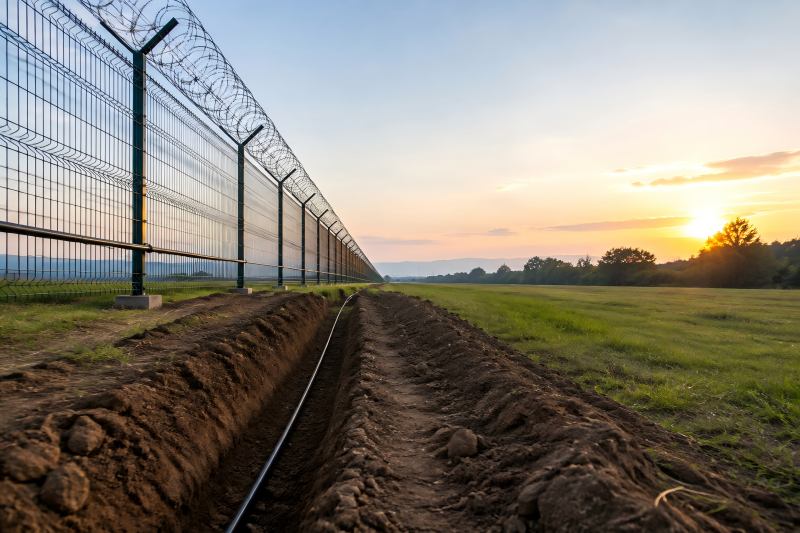
Underground critical infrastructure encounters exclusive security predicaments, attributed to the subsurface layout of key valuable assets.
Unauthorized excavation and man-made vandalism pose grave threats to communication optical cables, power transmission infrastructure and fluid transport pipelines.
A buried fiber optic intrusion detection system can identify vibration signals generated by:
- Shovel digging
- Mechanical excavation equipment
- Ground impact
- Cable cutting activities
Typical Underground Detection Configuration
| Security Risk | Vibration Source | Recommended Installation |
| Cable theft | Manual digging and cutting | Fiber installed near cable route |
| Pipeline damage | Excavator operation | Parallel fiber deployment |
| Unauthorized excavation | Ground vibration | Buried sensing cable |
| Underground access | Footsteps and movement | Tunnel or corridor installation |
Fence Climbing and Forced Entry Attempts
Factories, power stations, airports and transit sites generally install perimeter fences for protection.
Still, fences only provide physical separation. If no reliable sensing system is deployed, security crews will fail to notice intruders climbing, cutting or breaking the fences.
The fiber DAS system identifies mechanical vibrations spreading through fence structures.
Typical events include:
- Fence shaking
- Metal cutting vibration
- Repeated climbing impact
- Forced entry attempts
Compared with individual vibration sensors installed on sections of fencing, fiber sensing provides continuous coverage with fewer field components.
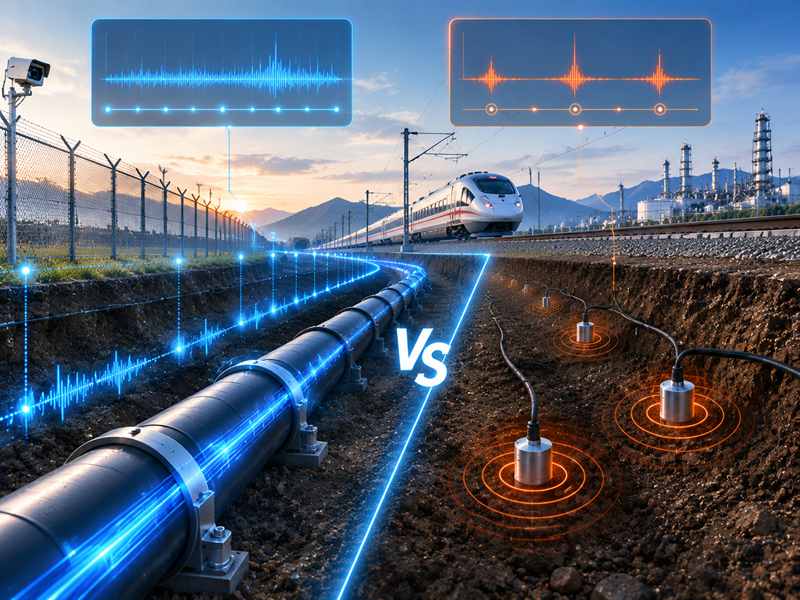
| Detection Method | Coverage Style | Suitable Application |
| Point vibration sensor | Fixed detection points | Small perimeter sections |
| CCTV monitoring | Visual confirmation | Areas with clear visibility |
| Fiber DAS | Continuous sensing line | Large industrial boundaries |
| Microwave detection | Area-based detection | Open perimeter zones |
Pipeline Excavation and External Disturbance
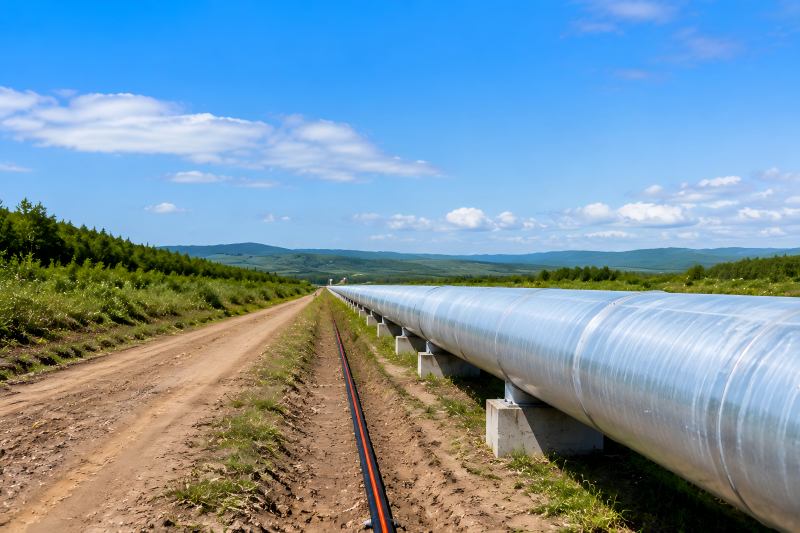
Cross-country long-distance pipelines generally traverse sparsely populated remote zones, which creates major obstacles for on-foot manual inspection operations.
External threats may include:
- Unauthorized excavation
- Construction activities
- Heavy equipment operation
- Intentional pipeline damage
Pipeline security protection brings a tough requirement: monitoring coverage should include not just the pipeline body, but all suspicious activities taking place in adjacent zones.
Fiber-optic DAS distinguishes vibration signals by comparing normal environmental vibration backgrounds with anomalous external interference waveforms.
For example:
- A vehicle passing regularly creates predictable vibration patterns.
- Excavation equipment produces stronger and more continuous ground vibration.
- Manual digging creates different frequency characteristics.
Cable Theft and Infrastructure Damage
Power transmission cables, communication optical cables and industrial wiring networks count as high-value infrastructure that demands round-the-clock safety protection.
Cable theft incidents frequently take place in outlying regions, where conventional security measures fail to deliver adequate protection.
Fiber-optic DAS enables early identification of suspicious operations including:
- Approaching the cable route
- Digging near cable corridors
- Cutting attempts
- Unauthorized maintenance activities
Cable Protection Applications
| Protected Asset | Main Risk | DAS Monitoring Value |
| Power transmission cable | Theft and damage | Detect nearby disturbance |
| Communication cable | Cutting and interruption | Provide early warning |
| Industrial cable corridor | Unauthorized access | Continuous monitoring |
| Underground utility route | Excavation risk | Location-based alarm |
Vehicle Approach and Abnormal Ground Movement
Extensive critical infrastructures demand safety monitoring that transcends the coverage range of physical enclosing fences.
Examples include:
- Airports
- Railway yards
- Energy facilities
- Border areas
- Military-related infrastructure
Vehicles approaching restricted areas generate recognizable vibration patterns through the ground.
Fiber DAS can identify:
- Vehicle movement
- Heavy equipment approach
- Abnormal ground vibration
- Repeated traffic near restricted zones
Tunnel and Underground Space Intrusion
Restricted visual range and impeded signal transmission generate extra security risks within underground spaces. Its practical application fields include:
- Railway tunnels
- Utility tunnels
- Underground cable galleries
- Mining access routes
Fiber DAS can monitor underground vibration caused by:
- Personnel movement
- Unauthorized entry
- Equipment operation
- Structural disturbance
Large Area Perimeter Blind Spots
Extensive security-protected regions generally possess segments where visual monitoring equipment cannot achieve full surveillance coverage.
Representative instances consist of:
- Long fences
- Remote boundaries
- Pipeline corridors
- Railway protection zones
Fiber DAS extends monitoring coverage by turning the optical fiber route into a continuous sensor.
Large Area Security Monitoring Comparison
| Monitoring Area | Traditional Challenge | Fiber DAS Response |
| Industrial perimeter | Large coverage area | Continuous fiber sensing |
| Pipeline route | Remote location | Long-distance monitoring |
| Railway corridor | Limited patrol frequency | Real-time vibration detection |
| Underground passage | Poor visibility | Hidden monitoring capability |
Multiple Security Events in Complex Environments
A factory, energy station, or transportation facility may face multiple risks simultaneously:
- Unauthorized entry
- Cable theft
- Vehicle intrusion
- Fence damage
- Underground excavation
Fiber-optic DAS serves as an integrated sensing platform. It is capable of distinguishing various vibration signatures and transmitting alert signals to central management platforms.
Multi-System Security Integration
| Security Event | Detection Source | Recommended Response |
| Fence climbing | Fiber vibration analysis | Trigger perimeter alarm |
| Excavation | Ground vibration | Dispatch inspection team |
| Vehicle intrusion | Roadside vibration | Activate camera verification |
| Cable cutting | Abnormal vibration | Protect critical assets |
Fiber Optic DAS Customization Guide
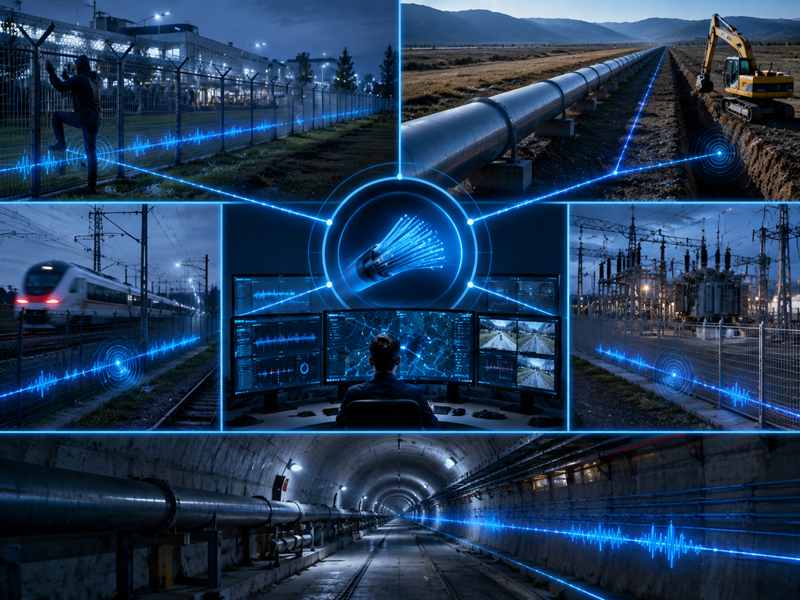
Terrain conditions, infrastructure distribution and security protection emphases vary widely across different monitoring sites. General standardized security solutions fail to satisfy the comprehensive demands of sophisticated large-scale projects.
Personalized DAS system configurations usually incorporate considerations of:
- Fiber installation method
- Detection distance
- Protected asset type
- Environmental conditions
- Alarm integration requirements
Industrial Factory Security Monitoring
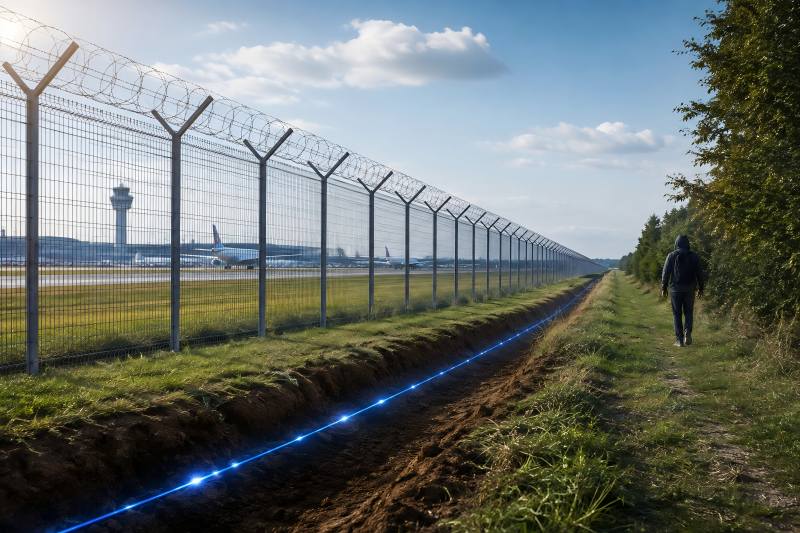
Fiber DAS uses fence-mounted or buried fiber installation to detect unauthorized access, climbing, and perimeter intrusion. Configuration focuses on continuous monitoring and integration with access control, and alarms.
Pipeline Security and Long-Distance Monitoring
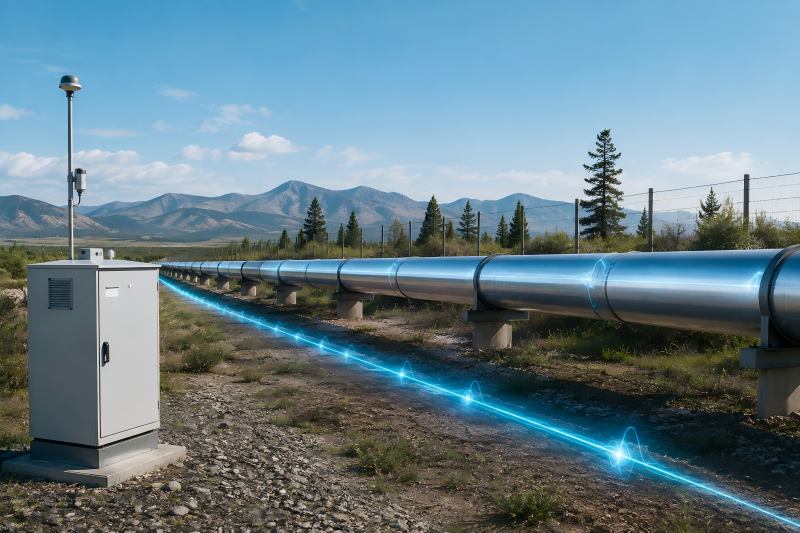
Parallel buried optical fiber layout is adopted by fiber-optic DAS to monitor excavation, trenching and potential pipeline damage hazards. The system configuration prioritizes long-distance surveillance, precise positioning and advance risk alerts for oil, gas and public utility pipeline networks.
Railway Corridor Protection
Fiber DAS uses trackside fiber installation to detect unauthorized entry and abnormal movement along railway corridors. Configuration focuses on real-time monitoring and integration with railway security control centers.
Power Facility Protection
By laying optical fibers along perimeters, fiber-optic DAS detects illegal intrusions and cable theft activities surrounding power substations and energy installations. Its system design centers on multi-level perimeter defense and unified alarm centralized control.
Underground Tunnel and Utility Corridor Monitoring
Optical fibers laid inside facilities enable fiber-optic DAS to capture human movement, equipment running status and anomalous vibration signals. The system design prioritizes hidden wiring layout, uninterrupted real-time sensing and stable subsurface monitoring performance.
Fiber optic DAS protects complex infrastructure by detecting intrusion, excavation, and abnormal vibration through customized long-distance security solutions.