

January 7, 2026

Fiber Optic Temperature Sensors in Airport Runways
Blogs

Fiber Optic Temperature Sensors in Airport Runways

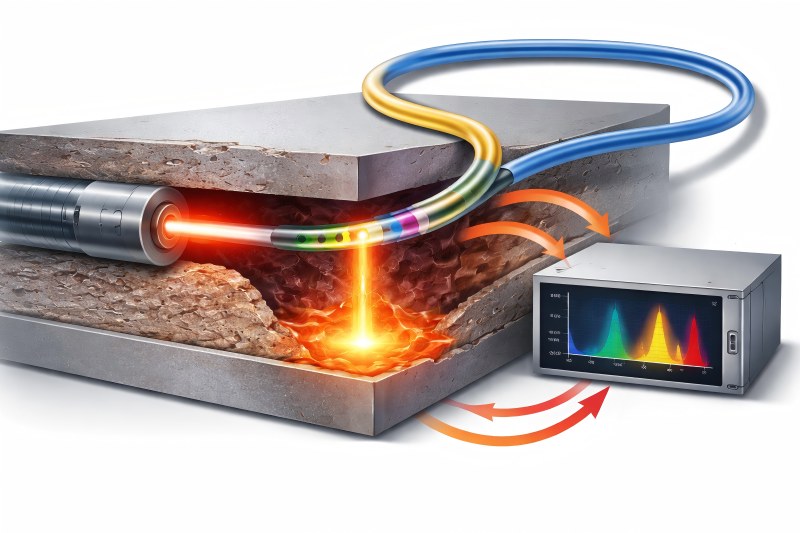
Airport runways face extreme loads and environmental stress, making accurate temperature monitoring essential for safety and performance. This article explores how fiber optic temperature sensing enables reliable, high-resolution runway monitoring and its advantages over traditional methods. Why Temperature Monitoring Matters for Airport Runways Runway integrity and performance depend heavily on temperature-dependent physical processes. Elevated or fluctuating temperatures can: Accelerate pavement degradation: Asphalt layers soften at high temperatures, while thermal contraction at low temperatures can lead to cracking and surface irregularities. Alter load-bearing characteristics: Subsurface temperature changes impact stiffness and modulus of pavement materials, affecting load distribution. Influence maintenance and safety operations: Real-time temperature data can inform decisions about runway usage, de-icing operations, and aircraft braking performance. Listening only to discrete thermocouples or surface probes has limitations in coverage and granularity. Runways, especially long ones exceeding a mile in length, benefit from continuous, distributed temperature data rather than isolated point measurements. How Fiber Optic Temperature Sensing Works A fiber optic temperature sensor uses optical fibers as the sensing medium, replacing traditional electrical sensors. Light pulses transmitted through an optical fiber experience changes due to temperature variations along the fiber. These changes are then detected and interpreted by a dedicated interrogation system to produce a temperature profile. Core Principles There are two major distributed sensing approaches used for temperature monitoring in infrastructures like airport runways: Distributed Temperature Sensing (DTS) In this method, the optical fiber itself acts as a continuous sensor covering long distances. Light is sent through the fiber and the fraction of backscattered light — typically based on Raman scattering — is analyzed to determine local temperature along the fiber’s length. Spatial resolution scales from meters to dozens of kilometers depending on system configuration. Fiber Bragg Grating (FBG) Sensors FBGs are inscribed along the fiber at specific intervals. They reflect particular wavelengths of light, and shifts in the reflected wavelength correspond to temperature changes at precise locations. This allows discrete multipoint temperature sensing with high precision. Key Advantages of Fiber Optic Sensors: Feature Benefit Distributed measurement Continuous temperature data along kilometers of runway High spatial resolution Detect small thermal anomalies or gradients EMI immunity Not affected by electromagnetic interference Durability and flexibility Withstand harsh environmental conditions Non-conductive and safe Ideal for critical infrastructure Installing Fiber Optic Sensors in Runways Integrating fiber optic temperature sensing in runway systems involves embedding or laying fiber optic cables within and beneath the pavement layers. These installations can be configured as: Subsurface installations: Fiber routes run within the base and sub-base layers of runways to capture temperature variations affecting structural components. Surface or near-surface configurations: Suitable for monitoring surface thermal gradients that influence friction and material performance. The placement design depends on specific monitoring objectives — such as detecting hotspots (zones of excessive heat), monitoring freeze-thaw effects, or managing thermal effects from aircraft landing cycles. Typical Fiber Deployment Zones and Monitoring Goals Deployment Zone Monitoring Objective Examples of Insights Runway surface layers Surface temperature mapping Detect high heat zones; friction performance correlation Base and sub-base Subsurface thermal behavior Detect thermal gradients affecting pavement stiffness Adjacent taxiways Cross-infrastructure thermal linkage Early warning for edge cracking Complete runway length DTS Continuous profile Identify systemic thermal trends Technical Considerations for Runway Applications Fiber optic sensors have several technical characteristics that make them ideal for runway monitoring, but they also require careful system design and calibration. Resolution & Accuracy Distributed fiber optic systems can achieve meter-level spatial resolution and temperature resolution within ±1°C or better, allowing detailed thermal characterization of multiple runway zones. Calibration Challenges Accurate runway temperature sensing requires careful calibration to differentiate between true thermal changes and factors like fiber strain or installation stresses. Calibration routines often involve reference temperature sources and baseline profiling. Environmental Robustness Optical fibers — typically made of glass — are inherently resistant to corrosion, chemical attack, and electromagnetic fields. This makes them suitable for the harsh airport environment, where electrical sensors can suffer from EMI and corrosion. Comparing Fiber Optic Sensors to Traditional Methods To understand the transformative value of fiber optic sensors in airport runway monitoring, it’s helpful to compare them with conventional technologies like thermocouples or infrared surface scanners. Fiber Optic vs Traditional Temperature Sensors Metric Traditional Sensors (Thermocouples) Fiber Optic Sensors Measurement type Point-based Distributed profile Installation complexity Moderate Moderate-high initial setup Spatial coverage Limited Full runway length Maintenance Requires regular checks Robust long-term sensor integrity EMI susceptibility High None Environmental durability Susceptible Highly resistant Data richness Low Very high Summary: While traditional sensors remain valuable for localized temperature measurements, they struggle to deliver a complete picture along long, complex infrastructures like airport runways. Fiber optics provides continuous data streams that help engineers and airport operators make better maintenance and safety decisions. Use Cases and Real-World Examples Structural Health Monitoring Distributed fiber optic temperature sensors create a thermal “map” of runway conditions. By correlating temperature variations with structural responses and stress patterns, engineers can anticipate pavement distress before visible damage occurs. Operational Safety Temperature data helps airports manage operations, especially in extreme weather. For instance: Hot weather runway maintenance: Detect surface softening to schedule early maintenance. Cold weather operations: Identify subsurface freeze zones that affect braking performance. Data-Driven Predictive Maintenance Continuous temperature monitoring supports predictive models that forecast wear and failure, enabling targeted maintenance planning that extends runway life and reduces unplanned closures. Smart Runway Integration Airport digital runway concepts use fiber optic sensors alongside other IoT technologies to create an intelligent monitoring system. This aligns with research into “smart runways” that integrate multi-sensor data for real-time performance assessment. Benefits of Fiber Optic Temperature Monitoring in Airports Using fiber optic sensors in runway monitoring brings several operational, safety, and financial advantages: Enhanced Safety Continuous real-time temperature data lets airport authorities react quickly to thermal anomalies that may affect runway friction, pavement integrity, or load-bearing capacity. Lower Long-Term Costs Although initial installation may be costlier than traditional sensors, fiber optic systems reduce long-term maintenance expenses by providing early warnings that prevent major repairs. Scalability Fiber networks can be extended or upgraded with new sensing modalities
E3 Distributed Temperature Sensing
Blogs

Long-Term Reliability Testing of Fiber Optic Temperature Systems

Fiber optic temperature sensing systems are valued for EMI immunity and long-distance monitoring, but long-term reliability is critical. This article examines why reliability testing matters and how it ensures stable performance over time. Why Long-Term Reliability Matters Fiber optic temperature systems are frequently deployed in critical and inaccessible environments, such as: High-voltage substations Underground tunnels and pipelines Nuclear and thermal power plants Offshore platforms Rail and metro infrastructure In these applications, sensor failure can lead to undetected overheating, false alarms, or costly shutdowns. Unlike conventional electrical sensors that may be replaced periodically, fiber optic systems are often embedded permanently, making long-term reliability essential. Key drivers for reliability testing include: Ensuring measurement stability over decades Minimizing drift and recalibration needs Predicting service life under harsh conditions Meeting industry standards and certifications Reducing the total cost of ownership (TCO) Core Components Subject to Reliability Testing A fiber optic temperature system is not a single component but a system of interacting elements, each with unique aging mechanisms. Component Function Reliability Concern Optical fiber Temperature sensing medium Coating degradation, attenuation increase Sensing element (FBG, Raman, phosphor, FP) Temperature encoding Drift, fatigue, contamination Connectors & splices Signal continuity Insertion loss, moisture ingress Interrogator unit Signal processing Laser aging, electronics failure Cables & sheathing Environmental protection Chemical, UV, and mechanical damage Long-term testing must evaluate both individual components and the integrated system. Major Long-Term Failure Mechanisms Understanding failure mechanisms is the foundation of reliability testing. Optical Fiber Aging Although silica fibers are chemically stable, long-term exposure to heat, radiation, or chemicals can cause: Increased attenuation Micro-crack propagation Coating embrittlement Hydrogen-induced losses Sensor Drift Temperature sensors may experience gradual drift due to: Refractive index changes Mechanical stress relaxation Grating or cavity aging Phosphor material degradation Environmental Stress External factors that accelerate aging include: Thermal cycling High humidity or condensation Chemical corrosion Vibration and mechanical fatigue Interrogator Degradation Electronic and optoelectronic components degrade over time: Laser wavelength drift Reduced signal-to-noise ratio (SNR) Power supply aging Component solder fatigue Types of Long-Term Reliability Tests Reliability testing combines accelerated laboratory tests with real-world field validation. Accelerated Aging Tests Accelerated tests simulate years of operation within a shorter timeframe. Test Type Purpose Typical Conditions High-temperature aging Evaluate thermal stability 85–300 °C for 1,000–10,000 h Thermal cycling Stress expansion and contraction −40 °C to +150 °C Humidity exposure Assess moisture resistance 85 °C / 85% RH UV exposure Outdoor durability UV-A / UV-B lamps Chemical immersion Corrosion resistance Oils, acids, solvents Results are extrapolated using Arrhenius or Eyring models to predict service life. Mechanical Performance Testing Mechanical integrity is essential for installations subject to vibration or movement. Bend fatigue testing Tensile strength retention Vibration and shock testing Crush and abrasion resistance Parameter Typical Requirement Minimum bend radius ≥10× cable diameter Tensile load 1,000–3,000 N Vibration IEC 60068 standards Shock Up to 50 g Optical Performance Stability Testing Measurement accuracy must remain stable over time. Metric Test Objective Temperature accuracy Drift < ±0.1 °C/year Repeatability Stable readings over cycles Resolution No degradation over time Signal attenuation <0.02 dB/km/year These tests often run continuously for months or years. Distributed Temperature Sensing (DTS) Reliability Testing DTS systems present unique challenges due to their long sensing range. Fiber Length Stability Testing verifies performance over tens of kilometers, focusing on: Attenuation growth Raman signal stability Spatial resolution consistency Raman Scattering Stability Because DTS relies on the ratio of Stokes and Anti-Stokes signals, reliability testing examines: Laser pulse stability Backscatter intensity consistency Temperature coefficient stability DTS Parameter Long-Term Target Temperature drift ≤ ±1 °C over 10 years Spatial resolution No degradation Measurement repeatability ±0.5 °C Fiber lifetime >25 years Field Reliability and Long-Term Deployment Studies Laboratory tests alone are insufficient. Field testing validates performance under real conditions. Pilot Installations Manufacturers deploy systems in: Power substations Oil pipelines Rail tunnels These sites provide long-term data on: Environmental exposure Installation-induced stress Maintenance requirements Continuous Monitoring Data Reliability is evaluated through: Trend analysis Drift detection Alarm consistency Failure statistics Standards and Qualification Frameworks Long-term reliability testing is guided by international standards. Standard Scope IEC 61757 Fiber optic sensor performance IEC 60068 Environmental testing Telcordia GR-20 / GR-326 Fiber and connector reliability IEEE 1613 Power utility environments ISO 9001 Quality management Compliance ensures repeatable, auditable, and comparable results. Data Analysis and Lifetime Prediction Reliability testing produces large datasets that must be analyzed correctly. Statistical Methods Common techniques include: Weibull analysis Mean Time Between Failures (MTBF) Confidence interval modeling Lifetime Estimation Models Model Application Arrhenius Thermal aging Eyring Multi-stress environments Coffin–Manson Thermal fatigue Miner’s rule Cumulative damage These models translate accelerated test data into real-world lifetime predictions. Maintenance and Recalibration Strategy Validation Long-term testing also validates maintenance intervals. System Type Typical Recalibration Interval FBG systems 5–10 years DTS systems 10–15 years Fluorescence sensors Minimal Fabry–Perot sensors 5–10 years Well-designed systems often achieve maintenance-free operation for over a decade. Emerging Trends in Reliability Testing Reliability testing continues to evolve alongside technology. Key trends include: AI-driven drift detection Digital twin-based aging simulation Multi-parameter reliability testing (temperature + strain + vibration) Smaller, more stable laser sources Predictive maintenance analytics These advances reduce uncertainty and further extend system lifetime. Long-term reliability testing ensures fiber optic temperature systems deliver durable, low-maintenance performance in demanding environments, making it essential for long-term, mission-critical monitoring.

Fiber Optic Temperature Sensor Work Principle
Blogs

Fiber Optic Temperature Sensor Working Principle: A Complete Technical Guide

Fiber optic temperature sensors are now a key measurement solution in industries that demand high accuracy, safety, and reliability. Unlike conventional electrical temperature sensors, fiber optic sensors use light instead of electricity, making them immune to electromagnetic interference and suitable for extreme or hazardous environments. This article provides a deep technical explanation of how fiber optic temperature sensors work, the core sensing mechanisms, different sensor types, and where each technology is best applied. What Is a Fiber Optic Temperature Sensor? A fiber optic temperature sensor measures temperature by monitoring how changes in heat affect light transmission within an optical fiber. The sensor consists of: A light source An optical fiber acting as the sensing medium A detector/interrogator that interprets the returned signal Because optical fibers are dielectric (non-conductive), these sensors are inherently safe in high-voltage, explosive, or electromagnetically noisy environments. Fundamental Working Principle The working principle of fiber optic temperature sensors is based on the fact that temperature affects optical properties, such as: Refractive index Optical path length Light wavelength Light scattering intensity Phase or frequency of light When temperature changes, it alters how light travels through, reflects from, or scatters within the fiber. These changes are measured and converted into accurate temperature values. Core Physical Effects Used: Thermal expansion Thermo-optic effect Inelastic scattering Optical interference Main Fiber Optic Temperature Sensing Technologies Fiber optic temperature sensors can be categorized by how temperature information is encoded in light. Major Fiber Optic Temperature Sensing Technologies Technology Measurement Principle Temperature Encoding Method Fiber Bragg Grating (FBG) Wavelength shift Reflected Bragg wavelength Distributed Temperature Sensing (DTS) Raman scattering Backscattered light intensity Interferometric Sensors Phase change Optical phase difference Fluorescence-Based Sensors Decay time Fluorescence lifetime Fabry–Perot Sensors Cavity length change Interference pattern shift Fiber Bragg Grating (FBG) Temperature Sensor Principle How It Works An FBG sensor contains a microscopic periodic structure (grating) inscribed inside the fiber core. This grating reflects a specific wavelength, referred to as the Bragg wavelength. When temperature changes: The fiber expands or contracts The refractive index changes The reflected wavelength shifts proportionally Advantages High accuracy Fast response Suitable for multi-point sensing Limitations Cross-sensitivity to strain (requires compensation) Distributed Temperature Sensing (DTS) Working Principle Distributed Temperature Sensing continuously monitors temperature along the full length of an optical fiber, often across distances of tens of kilometers. Raman Scattering Mechanism A short laser pulse is sent into the fiber. As light interacts with the fiber material, Raman backscattering occurs, producing: Stokes signal (temperature-independent) Anti-Stokes signal (temperature-dependent) The intensity ratio between these signals determines the temperature at each point. Interferometric Fiber Optic Temperature Sensors Interferometric sensors rely on optical phase changes caused by temperature variations. Common Types Mach–Zehnder Michelson Sagnac Principle Temperature alters the optical path length of one arm of the interferometer, causing a phase shift when compared to a reference arm. This phase difference is detected as interference fringes. Key Characteristics Extremely high sensitivity Suitable for micro-temperature changes Complex signal processing required Fluorescence-Based Fiber Optic Temperature Sensors These sensors use temperature-dependent fluorescence decay time. How It Works A phosphor material at the fiber tip is excited by light The material emits fluorescence The decay time of fluorescence changes with temperature Key Advantage Insensitive to signal loss and fiber bending Excellent stability in harsh environments Common Use Medical devices Power transformer winding monitoring Fabry–Perot Fiber Optic Temperature Sensor Principle A Fabry–Perot sensor consists of two reflective surfaces forming an optical cavity. Temperature Effect Temperature changes cause cavity length expansion This shifts the interference pattern The shift is correlated to temperature Benefits High resolution Compact design Suitable for point sensing Comparison of Fiber Optic Temperature Sensor Types Sensor Type Measurement Range Accuracy Response Time Typical Applications FBG −200 to 300 °C ±0.1 °C ms Power systems, aerospace DTS (Raman) −40 to 600 °C ±1–2 °C seconds Pipelines, tunnels Interferometric Narrow ±0.01 °C ms Scientific research Fluorescence −200 to 450 °C ±0.5 °C ms Medical, transformers Fabry–Perot −50 to 400 °C ±0.1 °C ms Industrial monitoring Advantages Over Traditional Temperature Sensors Fiber optic temperature sensors outperform thermocouples and RTDs in several key areas: Electromagnetic immunity Electrical isolation Intrinsic safety Long-distance measurement Multiplexing capability Resistance to corrosion and moisture Environmental and Industrial Suitability Fiber optic temperature sensors are ideal for: High-voltage environments Explosive atmospheres Strong electromagnetic fields Corrosive chemicals Remote or inaccessible locations They are widely deployed in: Power generation Oil & gas Rail transportation Smart infrastructure Industrial automation Signal Processing and Interrogation Systems The interrogator is the brain of a fiber optic temperature sensing system. It performs: Light generation Signal demodulation Temperature calculation Data transmission Advanced systems integrate: Digital signal processing (DSP) AI-assisted anomaly detection Real-time alarms SCADA or IoT platforms Calibration and Accuracy Considerations To ensure accuracy: Sensors are factory-calibrated Temperature-strain compensation may be required Environmental factors such as bending radius and aging must be considered Future Trends in Fiber Optic Temperature Sensing Key developments include: Higher spatial resolution DTS Multi-parameter sensing (temperature + strain + vibration) Smaller interrogators AI-driven predictive maintenance Integration with digital twins The working principle of fiber optic temperature sensors is rooted in light–matter interaction, enabling precise temperature measurement without electrical conduction. Through technologies such as FBG, DTS, interferometric, fluorescence, and Fabry–Perot sensing, fiber optic temperature sensors provide unmatched safety, scalability, and performance. As industries demand smarter, safer, and more connected monitoring solutions, fiber optic temperature sensing will continue to play a critical role in next-generation industrial and infrastructure systems.

Leave Your Message