
September 22, 2025

What Is Fiber Optic Intrusion Detection
Blogs

What Is Fiber Optic Intrusion Detection and How Does It Work?

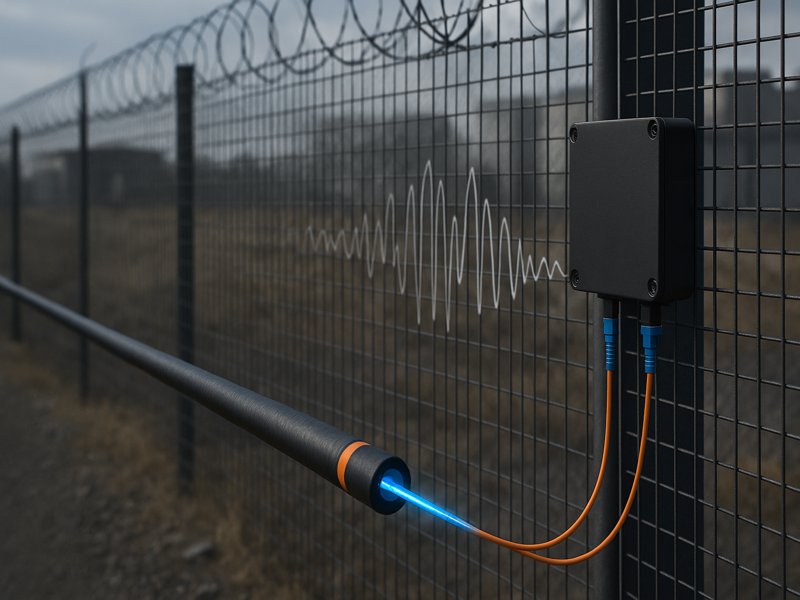
Fiber optic intrusion detection uses specialized cables to sense and report any unauthorized access or disturbance along a protected area. You can think of these cables as a sensitive tripwire or a microphone that listens for unusual vibrations. Unlike traditional electronic sensors, fiber optic systems can detect disturbances over long distances and remain reliable even in challenging environments. You gain better protection because these systems sense tiny changes in the fiber, making them less likely to miss an intrusion. Key Takeaways Fiber optic intrusion detection uses light signals to sense disturbances, making it more reliable than traditional electronic systems. These systems can cover long distances and detect even small changes, ensuring better security for sensitive areas. Advanced algorithms help reduce false alarms, allowing the system to focus on real threats while ignoring harmless events. You can use fiber optic systems for various applications, including perimeter security, infrastructure protection, and data centers. Knowing how this technology operates enables you to select the best option for efficiently safeguarding your assets. Intrusion Detection Overview What It Is You can think of fiber optic intrusion detection as a security system that uses light instead of electricity to sense threats. These systems use fiber optic cables to monitor for changes caused by physical disturbances. When someone tries to climb a fence, cut a cable, or tamper with a protected area, the system detects changes in the light signals traveling through the fiber. This method sets fiber optic systems apart from traditional intrusion detection technologies, which often rely on electronic signals or analyze network traffic. Fiber optic systems stand out because they: Transmit light signals through cables, not just electronic signals. Detect disturbances by monitoring changes in light, not just electrical changes. Respond to physical interactions, such as vibrations or pressure, which alter the light signal. You can find several types of fiber optic intrusion detection systems, each designed for specific needs. The table below shows some popular options and their features: System Type Features Aura Ai-X Data-driven technology with deep learning reduces nuisance alarm rates while maintaining high detection probability. Secure Fence Efficient on a variety of fence types, such as palisade, chainmesh, chain-link, and weldmesh. Secure Point Dual zone system with high sensitivity and low nuisance alarms, adaptable to almost all fence types. Aura Ai-XS Fence-mounted sensing up to 10 km, with precise intrusion detection within ±2 m. Aura Ai-XS (powered by FFT ATLAS) Continuous monitoring and maintenance for optimal performance of the intrusion detection system. Purpose You use fiber optic intrusion detection to protect sensitive areas from a range of threats. These systems help you detect: Unauthorized access, such as cable tapping or attempts to breach a perimeter. Suspicious activities, including unusual movements or behaviors near protected zones. Physical damage to cables can create vulnerabilities and risk data breaches. Organizations choose fiber optic intrusion detection for several reasons. The table below outlines the main objectives: Objective Description Accurate detection of intrusions Ensures that any unauthorized access is identified promptly. Resilience against tampering The system is designed to trigger alarms if the cables are cut or tampered with. Low false alarm rates Capable of distinguishing between real threats and environmental factors, reducing unnecessary alerts. Quick response times Real-time detection allows for immediate action to be taken in case of a security breach. Cost-effectiveness Although initial costs may be higher, long-term savings on maintenance and reliability are significant. Scalability It can be deployed over large areas, making it suitable for extensive perimeters. Reliable performance Continuous monitoring ensures consistent security coverage. You measure the effectiveness of these systems by looking at several factors: Reliability, which means the system works even during outages. Accuracy, which helps you avoid false alarms. Capabilities, so you can keep up with the latest detection features. Maintenance, since low-maintenance systems save you time and money. Coverage, which ensures you detect intrusions precisely. Integrations, so your system works well with other security technologies. Fiber optic intrusion detection gives you a reliable way to secure perimeters. The cables detect stress or breaks when someone tries to breach the area. This technology resists interference, making it a strong choice for organizations that want dependable security.  How It Works Sensing Disturbances You rely on fiber optic cables to act as sensitive detectors along your perimeter. These cables use light to sense even the smallest physical changes. When someone tries to climb a fence, dig near a buried cable, or tamper with a protected area, the cable picks up the disturbance. The system then analyzes these changes in the light signal to determine if an intrusion has occurred. Fiber optic cables can detect several types of disturbances in real-world security scenarios: Vibration Detection: The system senses vibrations caused by footsteps, digging, or cutting. Technologies like fiber Bragg gratings (FBG) and distributed acoustic sensing (DAS) help you secure the physical layer of your perimeter. Polarization Changes: Some systems use polarization-sensitive techniques to spot changes in the way light travels through the cable. This helps you identify disturbances that might not cause strong vibrations. Interferometric Methods: Advanced systems use interferometers, such as Mach–Zehnder and Michelson types, to pick up subtle vibrations. These methods work well for perimeter security and can detect even light touches. Tip: Fiber optic cables are perfect for isolated locations or expansive perimeters because they can detect disruptions over long distances. Environmental factors can sometimes mimic intrusion attempts. You need to understand how wind, rain, or even the movement of a fence can affect detection. The table below shows how these factors impact the system and what you can do to reduce false alarms: Environmental Factor Impact on Detection Mitigation Techniques Wind Creates vibrations that may trigger false alarms Environmental disaggregation, advanced pattern recognition Rain Can cause disturbances similar to intrusion attempts Frequency filters, advanced detection algorithms Fence Fabric Movement Excessive movement can lead to nuisance alarms Proper maintenance, software-defined zones You may rely on your system to overlook innocuous occurrences and concentrate on actual risks by utilizing sophisticated detection and mitigation strategies. Signal Processing After the fiber
Types of Fiber Security Systems
Blogs

Types of Fiber Security Systems: Perimeter, Pipeline, and Data Protection

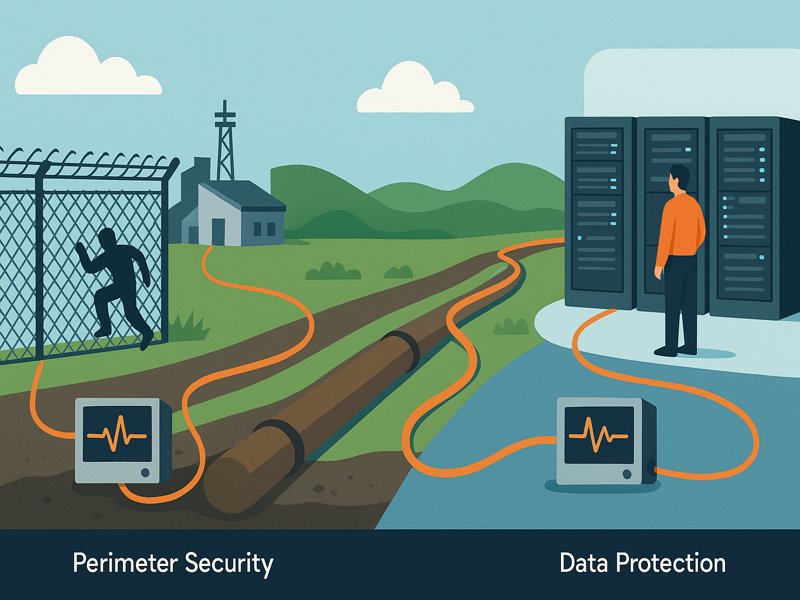
Unlike traditional electronic sensors, fiber optic security systems leverage the unique properties of light traveling through cables to detect disturbances with unmatched precision. These systems are immune to electromagnetic interference, capable of covering long distances, and versatile enough to protect physical, industrial, and digital infrastructures. This article explores the three main types of fiber security systems—perimeter security systems, pipeline security systems, and data protection systems. We’ll examine how each works, its commercial benefits, the industries that rely on them, and how businesses can choose the right fit for their needs.  Understanding Fiber Security Systems At their core, fiber optic security systems rely on a principle called Distributed Acoustic Sensing (DAS) or similar technologies. Light pulses travel down the fiber cable, and when vibrations, temperature shifts, or physical disturbances occur, the backscattered light pattern changes. These subtle changes are analyzed in real time by monitoring equipment, which can pinpoint the location and nature of the disturbance. The benefits of this approach are clear: High Sensitivity: Able to detect footsteps, tampering, or even leaks in buried pipelines. Long-Distance Monitoring: One fiber optic line can oversee distances of tens to hundreds of kilometers. Scalability: Easily adapted for small perimeters or nationwide networks. Durability: Fiber optic cables are resistant to electromagnetic interference and environmental conditions. With this foundation in mind, let’s dive into the three major applications. Perimeter Security Systems Definition and Purpose Fiber optic perimeter security systems are designed to safeguard physical boundaries. Instead of relying on traditional sensors like motion detectors or cameras, these systems use buried or fence-mounted fiber optic cables to detect intrusions in real time. How It Works When an intruder climbs a fence, digs under a barrier, or tampers with a restricted boundary, the resulting vibration causes tiny disturbances in the fiber cable. The system translates these disturbances into alerts, accurately identifying the intrusion point. Commercial Applications Airports & Seaports: Protect runways, terminals, and cargo areas. Military Bases: Provide high-security boundary protection. Energy Plants: Safeguard nuclear, solar, and wind energy sites. Data Centers: Safeguard sensitive facilities from unauthorized entry. Advantages Real-time detection with precise location accuracy. Minimal maintenance once installed. Incorporation with surveillance cameras, access control systems, and alarms. Reduced false alarms compared to traditional motion sensors. Challenges Environmental sensitivity (wind, heavy rain, and wildlife can trigger signals). Higher upfront installation cost compared to conventional security fencing. Pipeline Security Systems Definition and Purpose Pipeline networks carry oil, gas, water, and critical utilities across continents. Any leak, theft attempt, or sabotage can cause catastrophic financial and environmental damage. Fiber optic pipeline security systems monitor these networks around the clock. How It Works Fiber optic cables utilize DAS (Distributed Acoustic Sensing) and DTS (Distributed Temperature Sensing) to detect vibrations caused by tampering, leaks, or excavation near the pipeline. They can also sense temperature changes that indicate fluid leakage. Commercial Applications Oil & Gas Companies: Protect pipelines from theft and sabotage. Water Utilities: Monitor for leaks and unauthorized access. Mining Operations: Ensure slurry or chemical pipelines remain intact. Telecom Companies: Safeguard long-distance fiber optic communication lines. Advantages Real-time alerts over hundreds of kilometers. Reduces downtime and financial losses by detecting issues early. Minimizes environmental risks from leaks. Supports compliance with safety and environmental regulations. Challenges Interpreting vast amounts of sensor data requires advanced analytics. Installation requires a considerable initial investment. Needs to be integrated with monitoring centers for quick response. Data Protection Systems Definition and Purpose In the digital age, securing information is as critical as securing physical infrastructure. Fiber optic data protection systems prevent unauthorized tapping or interference with high-value communication networks. How It Works When hackers or malicious actors attempt to bend, tap, or interfere with a fiber optic cable, the system detects changes in the signal pattern. The monitoring equipment instantly raises an alert, pinpointing the attempted breach. Commercial Applications Financial Institutions: Protect banking transactions and customer data. Government Agencies: Safeguard confidential communications. Telecom Providers: Ensure secure data transmission across backbone networks. Corporate Enterprises: Protect intellectual property and customer records. Advantages Prevents covert data tapping or eavesdropping. Ensures compliance with cybersecurity regulations. Protects customer trust and brand reputation. Integrates with broader IT security frameworks. Challenges Requires collaboration with IT departments for full integration. Can produce false positives if not calibrated correctly. Initial costs may be high, especially for retrofitting older networks. Comparative Analysis To better understand the strengths of each fiber security system, the table below summarizes the differences: Feature / Factor Perimeter Security Pipeline Security Data Protection Primary Function Detect physical intrusions Monitor leaks/tampering Prevent data tapping Industries Served Airports, energy, defense Oil & gas, utilities, mining Finance, government, telecom Detection Technology Vibration sensing DAS & DTS Signal integrity monitoring Strengths Accurate location alerts Long-distance monitoring Cyber-physical data protection Challenges Environmental sensitivity High setup cost, analytics Integration with IT systems Scalability Medium to High Very High High This comparison highlights how each system serves unique security goals but together forms a complete defense strategy. Future Trends in Fiber Security Systems The demand for fiber optic security solutions continues to grow as industries modernize and threats evolve. Several major trends are: Artificial Intelligence alongside Machine Learning Smarter analytics to differentiate between real threats and harmless disturbances. Reduced false alarms through automated learning. IoT and Cloud Integration Real-time monitoring dashboards are accessible worldwide. Seamless integration with cloud-based data analytics platforms. Hybrid Security Solutions Combining fiber optics with cameras, drones, and radar for layered protection. Holistic security ecosystems that cover physical and digital threats simultaneously. Cost Reduction and Wider Adoption As technology matures, costs are expected to decrease, making fiber security accessible to medium-sized businesses, not just large enterprises. Organizations have transformed their protection methods for vital assets through the use of fiber security systems. Perimeter systems shield physical boundaries, pipeline systems safeguard vital infrastructure, and data protection systems ensure digital integrity. Each type has unique strengths and applications, but together they form a powerful, integrated security framework.

Leave Your Message