
July 17, 2025

Prison Security
Blogs

Creating Escape-Proof Prisons with Integrated Electric Fences and Intrusion Detection

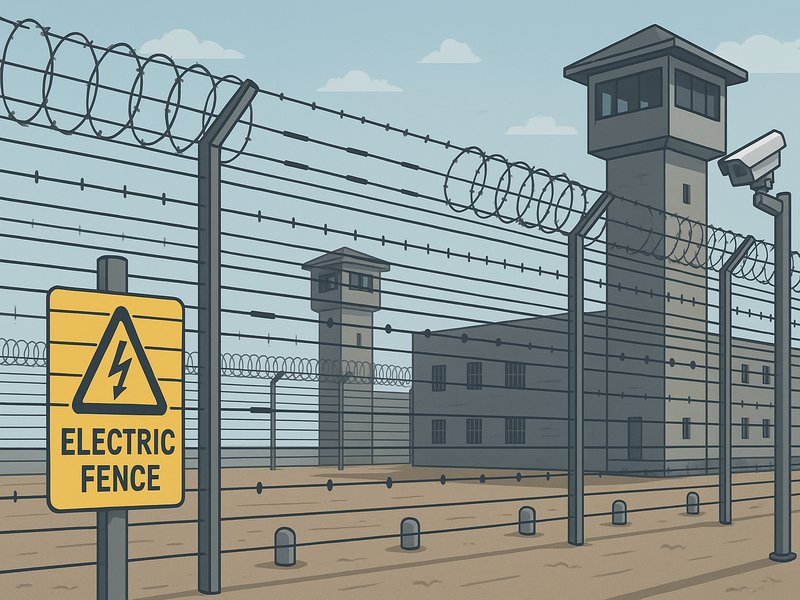
Prison escapes pose serious threats to public safety and correctional integrity. To counter them, modern prisons need more than guard towers—they require electric fences and intrusion detection systems for layered, intelligent security. This article explores how these technologies create escape-proof perimeters. The Challenge of Prison Escapes The Human and Operational Risks Prison escapes endanger lives—not only of the escapees and security personnel but also of innocent civilians. They lead to: Emergency lockdowns Manhunts and legal investigations Institutional reputation damage Massive resource expenditure Most escapes occur due to physical breaches, routine negligence, or technological blind spots—all of which can be mitigated with layered security. Traditional Weaknesses Conventional perimeter systems—barbed wire, passive barriers, patrols—are: Vulnerable to cutting or climbing Poor at detecting breaches in real time Difficult to monitor continuously across large facilities This is where electric fences and IDS integration change the game. Electric Fences: First Line of Physical and Psychological Defense How Electric Fencing Works in Correctional Settings Electric fences are no longer just farm tools—they are advanced high-voltage pulse deterrent systems engineered for security. In prison applications, electric fencing is used to: Deliver non-lethal shocks that deter contact or climbing. Alert security staff the moment wires are touched, cut, or moved. Serve as a visual and psychological barrier warning of active defense. Electric fences can be configured for inner perimeters, outer perimeters, or segregated zones within prison compounds. Types of Electric Fences Used in Prisons Pulse Electric Fences: Emit timed high-voltage pulses (~7000–10,000V) that are non-lethal but powerful enough to deter. Tensioned Wire Systems: Provide both structural integrity and electrocution deterrent. Multi-Zone Systems: Divide the fence into independently monitored zones to precisely locate breach attempts. Intrusion Detection: Turning the Fence into a Sensor What is PIDS? Perimeter Intrusion Detection Systems (PIDS) are sensor-based technologies that detect, analyze, and report any physical breach attempts across the fence line. Unlike passive systems, PIDS enables: Real-time breach alerts Pinpoint location detection False alarm filtration through AI or pattern analysis Common PIDS Used in Prisons Vibration or Microphonic Cable Sensors: Detect tampering, cutting, or climbing. Fiber Optic Cable Systems: Use light disturbance to detect movement along the fence. Accelerometers: Detect sudden jolts or displacements on fences or walls. Ground Surveillance Radars: Monitor movement near the perimeter from a distance. When combined with electric fences, these systems transform passive barriers into active detection zones. Layered Security Architecture: Building an Escape-Proof Perimeter A Multi-Zone Strategy Creating an escape-proof prison means no single point of failure. A typical layered system includes: Outer Fence (electrified): First psychological and physical barrier. Sterile Zone: A no-access area between fences for detection clarity. Inner Fence (electrified): Traps intruders who breach the first line. Underground IDS: Detects tunneling or digging activities. Laser/Microwave Sensors: Cover the sterile zone. CCTV Integration: Provides visual confirmation and AI-powered tracking. This architecture ensures redundancy, real-time tracking, and rapid incident response. Command Center Integration All perimeter data from electric fences and IDS is fed into a centralized security control platform, offering: Live mapping of breach locations Real-time alerts with time-stamped events Alarm prioritization and classification Integration with video analytics, access control, and patrol dispatch Operators can monitor the entire perimeter from one dashboard, reducing reaction time to seconds. Advanced Electric Fencing Features for High-Security Prisons Zone Customization Each fence zone can be tailored with: Variable voltage output Climb detection algorithms Tamper alerts Disabling zones for maintenance without disrupting the entire system Fail-Safe Operation Electric fences for prisons must remain active during: Power failures (UPS and solar backup) Communication outages (fiber + wireless redundancy) Manual overrides (requires double authentication) Maintenance Monitoring Self-diagnostics alert security teams about: Wire cuts or shorts Insulator damage Voltage drop Energizer faults Proactive alerts prevent downtime and avoid vulnerabilities. Global Case Studies: Lessons in Effective Integration South Africa’s Maximum Security Prisons Some of the country’s high-risk prisons use dual electric fence zones combined with buried vibration detection and laser motion barriers, reporting nearly zero successful escapes since implementation. Israeli Detention Centers Israel’s security infrastructure employs smart electric fences, underground seismic sensors, and thermal imaging cameras, making their high-security centers virtually escape-proof—even under sabotage attempts. Private U.S. Correctional Facilities Modern American prisons integrate fiber optic intrusion detection, AI-enhanced camera systems, and electric fencing with centralized control rooms, reducing response time to breaches to under 10 seconds. Advantages of Integrated Systems in Correctional Facilities Advantage Description Escape Deterrence Prevents attempts by adding real-time electric and psychological barriers Real-Time Alerts Notifies security instantly of intrusions or tampering Smart Decision-Making AI filters events to reduce false positives Efficient Response Guides rapid team deployment and incident resolution 24/7 Monitoring Works in all conditions—rain, night, fog, etc. Audit & Compliance Ready Generates records for investigations and compliance Safety, Ethics, and Human Rights Compliance Non-Lethal by Design Integrated electric fencing systems follow international standards (e.g., IEC 60335-2-76) to ensure: Short-duration, low-amperage pulses Safety signage at regular intervals Emergency shut-off protocols Manual override access These standards ensure inmate safety while maintaining security. Ethical Security Implementation Prison security systems must: Be transparent about usage Avoid excessive force or hidden electrification Respect visual privacy with smart zone masking Allow for third-party system audits This fosters trust, prevents abuse, and aligns with human rights compliance mandates. Planning and Deployment Considerations Site Assessment Security consultants begin with a full vulnerability and terrain assessment, factoring in: Facility layout Risk level (e.g., high-risk inmates) Surrounding topography Existing security infrastructure System Design Each system is uniquely configured with: Fence height and length Number of electric zones Type of IDS (fiber, seismic, infrared, etc.) Power and communication redundancy Testing and Training Before going live: Each zone is tested for detection sensitivity Control room staff undergo response simulations Maintenance teams are trained in diagnostics and safety Ongoing drills ensure system readiness at all times. The Future of Prison Perimeter Security Predictive Analytics Next-gen systems will predict escape attempts using: Historical data on behavior and incidents AI motion pattern recognition Geo-fencing for inmate location within prison zones Drone-Based Monitoring Autonomous drones may patrol perimeters, visually verifying fence alerts and providing real-time
Electric Fence Solutions
Blogs

Electric Fence Solutions for Border Control and Critical Infrastructure

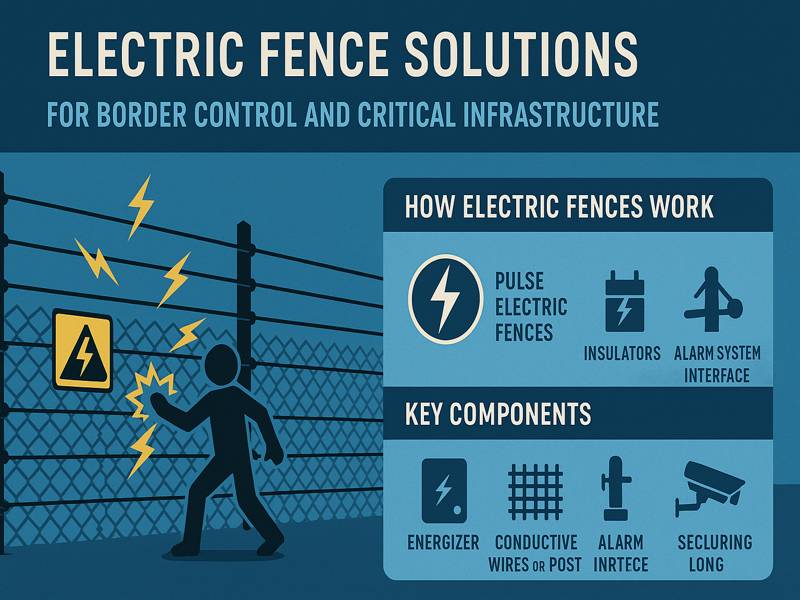
As global threats grow and border security demands rise, electric fences offer scalable, intelligent defense, combining deterrence, detection, and integration with modern surveillance for critical sites and remote borders. Understanding Electric Fence Technology How Electric Fences Work Electric fences function by delivering short, regulated electrical pulses through wires or conductive materials installed along a perimeter. When an intruder contacts the fence, they receive a non-lethal electric shock, acting as both a deterrent and an early warning system. There are two major types: Pulse Electric Fences: Emit high-voltage, low-current pulses at set intervals. Highly effective for human deterrence. Tensile Electric Fences: Use tensioned, electrified wires designed to resist tampering and climbing attempts, ideal for long border stretches. Key Components Energizers: Generate and regulate electrical pulses. Conductive Wires or Mesh: Deliver the current across the perimeter. Insulators and Posts: Maintain wire positioning and prevent current leakage. Alarm System Interface: Notifies users when the fence is broken or tampered with. Backup Power Supply: Guarantees uninterrupted functioning in the event of sabotage or outages. Electric Fencing in Border Control Securing Long and Remote Perimeters Securing international borders often involves thousands of kilometers of challenging terrain. Compared to concrete barriers or staffed patrols, electric fencing provides a low-maintenance, more affordable option. Advantages of border control: Visual and physical deterrence for smugglers, trespassers, or unauthorized immigrants. Real-time breach alerts through integrated sensor and alarm systems. Solar-powered options for deployment in remote areas. Notable Examples of Use India-Pakistan Border: Uses thousands of kilometers of electrified fencing supported by thermal sensors and surveillance towers. US-Mexico Border: Select zones use electric fencing integrated with motion detectors and patrol drones. Israel-Egypt Border: Features smart fencing with electric deterrents, radar, and camera integration. These deployments demonstrate how electric fence systems can operate autonomously while enhancing traditional patrol and surveillance strategies. Electric Fence Technologies: From Basic to Smart There are multiple types of fence intrusion detection system used in high-security environments. Their design and sophistication depend on the threat level and operational needs. 🔌 Pulse Electric Fence Systems Deliver high-voltage pulses (typically 5,000–10,000V) at low current Serve as non-lethal disincentives Set off alarms in response to wire cuts, short circuits, or tampering. Commonly used in border control due to simplicity and reliability 🧬 Tensile Wire Systems Use high-tension wires to resist cutting or climbing Ideal for integrating with sensors to detect vibrations or disturbances Less reliant on high-voltage pulses, often used in urban infrastructure zones 🌐 Internet of Things-Integrated Smart Electric Fencing Incorporate cloud-based monitoring, GPS tracking, and microcontrollers. Capable of real-time health diagnostics, zone-based control, and data logging Integrate with video analytics, AI detection models, and access control systems Smart systems reduce false alarms by filtering out animals, debris, and weather interference, making them highly effective in complex environments like ports or oil pipelines. Smart Integration: Building a Multi-Layered Defense System Electric Fences + Sensors + Surveillance Modern electric fence systems are no longer standalone barriers. They are part of a comprehensive perimeter security system that includes: PIDS (Perimeter Intrusion Detection Systems): Fiber optic or cable-based sensors detect vibrations or pressure. CCTV and AI Surveillance: Real-time visual monitoring with behavior analytics. Laser and Microwave Barriers: Create invisible tripwires and motion-detection zones. Drones and PTZ Cameras: Mobile surveillance to verify breach attempts. Electric fences can trigger these systems on contact or tampering, enabling swift security responses. Centralized Command Platforms Control rooms at critical infrastructure sites now employ integrated security control platforms where electric fence systems feed live data into: Central dashboards AI-based decision engines Incident loggers Emergency communication systems Operators receive instant alerts with location tagging, allowing security teams to intercept intruders before they advance. Deployment Challenges and Engineering Considerations Deploying electric fences on a border or around infrastructure comes with a host of logistical and technical challenges: Geographical Constraints Rocky terrains and mountainous regions may require specialized anchoring systems Flood-prone areas demand waterproof insulators and elevated fencing Long spans require repeater stations and voltage equalization Power Supply Management In remote areas, solar-powered fences with battery backup are vital Power conditioning equipment ensures stable voltage delivery and protection against lightning Material Durability High-tensile galvanized steel or aluminum wires are preferred UV-stabilized plastics and corrosion-resistant fittings extend lifespan Tamper-proof design deters intruders from bypassing or dismantling the fence Environmental and Wildlife Considerations Wildlife-friendly fencing modes can reduce accidental shocks to animals Fence systems must withstand extreme heat, snow, and sandstorms Threat-Specific Customization Nuclear Power Plants: Need multilayered fencing with seismic sensors and redundancy in power and communication lines. Data Centers: Prioritize fast breach detection and silent alarm triggering to avoid operational panic. Custom fence tension, voltage levels, and detection sensitivity can all be fine-tuned for each application. Advantages of Electric Fencing in High-Security Environments The reason electric fence solutions continue to grow in popularity for border and critical infrastructure protection is due to their combination of practical and strategic advantages: Feature Benefit Non-lethal shock Safe deterrent with minimal liability risks Tamper detection Alerts triggered on cutting, grounding, or climbing Integration-ready Easily links to alarms, cameras, and command systems Visual deterrent Warning signs and design deter intrusions proactively Scalable & modular Can be expanded or segmented based on threat level Low operational cost Requires less manpower than traditional patrolling Quick deployment Portable systems can be set up in temporary zones Regulations and Compliance Standards Electric fence systems must adhere to regional and global safety and operating regulations prior to deployment, including: Regarding electric fence energizers, IEC 60335-2-76 EN 60335-2-76 (European equivalent) UL 69 and ASTM standards in the U.S. Local government regulations on height, signage, and access Noncompliance may result in operational shutdowns or legal repercussions. Maintenance and Remote Monitoring Routine Maintenance Practices To ensure 24/7 protection, regular checks are essential: Wire tension and integrity Insulator condition Energizer voltage output Grounding effectiveness Sensor calibration Modern systems offer automated health monitoring, flagging maintenance issues before they become critical. Remote Monitoring Capabilities Today’s electric fences are accessible via cloud platforms and mobile apps, allowing users to: View real-time fence status Receive SMS/email alerts Control zones

Leave Your Message