
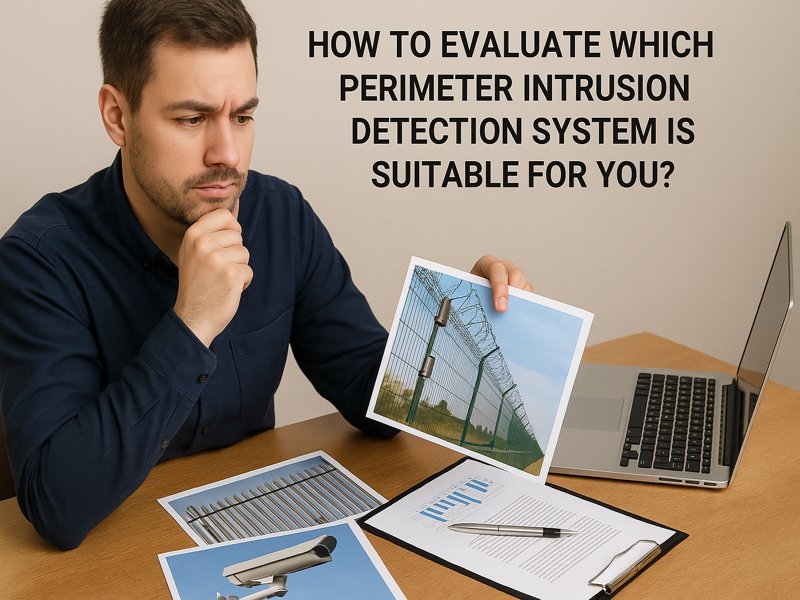
How to Evaluate Which Perimeter Intrusion Detection System is Suitable for You?
Perimeter security is crucial for protecting sensitive assets. Perimeter intrusion detection systems (PIDS) detect threats before they reach secure areas. Evaluating the right PIDS involves considering performance, cost, scalability, and environmental factors. This post offers guidance on how to choose the ideal system depending on your needs, security specifications, and financial constraints. What is a Perimeter Intrusion Detection System (PIDS)? Before diving into how to evaluate PIDS, it’s important to understand what they are. A security solution called a perimeter intrusion detection system is made to keep an eye on a protected area’s boundaries and identify any breaches, invasions, or unauthorized access. PIDS typically rely on a combination of sensors, alarms, cameras, and control systems to monitor and analyze activity. Some PIDS can provide real-time alerts, while others may work in conjunction with video surveillance and access control systems for a multi-layered security approach. There are various types of PIDS available, depending on the technology and detection method used, such as: Infrared Sensors Fiber Optic Sensors Radar and Microwave Sensors Electromagnetic Sensors Video Analytics and Surveillance Systems Because every technology has unique advantages and disadvantages, the choosing process is more complex. Key Factors to Consider When Evaluating a PIDS Understand Your Security Needs and Objectives The first and most important step in evaluating which perimeter intrusion detection system is suitable for you is to clearly define your security requirements. Every organization has different levels of security threats and needs, so your PIDS must be tailored to your specific circumstances. Type of Assets to Protect: What are you trying to protect? Critical infrastructure, such as military installations, data centers, or power plants, requires a more sophisticated and robust system, while smaller sites like warehouses may only need basic detection capabilities. Level of Security Required: How high are the security risks for your facility? If you are protecting highly sensitive or classified information, you may need a multi-layered system with advanced analytics, real-time monitoring, and integration with other security systems. Conversely, lower-risk environments may be adequately secured with simpler technologies. Threat Profile: Understanding the types of threats that your facility faces is key. Do you anticipate threats from human intruders, vehicles, animals, or all of the above? Some systems are better suited to detecting vehicles, while others focus more on detecting individual human intruders. Perimeter Dimensions and Design Another important consideration is the area’s size and complexity, which requires monitoring. A small facility can typically be secured with a less extensive and more affordable system, while large-scale facilities may require a more complex PIDS. Small Facilities: Smaller sites, such as retail locations or small industrial complexes, may only require basic sensors such as infrared or motion detectors. These systems typically offer sufficient protection, are less costly, and are simpler to install. Large Facilities: For larger facilities, such as airports, military bases, or industrial plants, a more comprehensive system will be needed. Larger perimeters require sensors with a broader range and often involve more complex technologies such as fiber optics or radar. Furthermore, if your facility has a complicated layout with multiple entry points, gates, or varying terrain, the PIDS should be adaptable enough to cover those areas effectively. A PIDS for a sprawling campus with varied features will require sensors capable of adapting to the different areas while providing continuous monitoring. Evaluate the Types of Sensors and Detection Technologies When selecting a PIDS, it’s essential to choose the right type of sensors and detection technologies for your specific needs. There are numerous varieties of sensors available, and each has pros and cons of its own. Infrared Sensors: These sensors pick up movement and heat signals. They are commonly used for small to medium-sized sites and are particularly effective at detecting humans and animals crossing the perimeter. However, their effectiveness can be reduced by extreme weather conditions such as fog, heavy rain, or high temperatures. Infrared sensors are often less expensive than other technologies, but they may not be suitable for all environments. Fiber optic sensors are renowned for their exceptional sensitivity, which enables them to identify even the smallest perturbations along the perimeter. Because of their ability to sense pressure, temperature, and vibration changes, they are frequently employed in high-security applications. Fiber optic systems are ideal for long stretches of perimeter and are effective in harsh weather conditions. They do, however, need specialized installation and are typically costly. Radar and microwave sensors are examples of sensors that employ electromagnetic waves to identify movement within a certain range. They are highly effective at covering large areas and can detect objects regardless of weather conditions such as rain, fog, or snow. For more precise detection, radar systems can be combined with additional sensors. Radar devices are typically more costly and more difficult to install than infrared sensors, though. Electromagnetic Sensors: When an object or person crosses the border, these sensors pick up changes in the electromagnetic field. They can be relatively inexpensive and effective for monitoring smaller perimeters, but they may not be suitable for larger sites or areas with complex terrain. Video Surveillance and Analytics: High-definition cameras paired with video analytics software are increasingly used as part of PIDS. Video analytics can identify movement patterns, detect suspicious activity, and even recognize faces or vehicles. This technology can be an excellent addition to other sensors, providing visual verification of any detected threats. However, the cost of cameras and video analytics software can be high, and their performance may degrade in low-light conditions or extreme weather. Environmental Considerations The environmental conditions in which the PIDS will be installed play a significant role in determining which system will be most suitable. The performance of some sensors can be heavily impacted by factors such as weather, temperature, and terrain. Weather Conditions: If your facility is located in an area prone to heavy rainfall, snow, or fog, consider radar or microwave sensors, which are less affected by weather. Unfavorable weather conditions can cause infrared sensors to malfunction, resulting in missed detections or false alerts. Terrain: If