
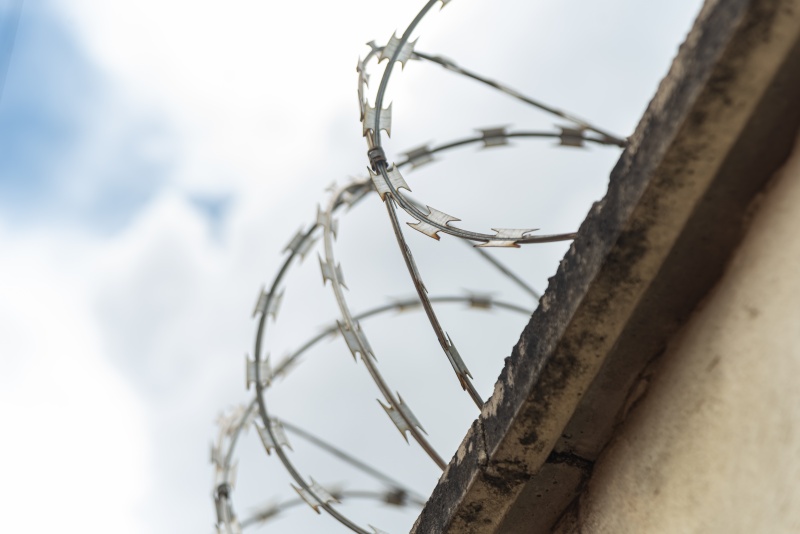
How different perimeter intrusion detection technologies can enhance prison security and prevent jailbreaks
Prisons require strong security to prevent escapes and unauthorized access. Traditional methods fall short, making modern Perimeter Intrusion Detection Systems (PIDS) essential. This article explores how various PIDS types improve prison safety, highlighting their functions, benefits, and security challenges. The Importance of Perimeter Security in Prisons Before delving into the specifics of how PIDS work, it’s essential to understand why perimeter security is so critical. The perimeter of a prison is the first line of defense against escape attempts and unauthorized access. Inmates, especially those housed in high-security facilities, may have a motive to escape, and a breach in the prison’s perimeter can lead to serious consequences. Therefore, prison authorities must ensure that the perimeter is well-secured and continuously monitored to prevent any unauthorized entry or exit. While traditional methods like fencing and patrols are still vital, they are often not enough on their own. This is where contemporary tools like perimeter intrusion detection systems are useful. These systems provide advanced security features that detect breaches early, alert security personnel in real-time, and even trigger automated responses to prevent potential escapes. Fiber Optic Intrusion Detection Systems (FOIDS) Fiber Optic Intrusion Detection Systems are one of the most advanced technologies used in perimeter security today. Fiber optic cables are installed along the perimeter of the prison, where they are capable of detecting small disturbances, including vibrations, pressure, or temperature changes. When an intruder tries to tamper with the perimeter, such as cutting the fence or attempting to climb it, the fiber optic system detects the disturbance and immediately alerts the monitoring station. How FOIDS Reduce Escapes and Improve Prison Safety High Sensitivity and Early Detection: Fiber optic systems are extremely sensitive and can detect even the smallest disturbances. Whether an inmate is attempting to cut through a fence, climb over it, or tamper with the boundary in any way, the system will detect these actions immediately. Because of this early detection, security staff can react before the intruder has a chance to make major headway. Durability and Environmental Factor Resistance: Fiber optic systems can withstand extreme conditions. Fiber optic cables can withstand high temperatures, rain, and even electrical interference, unlike other sensors that could be impacted by weather. This makes them particularly useful in locations with challenging climates or outdoor conditions. Wide Coverage and Flexibility: Fiber optic systems can cover large stretches of the prison perimeter with a single cable, making them ideal for large facilities. Additionally, fiber optic cables can be buried underground or installed along walls, fences, or gates, offering flexibility in installation and maintenance. Low Maintenance: Compared to other detection systems, fiber optic systems require less maintenance after installation. This low-maintenance characteristic is particularly valuable for high-security prisons where the system must remain operational 24/7. Fence Intrusion Detection Systems (FIDS) One of the most popular and useful systems for perimeter protection is the Fence Intrusion Detection System (FIDS). FIDS uses various sensors, such as vibration, motion, or capacitive sensors, attached to the perimeter fence. These sensors can detect physical movements or tampering with the fence structure, such as cutting, climbing, or lifting sections of the fence. How FIDS Improves Security in Prisons and Stops Escapes Vibration Detection: One of the primary methods for detecting perimeter breaches in FIDS is through vibration sensors. These sensors can detect the vibrations caused by tools used to cut through the fence or by individuals attempting to climb the fence. As soon as a vibration is detected, the system alerts the security personnel, enabling them to respond immediately. Real-Time Monitoring and Immediate Alerts: FIDS are designed for continuous, real-time monitoring of the entire perimeter. The system is linked to a central monitoring station where any detected intrusion is immediately flagged, ensuring that security personnel can take immediate action. Cost-Effectiveness: Compared to other advanced systems like fiber optic detection, FIDS is a more cost-effective solution, especially for prisons on a budget. Despite being more affordable, FIDS still offers robust security, making it a popular choice for many correctional facilities. Scalability: FIDS is highly scalable and can be easily adjusted to fit the needs of both small and large facilities. It can be used to monitor different sections of the perimeter and can be expanded as the facility grows. Deterrence: The presence of FIDS acts as a powerful deterrent to escape attempts. Inmates are less likely to attempt to breach the perimeter if they know that any tampering will immediately trigger an alarm. Laser Beam Security Systems A Laser Beam Security System is another innovative perimeter security technology. This device surrounds the prison’s perimeter with an imperceptible security barrier made of laser beams. The laser beams are projected across defined spaces, and if the beam is broken or disturbed by an object or person, the system triggers an alarm. How Laser Beam Security Systems Enhance Prison Safety and Prevent Escapes Extremely Sensitive Detection: Within the designated radius, laser beams are incredibly sensitive and can pick up even the smallest movement. This makes them particularly useful in detecting escape attempts, especially when inmates attempt to climb walls or fences. Any incursion will be discovered as soon as it happens thanks to the laser beams’ sensitivity. Non-Intrusive and Versatile: Laser beam security systems are non-intrusive, meaning that they do not require significant changes to the prison’s existing structure. The laser beams can be installed across walls, rooftops, or other critical areas where traditional sensors may not be as effective. This versatility allows for comprehensive monitoring of hard-to-reach areas. Enhanced Coverage: Laser systems can cover large areas with minimal infrastructure. They are ideal for monitoring high-risk areas like rooftops, tall fences, or isolated parts of the perimeter that may be difficult to patrol. Difficult to Evade: Unlike traditional physical barriers, laser beams are invisible and difficult to detect or avoid. Inmates attempting to escape are unlikely to be aware of the laser beams, making them highly effective in preventing unauthorized access or escapes. To enhance comprehensive monitoring, laser beam systems can be combined with additional security features