Security guards are often one of the largest recurring expenses in a physical security budget. At the same time, many sites still struggle with slow incident response, missed events, and blind spots along the fence line. Modern fence security systems—combining sensors, cameras, analytics, and remote monitoring—offer a way out of this trade-off: better security at a lower long-term cost.
This article explains how to use fence security systems to reduce dependence on manned patrols, cut guard costs, and dramatically improve incident response.
Why Guard-Only Security Is So Expensive (and Limited)
Traditional security models rely on on-site guards patrolling the perimeter, watching gates, and responding when something “looks wrong.” The problem is that this approach scales badly:
- You pay for 24/7 staffing: wages, overtime, benefits, and training.
- Coverage is naturally constrained because guards can only be in one location at a time.
- Night shifts and large perimeters often lead to fatigue and missed events.
Industry comparisons show that fully manned gate or perimeter guard setups can cost well into six figures per year per site, while virtual/remote guarding or automated systems typically cost a fraction of that—often 40–90% less over the long term.
At the same time, modern perimeter systems (fence sensors, cameras, analytics, and integrated alarms) are designed to detect, verify, and escalate incidents in a consistent way, without fatigue or distraction.
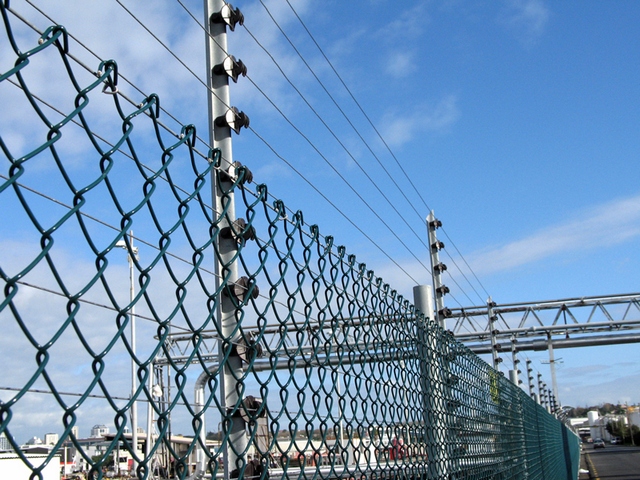
What a Fence Security System Actually Does
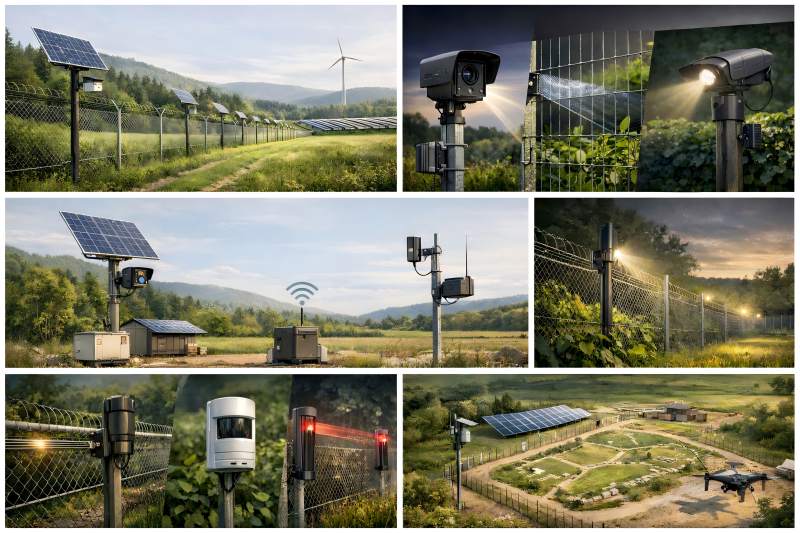
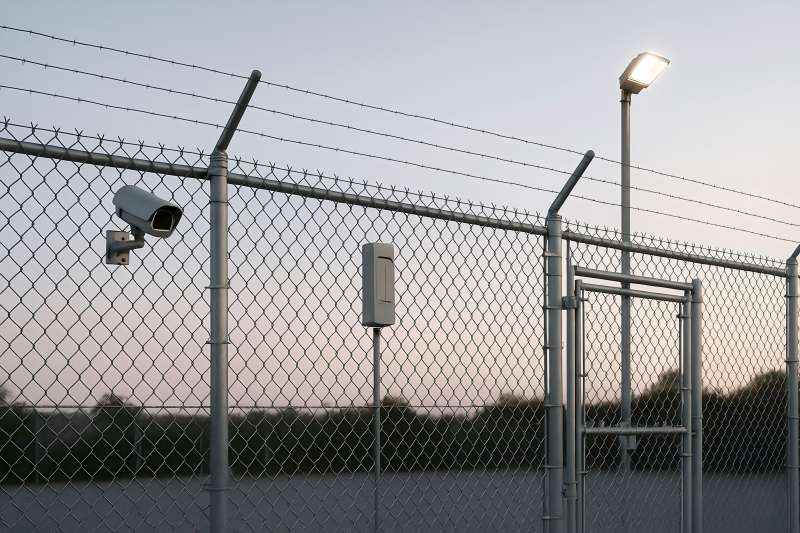
A fence security system is more than just a physical fence. It’s a layered detection and response platform built around the fence line. A typical solution combines:
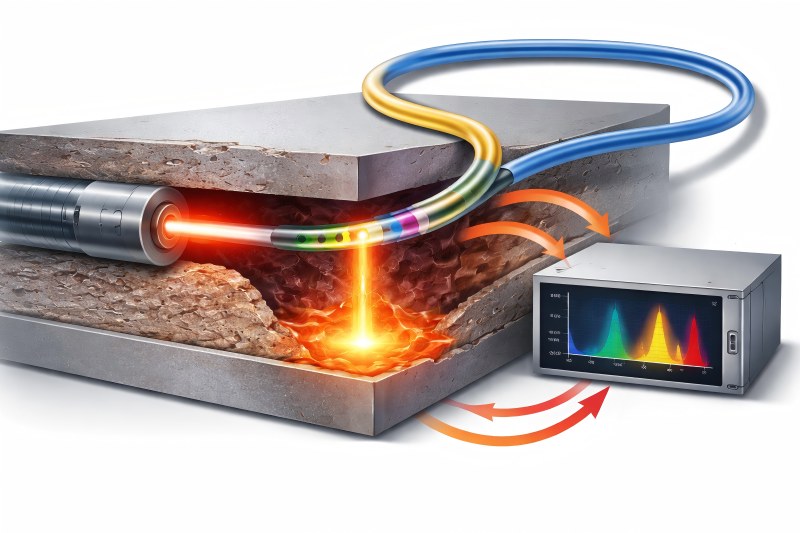
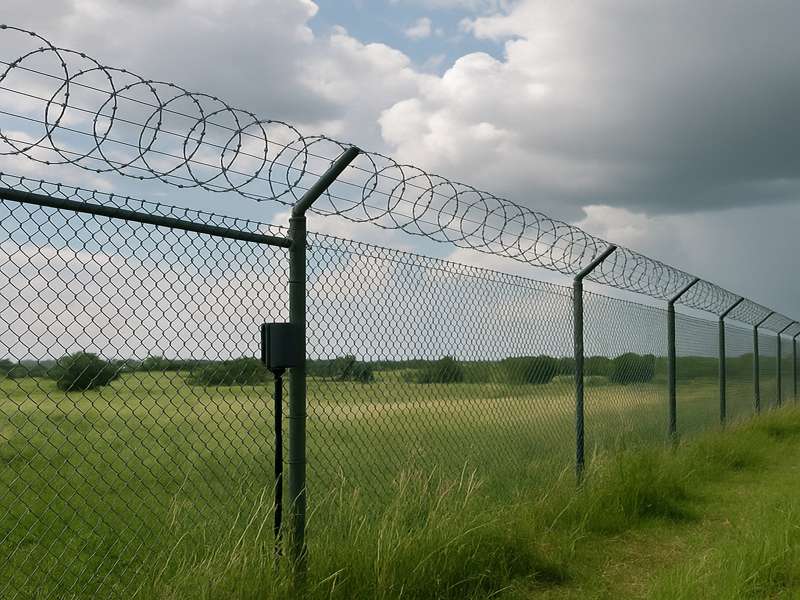
- Fence-mounted intrusion detection (PIDS/FIDS): vibration, fiber-optic, or microphonic sensors detect cutting, climbing, or lifting of the fence.
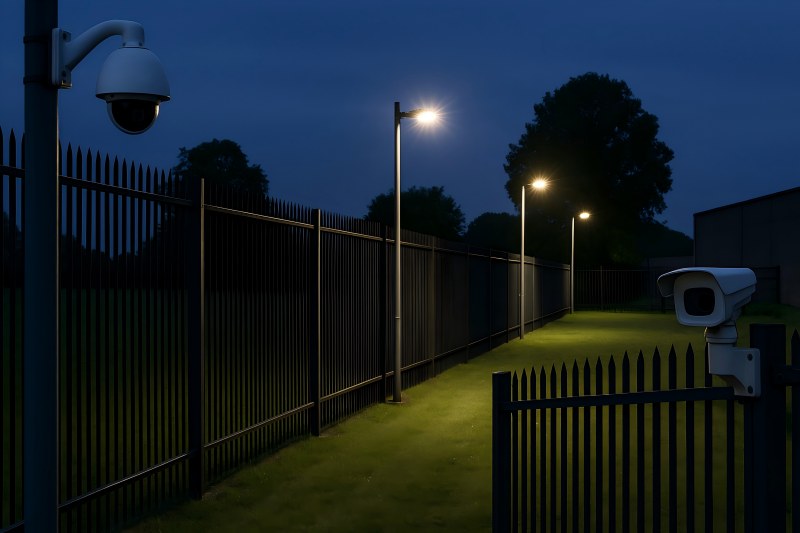
- Perimeter video: fixed and PTZ cameras monitor the fence line and integrate with video management systems (VMS).
- Perimeter lighting: supports both deterrence and clear video images.
- Analytics and AI: distinguish people from animals or weather, reducing false alarms.
- Alarm and event management: rules and workflows route alarms to local guards or remote monitoring centers.
When designed properly, the fence becomes an intelligent tripwire: as soon as someone touches or approaches it, the system detects, verifies, and triggers a defined response.
How Fence Systems Reduce Guard Costs
Replace Continuous Patrols with Event-Driven Monitoring
One of the biggest cost advantages comes from shifting from time-based patrols to event-driven response.
Instead of guards walking the fence every 30–60 minutes, the fence itself is continuously monitored by sensors and cameras. Guards—either on-site or remote—only react when:
- A fence sensor triggers an alarm
- Video analytics detect a person breaching the perimeter
- A rule (e.g., after-hours motion in a no-go zone) is violated
Remote and virtual guarding studies show that using smart surveillance and integrated alarms allows a much smaller team to monitor more sites, near-continuously, at a far lower cost than full manned coverage.
Consolidate Guard Posts
With an automated fence line:
- You may no longer need a guard at every gate or perimeter tower.
- One guard in a control room (or a remote monitoring center) can handle multiple entrances and dozens of cameras.
- Some sites move from three guards per shift to one supervisor plus remote monitoring, cutting on-site headcount significantly.
Case studies from remote perimeter monitoring providers show annual cost reductions of 50–80% when replacing or downsizing 24/7 guard posts with integrated perimeter systems and remote operators.
Lower Indirect Costs and Risk
Electronic fence security also reduces “hidden” guard costs:
- Fewer incidents (trespass, theft, vandalism) due to earlier detection and stronger deterrence
- Lower liability from guard errors, fatigue, or confrontations
- Potential insurance benefits for sites with documented perimeter protection and video coverage
When incidents are caught at the fence instead of inside the facility, loss severity and downtime fall, further strengthening the financial case.
Simple Cost Comparison (Illustrative)
| Model | Staffing / Operation | Typical Cost Profile* |
| Guard-only perimeter | Multiple guards per shift; full patrols | Very high annual OPEX (wages, overtime) |
| Hybrid: guards + fence system | Smaller on-site team, event-driven patrols | Medium OPEX + moderate CAPEX |
| Remote/virtual guarding | Minimal or no on-site guards | Low OPEX; higher CAPEX, strong ROI |
*Exact numbers vary by country and site, but multiple industry examples show virtual/perimeter-based models at 40–80% lower annual cost than guard-only setups.
How Fence Systems Improve Incident Response
Cutting costs is not enough; security also needs to get better. Well-designed fence systems do exactly that by enabling earlier detection, clearer verification, and faster, more coordinated response.
Detect Earlier—At the Edge of the Site
Perimeter intrusion detection systems (PIDS) are designed to detect intruders at the earliest possible moment—when they attempt to climb, cut, lift, or tunnel near the fence.
This has two big advantages:
- You gain time to respond before an intruder reaches critical assets.
- You reduce the number of “mystery alarms” inside the site, because most incidents are triggered and verified at the boundary.
Guidance on modern perimeter systems emphasizes that early perimeter detection plus integrated video gives security teams crucial minutes to assess and respond, often before incidents escalate.
4.2 Automate the First Response
When a fence sensor or analytic rule triggers, the system can automatically:
- Pop up the relevant camera views on a video wall
- Zoom PTZ cameras to the alarm location
- Activate strobe lights or sirens at the fence
- Lock or restrict access at nearby gates
- Send push notifications and snapshots to guards’ mobile devices
Automation removes seconds—or even minutes—of delay that happen when guards must manually search for the right camera and decide what to do. It also ensures consistent responses every time, independent of who is on shift.
4.3 Provide Clear, Actionable Information
Modern systems don’t just beep; they contextualize incidents:
- Video analytics highlight people and vehicles, filtering out animals, rain, or foliage movement.
- Maps or dashboards show exact zones and sensor IDs for each alarm.
- Event logs record who acknowledged what, when, supporting audits and investigations.
This clarity helps guards make faster, better decisions, while supervisors can refine procedures based on real data.
Before vs After Fence System Deployment
| Step | Guard-Only Model | With Fence Security System |
| Detection | Guard on patrol spots something (or not) | Fence sensor or analytics auto-detects an intruder |
| Verification | The guard walks / drives to check the area | Camera auto-positions; operator verifies on-screen |
| Initial response | The guard decides locally what to do | Predefined workflow triggers lights, alerts, and logs |
| Escalation | Radio/phone to supervisor, often delayed | Instant escalation via software + notifications |
| Documentation | Hand-written or simple digital report | Automatic event logs, video clips, and audit trail |
By shifting “detect + verify” to technology and reserving human effort for decision-making and physical intervention, you get faster and more reliable incident handling with fewer people.
Redesigning Guard Roles Around the Fence System
Deploying a fence security system doesn’t necessarily mean “no guards.” It means using guards differently—and more efficiently.
From Patrol Officers to Security Operators
Instead of walking the perimeter endlessly, guards can be stationed in a control room (or at a remote monitoring center):
- Monitoring multiple sites or zones through dashboards
- Handling alarms and incidents rather than random patrols
- Coordinating with law enforcement or facility management
This operator role is usually safer, less physically demanding, and more consistent, improving retention and professionalism.
Focus Guards on High-Value Tasks
With the fence and cameras doing the bulk of routine monitoring, you can shift guards toward:
- Visitor and contractor management
- Internal audits and safety checks
- High-risk escort duties (e.g., cash, sensitive materials)
- Emergency response training and drills
In many organizations, this redesign makes the guard function more strategic instead of purely reactive.
Implementation Roadmap: From Guards to Smart Fence Security
To actually reduce guard costs and improve response, you need a structured rollout rather than a piecemeal gadget-buying spree.
Step 1: Analyze Current Guard Spend and Risks
- Document guard posts, shifts, and annual costs.
- Map incident history around the perimeter.
- Identify coverage gaps and times when guards are most stretched.
Step 2: Design the Fence Security Architecture
Using risk and budget data, design a system that may include:
- Fence-mounted sensors on the critical or entire perimeter
- Cameras (fixed + PTZ) with overlapping coverage of those fence lines
- Adequate, uniform lighting along the perimeter
- Integration with existing access control and alarm systems
- A central monitoring platform (on-site or remote)
Work with a specialist vendor or integrator to ensure proper zoning, cabling, tuning, and environmental considerations.
Step 3: Pilot and Adjust
- Start with one section of fence or one facility.
- Run the system in parallel with existing guard patrols.
- Compare: number of detected events, false alarms, response times, and guard workload.
- Tune sensor sensitivity, camera placements, and analytics rules based on real data.
Step 4: Phase Down Guard Dependence
Once the pilot proves effective:
- Remove or reduce redundant patrol routes along covered fence segments.
- Consolidate guard posts where cameras and intercoms can replace static “sitting” guards.
- Shift some monitoring to a remote guarding center, if appropriate.
Keep communicating with staff about new roles and expectations to ensure buy-in.
Step 5: Document ROI and Reinvest
Use before/after comparisons to show:
- Guard hours eliminated
- Reduction in incidents or loss of value
- Faster response times
- Insurance or liability gains
Many organizations find that the capital investment in fence security systems pays for itself within months to a few years through guard and incident savings alone.
Those savings can be reinvested in further upgrades (analytics, redundancy, cyber-physical integration) to keep your security posture ahead of evolving threats.
Using fence security systems to reduce guard costs isn’t about “replacing humans with machines.” It’s about:
- Putting detection, verification, and logging in the hands of tireless technology
- Using fewer, better-trained guards for decisions and interventions
- Detecting threats earlier at the perimeter, not deep inside the site
- Building a repeatable, auditable incident response process that doesn’t depend on who happens to be on shift
When your fence becomes an intelligent, monitored boundary rather than just a line of metal or concrete, you can shrink your guard budget and strengthen your security.
Over time, sites that embrace this model move from reactive, labor-intensive guarding to a data-driven, technology-enabled security program—one that protects people, assets, and operations more effectively and more affordably.