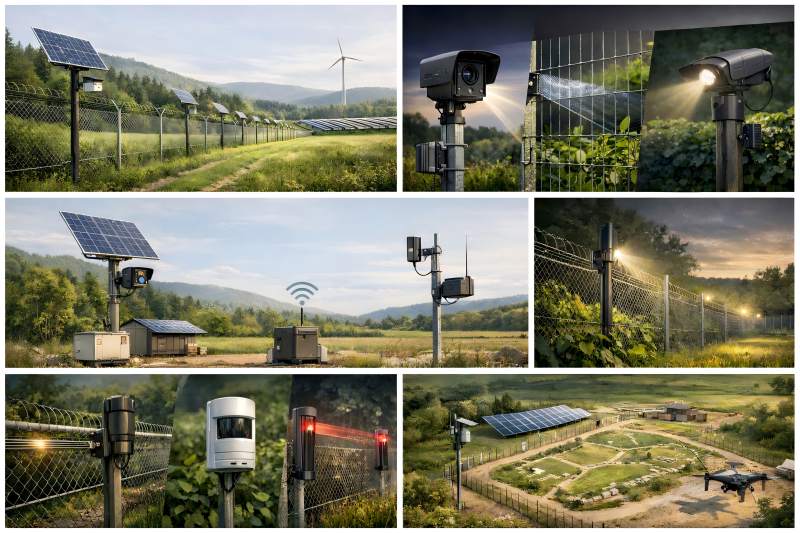
As energy costs rise and ESG reporting becomes standard, security managers must protect long, remote perimeters while reducing their environmental footprint. Modern PIDS help by using solar power, low-consumption sensors, smart lighting, and efficient analytics to deliver greener, more cost-effective security.
Why Sustainability Matters in Perimeter Security
The physical security industry is moving quickly toward sustainability. Major manufacturers, integrators, and end-users are aligning security investments with environmental, social, and governance (ESG) goals, aiming to reduce energy use and hardware waste without compromising safety.
Key drivers include:
- Energy costs and carbon footprint – Always-on cameras, lighting, and servers can consume significant power. Green security aims to reduce this load through efficient hardware and smarter operation.
- ESG and stakeholder expectations – Investors, regulators, and customers increasingly expect security systems to support sustainability initiatives, not work against them.
- Difficult power access – Remote solar farms, wind parks, pipelines, and substations may lack reliable grid infrastructure, making low-consumption, solar-powered PIDS not just “nice to have,” but essential.
In this context, designing PIDS as a green, energy-efficient platform is both a security decision and a strategic sustainability choice.
What Makes a PIDS “Green” and Energy-Efficient?
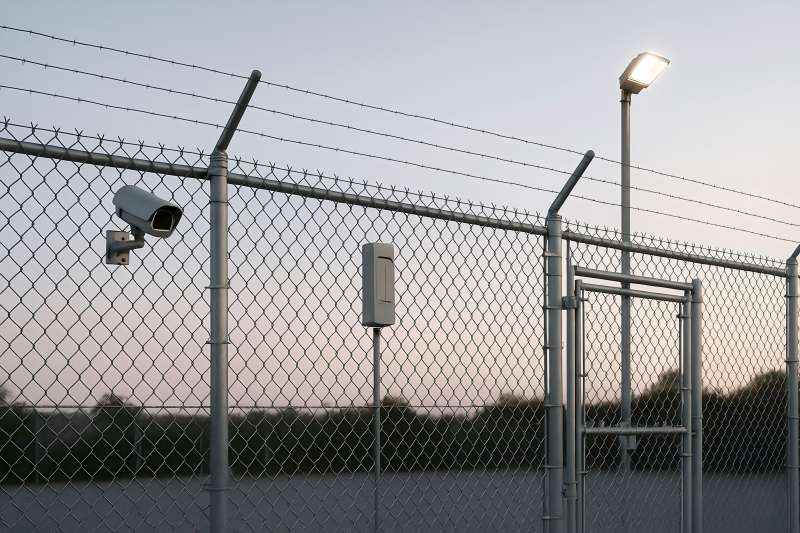
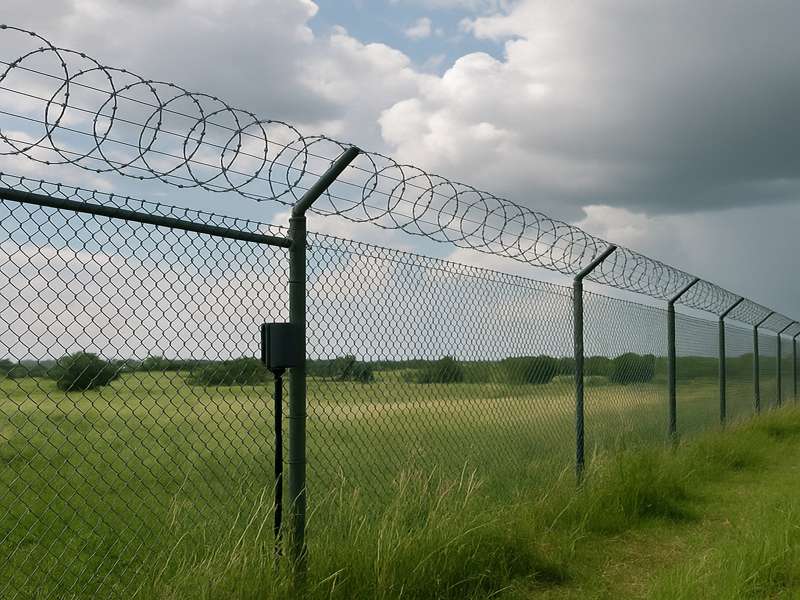
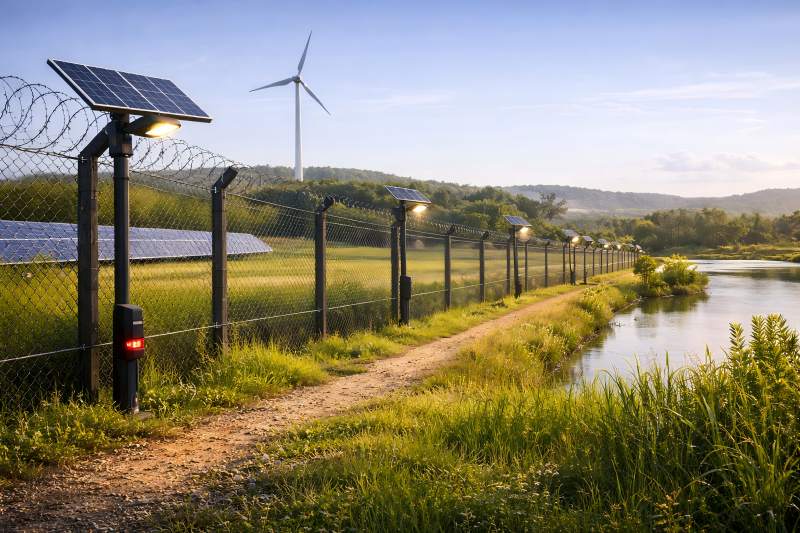
A Perimeter Intrusion Detection System (PIDS) is any system deployed outdoors to detect attempts to breach a protected boundary—typically using fence-mounted sensors, buried detection, radar, or beams.
A green PIDS has three main characteristics:
- Low operational power – Sensors, cameras, communication modules, and controllers are chosen and configured to use minimal energy, often suitable for solar or hybrid power. Some fiber-optic and fence-mounted systems are specifically designed with low-power electronics and optional battery backup.
- Efficient infrastructure – Long-range or wide-coverage devices reduce the number of poles, cabinets, and trenching needed, cutting both material and energy use. Radar- and AI-based perimeter solutions, for example, can cover hundreds of meters from a single unit, requiring fewer powered points.
- Smart, event-driven operation – Instead of running everything at full power 24/7, green PIDS focuses on event-based recording, analytics, and lighting—saving energy while keeping security strong.
Key Energy-Efficient PIDS Components
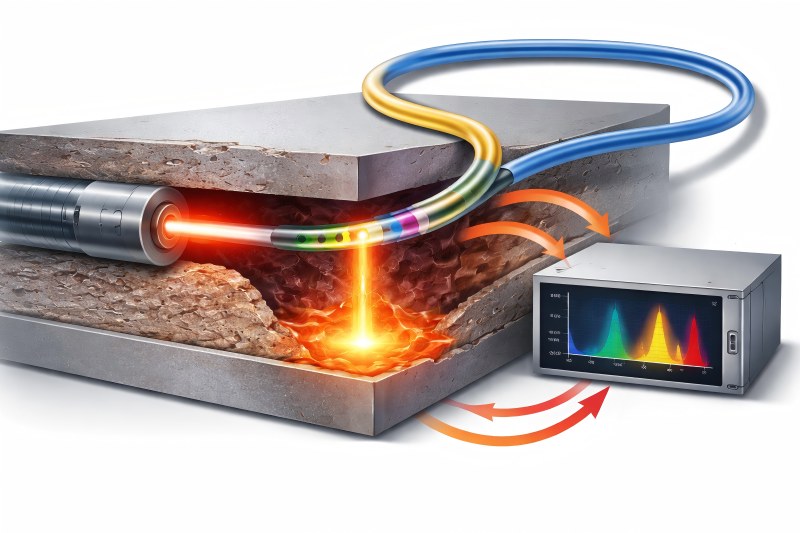
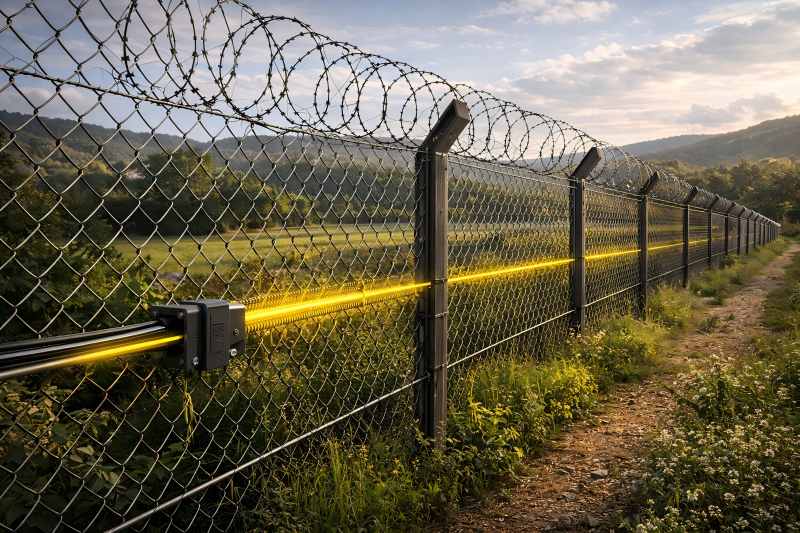
- Fence-mounted fiber-optic sensors – Use light instead of copper, support long runs, and can monitor an extended fence line from a few head-end units.
- Low-power radars and wide-area sensors – Offer long detection ranges with low power and bandwidth requirements, minimizing field infrastructure.
- Solar-powered IR beams and motion sensors – Provide intrusion detection across gates, paths, and open areas without grid power.
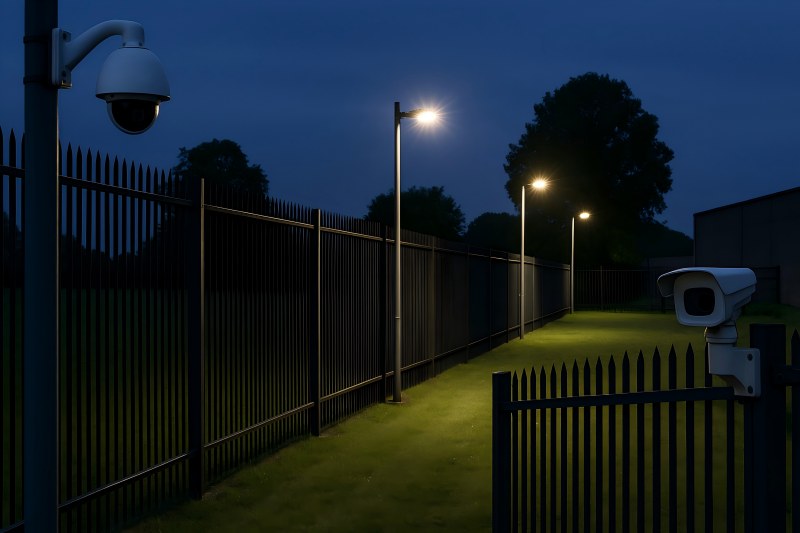
- LED perimeter lighting with motion control – Uses far less power than old sodium or halogen lights; can be triggered only on alarm or presence.
- Video analytics and H.265/H.265+ compression – Reduce server load and storage capacity needed while preserving forensic-quality video.
Conventional vs Green PIDS at a Glance
| Aspect | Conventional PIDS | Green / Energy-Efficient PIDS |
| Power Source | Grid-only, often oversized | Solar, hybrid, or optimized grid usage |
| Field Hardware | Many short-range devices | Fewer long-range sensors and radars |
| Lighting | Always-on perimeter lighting | LED + motion / event-based control |
| Data & Storage | Continuous recording, older codecs | Event-driven recording, advanced compression |
| Sustainability Impact | High energy and material footprint | Designed to minimize energy use and waste |
Solar-Powered PIDS: Off-Grid and Sustainable
Many contemporary green PIDS architectures are powered by solar energy. Solar-powered beams, radars, and fence-mounted sensors make it possible to protect remote or off-grid perimeters with minimal environmental impact.
How Solar-Powered PIDS Work
A typical solar-powered PIDS field point includes:
- Solar panel sized for local irradiance and load
- Charge controller to manage charging and protect batteries
- Battery pack (often lithium or AGM) sized for several nights of autonomy
- Low-power sensor(s) – IR beams, motion sensors, small cameras, or radar
- Wireless communication to a central gateway or receiver
Commercial solar-powered perimeter alarms demonstrate what’s possible: long-range wireless beams and siren units powered entirely by solar energy, with field devices up to several hundred feet apart and communication ranges reaching 3000 ft or more.
Similarly, solar-powered vibration detection and fence-mounted systems are now offered by specialized perimeter security vendors, enabling energy-efficient intrusion detection without trenching power cables along the fence.
Partnerships between solar pole manufacturers and radar-based perimeter providers have also made fully off-grid, solar-powered radar PIDS a reality, combining advanced detection with clean energy.
Ideal Use Cases for Solar PIDS
Solar-powered PIDS solutions are especially effective for:
- Solar farms and renewable energy plants – Using green power to protect green energy assets is both symbolic and practical; radar, buried sensors, and fence detection can be powered from solar poles.
- Remote farms, ranches, and estates – Solar beams and wireless receivers secure driveways, fence lines, and barns where grid power is unavailable or expensive.
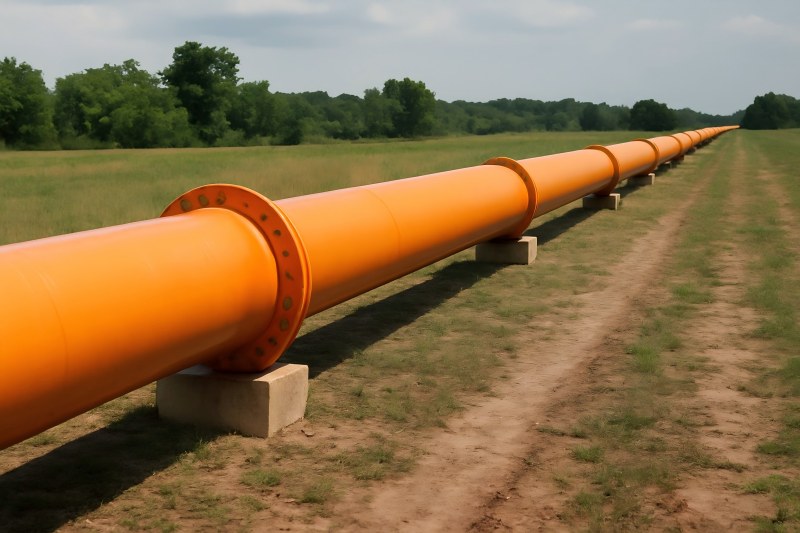
- Pipelines and remote infrastructure – Off-grid or hybrid PIDS nodes along a pipeline or access road can integrate into a central command center via cellular or radio links.
- Temporary or mobile deployments – Construction sites, temporary storage yards, and event perimeters can be protected without permanent power infrastructure.
In all these scenarios, solar-powered PIDS reduce cabling, trenching, and connection to utility power, shrinking both project CAPEX and environmental impact.
Low-Consumption Designs Across the PIDS Stack
Green PIDS are not only about solar panels. The full stack—sensors, computing, communications, and management—must be optimized.
Low-Power Sensors and Electronics
Manufacturers increasingly design fence sensors and processing units to use minimal power while maintaining high detection sensitivity. For example, fiber-optic fence sensors can cover long distances with a single controller, reducing the number of powered enclosures in the field.
Energy-efficient sensor types include:
- Passive infrared (PIR) sensors – Known for their simplicity and low power draw, commonly used for presence detection around perimeters.
- Photobeam/IR barriers with sleep modes – Designed to operate at microamp standby currents, waking into full power only when sampling or alarming.
- Long-range radars with low bandwidth – Some radar-based perimeter solutions emphasize low power and minimal data transmission, making them well suited for solar and wireless deployments.
Smart Power Management and Edge Computing
Intelligent power management dramatically reduces total energy use:
- Event-driven activation – Cameras record at full frame rate only when a PIDS event occurs; otherwise, they operate at lower rates or in standby.
- Edge analytics – Processing video and sensor data at the edge reduces bandwidth and storage requirements. Modern VMS platforms highlight edge analytics and advanced compression (e.g., H.265) as core sustainability features.
- Motion-triggered lighting – Motion and PIDS alarms can trigger perimeter LED lights only when needed, a widely recommended energy-saving security practice.
By combining efficient hardware with smart, event-based control, you can significantly cut kilowatt-hours without weakening perimeter protection.
Business Benefits of Green, Energy-Efficient PIDS
Green PIDS architectures deliver more than just “feel-good” sustainability—they offer tangible business advantages.
Lower Operating Costs
Solar-powered and low-consumption systems can dramatically reduce utility bills, especially at large sites with many light poles, cameras, and sensor nodes. Recent analyses of solar-powered perimeter security highlight cost reductions in both electricity and maintenance, as well as the avoided cost of trenching and cabling.
Over the lifecycle of a PIDS deployment (often 10–15 years), the savings in energy and infrastructure can be substantial, improving the total cost of ownership (TCO).
Easier ESG and Sustainability Reporting
Sustainability frameworks increasingly expect organizations to quantify and improve the environmental impact of their security systems. Guidance from security and ESG experts stresses the value of measuring energy use, consolidating hardware, and adopting efficient technologies to support ESG narratives and budgets.
By specifying PIDS that are explicitly marketed as energy-efficient or solar-ready, security managers can:
- Show measurable decreases in energy consumption.
- Demonstrate commitment to company sustainability and net-zero objectives.
- Strengthen business cases for capital investment in new security infrastructure
Future-Proofing and Grid Resilience
Solar-powered PIDS nodes and low-consumption designs are naturally more resilient during:
- Power outages
- Grid instability
- Expansions into newly developed, lightly serviced areas
Off-grid or hybrid PIDS architectures keep perimeters protected even when grid power is compromised, which is a growing concern for critical infrastructure and energy sites.
Design Tips for Implementing Green and Solar PIDS
If you’re planning to deploy or upgrade a PIDS with sustainability in mind, consider the following best practices.
Start with a Power and Sustainability Audit
- Map all existing perimeter devices and their power consumption.
- Identify long runs where trenching or power extension is cost-prohibitive—these are prime candidates for solar PIDS.
- Align design goals with your organization’s ESG targets and reporting metrics.
Choose Energy-Efficient Technologies by Default
Prefer fiber-optic or long-range fence sensors that cover more distance with fewer powered control units.
Where line-of-sight is available, consider radar or IR beam solutions with published low-power profiles and solar options.
Standardize on LED lighting, motion control, and efficient power supplies.
Design Solar Arrays with Margin
- Size solar panels and batteries based on worst-case seasonal irradiance, not just average conditions.
- Factor in future device additions and potential firmware features that may slightly increase load.
- Consider modular solar poles that can be reused or reconfigured as your perimeter evolves.
Integrate Management, Not Just Hardware
- Use a PIDS and VMS platform that can log energy-related metrics, support event-driven recording, and centralize configuration.
- Document green design choices so they can be referenced in ESG reports, RFP responses, and audits.
Work with a Green-Security-Focused Partner
Look for manufacturers and integrators who explicitly support green security principles—low-power devices, solar-ready designs, and sustainability guidance.
If this article is for your own brand (for example, Gato’s perimeter intrusion detection portfolio), emphasize how your PIDS solutions combine solar power, low-consumption sensors, and smart analytics to deliver robust security with a lighter environmental footprint.
Green and energy-efficient PIDS security systems are no longer experimental—they’re a practical, proven way to secure perimeters while reducing energy use, operating cost, and environmental impact.
By:
- Selecting low-power sensors and long-range detection technologies
- Deploying solar-powered nodes where grid power is expensive or unavailable
- Using LED lighting, event-driven analytics, and efficient video compression
- Integrating sustainability into your design, procurement, and reporting
- you can transform your perimeter from a power-hungry cost center into a sustainable, resilient, and future-ready security asset.
For security teams working toward both stronger protection and greener operations, solar power and low-consumption PIDS designs are not just an option—they’re the next standard.