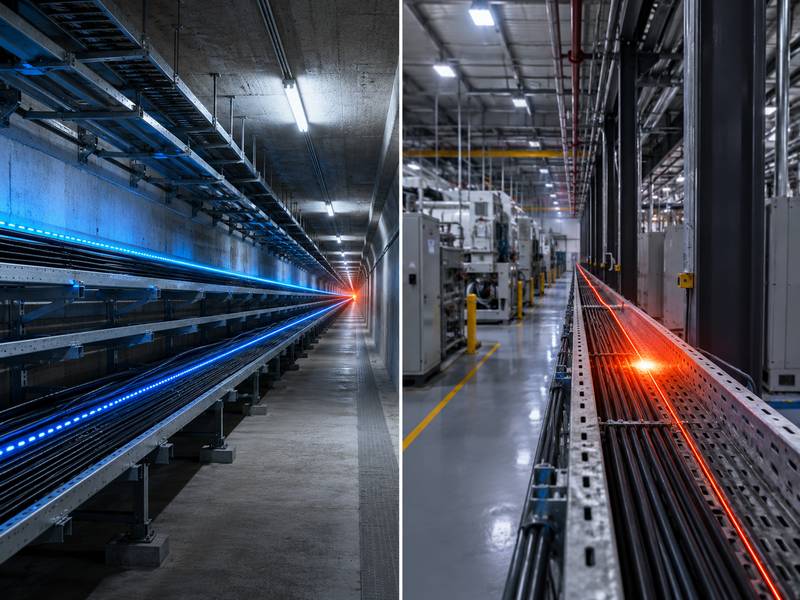
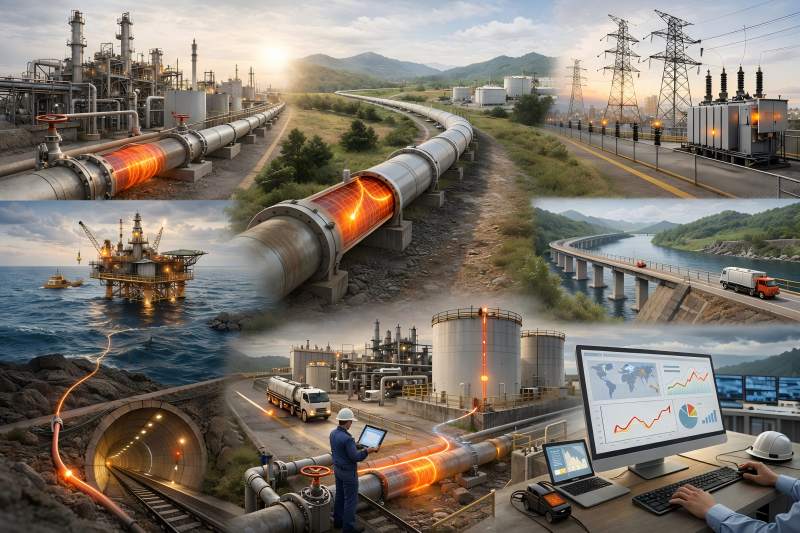
Accurate, real-time temperature monitoring is now essential in modern industry. Across the petrochemical, energy, manufacturing, and infrastructure sectors, Distributed Temperature Sensing (DTS) provides continuous, fiber-based measurements that outperform traditional point sensors.
Real-Time, Continuous Monitoring Across Large Areas
Traditional temperature sensors like thermocouples and RTDs measure temperature at discrete points. While adequate for small or localized systems, these sensors fail to capture temperature gradients across large installations — such as pipelines, storage tanks, and electrical assets.
Distributed Temperature Sensing changes this paradigm. Using optical fibers as continuous sensing elements, DTS systems provide thermal measurements every meter (or even less) along the length of the fiber. This means industries can now monitor entire segments of infrastructure simultaneously — in real time.
Benefits of Continuous Monitoring
- Immediate detection of thermal anomalies — Allowing for faster response to equipment failures or safety hazards.
- Elimination of blind spots — No gap between sensors means no undetected hot spots.
- Better process optimization — Enables finer control over temperature-dependent processes.
For industries such as oil and gas, power transmission, and chemical manufacturing — where hundreds of meters of equipment operate under extreme temperatures — this level of insight is invaluable.
Enhanced Safety in Hazardous Environments
Safety remains a paramount concern across industrial applications. Temperature anomalies often serve as early warning signs for mechanical failures, chemical runaway reactions, or thermal stress in equipment. Failures in monitoring can lead to unplanned shutdowns, fires, or catastrophic failures.
DTS systems minimize these risks:
- Explosion-proof fiber optics — Because the sensing element is passive, it does not create electrical sparks, making DTS suitable for hazardous environments such as offshore platforms and petrochemical plants.
- Real-time thermal profiles — Maintenance teams can detect dangerous hotspots early and intervene before escalation.
- Reduced need for human intervention — Lowering the risk for personnel operating in risky environments.
In sectors dealing with combustible gases or high heat processes, the ability to continuously monitor and react to temperature changes is a critical component of operational safety.
High Accuracy and Spatial Resolution
Accuracy and resolution are two critical metrics in any temperature measurement system. While conventional sensors provide accurate point measurements, they offer no information between sensor points.
DTS systems deliver:
- High spatial resolution — Some systems can measure temperature changes over intervals as close as 0.1 to 1 meter.
- Precise thermal mapping — Allowing operators to distinguish subtle temperature variations across broad areas.
This capability is especially significant in applications such as:
- Pipeline integrity monitoring
- Transformer winding temperature profiling
- Industrial furnace and kiln process control
By achieving fine-grained thermal data with minimal instrumentation, DTS enables proactive decision-making based on detailed temperature maps rather than isolated data points.
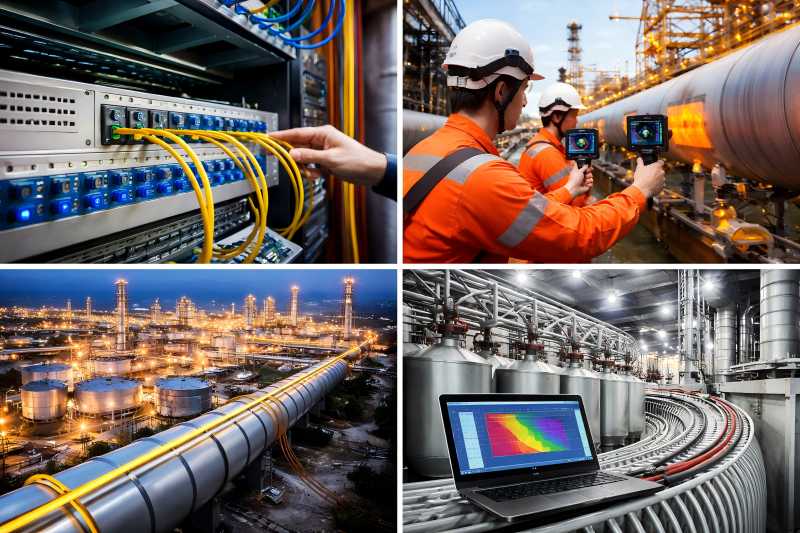
Cost Savings Through Reduced Downtime and Maintenance
Unplanned downtime is one of the most costly burdens in industry. Unexpected thermal failures can halt production lines, damage equipment, or incur safety fines and regulatory penalties.
DTS provides cost savings by:
A. Predictive Maintenance
Many failures begin as subtle temperature changes long before they become visible or catastrophic. Because DTS sees these patterns early, maintenance crews may take action before problems arise.
Predictive maintenance reduces:
- Equipment wear and tear
- Emergency repairs
- Replacement costs
B. Reduced Labor Costs
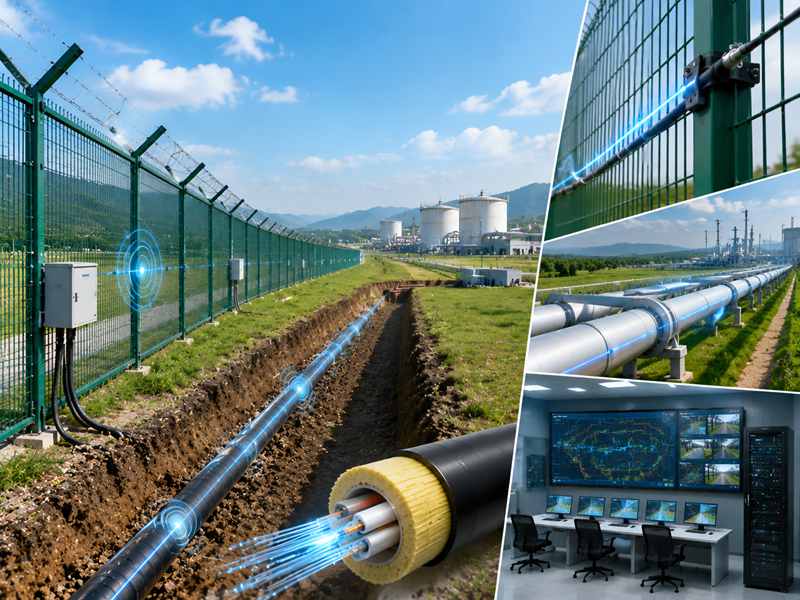
Instead of installing hundreds of discrete sensors and performing scheduled manual inspections, industries can monitor entire systems remotely using a single fiber optic sensing network.
C. Extended Asset Lifespan
By avoiding thermal stress and controlled temperature escalation, equipment life expectancy improves — resulting in further long-term savings.
Studies have shown that predictive temperature monitoring with DTS can cut downtime costs by millions annually for large industrial operations.
Ease of Installation and Flexibility
When compared to traditional temperature sensors, DTS offers significant advantages in installation and scalability.
Simple Installations
Optical fibers are:
- Lightweight
- Low profile
- Easy to route along pipes, walls, cables, or conduits
Unlike electrical sensors where wiring complexity increases with each sensor added, DTS requires only one fiber network with no additional power at sensing points.
This reduces:
- Installation time
- Conduit and wiring costs
- Need for junction boxes or auxiliary power
Scalable and Future-Ready
Adding more coverage or extending the sensing range is as simple as deploying additional fiber — often without significant infrastructure changes.
Industries with expanding assets therefore find DTS to be both a short-term solution and a future-proof monitoring platform.
Multi-Industry and Multi-Application Versatility
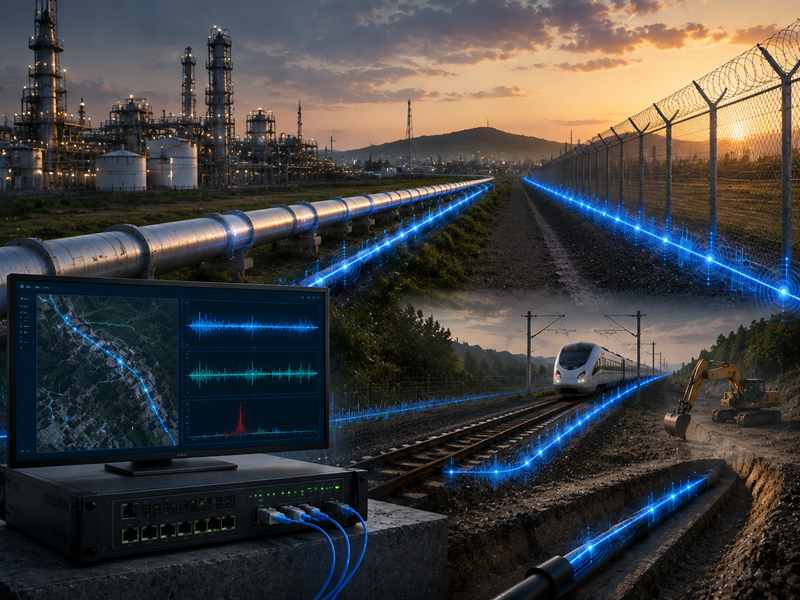
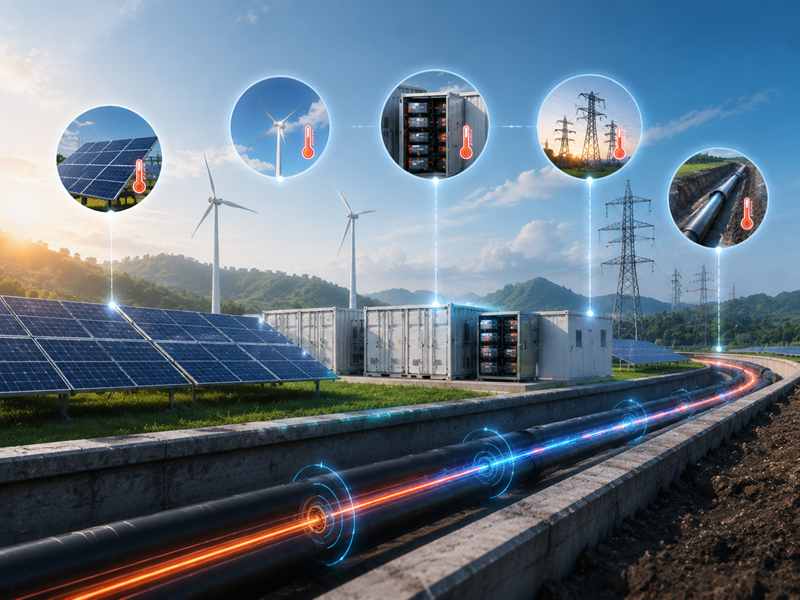
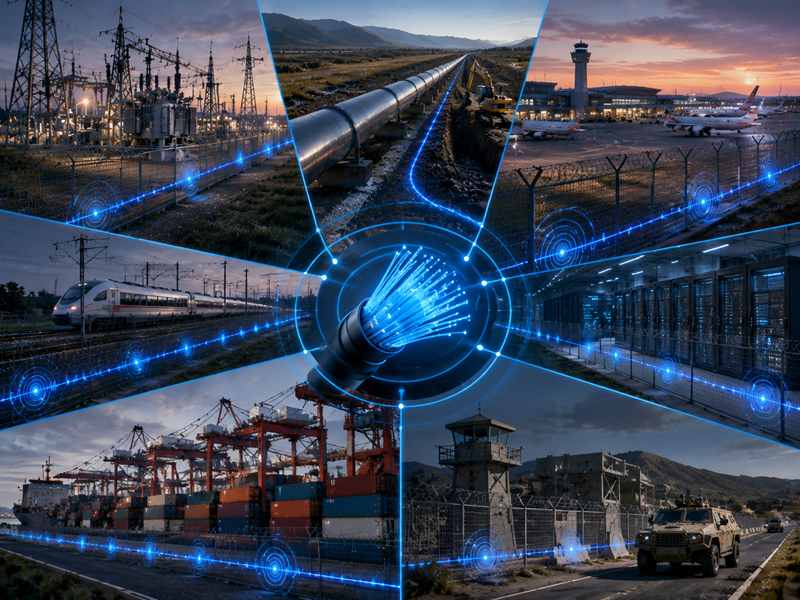
The appeal of Distributed Temperature Sensing extends far beyond a single industry. Because the technology measures temperature over distances — and not just at pre-selected points — applications are remarkably broad.
Here are some of the major use cases:
Oil & Gas
- Pipeline leak detection
- Flow monitoring in multiphase pipelines
- Offshore platform safety monitoring
Power / Energy
- Transformer temperature profiling
- Power cable thermal monitoring
- Substation asset protection
Industrial Manufacturing
- Furnace process control
- Heat exchanger monitoring
- Chemical reactor thermal profiling
Infrastructure & Civil Engineering
- Fire detection in tunnels
- Structural monitoring in bridges and buildings
- Geothermal temperature analysis
This versatility is one of the primary reasons industries with complex thermal challenges — spanning energy, infrastructure, and manufacturing — are making the switch to DTS.
Integration with Analytics and Digital Infrastructure
Modern industrial ecosystems are increasingly adopting digital transformation initiatives — think Industrial Internet of Things (IIoT), predictive analytics, and AI-based process optimization. DTS fits seamlessly within these frameworks.
Data-Driven Decision Support
By generating rich streams of temperature data over time, DTS systems can integrate with:
- AI models for anomaly detection
- Cloud-based analytic platforms
- Energy efficiency dashboards
This opens new possibilities:
- Enhanced process control
- Automated alarms and alerting
- Trend forecasting for maintenance planning
Rather than standalone sensors feeding isolated data, DTS becomes a critical source of continuous, actionable insights within an enterprise’s digital infrastructure.
Case Illustration: Oil Pipeline Monitoring with DTS
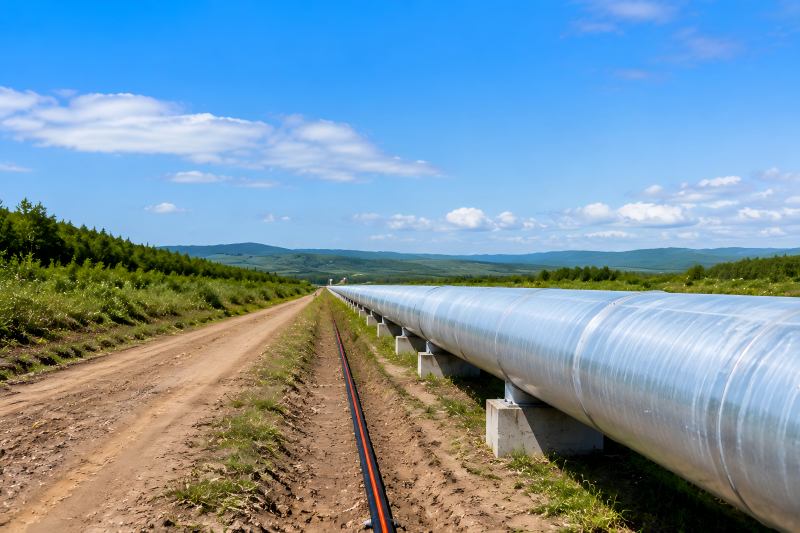
Consider the challenges faced by cross-country oil pipeline operators
- Long distances spanning hundreds of kilometers
- Extreme ambient temperatures
- Risk of external interference, leaks, or blockages
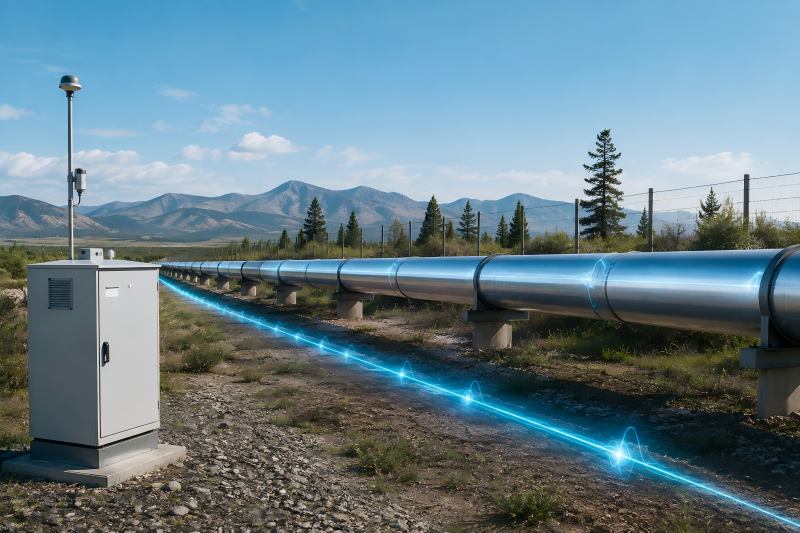
Traditional sensors can only monitor discrete points — leaving large blind zones between measurement locations. DTS, using a single optical fiber line, can detect temperature changes continuously over the entire pipeline segment.
Temperature anomalies can indicate:
- Flow interruptions
- Leak locations
- Freeze points in colder climates
With real-time DTS monitoring, operators are alerted instantly to deviations — enabling rapid response and minimizing environmental hazards or product loss.
Overcoming Challenges and Deployment Considerations
While DTS technology offers profound advantages, successful deployment requires careful planning and understanding of system requirements.
Fiber and Cable Management
Optical fibers must be appropriately protected — especially in environments with mechanical stress, vibration, or chemical exposure. Choosing suitable protective cable jackets and installation methods is critical.
Integration and Calibration
DTS systems rely on sophisticated signal processing. Calibration and system alignment with operational parameters ensure accurate and reliable temperature profiles.
Skilled Implementation
Training operations personnel and integrating DTS data into existing monitoring systems requires upfront investment in skills and software infrastructure.
Despite these considerations, companies that invest in DTS implementation typically see rapid returns through improved safety, reduced downtime, and optimized processes.
Future Outlook: DTS in the Era of Smart Industries
As industries pursue greater automation, sustainability, and resilience, the role of advanced sensing technologies will only grow. DTS, with its continuous, high-resolution, and real-time temperature insights, stands at the forefront of this transformation.
Emerging trends indicate:
- Integration with machine learning for automated anomaly prediction
- Expansion into new sectors such as aerospace and smart cities
- Hybrid sensing networks combining temperature with strain, vibration, and acoustic data
These advancements promise to further elevate the value of DTS in industrial monitoring ecosystems.
Conclusion
The move to Distributed Temperature Sensing is a strategic response to modern industrial demands. With real-time monitoring, improved safety, cost savings, and digital integration, DTS outperforms traditional systems.
Key advantages include continuous monitoring, high accuracy, reduced downtime, flexible installation, multi-industry use, and seamless analytics integration. DTS will continue to be crucial for safer and more effective operations as industries become increasingly data-driven and sophisticated.