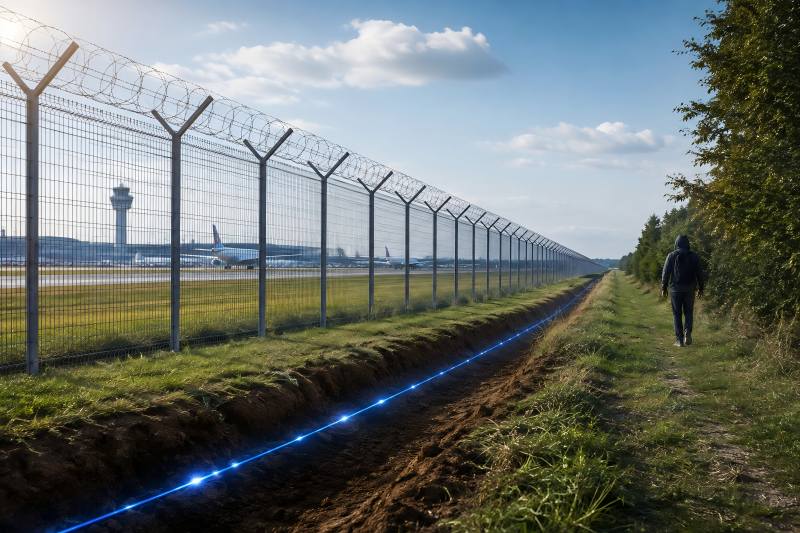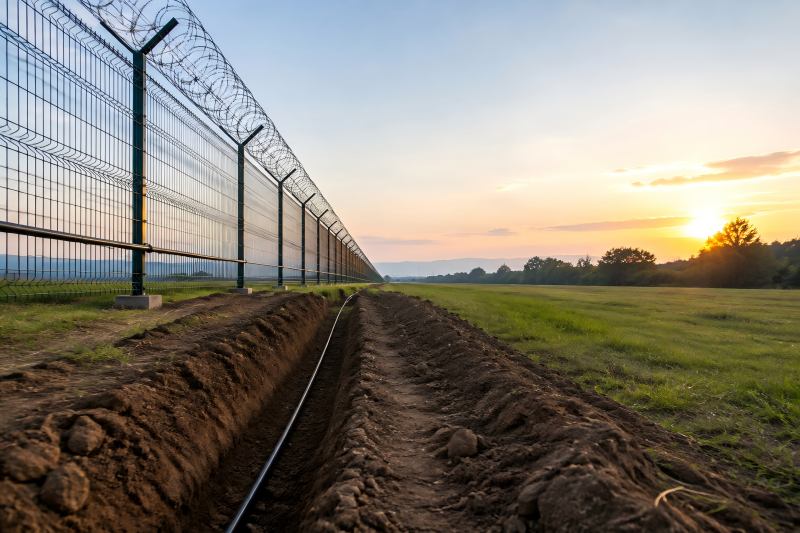
A perimeter alarm sounds during a demonstration. The camera turns, a marker appears on the map, and everyone agrees the equipment works. That is a useful start, but it leaves an important question unanswered: will the same installation perform consistently across the boundary, with the settings and staffing the site will actually use?
A site acceptance test (SAT) gives the owner evidence to answer that question. For a Perimeter Intrusion Detection System, acceptance should cover detection, location, alarm delivery, video verification and fault handling. A successful demonstration at one convenient fence panel tells you very little about the rest of the site.
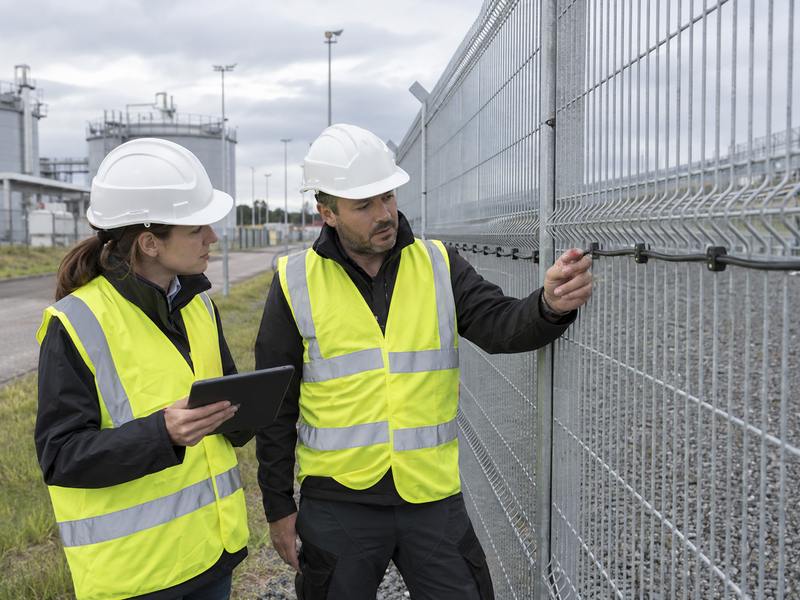
Agree on Acceptance Criteria Before Testing
The most expensive time to discover an ambiguous specification is when the installation is complete. “Fast response” and “low false alarms” sound reasonable, but neither tells the acceptance team what to measure. Define the required outcomes before the witnessed tests begin, ideally during procurement.
The NPSA guidance on PIDS commissioning supports testing the installed system against its specification, including integrated functions. The following checklist is not a certification program or a replacement for project requirements; rather, it provides a useful planning framework.
| Acceptance item | What to agree in advance | Evidence to retain |
| Detection | Required scenarios, locations and repetitions | Successful detections and all unsuccessful attempts |
| Alarm location | Zone identification or permitted position error | Actual test point versus reported location |
| Response time | Start event and endpoint for each measurement | Synchronized timestamps or recorded test video |
| Video verification | Required view, lighting and image detail | Event-linked image or video reference |
| Unwanted alarms | Classification, counting rules and observation period | Event log with causes and operating conditions |
| Fault handling | Required behavior during power, cable or network faults | Fault notifications and recovery records |
Avoid accepting a vendor’s percentage without its denominator. Ten successful trials demonstrate what happened in those ten trials; they do not establish a universal detection probability. Likewise, a quiet afternoon cannot establish year-round performance in wind, rain and changing vegetation.
For example, an owner might require a perimeter alarm to appear at the monitoring desk within an agreed interval, followed by a camera view suitable for confirmation. That creates two measurable obligations. If the detector passes and the video fails, the record should show both outcomes. Combining them into a single “system passed” box hides the part that needs attention. Keep the criteria specific enough that another acceptance team could repeat the test and reach the same decision from the recorded evidence.
Prepare the Site and Freeze the Configuration
Acceptance testing should begin after installation checks and initial tuning. Otherwise, the witnessed session becomes a troubleshooting workshop, and nobody knows which configuration produced the final results. For a fiber optic intrusion detection system, confirm that the route, protected structures and map references match the installation records.
Before the first test, check these essentials:
- Confirm approved drawings, zone names and accessible test locations.
- Inspect cable attachments, enclosures, gates and repaired fence sections.
- Record hardware models, firmware, thresholds, filtering settings and bypasses.
- Synchronize clocks across the detector, management platform and recording system.
- Assign a field tester, control-room observer and acceptance witness.
- Agree on test permissions, safe simulations and temporary operating restrictions.
Use the F7 installation and commissioning guide for installation preparation. The SAT record serves a different purpose: documenting whether the completed installation meets the owner’s requirements. Any setting changes during testing should be recorded, with affected tests repeated afterward.
Test Representative Conditions Along the Boundary
Convenient locations tend to produce convenient results. A straight, well-tensioned fence near the equipment room may behave differently from a gate, a repaired panel or a section beside a busy road. Build the test matrix around changes in structure and environment, rather than selecting points only at equal distances.
Include representative fence types, corners, gates, transitions and locations near ordinary sources of disturbance. Repeat the specified scenarios at different points within each relevant zone. For buried detection, select scenarios appropriate to the sensing technology and ground conditions; fence-mounted performance does not demonstrate underground coverage.
| Test group | Practical check | What the observer records |
| Intrusion scenarios | Approved climb, cut-related or digging simulations where applicable | Detection result, event type and test location |
| Boundary transitions | Gates, corners and changes in fence construction | Coverage consistency and correct zone assignment |
| Routine activity | Authorized access, nearby traffic and permitted maintenance | Expected behavior and any unwanted alarms |
| Multiple events | Two separated test events within an agreed interval | Both alarms, event order and verification availability |
| Night operation | Repeat selected scenarios using normal lighting | Usable camera view and operator confirmation |
A gentle tap is useful for checking signal presence and mapping, but it should not replace the agreed intrusion scenarios. The physical action, duration and method need to be reproducible. Where destructive testing is unsuitable, agree on the simulation and its limitations before the session.
Follow the Alarm Through to the Operator
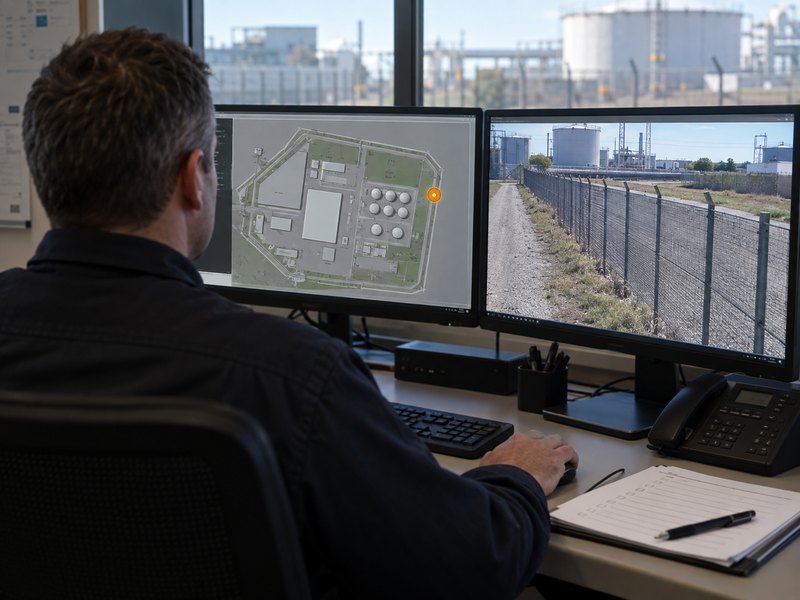
Measure the sequence the site depends on: physical event, detector decision, platform notification, camera availability and operator acknowledgment. Record these separately. A quick detector response can still lead to slow verification if the camera is moving, the network is congested or the event description is unclear.
When testing perimeter alarm management and video linkage, use the workstation and user permissions planned for normal operation. An administrator’s laptop may show functions unavailable to the guard who receives the alarm overnight.
Check whether the displayed zone name guides a patrol to the right place. Confirm that the linked camera shows the relevant fence section and produces a usable image under normal illumination. If two alarms compete for one PTZ camera, record which view appears first and how the second event remains available for review.
I would treat an alarm that cannot be located or verified as an open acceptance issue, even when the sensor detected it correctly. The owner’s useful output is an event that staff can assess and act on. Acceptance criteria should reflect that operational responsibility.
Observe Unwanted Alarms Without Hiding Missed Detection
Intrusion trials and unwanted-alarm observation need separate records. One measures performance during planned events; the other examines behavior during ordinary operation. Agree whether the project distinguishes equipment false alarms from nuisance alarms caused by real, harmless disturbances, then use those definitions consistently.
An observation log should capture the monitored length, operating hours, weather, traffic, maintenance activity and configuration. If the contract uses alarms per kilometer per day, retain the information needed to calculate that measure. A raw alarm total cannot be compared fairly across different site sizes or observation periods.
Reducing sensitivity until the log becomes quiet is an easy way to make an installation look better. It can also remove the response the owner purchased. After changes to thresholds or filtering, repeat the affected intrusion tests. If acceptance occurs during mild weather, record the environmental limitation and agree on follow-up observation for conditions not encountered.
Check Faults and Recovery Before Handover
Fault tests reveal whether operators can distinguish a protected boundary from an unavailable one. Select interruptions appropriate to the installed architecture and confirm the expected behavior beforehand. Passive sensing cable still relies on powered equipment and communication to deliver an alarm.
The fault checklist should include:
- Loss of mains power: check backup operation, notifications and restoration.
- Network interruption: check communication status and operator visibility.
- Sensing cable interruption: check fault location and remaining coverage where redundancy is specified.
- Camera unavailability: check that the perimeter event remains visible without video.
- Maintenance bypass: check the affected area and the procedure for restoring protection.
Test recovery as carefully as the interruption. Confirm that zones return to their intended state, camera linkage resumes and temporary bypasses are cleared. “Dual channel” alone does not describe which cable faults an installation can tolerate; the tested topology and remaining coverage belong in the record.
Close the Test With Evidence, Not Just Signatures
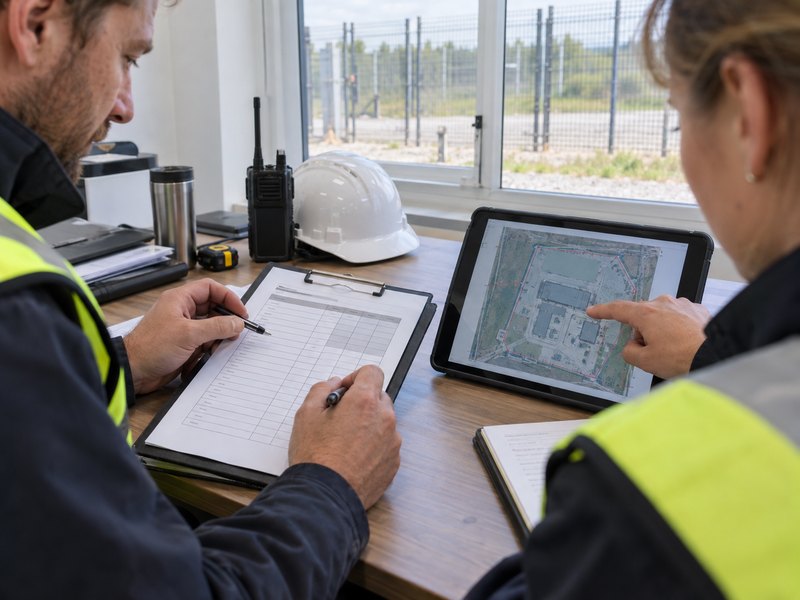
Keep one record per trial, including failures and repetitions. A useful entry contains the test ID, date, location, scenario, configuration reference, expected result, actual result, timing, image reference and witness. Preserve the first failed result alongside the corrective action and retest; deleting it removes useful maintenance history.
Finish with a punch list assigning each unresolved issue an owner, corrective action and retest date. Distinguish completed acceptance from conditional handover, and document any temporary operating measures. Deliver the final configuration backup, route drawings, contact details and operator instructions with the signed records.
The strongest SAT report also becomes a maintenance baseline. When a fence is repaired, a fiber route changes or alarm patterns deteriorate, the owner has a documented reference for comparison. That lasting value deserves attention during procurement: ask who will maintain the evidence and repeat the relevant checks after changes.
Planning acceptance for a new installation or upgrade? Discuss your perimeter security project with GATO and share the boundary drawings, existing camera inventory and acceptance requirements so the proposed system and test plan can be reviewed together.