

F7 Fiber Optic Intrusion Detection System (DAS)
Detect perimeter intrusion in real time across long distances with AI-powered distributed acoustic sensing technology.
- Up to 140 km Continuous Monitoring
- ±1m Accurate Intrusion Localization
- Ultra-low False Alarm with AI Signal Analysis
Advantages of Vibrating Fiber Optics

Intrinsically Safe Design
No electrical power is required at the front end, making it suitable for flammable and explosive environments.

Flexible Concealed Installation
The sensing cable is lightweight and flexible, allowing discreet installation in a variety of environments.

Ultra-Long Detection Range
A single system supports long-distance perimeter detection, helping reduce overall deployment costs for wide-area applications.
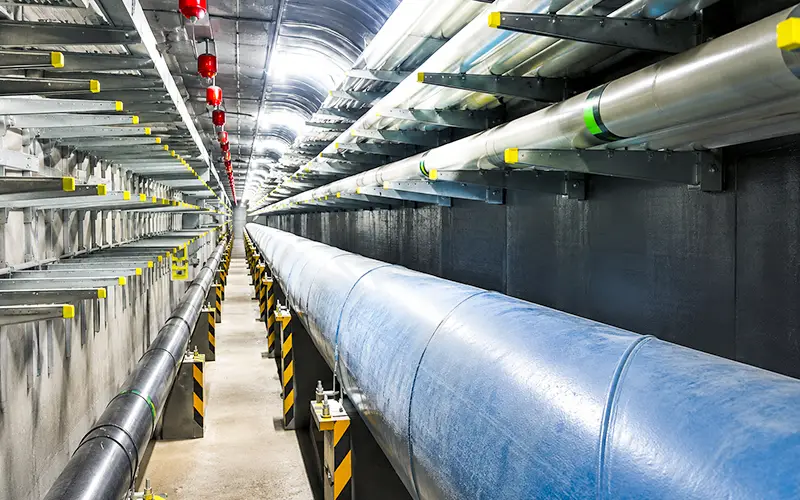
Blind-Spot-Free Protection
Delivers reliable intrusion detection across difficult-to-cover areas, ideal for underground pipelines, urban utility corridors, and other concealed routes.

Our Fiber Optic Intrusion Detection System Solution
Based on an integrated DAS + AI architecture, our fiber optic intrusion detection solution use optical fibers to sense acoustic vibrations, identify intrusion types via intelligent algorithms, and trigger corresponding alarms, providing a comprehensive monitoring solution for long-distance perimeters.
- Ultra-long Coverage: Maximum detection range of 140 km; adaptable to complex terrains with buried/fence-mounted deployment to eliminate blind spots.
- AI Intelligent Detection: Accurately identifies climbing, wall-breaking, digging, vehicles, etc.; filters out wind, rain, and animal interference.
- Precise Multi-point Positioning: ±1m accuracy; supports 16,000 concurrent detection points with complete intrusion trace reconstruction.
- Open Integration & Smart Linkage: Seamless compatibility with Hikvision / Dahua video surveillance; supports access to other video surveillance brands via ONVIF and RTSP protocols. Flexible 1:N / M:N zone-based camera coordination, automatic target tracking, and drone dispatch.
- Flexible & Visual Management: Customizable zones, whitelist exclusions, Google/offline GIS/vector/image maps; browser-based B/S management with no installation.
- High-reliability Security: Passive front-end design for hazardous environments; dual-channel ring network ensures uninterrupted operation upon fiber breakage.
Core Strengths

AI Full-sample Learning
Bidirectional training with on-site self-learning continuously reduces false alarms and adapts to new scenarios in real time.

Multi-pattern Recognition
Precisely classifies main intrusion behavior types—distinguishing humans, animals, and machinery with zero missed detections.

Full-spectrum Analysis
Multi-frequency dynamic noise cancellation extracts clean signals across all conditions for 100% fiber coverage with zero blind zones.

Full-embedded Design
Embedded microsecond-level processing delivers zero-latency alarms; browser-based remote management with zero maintenance.
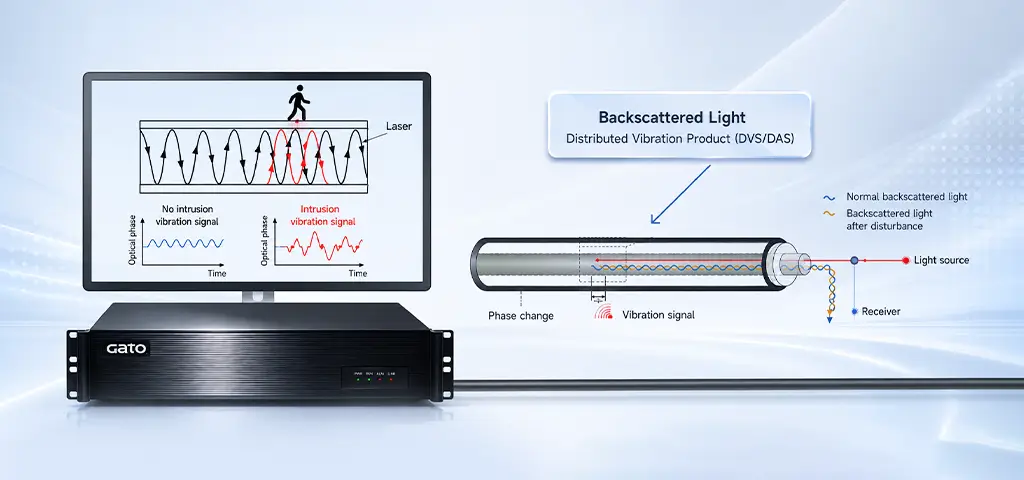
How It Works
Based on advanced Distributed Acoustic Sensing (DAS) technology, optical fiber is used as a sensor to monitor acoustic activities. When acoustic signals propagate along the fiber, they cause linear changes in light phase. The host demodulates the phase changes at corresponding positions and, combined with high-dimensional abstraction algorithms and a system model library, uses AI to intelligently identify specific intrusion event types and trigger corresponding alarm modes.
Applications
Pipeline Monitoring
Detect third-party interference and unauthorized excavation activities
Airports and Railways
Secure perimeters against unauthorized access and ensure operational safety
Industrial Perimeter Security
Provide real-time intrusion detection for climbing, cutting and digging breaches
Real Project Application
Pipeline Monitoring Project
Project Background
The Niger-Benin Crude Oil Pipeline spans 1,950 km across remote, harsh terrain.
Key Challenge & Solution
To secure 11 stations, 11 F7 fiber optic early warning systems were deployed, each covering about 1 km of perimeter. The system offers:
- Real-time intrusion detection
- Low maintenance rodent-resistant cables
- Centralized and distributed monitoring
- Passive, explosion-proof protection
Why It Matters
- Improves pipeline security
- Supports reliable operation
- Fits harsh environments
Airport Perimeter Protection Project
Project Background
Nasiriyah Airport in Iraq, built by CSCEC, is a new aviation hub designed for 750,000 passengers annually.
Challenge
Its 586,000㎡ perimeter faces sandstorms, extreme heat, and intrusion risks such as climbing, cutting, and digging. Traditional systems often cause false alarms and require heavy maintenance.
Solution
Gato deployed the F7 DAS fiber optic system along the fence line for real-time intrusion detection, ±1m alarm localization, strong environmental adaptability, and video integration.
Outcome
The system provides reliable, low-maintenance perimeter protection in harsh conditions, supporting safe operations from day one.
Fiber Optic Technology at Oman PV Industrial Park
Project Background
As a major project under Oman’s Vision 2024, the Oman Photovoltaic Industrial Park helps reduce greenhouse gas emissions, lower reliance on fossil fuels, and strengthen the clean energy economy.
Solution
GATO supports the park’s safe and stable operation with its F7 DAS AI Fiber Optic Solution for perimeter intrusion detection, offering:
- Low false alarm rate
- Long-distance monitoring
- Strong weather resistance
- Minimal maintenance
Outcome
With GATO’s F7 system, the park achieves reliable 24/7 perimeter protection for critical infrastructure.
Product Configuration & Customization

Monitoring & Management Platform
- Centralizes monitoring, alarm display, and system management.
- Supports visualized maps, event records, and status overview.
- Enables parameter setting, user control, and data analysis.
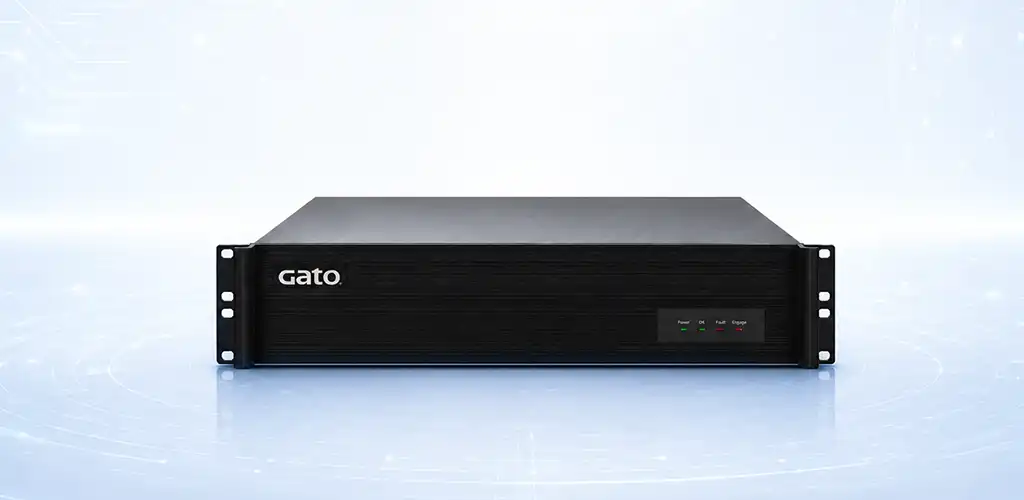
Interrogator / Host Unit
- Collects, processes, and analyzes vibration signals accurately.
- Identifies intrusion locations with high positioning precision.
- Supports real-time alarms and stable long-distance detection.
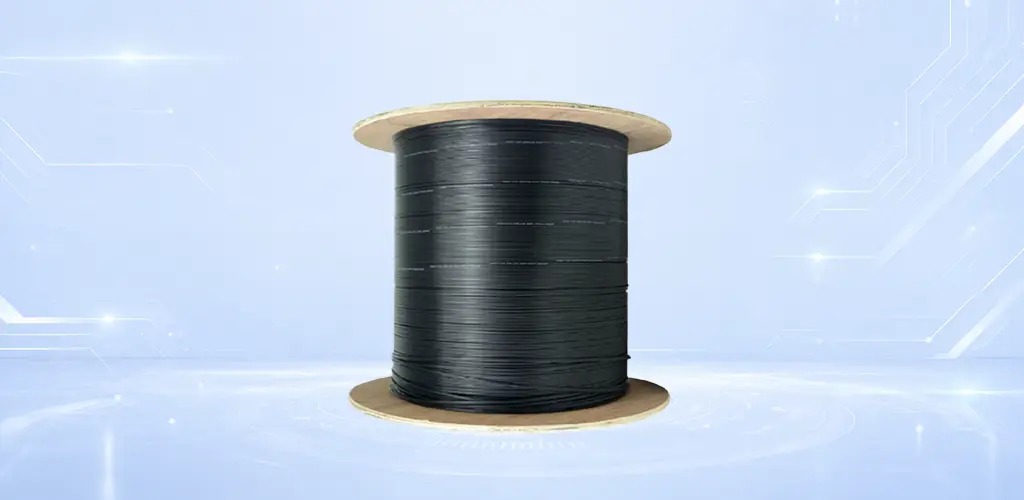
Fiber Optic Sensing Cable
- Detects vibrations and disturbances along the protected perimeter.
- Offers high sensitivity and strong anti-interference performance.
- Suitable for various outdoor and complex installation environments.
Frequently Asked Questions
What is the working principle of DAS (Distributed Acoustic Sensing) technology?
This technology detects acoustic activity by monitoring the linear changes in the phase of light within the fiber optic cable. When the fiber is subjected to external disturbances (such as vibration), the phase change is demodulated by the main unit and converted into an alarm signal.
How does the system achieve "personalized" behavior recognition through AI algorithms?
The system has built-in intelligent algorithms and a system model library. It can extract characteristic values such as vibration frequency and intensity to intelligently identify specific intrusion events like climbing, knocking, vehicle passing, and digging, while effectively filtering out wind and rain noise.
What is the "full-spectrum data reconstruction" technology?
Based on full-spectrum analysis, this technology extracts characteristic values from high, medium, and low frequency bands respectively and reconstructs the signal. It can eliminate interference signals and significantly enhance the signal-to-noise ratio, thereby improving recognition accuracy.
What are the technical advantages of this system in terms of positioning accuracy?
The F7-DAS system can achieve a physical positioning accuracy of up to ±1 meter. Across a perimeter tens of kilometers long, it can precisely guide PTZ cameras to capture intrusion events.
What are the advantages of the system's "fully embedded design" compared to traditional Windows-based architectures?
The system is based on a customized Linux operating system and industrial-grade chips. Compared to Windows-based architectures, it offers higher real-time performance, security (virus resistance), and stability (long-term operation without crashes).
How does the system handle optical signal attenuation over ultra-long range perimeters?
For long-distance perimeters (e.g., over 50 km), the system can be used in conjunction with Raman fiber amplifiers to compensate for and amplify the optical signal at the far end, ensuring that the detection sensitivity at the remote end does not decrease.
How does the "whitelist function" work in practical application scenarios?
Management personnel can set specific areas (such as legal entrances/exits or areas adjacent to roads) as whitelisted zones in the software. The system will suppress specific interference alarms from these areas without affecting the monitoring of other defense zones.
Can the physical reliability of the sensing cable meet the demands of long-term outdoor service?
The sensing cable adopts a central tube armored design, offering extremely strong tensile and crush resistance. It has a service life of over 25 years, and since the front-end is passive, maintenance costs are very low.
Obtain a Free Plan for Perimeter Security
Give us the specifics of your project, and our engineers will create a tailored solution.
Reply within 24 hours. Your information is secure.