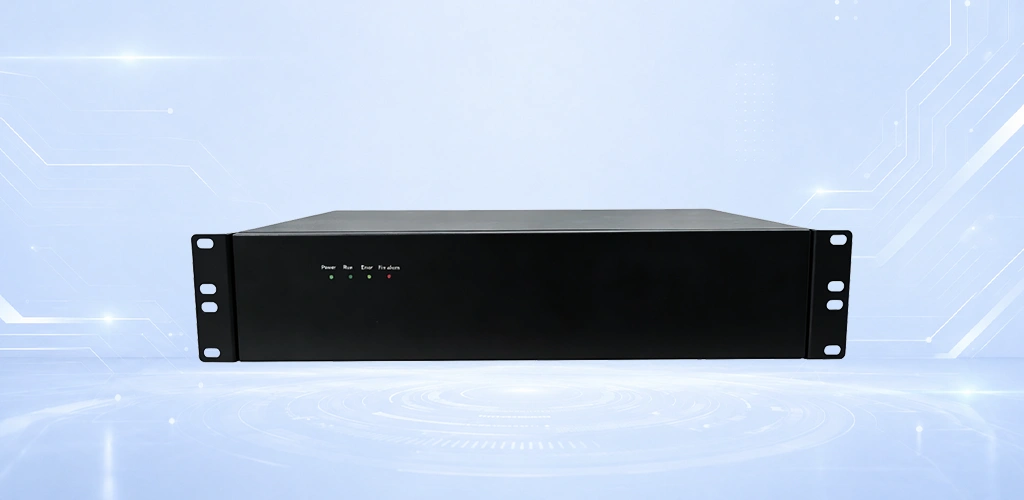

E3 Distributed Temperature Sensing (DTS)
Detect overheating, fire risks, and system failures in real time with high-precision distributed temperature sensing across long distances.
- Continuous Temperature Monitoring up to 16 km (One Channel)
- Accurate Hotspot Detection (±0.5°C / ±0.5m)
- Safe for High-voltage and Hazardous Environments
Fiber Optic Temperature Sensing Category Advantages

Intrinsically Safe
No electricity at the front end, making it better suited for flammable and explosive environments.

Real-time Continuous Detection
Monitors temperature changes in target objects in real time and detects temperature across the entire line simultaneously.
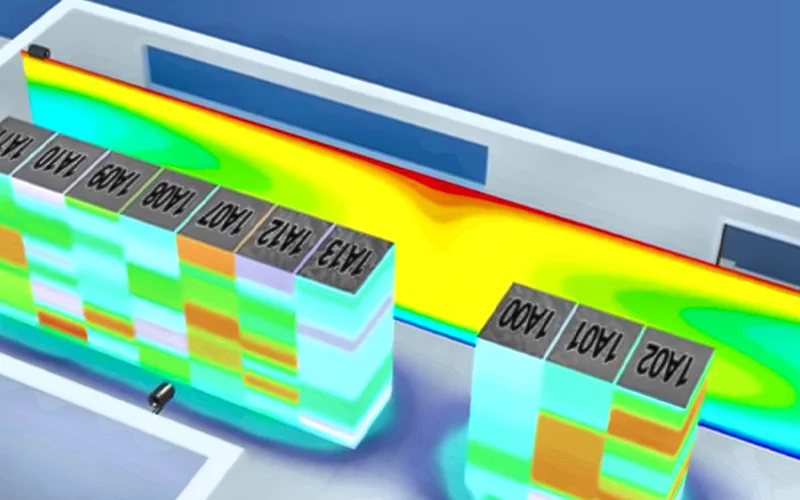
High-precision Measurement
Enables high-accuracy, high-resolution temperature measurement along the full length of the optical fiber.
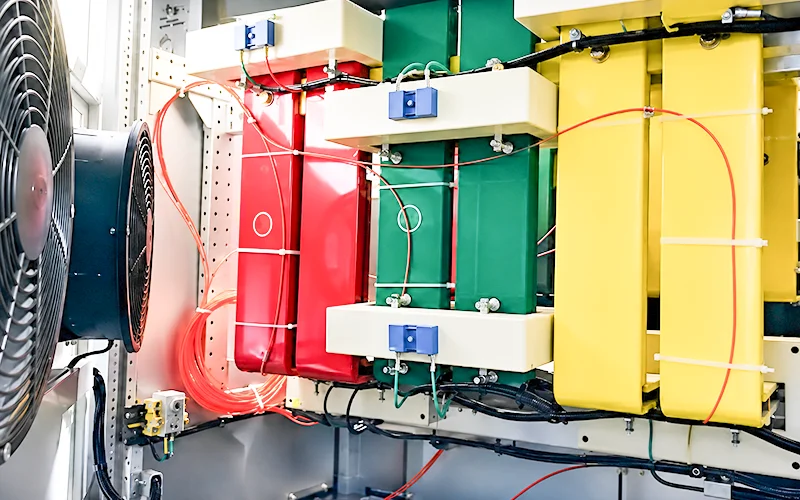
Interference-resistant, Reliable & Durable
Uses optical fiber as the sensing unit for stable long-term operation in harsh environments.

Our Distributed Temperature Sensing (DTS) Solution
Our fiber optic temperature system provides continuous, real-time temperature profiling along the entire cable, enabling early detection of abnormal heat and preventing critical failures.
- 1. Full-length real-time temperature monitoring
- 2. Early fire and overheating detection
- 3. Accurate hotspot localization
- 4. Continuous 24/7 operation
- 5. Ecosystem Synergy: SAM300 Unified Platform – LAN access to E3 fiber host and video surveillance systems
- Protocol Compatibility: Supports Hikvision, Dahua, and Uniview private protocols, plus ONVIF/RTSP standards.
- Open Integration: Offers API and Modbus TCP/IP protocols for upper-level platform docking; customizable protocol adaptation available.
- Flexible Mapping: One-to-many and many-to-many linkage between defense zones and cameras; supports preset position switching for PTZ cameras.
- Alarm Evidence: Auto-captures alarm screenshots via video system and stores them locally on SAM300 for visual verification and traceability.
Core Strengths

Flexible Deployment
2/4/8/16 channel options for scalable architectures

Long-Distance Coverage
10km–16km single-channel measurement range
Multi-System Interoperability
Integrated video surveillance & fire detection linkage

Google Maps Supported
Supports online GIS(with Google Maps available), offline GIS, vector maps, and image maps.
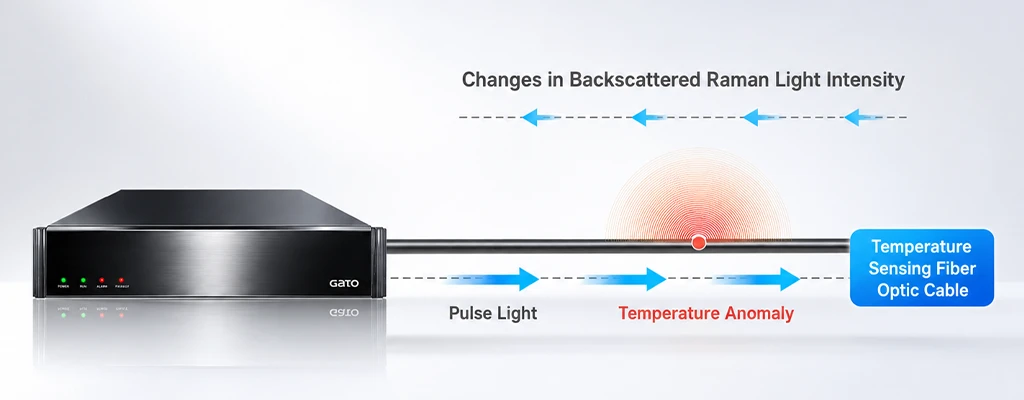
How It Works
Using advanced distributed sensing technology, the system analyzes light signal changes along fiber optic cables to detect temperature variations in real time.
Applications
Real Project Application
Power Tunnel Projects
Project Background
A senior French tunnel engineering provider with 20+ years of global experience needed to upgrade manual fire alarms with real-time monitoring and early fire warning.
Solution
We delivered a distributed fiber optic temperature sensing system with continuous tunnel-wide monitoring, remote supervision, and intelligent early warning.
Collaboration Value
- Technical Upgrade: Shifted from manual inspection to 24/7 intelligent monitoring.
- Milestone Progress: Reached preliminary cooperation and validated suitability for European-standard tunnel projects.
Factory Electrical Equipment Temperature Monitoring
Project Background
A Spanish customer deployed our solution in a factory environment to monitor key electrical equipment, including inverters, cables, and connection points. As power loads increased, continuous temperature monitoring became important for improving operational safety.
Solution
We provided a distributed fiber optic temperature sensing system for real-time monitoring and early warning of abnormal temperature rises across critical electrical assets.
Collaboration Value
The project demonstrates the use of fiber optic temperature sensing in industrial factory applications, helping the customer reduce overheating risks, improve equipment reliability, and support smarter maintenance.
Product Configuration & Customization

Fiber Optic Temperature Monitoring Unit
Fiber Optic Temperature Monitoring Unit is a key component of the Distributed Fiber Optic Temperature Sensing (DTS) system. It monitors real-time temperature distribution along fiber optic cables, detecting anomalies and triggering alarms for quick action.
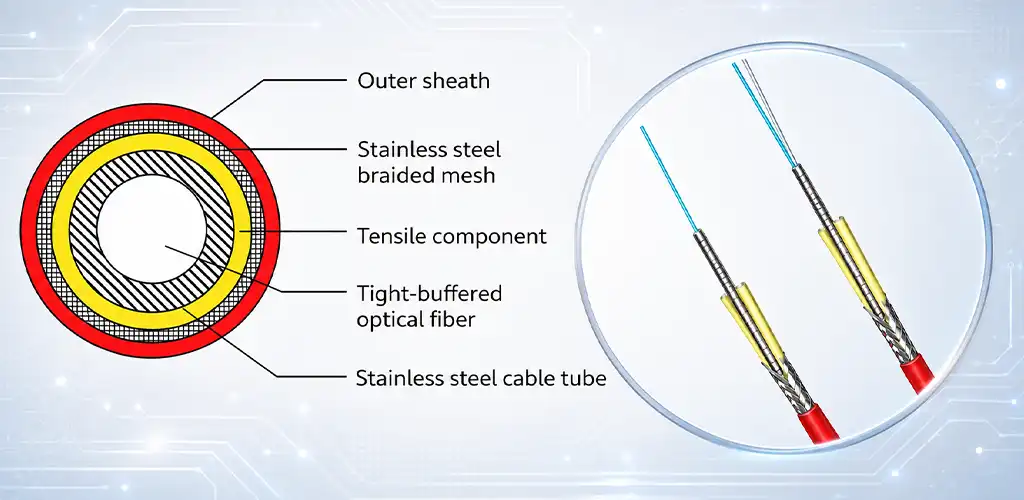
Sensing Fiber Optic Cable
Cable features a GI 62.5/125 multimode optical fiber core and is protected by high-strength polymers and an armored sheath, offering excellent tensile strength, bending resistance, and long-lasting reliability.
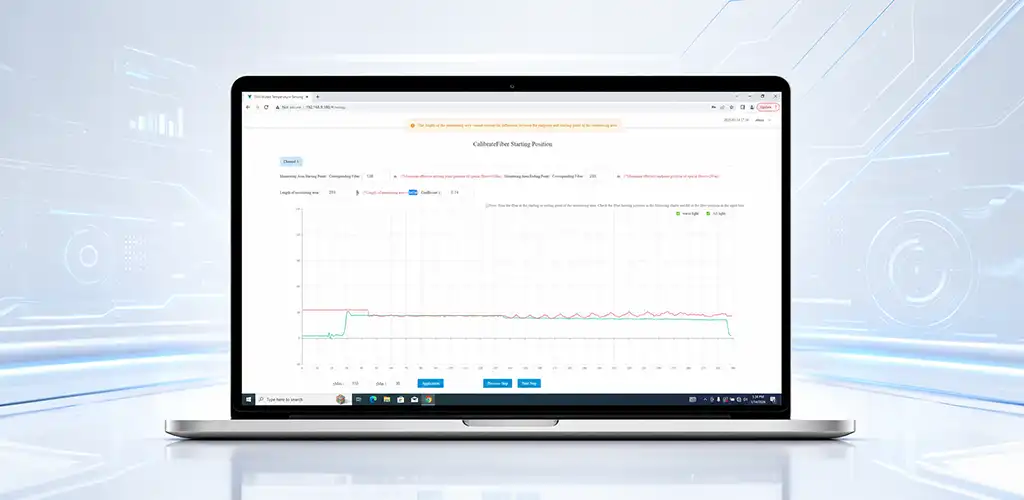
Monitoring Software Platformt
Built on a B/S architecture, the system displays real-time temperature distribution curves and alarm statuses. It allows easy configuration of zone-specific alarm protocols and supports historical data queries and statistical analysis for optimized performance.
Frequently Asked Questions
What is the core advantage of distributed fiber optic temperature measurement technology compared to traditional point temperature measurement?
Traditional technology can only detect the temperature at specific points, while the E3 series can achieve full-range detection without blind spots through a single optical cable, with a sampling interval of only 0.4 meters, equivalent to placing tens of thousands of detection points on a line of several kilometers.
What is the positioning accuracy of the system for locating the origin of a fire?
Using the Optical Time Domain Reflectometry (OTDR) principle, the system can calculate the location of a hot spot in real-time, achieving a positioning accuracy of ±0.5 meters, ensuring the precise identification of the accident source in the early stages of a fire.
How does the system sense temperature changes based on the "Raman scattering" principle?
When a light pulse propagates through the optical fiber, it generates Raman scattering signals, the intensity of which varies linearly with temperature. By capturing these subtle signal fluctuations, the system reconstructs the temperature distribution curve along the entire length of the fiber using high-speed algorithms.
How stable is the system in electromagnetic interference environments like power cables?
Since the sensing medium is an optical fiber, it uses optical signals for sensing, offering intrinsic safety and immunity to electromagnetic interference. It is particularly suitable for extreme electromagnetic environments such as high-voltage cables and substations.
What complex alarm logic does the system support to address different fire hazard models?
The system supports Fixed Temperature Alarms (reaching a set temperature), Differential Temperature Alarms (excessive temperature difference from the environment), and Rate-of-Rise Alarms (temperature rise is too fast), allowing it to adapt to various types of fire development scenarios.
When the optical cable suffers mechanical damage, how does the system quickly troubleshoot the fault?
The system features a built-in optical cable quality assessment function. It can locate fiber attenuation points or break points with a single click, automatically assess the loss, and help maintenance personnel quickly identify the fault location for repair.
What is the performance of the E3 series in long-distance monitoring?
The maximum detection distance for a single channel can reach 16 kilometers. This makes the system highly cost-effective for deployment in long-distance scenarios such as highway tunnels and urban utility tunnels.
What convenience does the system's software architecture offer for multi-terminal access?
The system is developed based on a B/S architecture and does not require the installation of a dedicated client. Management personnel can monitor the temperature distribution along the entire line in real-time via a browser on a computer, tablet, or mobile phone.
Start Your Project Today
Get expert support and a customized temperature monitoring solution.
Reply within 24 hours. Your information is secure.